 45 m
DonQ45 m
Bakery chain.
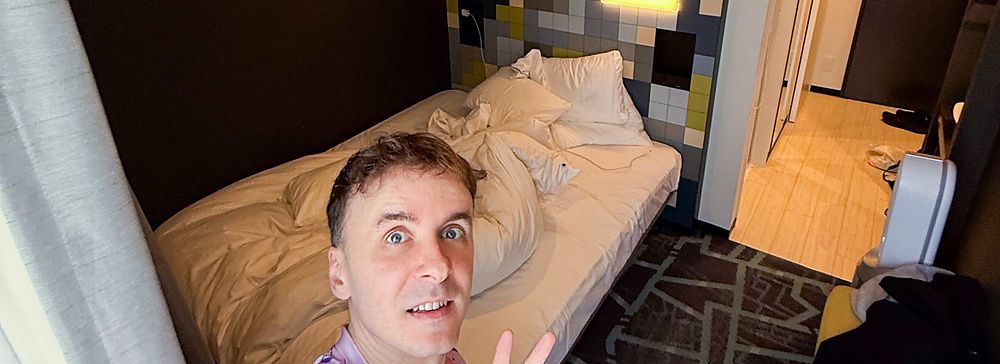
A business hotel in Tokyo’s Akihabara, where the signs of the electronics and anime shops are just a few meters from your room window. The JR East Hotel Mets Premier Akihabara has colorful rooms, a proper bathroom with a tub and brand-name bathroom extras, like the Refa showerhead.
It’s a good fit for business travelers, for anyone visiting Tokyo solo or as a couple who wants to sleep where the neighborhood is at its liveliest, and for people who come to Akihabara for the shops, manga and arcades and want their room right there to duck back into between outings.
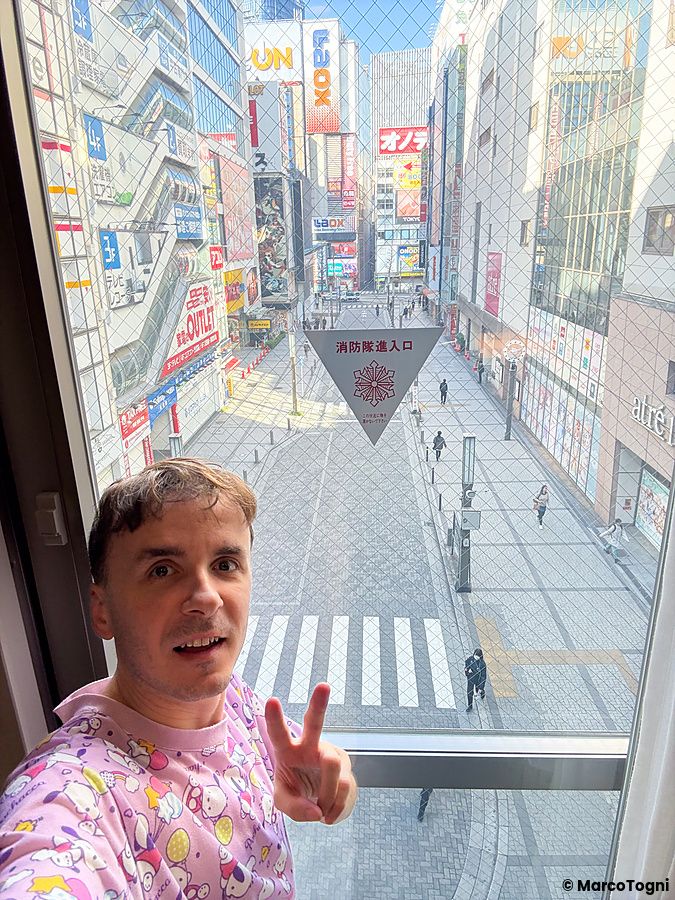
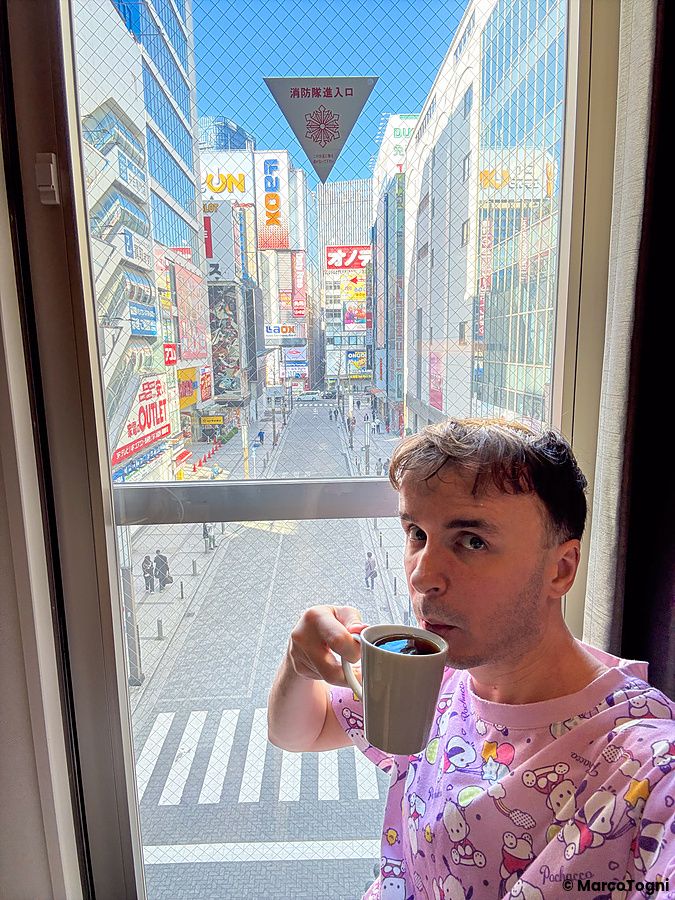
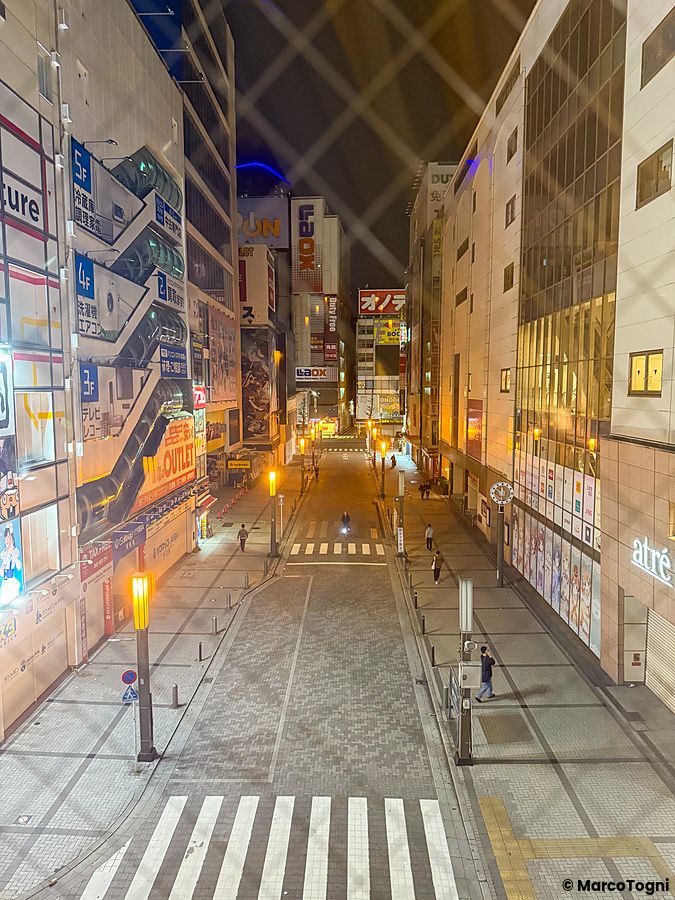
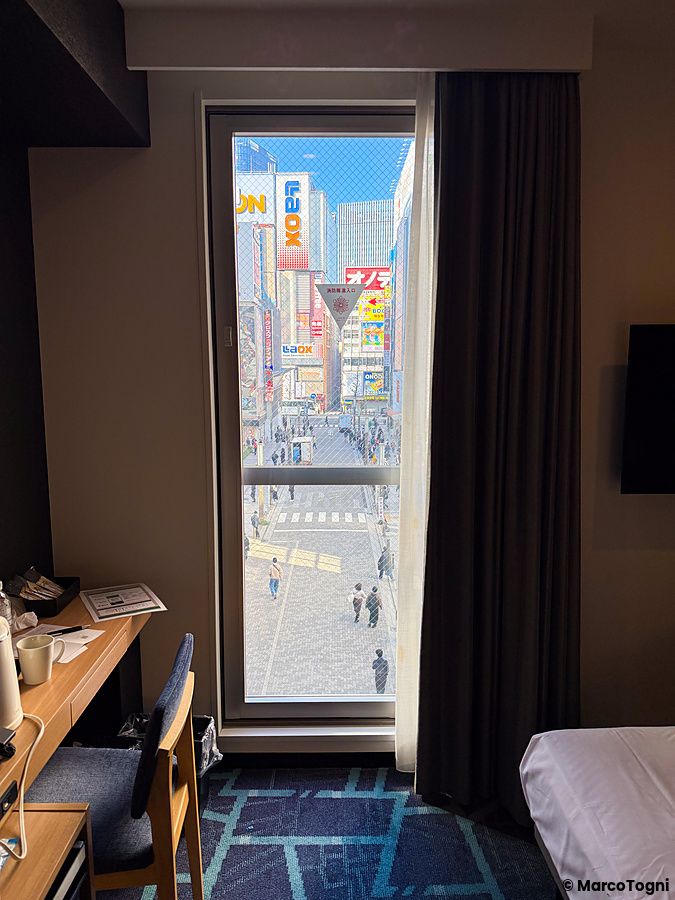
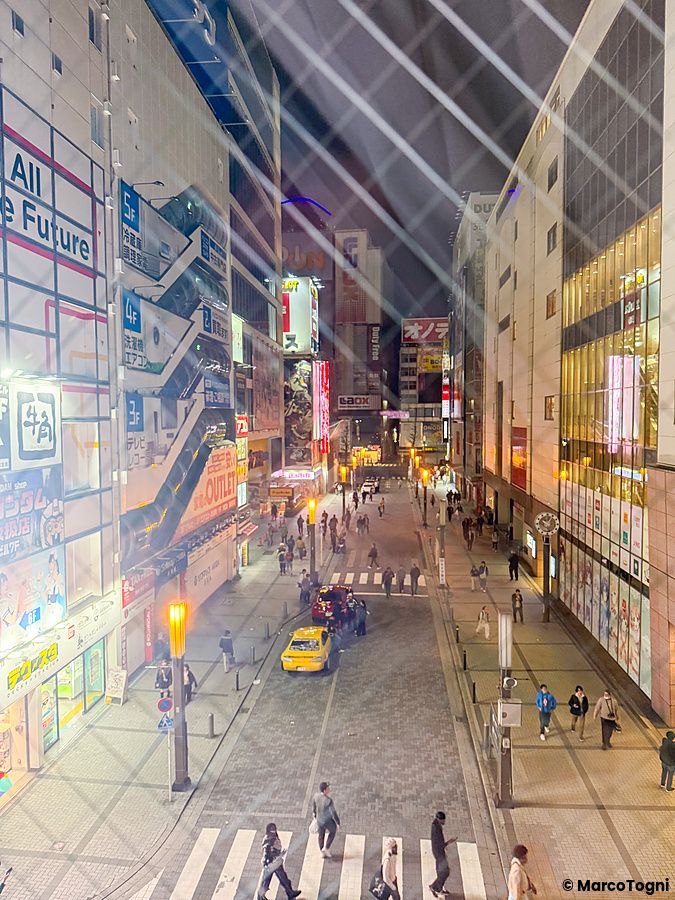
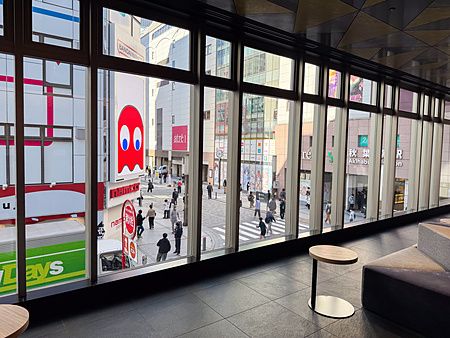
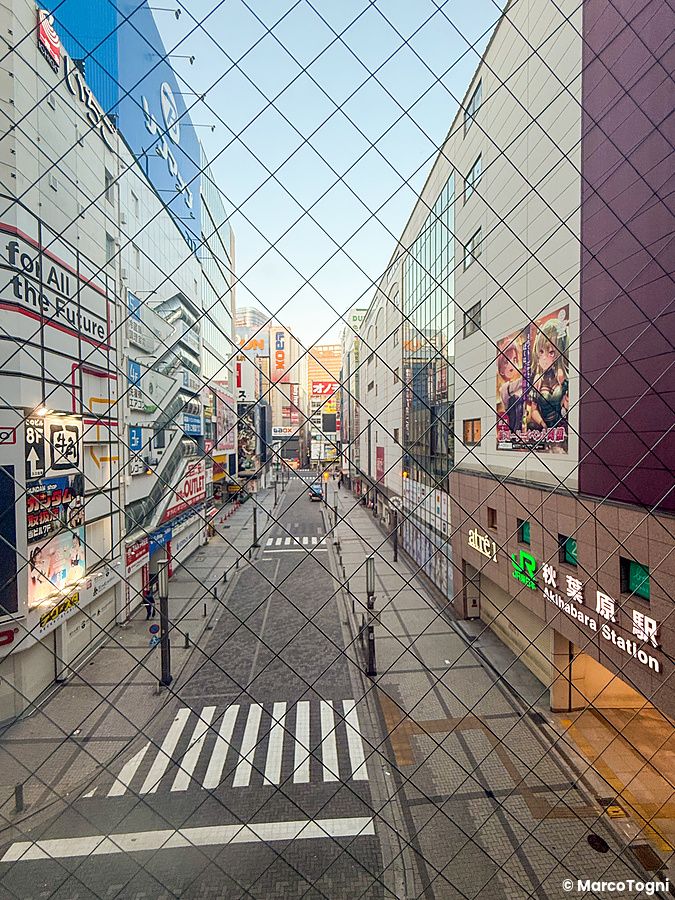
I never thought I’d be sleeping with a view of one of Akihabara’s most famous streets. I had a double room on the third floor, with the bed and the wooden desk right in front of the window, and the whole neighborhood below me: buildings covered in neon signs and anime posters, the crosswalks, people going in and out of the station. From the third floor you don’t look down on the city. You’re in the middle of it, and at night, with the neon on, it feels like the street is in your room.
There’s a metal security mesh in front of the glass. You notice it when you take photos, but it doesn’t bother you when you’re just looking out.
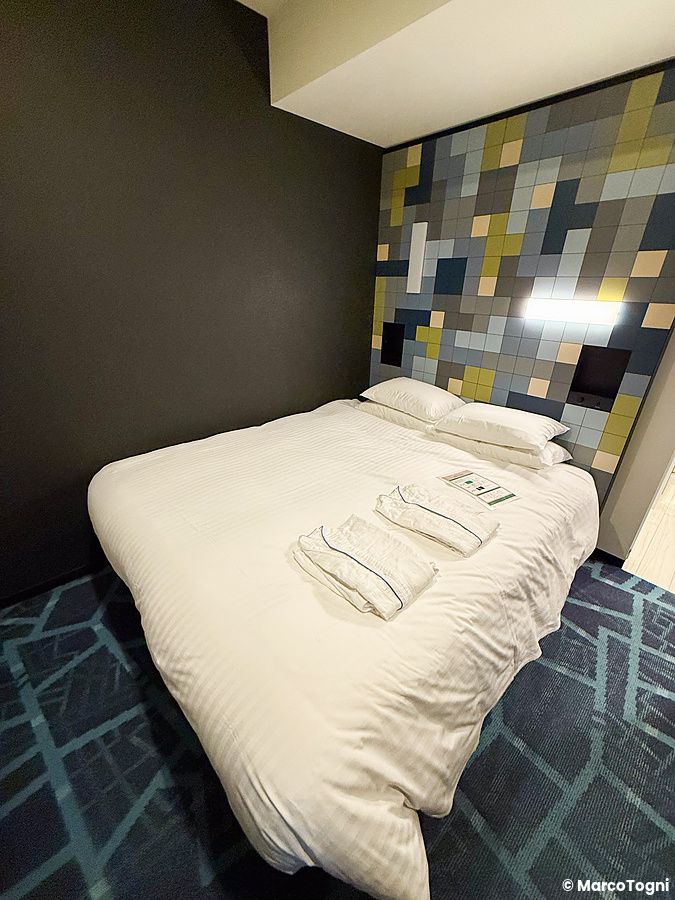
The room has a cheerful style that suits the neighborhood. The headboard is a mosaic of square tiles in blue, gray and lime green, there’s a rug with an abstract blue pattern on the floor, and by the entrance there’s a yellow chair and an air purifier. On the bed I find two sets of white pajamas, folded. The mattress is a Simmons and the pillows are Nishikawa, a Japanese brand I trust. The bed is neither too soft nor too firm, and you get a good night’s sleep.
The room also has a smart TV with an HDMI cable, a kettle and a small fridge with two cans of Chill Out and two packs of Gaba chocolate, all on the house. The USB ports are next to the bed, so your phone charges on the nightstand.
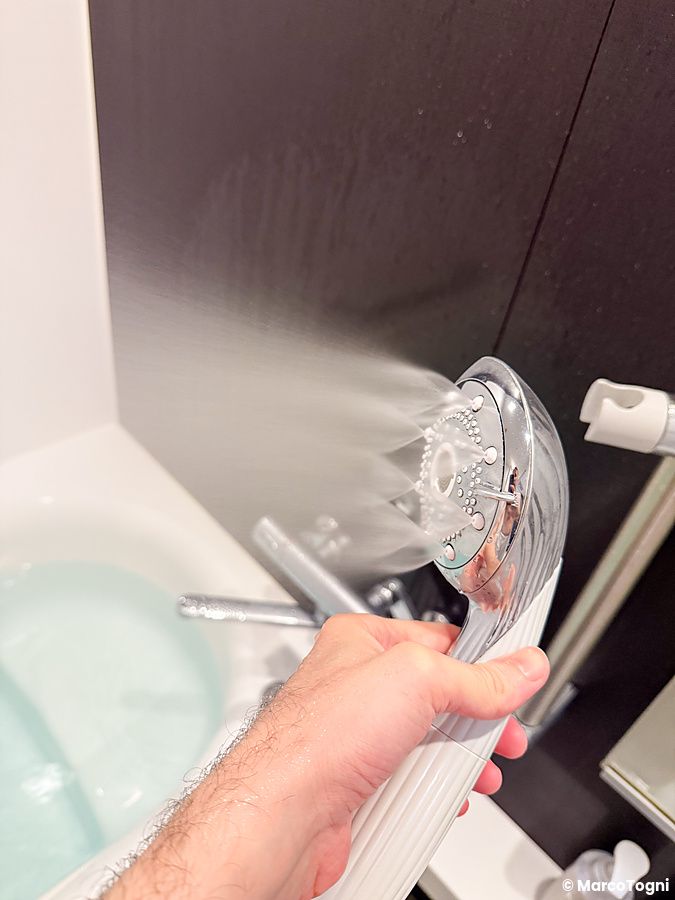
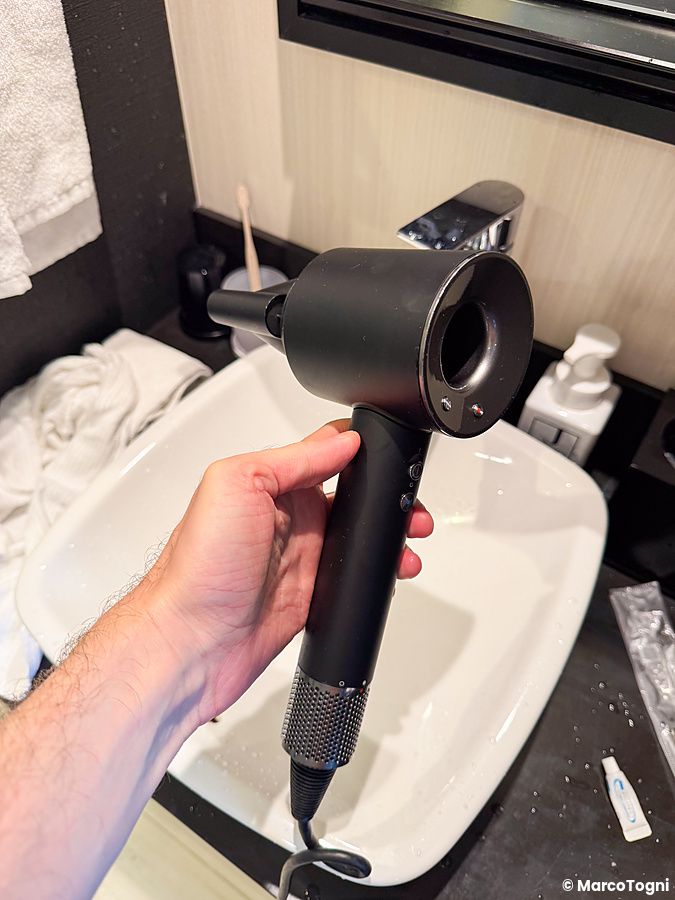
The bathroom is the biggest surprise. It’s laid out Japanese-style, with the toilet separate from the bathing room, where the shower area is in front of the tub. You wash sitting on the stool and then get into the tub, which is deep enough for a real soak. The showerhead is a Refa, with strong pressure and water that feels soft on your skin, and the hair dryer is a Dyson. I don’t expect either of those in a business hotel.
The sink is a white bowl sitting on a dark counter, under a mirror with a black frame.
These are the rooms you can choose from:
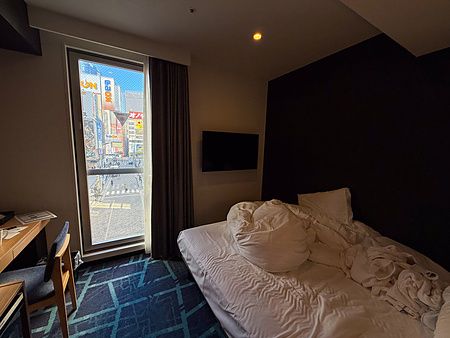
Two people with two big suitcases will end up opening one of them on the bed in the double. The Superior Twin has the extra four square meters you need to stay out of each other’s way.
Not every window faces the street. If you want the signs in front of your bed, you need to say so when you book, and ask for a low floor too.
The only downside was the door. In my room the gap between the door and the frame was a few millimeters wider than it should have been, and a sliver of light came in from the hallway. There was no noise in the hallway and I slept fine anyway, but if you’re a light sleeper and even a sliver of light bothers you, bring an eye mask.
Price-wise, it sits in the upper-middle range for business hotels, a bit above the cheaper chains in the area. What you get in return is the bathroom with the tub, the Simmons bed, and free drinks and toiletries.
When a friend asks me where to stay in Tokyo and they’re coming to Akihabara for the shops, this is the first name I give them. In the evening they can drop off their bags full of manga and models and head straight back out, and in the morning they wake up exactly where they want to spend the day.
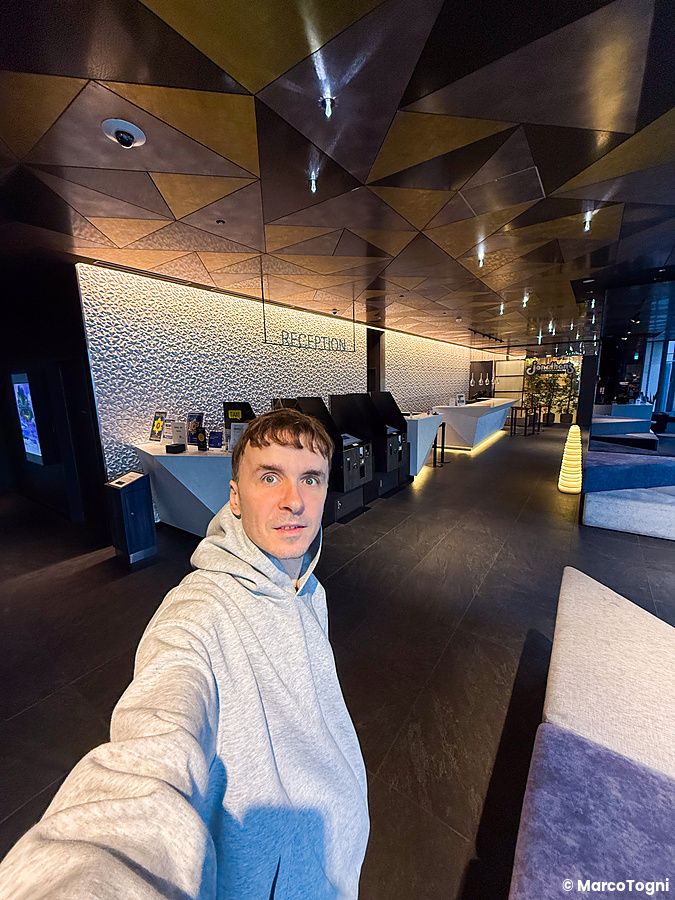
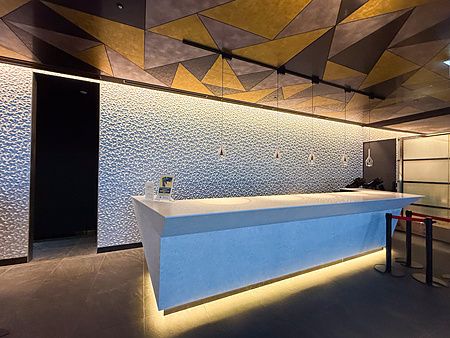
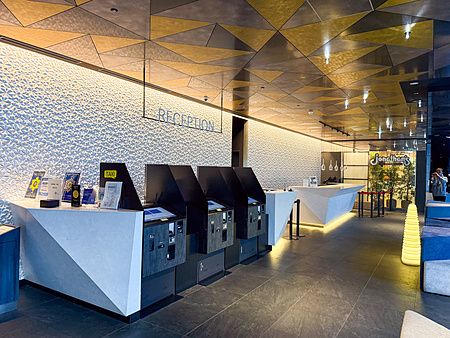
The front desk is on the second floor. You come in through a small entrance with walls of white, gray, blue and yellow square tiles, go up, and reach a lobby with a dark stone floor, a long white counter lit from below and a ceiling covered in gold and gray triangles. The lobby has big windows too, and through them you can see the street with its signs and the station entrance.
You check in at self-service machines, but there’s always someone behind the counter to help if something goes wrong.
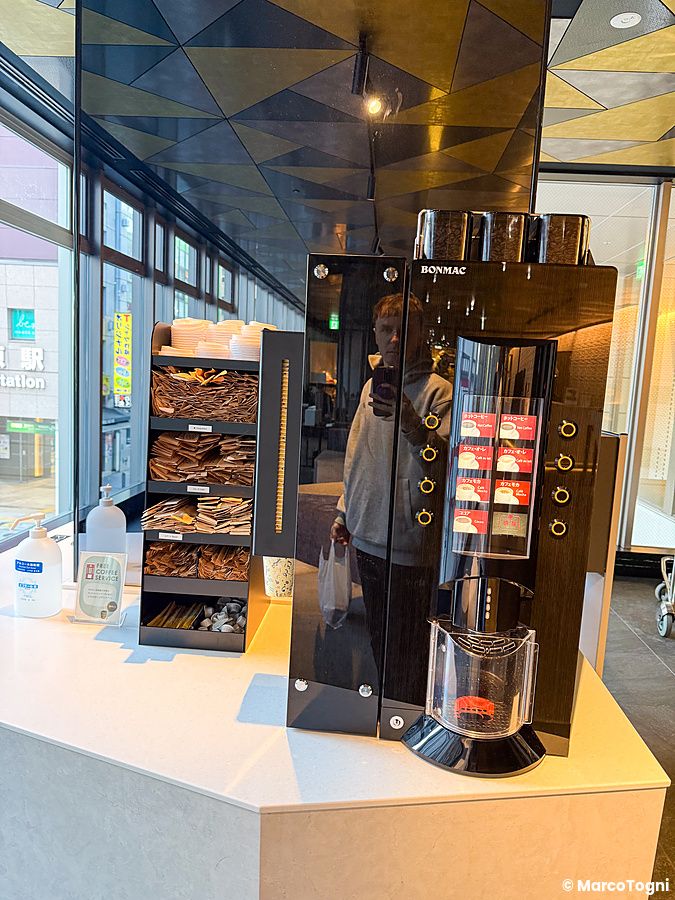
The lobby has a free coffee machine, with sugar and stirrers on the white counter next to it. Grabbing a cup and taking it up to my room is something I always do when I stay here.
On the same floor there’s a counter where you pick out your toiletries: bath salts, face masks, skincare, razors and toothbrushes. You can return used toothbrushes for recycling, and a sign explains how.
On the third floor there’s a coin-operated laundry room with three Sharp washing machines, which is handy if you’re in Tokyo for several days. The hallways to the rooms have dark carpet with geometric patterns and lettering. The floor signs are clear, and you find your room easily.
Breakfast is a hotel buffet served at a Jonathan’s, a Japanese family restaurant on the building’s second floor. There’s both Japanese and Western food: rice, soup, side dishes, vegetables, salads, a few sweets and a counter where you help yourself to drinks. It’s a full, varied buffet with nothing out of the ordinary. For one or two mornings it’s perfectly fine, but over a whole week it can get repetitive.
Alternatively, the hotel offers breakfast at the Starbucks on the ground floor, where you can grab a coffee and a pastry on the go if you want to head out early. Akihabara has plenty of places for breakfast, so you can also decide day by day.
The front desk staff are friendly and smiling, and they speak English. If the check-in machines won’t let you choose an option, though, there’s no way to change it on the spot.
I’d booked for two people but was traveling alone, and the machine wanted me to pay the accommodation tax for two. I pointed this out, but they explained that the system wouldn’t let them remove the second person and that I had to pay for two. I emailed a complaint right away, and they wrote back in the middle of the night to say they’d refund the difference at the front desk the next morning. And they did.
It was small change and made no real difference, but I like to dig in my heels over what’s fair, and they answered quickly and without any argument. My advice is to book for the right number of guests, so you don’t even have to think about it.
Pros:
Cons:
Best for: people coming to Akihabara for the shops and manga who want to stay right in the middle of it, solo or as a couple, without giving up a real bathtub
Vibe: cheerful colors, mosaics and gold triangles, and the neighborhood’s neon coming in through the window
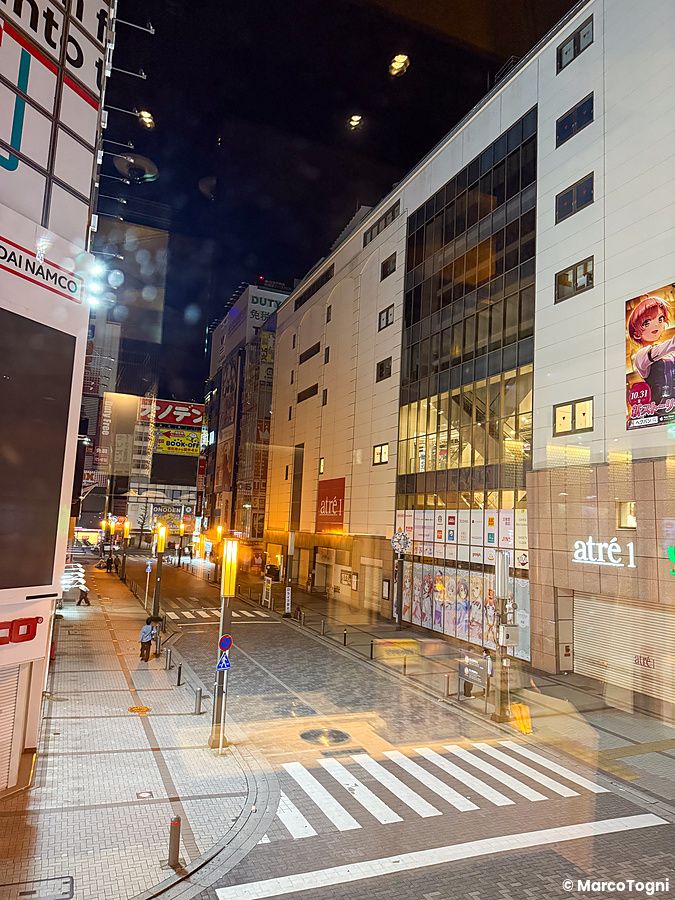
What stays with me is the moment at night when I switch off the light in my room and the signs below keep coloring the walls, while people with shopping bags are still walking by on the street. The next morning, holding my cup of lobby coffee, I watch the shop shutters go up one after another and decide which shop to start with.
If Akihabara is the reason for your trip, waking up with the street under your window is the best way to experience it. Book a room on the street side and make the most of it.
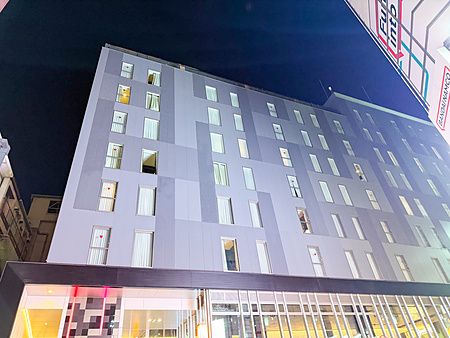
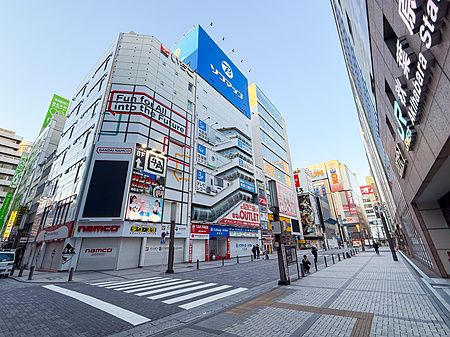
From JR Akihabara Station, take the Electric Town exit (south side). The hotel is in the building right across from the station, about a minute's walk away. Go in through the ground-floor entrance and head up to the second floor, where the front desk is.
If you're coming by subway, walk about 3 minutes from exit 3 of the Hibiya line toward the Electric Town side of the JR station.
This place is on MarcoMaps
JR East Hotel Mets Premier Akihabara
My map of Japan: over 4,000 places I've tried myself, each with photos, rating, and hours. Filter by category and rating, find veg-friendly spots and places near you with GPS. No sign-up, right from your phone.


JR East Hotel Mets Premier Akihabara - nearby you will find: