 677 m
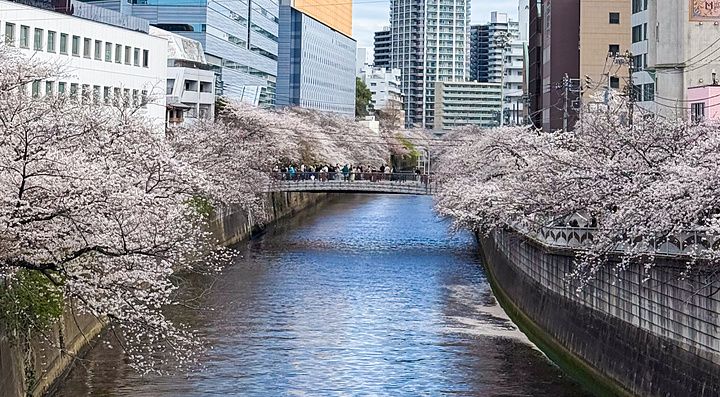
Meguro River677 m
Cherry trees, footbridges and bars.
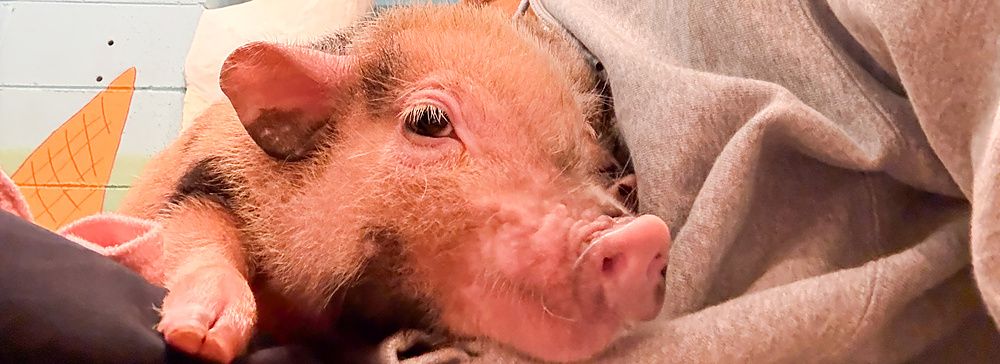
A chain of mini pig cafés with locations all over Tokyo and in several other Japanese cities, where miniature pigs climb into your lap and fall asleep there. Nobody comes to mipig cafe for the coffee. You pay for the time you spend there: half an hour or an hour sitting with a blanket over your legs while pink, black and spotted pigs come looking for cuddles.
It’s the right place for animal lovers, for couples and for kids old enough to sit still. When you walk out, you won’t feel like ordering tonkatsu for quite a while.
You don’t come here to eat. You pay for the time you spend with the pigs. Prices vary by location, but the setup is always the same: there’s a short session of about 25 minutes and a longer one of about an hour, and depending on the location and the package, an adult spends between 2,000 and 5,000 yen.
Young children pay much less. It’s not a cheap activity, but prices are in line with other animal cafés in Tokyo.
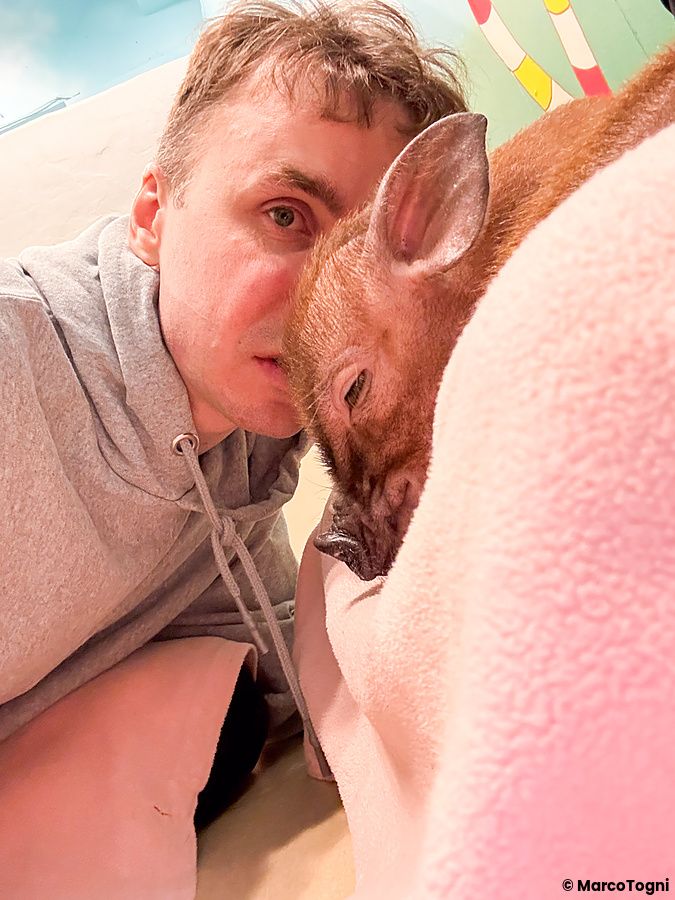
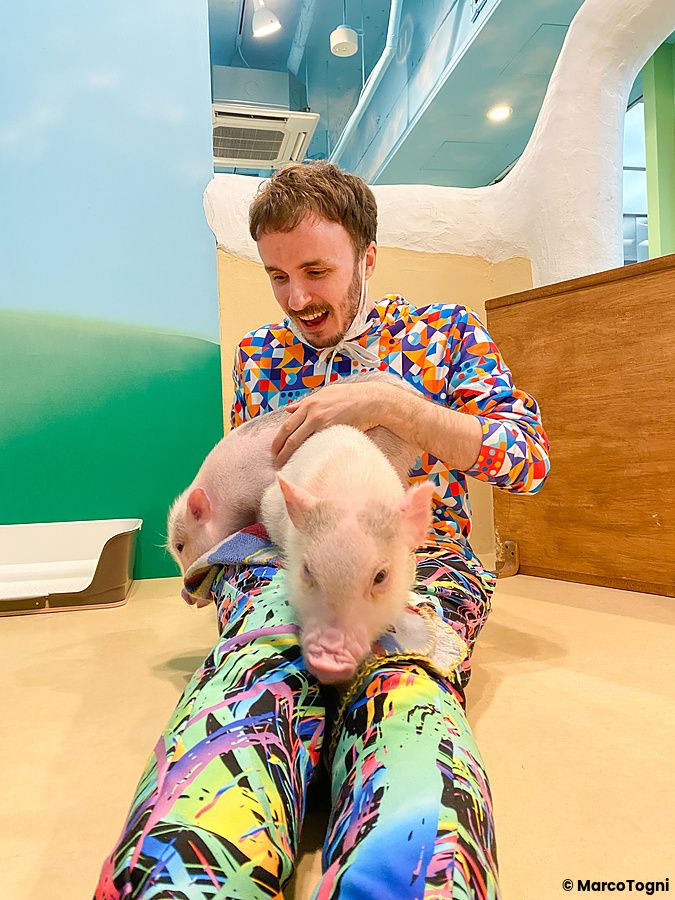
The pigs look like the ones you see in videos, just a bit bigger. They come from an English breed developed to stay small, and as adults they reach around 20 kilograms. The piglets fit in your arms, while the bigger ones lie down next to you and rest their snouts on your leg.
Their skin is thick and rough, not soft like a dog’s, so you pet them by gently scratching them with your nails, and they close their eyes and flop over on their side. The shared room also has its chaotic moments, because the pigs shove each other around and grunt loudly when they fight over the best spot. Don’t expect it to be library-quiet.
For the money, what you get is real contact, not a zoo behind glass. I go back whenever I need to switch off, because after an hour with a piglet sleeping on me I walk out calmer than after any massage.
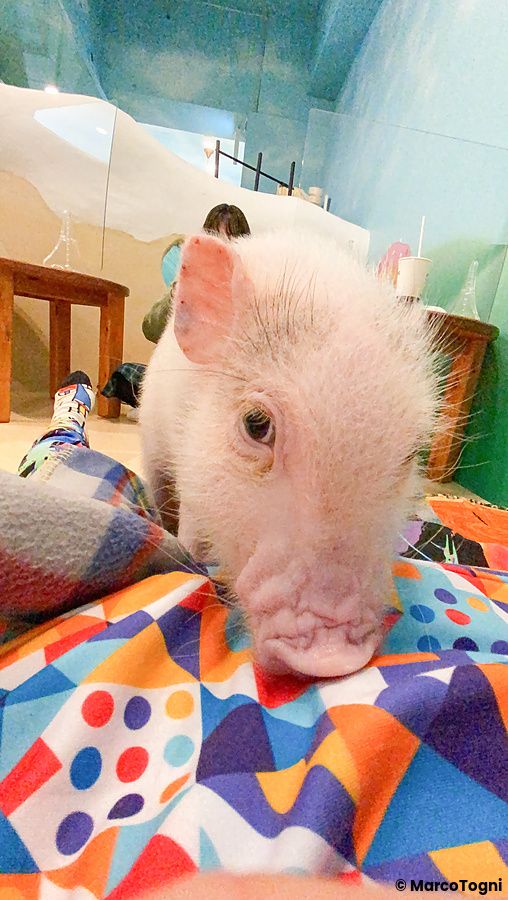
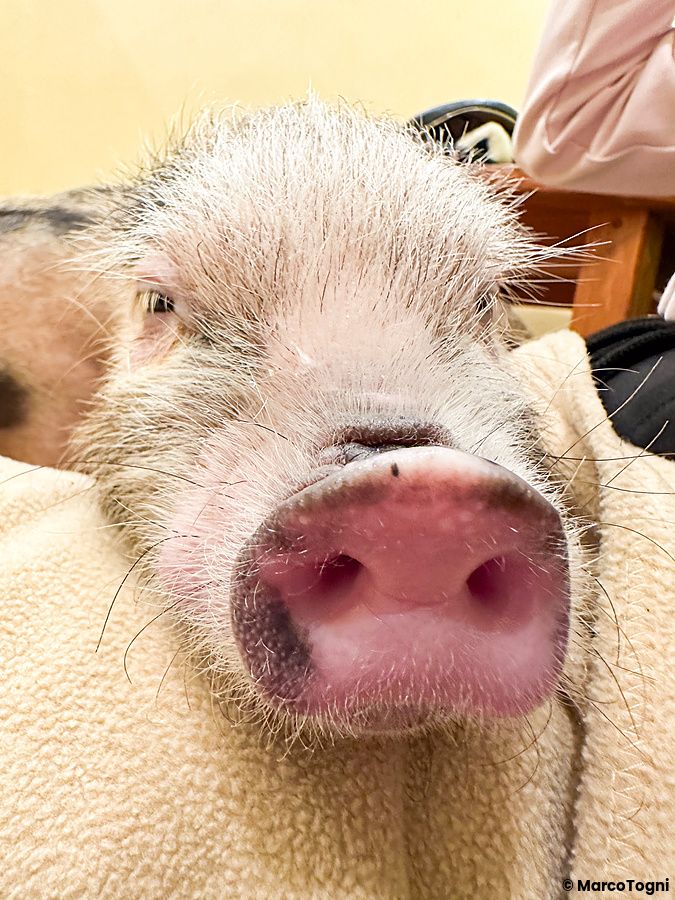
Every visit starts the same way: shoes and bags go in the locker, you wash your hands and then you get your blanket. Hiking boots just slow you down, so wear shoes you can slip off in a second.
Large bags don’t fit in the lockers, and it’s better to leave new clothes or anything you really care about at the hotel, because snouts and little hooves get everywhere. You sit on the floor or on low benches, and from there you don’t have to do anything. The pigs come to you one after another, until one of them finds the right lap and falls asleep in it.
Almost every location has the same look, like something out of a children’s picture book: blue walls with clouds, a grass-green floor, and round arches and low curved walls that split the room into lots of little corners. At some locations even the ceiling pipes are painted blue.
Everything is soft with no sharp edges, and you can tell it was designed more for the pigs than for photos. You can smell the animals, but only faintly, and the pigs are clean because the staff are constantly coming around to tidy up.
The staff are young and friendly, and they don’t speak much English. There aren’t many rules, but they’re clear: don’t chase the pigs, and in the shared room don’t pick them up.
If you’re sick or you’ve been on a pig farm in the days before your visit, they ask you to stay away to protect the animals. If a pig gets too heavy for a child, someone comes over to move it.
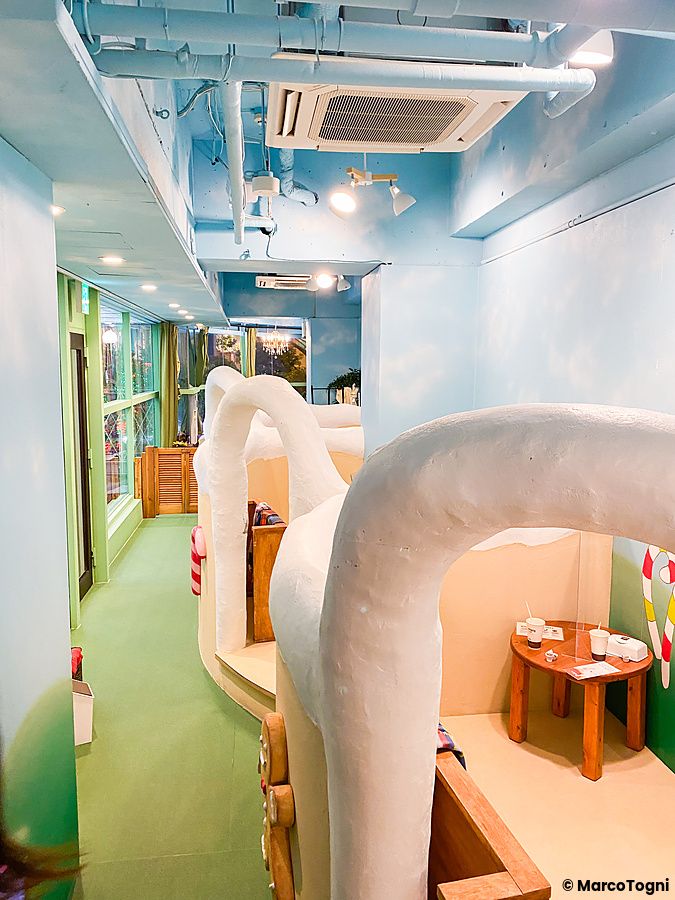
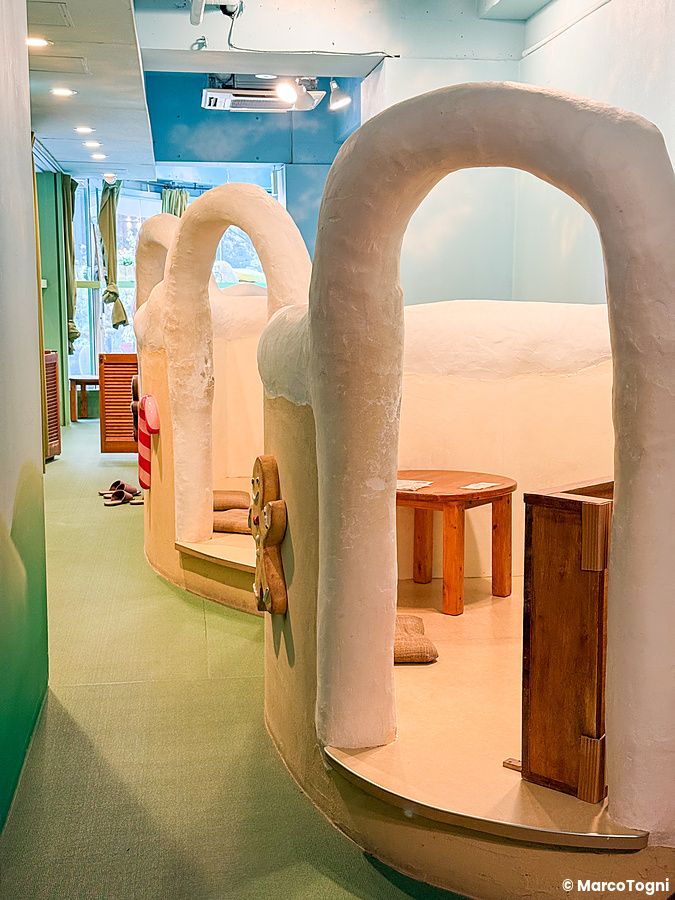
This is the real decision you have to make.
The shared room has lots of pigs, and they move from one person to the next nonstop. You get to pet five or six different ones and watch how they behave as a group, with the little ones burrowing under the blanket and the big ones shoving their way in to claim space. The trade-off is more people around and more commotion.
The private room is a different story. It’s just you and a few pigs, the chaos stays outside, and you can even pick them up, which you can’t do in the shared room.
That’s where I’ve had two piglets fall asleep in my arms, one on top of the other, and it’s a feeling you don’t forget. The downside is that there are fewer pigs, so if you want to see lots of them and get to know their different personalities, the shared room gives you more. It’s your call: both options have their upsides.
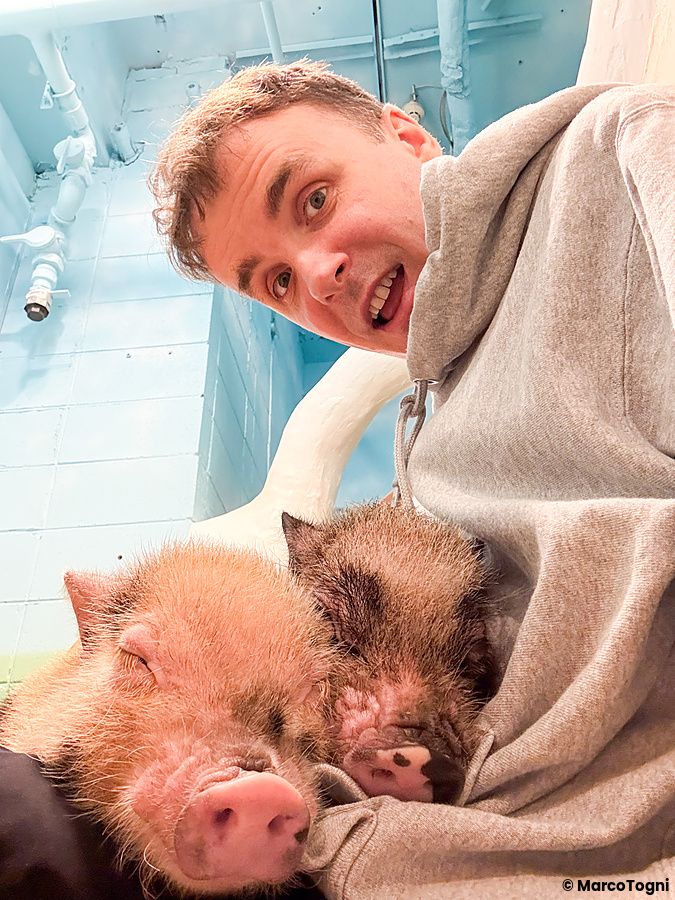
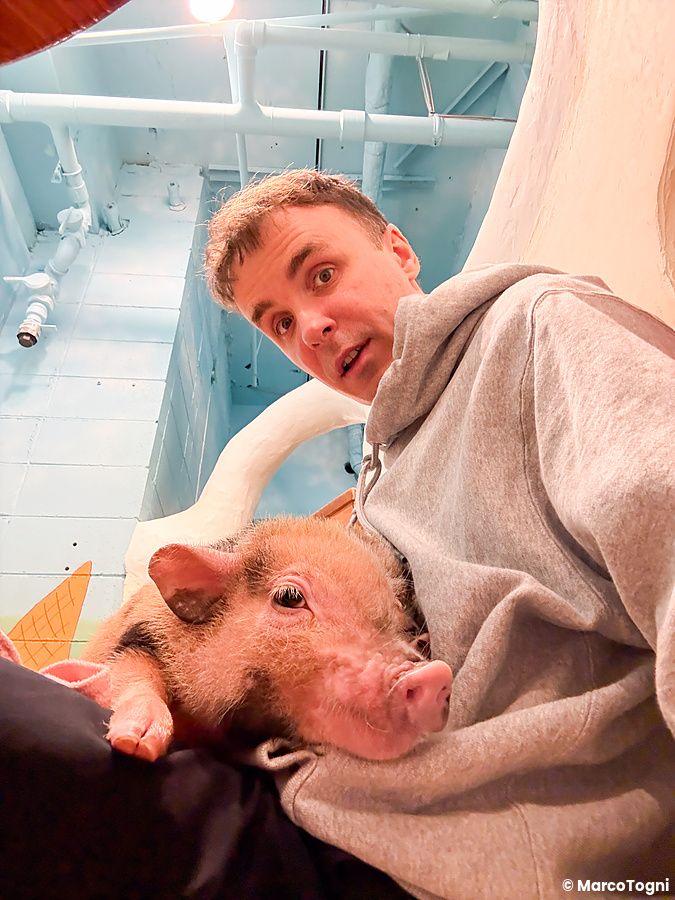
The most practical tip is to avoid weekends. On Saturdays and Sundays the sessions are full, with groups of young people filming videos and families with small kids, so the pigs have more people to choose from.
On a weekday, especially in the morning, there aren’t many people there and the pigs have less to keep them busy, so they stay on you longer and fall asleep sooner. The same goes for the first sessions of the day, when the animals are rested and calm.
With kids, it depends on their age. Kids in elementary school and up have fun and understand how to behave. With younger ones, the risk is that they get scared when a 15-kilogram pig climbs into their lap grunting.
If you’re worried about seeing stressed animals, you can relax: the pigs here are used to people, they come to you because they want to and they leave whenever they like. The chain also sells them as pets and supports the families who adopt them, and in fact you’ll see piglets and adults of different ages in the rooms.
Pros:
Cons:
Best for: couples, animal lovers, kids in elementary school and up, and anyone after a different kind of break in Tokyo
Atmosphere: blue walls with clouds, a green floor, people sitting on the floor with blankets over their legs, and sleeping pigs
When to go: a weekday, ideally in the morning
Pigs get attached to people in a way you don’t expect. They don’t beg for food and don’t want anything in return. They come over, curl up, nudge your hand with their snout so you’ll keep scratching, and look at you the way a dog would.
What stays with you when you leave is the warm weight of a piglet asleep on your legs and the low grunt they make when they’re happy. After an hour like that, the pork on your plate will look different to you. Book the long session, take off your shoes and let them come to you.
This place is on MarcoMaps
mipig cafe Meguro
My map of Japan: over 4,000 places I've tried myself, each with photos, rating, and hours. Filter by category and rating, find veg-friendly spots and places near you with GPS. No sign-up, right from your phone.


mipig cafe Harajuku - nearby you will find:
 119 m
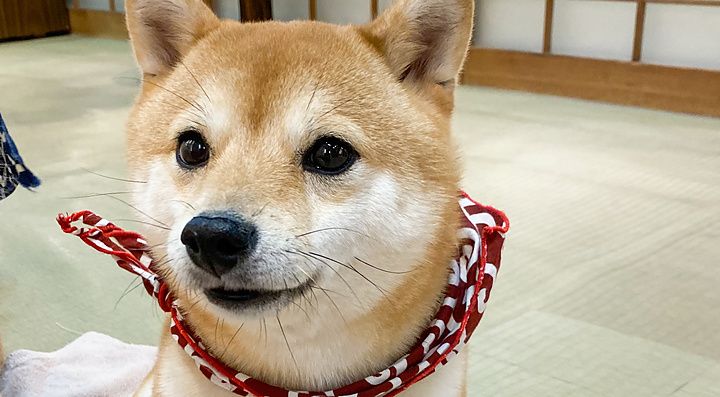
Dog cafes with miniature shiba.
 122 m
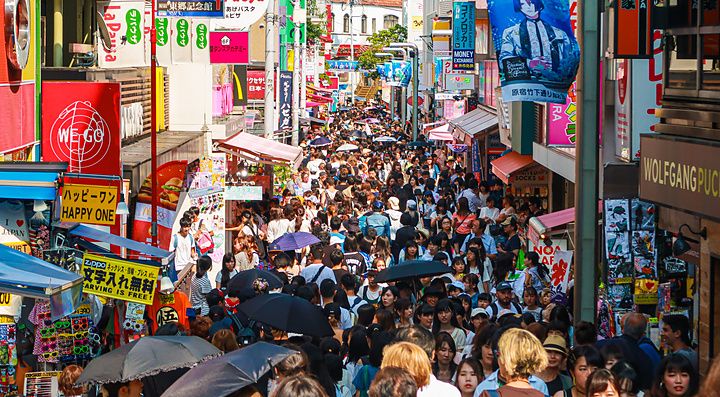
Harajuku's street for youth fashion shopping.
 164 m
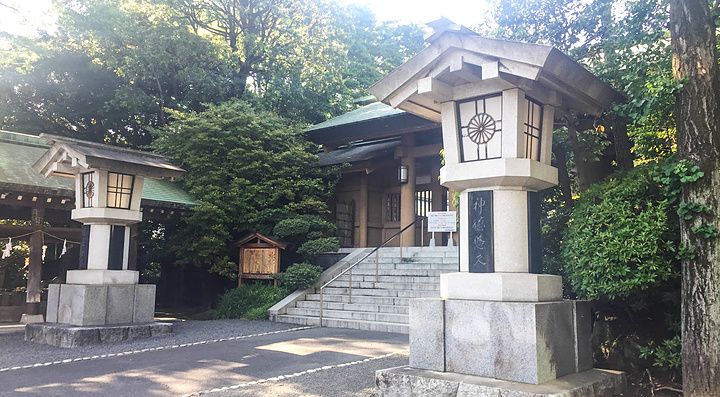
A pond, carp and turtles.
 184 m
With Japanese ukiyo-e prints.
 201 m
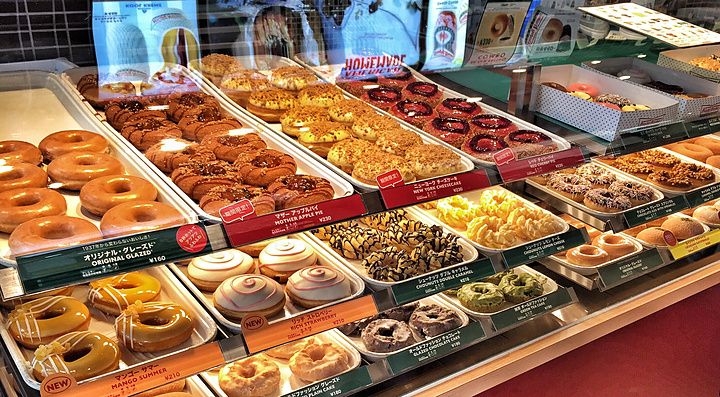
American glazed doughnut chain.
 217 m
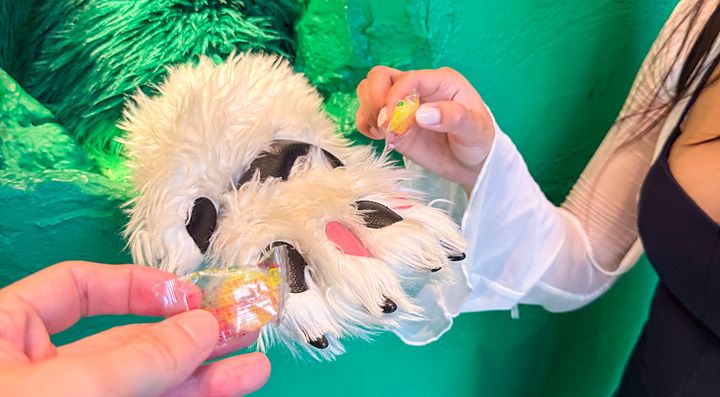
Café with a bear paw sticking out of the wall.
mipig cafe Harajuku Takeshita Dori - nearby you will find:
2 mDog cafes with miniature shiba.
93 mA pond, carp and turtles.
 152 m
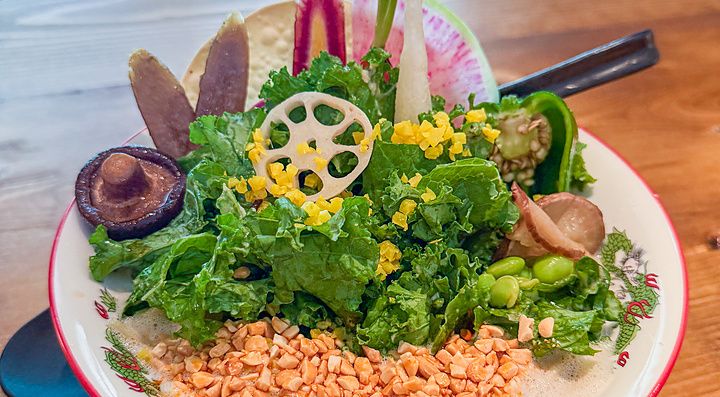
Vegan ramen, sushi, and gyoza.
179 mWith Japanese ukiyo-e prints.
 234 m
Art gallery.
234 mHarajuku's street for youth fashion shopping.
mipig cafe Kyoto Shinkyogoku - nearby you will find:
mipig cafe Shinsaibashi - nearby you will find:
 10 m
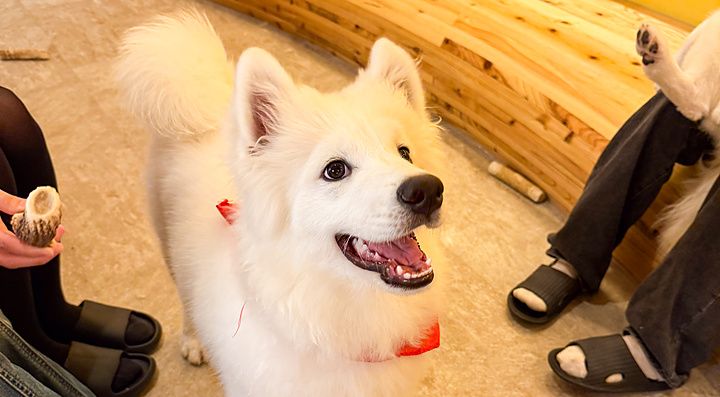
Samoyed cafe.
 10 m
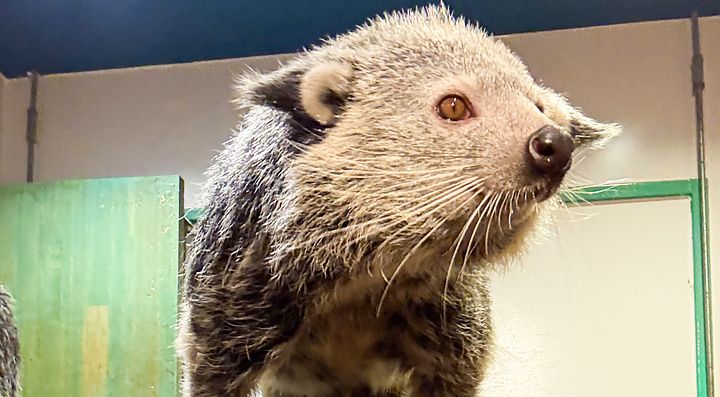
Owls, sloths and binturongs.
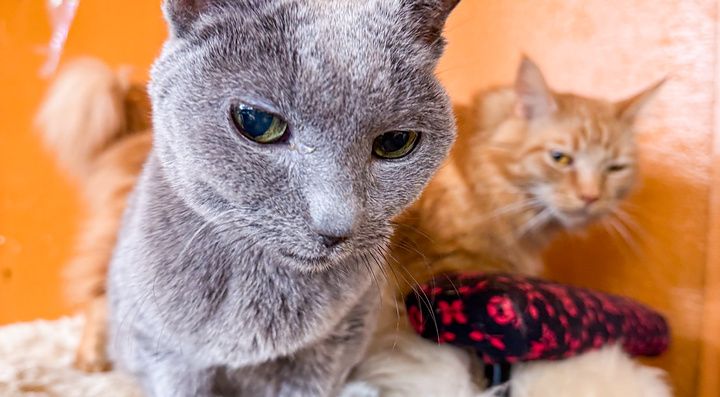 59 m
Cats on your lap and Asian drinks.
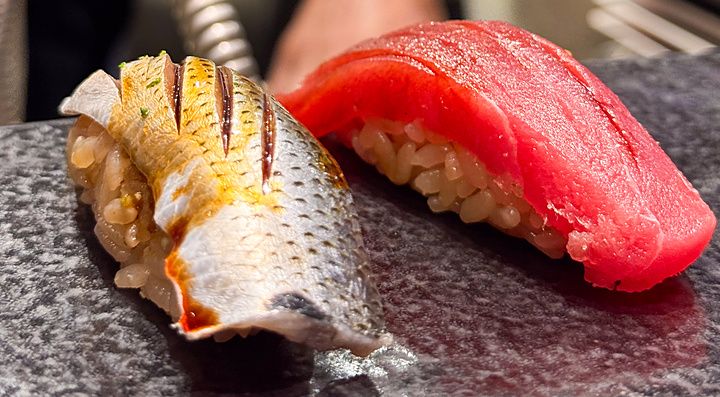 106 m
Chain with excellent sushi.
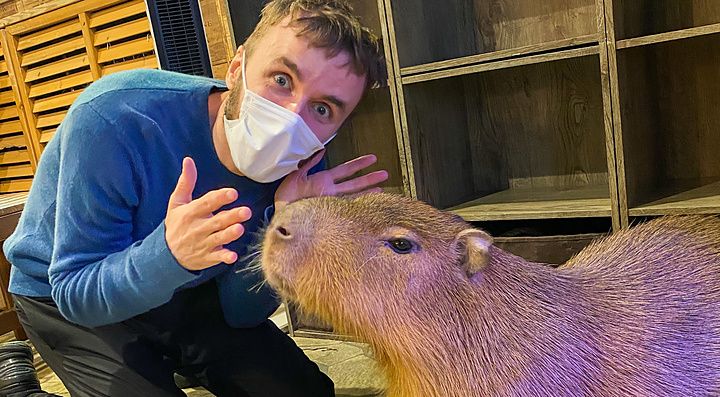 147 m
Capybaras, meerkats, and owls with no cages.
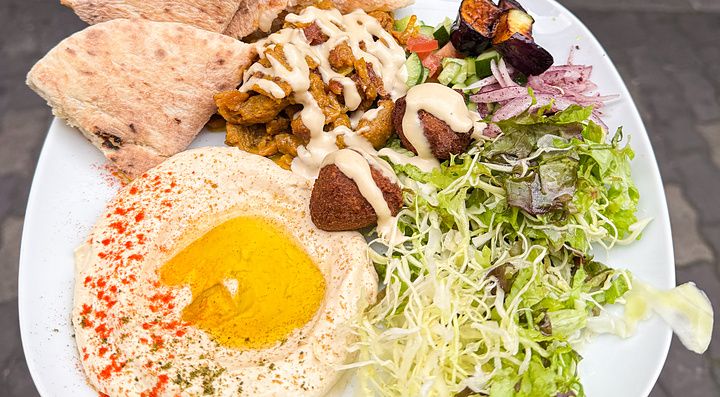 189 m
Middle Eastern stand with vegan options.
mipig cafe Kobe Sannomiya - nearby you will find:
mipig cafe Fukuoka Tenjin - nearby you will find:
mipig cafe Kamakura - nearby you will find:
mipig cafe Asakusa - nearby you will find:
mipig cafe Ikebukuro Sunshine City - nearby you will find: