Musashi-Koyama
It’s often called one of the easiest places to see the Tokyo people actually live in, without crowds or tickets.
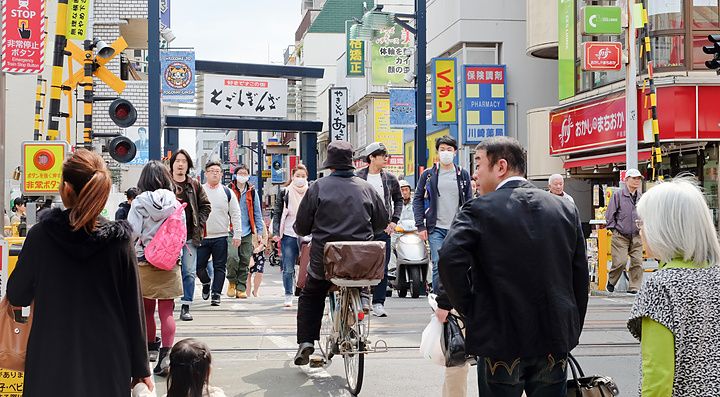
Musashi-Koyama is a residential neighborhood south of the center, in Shinagawa ward, and at its heart is a very long covered arcade packed with shops, food stalls and locals on bicycles.
It’s considered the longest arcade in Tokyo and a great place to shop while the neighborhood goes about its day. It’s all one very long street, so you’ll want comfortable shoes.
It isn’t a classic guidebook stop, and that’s exactly why I recommend it to people who’ve already seen the big viewpoints and want to soak up daily life.
Contents
Restaurants
Nearby neighborhoods
Meguro
Osaki
The Palm arcade
The arcade is called Palm, and you’ll see the name everywhere, from shop signs to shopping bags. It opened in 1956 as Japan’s first large covered arcade, back when it was under 500 meters long. Today it runs a good 800 meters.
There are more than 200 businesses inside, and the best part is the mix: a long-established shop next to a clothing chain, a florist, a shoe store, a neighborhood pastry shop.
The roof opens and closes, so in summer the light gets in, and when it rains you stay dry without ever noticing it’s raining. Every so often it’s worth ducking down a side street. Quieter lanes branch off the arcade, and there the neighborhood changes mood and pace.
The neighborhood onsen
What keeps bringing me back here is a real public bath tucked in among the houses. Shimizu-yu is a sento near Musashi-Koyama Station with two kinds of natural hot spring water.
It goes back a long way, to the 1920s, but since its renovation it’s modern and clean, and besides the stone baths there are indoor tubs like a jet bath and an electric bath. The two kinds of water are nothing alike. The golden one comes up from 1,500 meters down. It’s very salty and keeps you warm long after you’ve gotten out. The black one, Tokyo’s underground specialty, comes from much closer to the surface. It’s dark amber and dense, and you can’t see your own feet in it.
I’ll be straight with you: a soak here after wandering the shops is the best way to get a feel for the neighborhood’s rhythm.
It costs the standard regulated sento price, 600 yen, so you’re paying next to nothing for what you get. Bring your own towel or buy one at the entrance, and remember the Japanese bath rules: you wash thoroughly, sitting down, before getting into the tub. Tattoos generally aren’t a problem here, but it’s always something to check when you get there.
The towers by the station
Step out of the station and the first thing you see is completely out of step with this low-rise, orderly neighborhood: a 41-story residential tower with an open plaza and a small shopping center at its base.
It’s the first piece of the redevelopment around the station, and that’s exactly where Musashi-Koyama is starting to change. Under the towers you get chains and cafés, while 50 meters away the arcade carries on as it always has.
It’s worth looking up for a second, because it’s the quickest way to see where the neighborhood is heading.
What not to expect
There are no famous temples or skyscrapers to photograph here, and that’s perfectly fine. It’s a residential neighborhood, but a warm and welcoming one, and it’s convenient because the station is a short hop from the center.
My favorite time is late afternoon, toward evening, when the arcade fills up with people heading home from work and picking up something to eat.
A few simple things I keep in mind when planning:
- Half an hour or a little more is enough to browse the shops, a couple of hours if you add the bath and a stop to eat.
- Pair it with other stops: the nearby neighborhoods on the same line round out the day nicely.
- As a place to stay, I wouldn’t recommend it. It’s convenient for getting around, but out of the way at night.
Honestly, I wouldn’t include it in a first trip, when time is short and the list is long.
But if you’re coming back to Tokyo, or you’re after a slow afternoon with no tourists around, this is one of the first places I think of.
Getting There
From Meguro it's just two stops on the Tokyu Meguro Line, and express trains stop here too. The station is underground: take the escalators on the left side of the ticket gates and head for the east exit. The arcade entrance is right in front of you, slightly to the right.
If you're coming from other parts of the city, the Meguro Line runs through services onto the Namboku and Mita subway lines, so from a good part of central Tokyo you can get here without changing trains.
Useful Info
Name: Musashi-Koyama
Time needed: Half an hour to walk the arcade, a couple of hours if you add the sento and a stop to eat
Closed: Shimizu-yu, the neighborhood sento, is closed on Mondays unless Monday falls on a public holiday.
Tips: Don't stop at the first bath at Shimizu-yu. There are two different hot spring waters, the black one and the golden one, and both are worth trying. And don't be in a hurry to reach the far end of the arcade: the best stretches are the first ones, right after you leave the station.
Getting there:
- Musashi-Koyama Station (Tokyu Meguro Line): east exit
- Meguro Station (JR Yamanote, Tokyo Metro Namboku, Toei Mita, Tokyu Meguro): transfer hub two stops away
Map
MarcoMaps100% free
This place is on MarcoMaps
Musashi-Koyama
My map of Japan: over 4,000 places I've tried myself, each with photos, rating, and hours. Filter by category and rating, find veg-friendly spots and places near you with GPS. No sign-up, right from your phone.
- 4,000+ places
- Rating, photos, and hours
- Veg friendly
- Near me (GPS)
- Favorites without login
- Works offline

