 585 m
Hands585 m
A store that sells everything. Great.
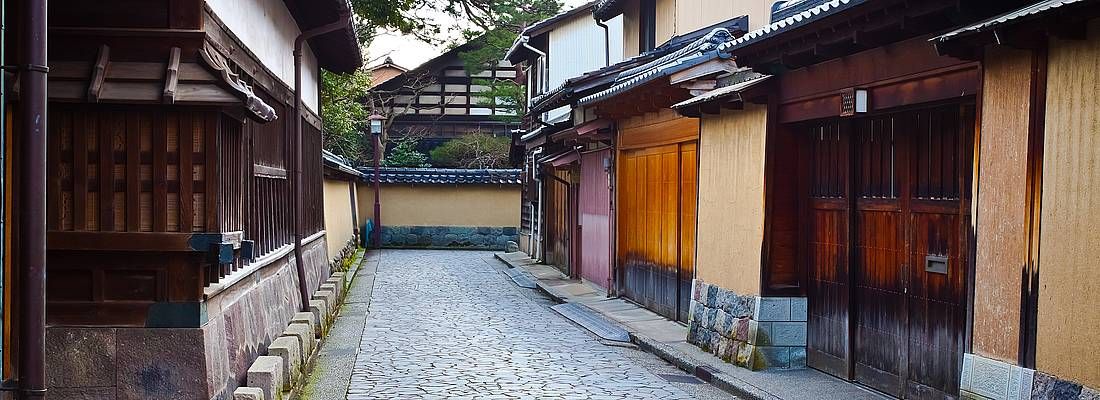
The walls lining Nagamachi’s narrow lanes hide centuries of history: gripping family stories and the deeds of the warriors who lived in these elegant residences. Walking here, you feel like you’ve slipped back into the Edo period, when powerful samurai families lived in this part of town. The atmosphere has stayed much as it was back then, worlds away from the city’s traffic and noise. Cobbled paths wind between high walls, and the gentle sound of the Onosho canal, the oldest of the city’s 50 waterways, still sets the rhythm of the day.
Not many tourists come to Nagamachi, but it’s a place you really shouldn’t skip on a trip to Japan. It’s one of the best-preserved legacies of the golden age of the samurai, which never stops fascinating and surprising people, and it also has picturesque spots and a quiet atmosphere that makes for a relaxing walk, helped by the fact that cars aren’t allowed on some streets. Old-style street lamps line the stone paving, tall trees shade the courtyards of the houses, and in the warmer months cicadas and birds break the silence every now and then. Each season brings a different look: in winter the ocher walls are covered with straw mats to protect them from snow and rain. Besides the samurai residences, as you wander the lanes of Nagamachi you’ll come across ryokan, tea houses and temples.
Nagamachi lies south of central Kanazawa, a historic city in Ishikawa Prefecture. In the Edo period Kanazawa was the fourth-largest city in Japan and one of the richest, mostly thanks to the enormous power of the Maeda clan, who ruled it. That’s why so many samurai lived here. Among them were the Nomura, who served the Maeda and were one of the most influential and wealthy families of the time. Their wealth shows in their lavish residence, which is now open to visitors.
At the end of the Edo period, as the feudal lords lost power, the samurai’s influence began to fade too, and their fortunes with it. Even so, the Nomura family house still holds some remarkable treasures, and extensive restoration has brought it back to its former glory. Anyone who steps into this small wooden house is taken with the refined architecture and the walls covered in beautiful paintings. Room by room, you pick up stories about the family and how they lived through a large number of artifacts, including a suit of armor by the entrance and plenty of everyday objects. One of the highlights is without doubt the small garden, where you can walk around the carp pond and admire the carefully tended plants and trees, while the splashing of little waterfalls in the background makes it even more relaxing. When you’ve finished, head to the small tea room behind the house, where you can sit down with a cup of tea and traditional sweets and enjoy the view of the inner garden. Another residence worth visiting belonged to the Takada family. Here too the best part is the garden, where plants and trees frame a central pond.
Not much is left of the house itself. What you see today is the restored nagayamon gate, the long building that ran along the edge of the property and housed the servants’ quarters and the stable. Inside, objects and panels tell the story of the people who worked for the samurai, a point of view you won’t find in the other residences.
The garden pond is fed by water from the canal, and carefully planted Japanese red pines stand all around it.
Wherever you go in the lanes, you’re walking alongside the earthen walls of the old residences: ocher plaster, roof tiles on top and a stone base at the bottom. They marked the edge of each property, protecting the privacy of the samurai families and enclosing their gardens. In the cold months they’re wrapped in straw mats tied side by side, which shield the earth from snow and freezing rain and completely change the color of the lanes. This is called komogake, and it’s done by hand on the first weekend of December, with the mats tied on one by one along the walls of the whole district. They stay up until early March. If you come in winter you’ll find a completely different Nagamachi, with the ocher hidden under straw and, if you’re lucky, snow on the roof tiles.
The Onosho canal is what sets the pace of the walk. It was dug around 1590 to carry timber for building Kanazawa Castle and to bring water to the houses, and it still feeds the gardens of the residences, ponds and little waterfalls included. Take your time following it, because it’s the thread that ties the different parts of the district together.
A short walk from the Nomura family house, this museum occupies an old pharmacy dating from 1878. It has several really interesting exhibits, including one on the medicines and natural remedies used in the Edo period. A particularly curious section covers engagement gifts and shows how traditions and customs changed over the centuries. Some of the items on display look odd, like seaweed and squid, but they were important symbols of fertility and happiness. Further on you’ll find out which crafts were most popular in the Edo period and learn about one of Japan’s most important traditions, the tea ceremony, whose steps and secrets are explained in the tea room set up inside the museum. Outside, you can walk through the garden where tea is grown. It’s well worth a visit to see other sides of everyday life in the golden age of the samurai.
The name itself tells you what you’re visiting: shinise means a long-established shop, and the building is one of those merchant houses with the shop at the front and the family’s home at the back. The front part recreates the feel of the old medicine shop, and the family’s living quarters are behind it, so you can see right away how work and family life went on under the same roof.
Another stop you shouldn’t miss is the Ashigaru Shiryokan Museum, at the western end of Nagamachi. This is where you see how the other half lived, the less well-off part of the population. The ashigaru were low-ranking soldiers, the bottom rung of the samurai hierarchy, so their houses were very simple, both in structure and in furnishings. The museum has two restored houses that you can explore freely, going from room to room, and you’ll definitely notice the difference from the Nomura residence. Simple as they were, though, having one of these houses was a small privilege. In the Kaga domain the ashigaru had a detached house, complete with a little garden, while in other domains low-ranking soldiers were packed into nagaya, long row houses. Pay attention to how the interior is divided, too: the entrance and the room for receiving guests are lined up along one side, well separated from the part where the family actually lived.
Once you’ve finished exploring Nagamachi, head back toward Katamachi, the main area for shopping and local food. You’ll find shops, cafés and even a chocolate shop to end the day on a sweet note.
From Kanazawa Station, take the east exit and catch a bus to Korinbo. The ride takes about ten minutes, and from there it's a 5-minute walk west to the district's earthen walls.
If you're already in the Korinbo shopping area or in Katamachi, it's an easy walk. If you'd rather get off right by the Nomura family house, use the Nagamachi Buke Yashiki stop, one minute from the entrance.
This place is on MarcoMaps
Nagamachi
My map of Japan: over 4,000 places I've tried myself, each with photos, rating, and hours. Filter by category and rating, find veg-friendly spots and places near you with GPS. No sign-up, right from your phone.


Nagamachi - nearby you will find:
