 505 m
Krispy Kreme505 m
American glazed doughnut chain.
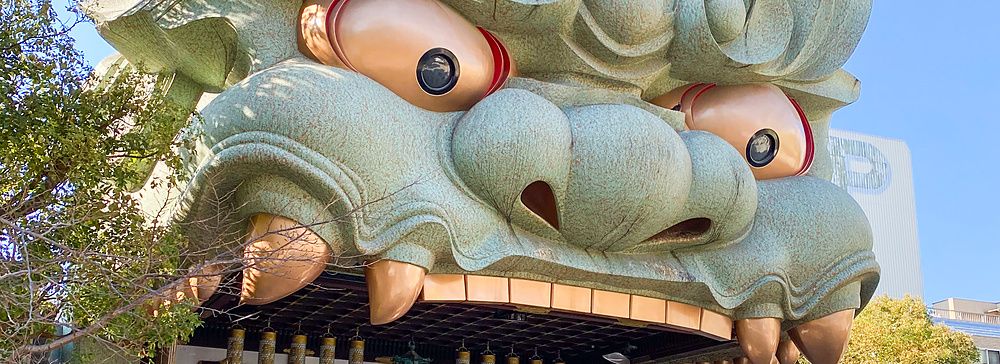
A Shinto shrine in Namba, Osaka, that you can spot from a distance: at the back of the courtyard sits a giant lion head with golden eyes, bared fangs and its mouth wide open. This is Namba Yasaka Shrine, squeezed in among the neighborhood’s buildings, and the lion is visible right from the entrance gate.
There’s also a main hall, a few smaller shrines and some stone foxes, but people come here for that face. Add it to your list if it’s your first time in Namba, if you’re traveling with kids, or if you want to see a shrine unlike any other.
The grounds aren’t big, and the lion is the first thing you notice when you walk in. It takes up half the courtyard, and everything else is gathered around it, just a few steps away.
In person, the lion is far more impressive than in any picture you’ve seen. It’s huge, and when you stand underneath it you notice details that get lost from farther away: the folds of its face, every single tooth, and an expression that’s half angry, half goofy. Kids absolutely love it, and so do adults.
The rest is what you’d find at any ordinary neighborhood shrine. If you’re expecting gardens, long approach paths or old buildings, lower your expectations: the shrine was rebuilt after the war, and that’s when the lion was added. The old shrine had burned down in the 1945 bombings, and when the main hall went back up in 1974, they wanted something that would wow the people of Osaka. They chose the lion from the lion dance, a tradition for warding off evil spirits that runs deep in this neighborhood.
There’s hardly any walking or climbing apart from the few steps in front of the stage, and it doesn’t take long to walk around the courtyard.
For me the real highlight is the contrast. Outside you have the streets of Namba, the signs and the traffic. Then you walk through the gate and find yourself facing a lion’s face as tall as a four-story building, while locals stop by to pray as if nothing could be more normal.
When people come to visit me and we head to Osaka, I always bring them here, because it’s the only shrine where I see people’s expressions change the second they walk in. Everyone stops dead for a moment with their mouth hanging open, a bit like the lion.
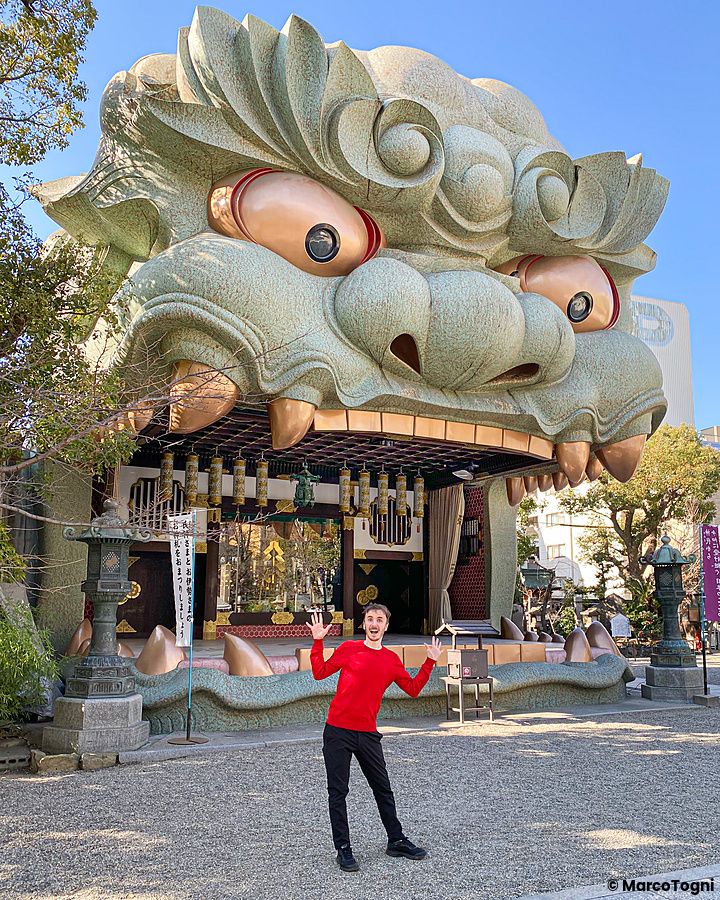
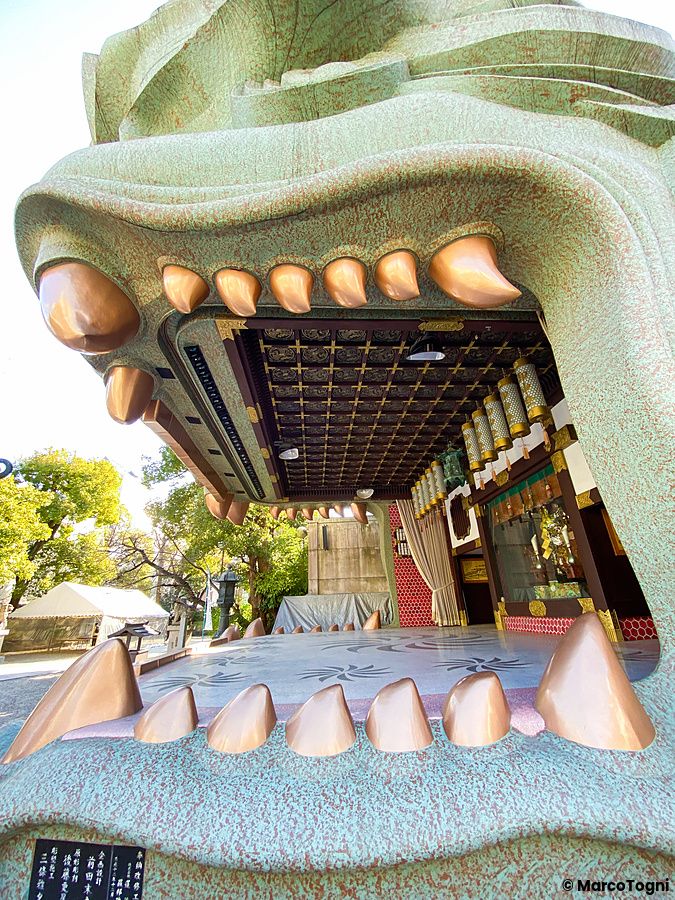
The best time is early in the morning. The courtyard is half empty, the only people around are local men stopping to pray on their way to work, and you can photograph the face with nobody in front of it.
From mid-morning on, a small line forms in front of the steps as people wait their turn to pose, and many of them are foreigners. It’s not a huge crowd, but getting the lion without anyone in the shot takes patience. On weekends the line gets longer.
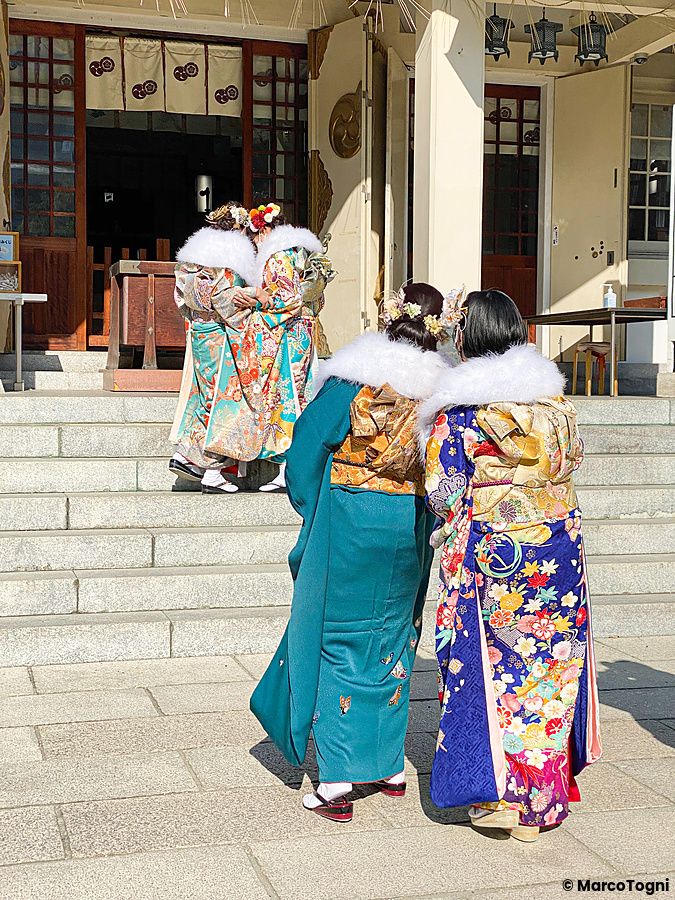
January is the liveliest month. Early in the month the courtyard fills up for the year’s first prayers, and around Coming of Age Day young women in furisode, long-sleeved kimono, arrive with white fur stoles and their hair up. They take group photos on the steps beneath the face. That same month there’s an ancient tug-of-war ceremony that recalls how the shrine’s deity defeated the eight-headed serpent.
The lion’s eyes light up at New Year’s and in summer during the shrine festival. If you’re in town on those days, stop by after dark, but check the dates before you go.
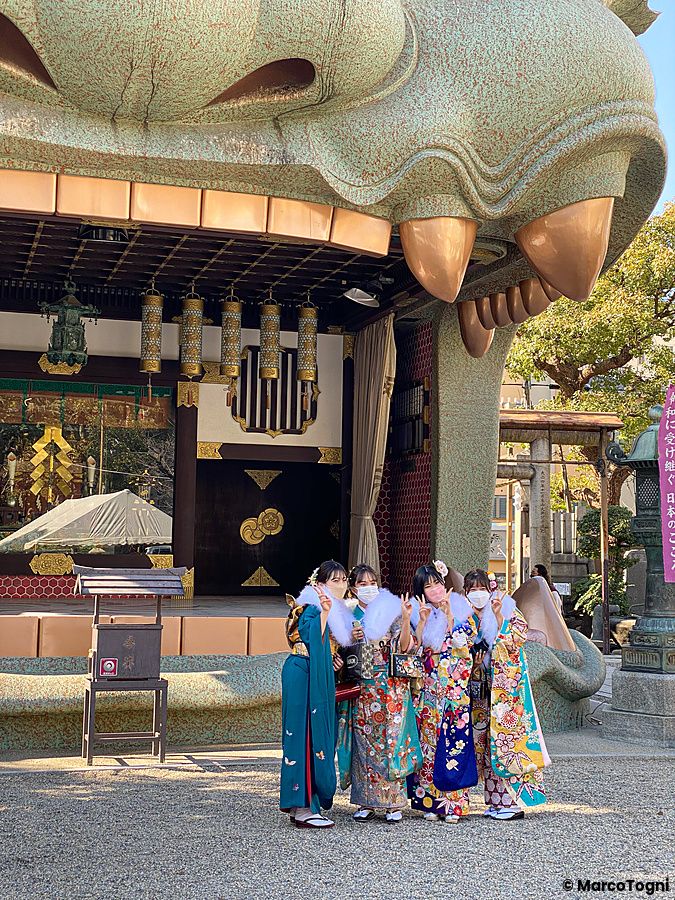
Stand in the middle of the courtyard, a few meters back from the lanterns. From there the whole face fits in the frame, with the steps below it. If you want someone in the photo, put them on the steps rather than in front of the mouth, or they’ll disappear into the darkness of the stage.
From the gate you can also get an angled shot with the main hall’s roof beside the lion, and there’s no line over there. For a straight-on shot without many people, though, your only option is to get there early.
You come here for one thing, and you won’t find it anywhere else in Japan. There’s not much else to see and it doesn’t take long, but the lion alone is worth the detour from Dotonbori. If what you want is ancient temples and moss gardens, this isn’t your place. For that, go to Kyoto. Everyone else: if you’re in Namba, stop in.
From the subway's Namba Station, head southwest. It's about a 6-minute walk to the shrine gate, past the neighborhood's buildings and side streets.
If you're coming from the south, it takes about 7 minutes from Exit 2 of Daikokucho Station.
From Dotonbori you can get there on foot in 15 minutes, cutting through the Namba area.
This place is on MarcoMaps
Namba Yasaka Shrine
My map of Japan: over 4,000 places I've tried myself, each with photos, rating, and hours. Filter by category and rating, find veg-friendly spots and places near you with GPS. No sign-up, right from your phone.


Namba Yasaka Shrine - nearby you will find:
505 mAmerican glazed doughnut chain.
 543 m
Unbeatable tonkatsu.
 644 m
Good, cheap standing sushi.
 667 m
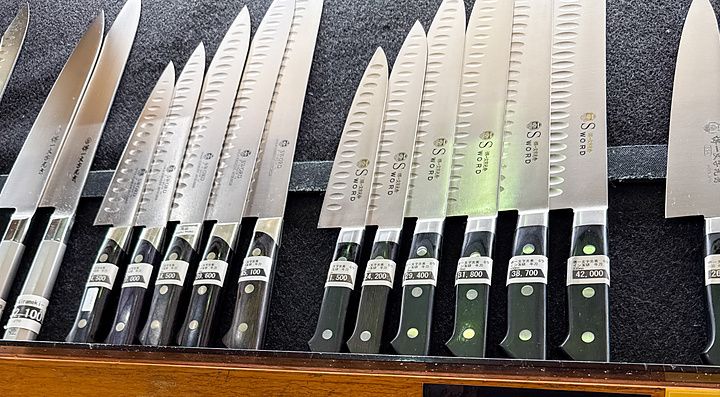
Handmade kitchen knives.
 671 m
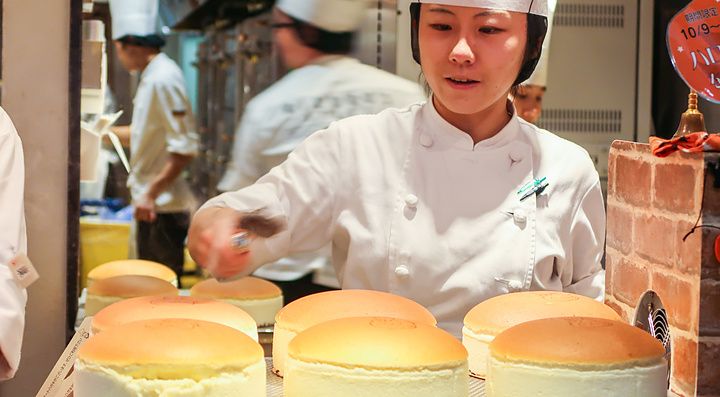
The best Japanese cheesecake.
 673 m
Open 24 hours, and you can find anything.