494 m
Isuien Garden494 m
Beautiful, in central Nara.
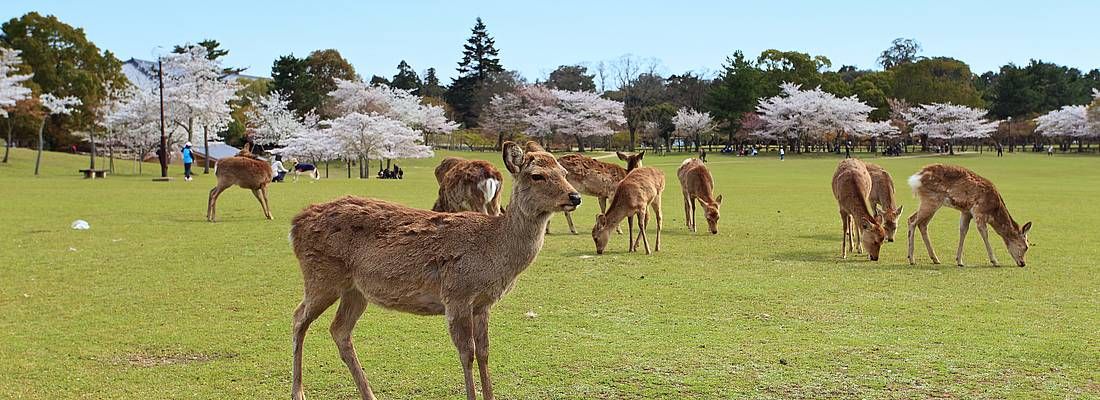
Grand temples, shrines, museums and deer that roam free, waiting for tourists to hand them a snack. Nara Park is one of the city’s main attractions. It covers a large area at the foot of Mount Wakakusa, and its woods and ponds full of carp and turtles make a beautiful setting for Nara’s most important historic and cultural sites, so you can walk among the trees between sights.
Nara Park’s 1,200 deer are one of the main attractions here, and every visitor stops to watch them and tries to get a photo with them. They wander the park freely and are so used to people that they aren’t afraid of them at all. They’ll come right up to you hoping for their favorite food, the special crackers sold at stalls around the park, and some will even bow their heads to thank you for a tasty snack! Keep in mind, though, that they’re still wild animals and can sometimes get aggressive.
In Shinto, deer are an important symbol because they’re considered messengers of the gods. Today they’ve also become a symbol of the city itself and have been designated a Natural Monument.
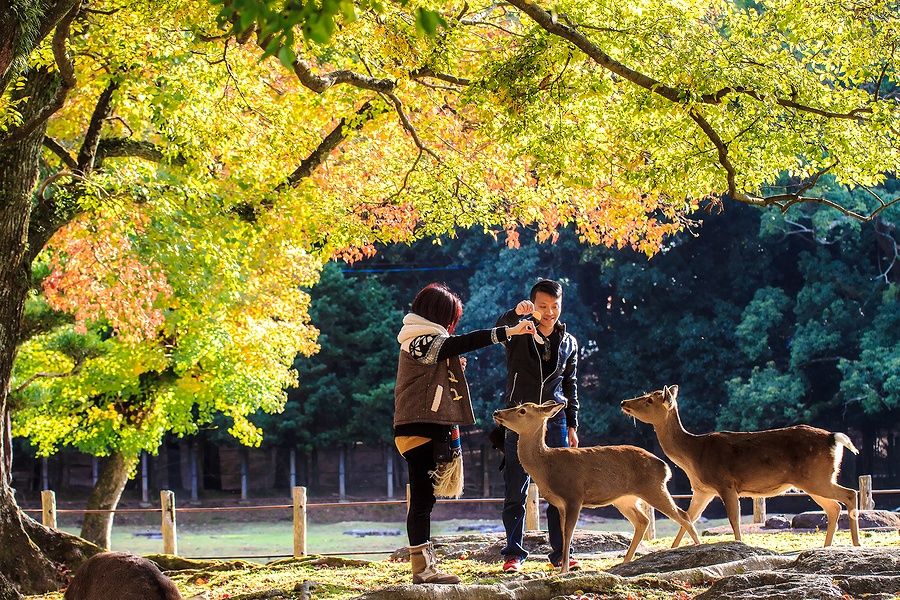
If you come in the fall, you’ll notice that quite a few males are walking around without antlers. The mating season starts in September, and those sharp antlers become dangerous, both for people and for the other deer.
That’s why every October, in an enclosure called Rokuen a short walk from Kasuga Taisha, Nara holds the shika no tsunokiri. After a Shinto ritual, trained men chase the males with ropes and bamboo poles, pin them down and saw off their antlers. The tradition has been going on since 1671 and it’s worth seeing. Even if you skip the ceremony, keep the season in mind: in the fall the males are more likely to charge, so it’s better to watch them from a distance.

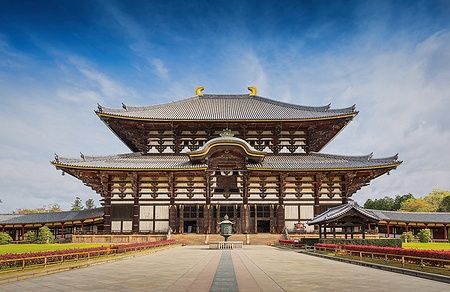
Todaiji, with its 15-meter-tall Buddha, is the most prestigious temple in Nara. It stands in the northern part of the park, past the great Nandaimon gate, which is guarded by deer. The Buddha sits inside the main hall, one of the largest wooden buildings in the world. Don’t miss the smaller buildings farther up the hill either.
On the opposite side of the park from Todaiji Temple is the beautiful Kasuga Taisha, a shrine with a perfect mix of nature and culture. The path to the shrine runs through the park’s lush forest, which gives you a taste of what’s waiting at the end. Thousands of bronze lanterns hang from the shrine’s vermilion and white buildings, and the effect is magical when they’re lit up in summer and in winter. In May the wisteria in bloom makes the shrine even more beautiful.
If you’re not there on one of the two festival nights, you can still get a sense of the effect. Inside the shrine there’s a dark room with all the bronze lanterns lit, a small, silent space that a lot of visitors miss.
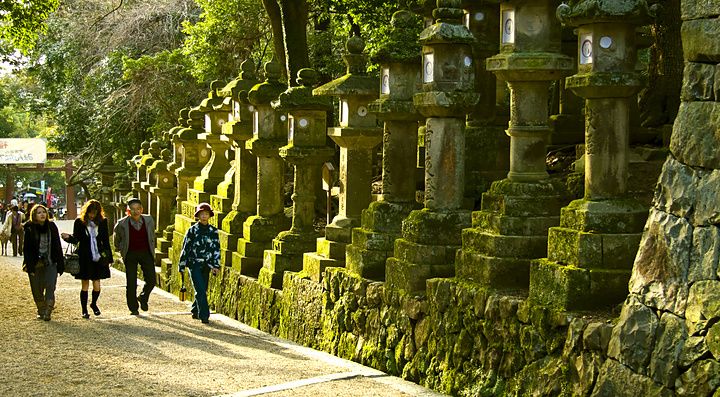
Also take a look at the stone lanterns along the approach. There are more than two thousand of them, covered in moss, and many are carved with the names of the people who donated them over the centuries.
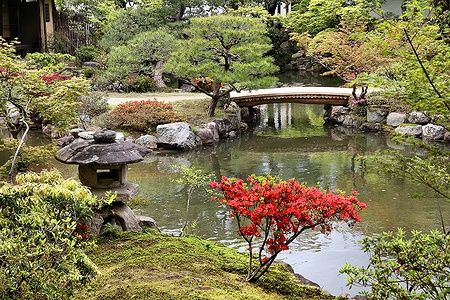
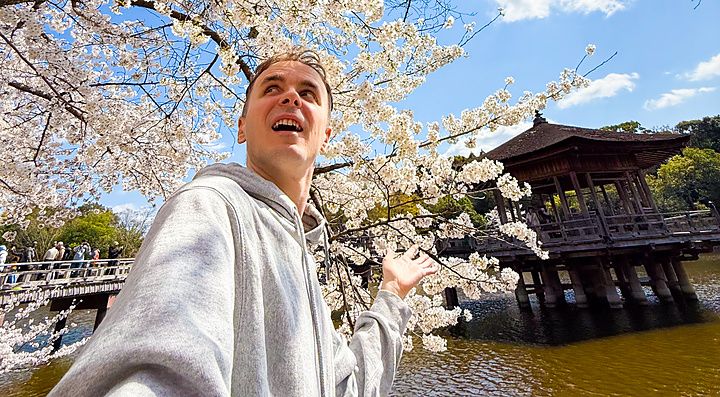
Head toward Naramachi, a little away from the crowds, and you’ll reach the wonderful Isuien Garden, a beautiful example of a traditional Japanese garden. The name Isuien means “garden built on water,” and you’ll see why as soon as you start walking among its many ponds, surrounded by green lawns, paths and stone steps. The cherry trees draw lots of visitors when they bloom in spring, and the rest of the year you can enjoy how quiet it is over a cup of matcha in one of the teahouses.
A short walk from Isuien Garden is another of Nara Park’s temples, Kofukuji, which started out as the Fujiwara family’s private temple. Its Treasure Hall holds many ancient Buddhist statues and works of art. The five-story pagoda, the second tallest in Japan, is wrapped in scaffolding for a major restoration that won’t be finished before 2031, so for now you can’t take the classic photo of it reflected in Sarusawa Pond.
If you love museums, visit the Nara National Museum, right inside Nara Park. Its galleries hold an important collection of Buddhist objects and works of art, including sculptures and altars from the temples in the surrounding area. If you’re short on time, at least take a quick look at the facade. It dates from 1894 and is a beautiful example of the classical style typical of the Meiji period.
For a break from the crowds and the sightseeing, take one of the many trails that climb Mount Wakakusa and lead into the Kasugayama Primeval Forest. It’s a sacred place where hunting and logging have been banned for more than a thousand years, and it’s a World Heritage Site. Several trails lead to different viewpoints, and once you reach the top you’ll have a beautiful view over Nara, the park and its main sights. In the fall, the autumn colors draw lots of visitors and photographers.
The dry grass covering Mount Wakakusa isn’t there by chance. One evening in late January, the whole slope is set on fire for Yamayaki, one of the most impressive things you can see in Nara.
Before the burning, monks and priests carry a sacred torch in procession to the foot of the hill. Then the fireworks start, and finally the fire races across the entire slope, lighting up the park and the outlines of the temples. The festival’s origins are hazy, tangled up with old boundary disputes between Todaiji and Kofukuji and the need to clear the grazing land. The burning is also why the mountain looks black and bare in winter instead of green.
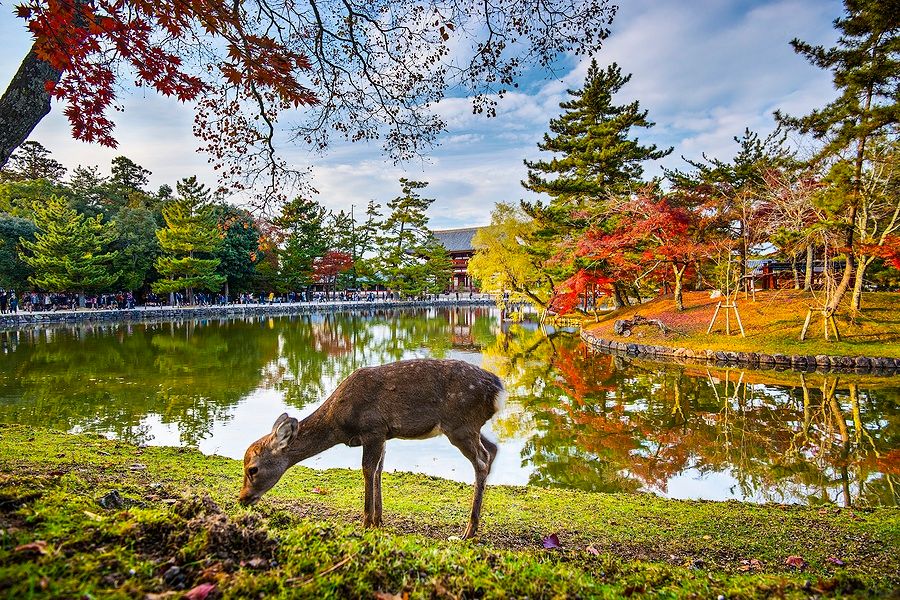
The park starts practically at the exit of Kintetsu Nara Station: walk five minutes east and you're already among the first deer, near Kofukuji.
From JR Nara Station it's a longer walk, about twenty minutes along the Sanjo-dori shopping street, or a few stops by bus.
Keep in mind that the park is big and uphill. Todaiji and Kasuga Taisha are in the farthest part, so it's best to take the bus up and then walk back down to the stations.
This place is on MarcoMaps
Nara Park
My map of Japan: over 4,000 places I've tried myself, each with photos, rating, and hours. Filter by category and rating, find veg-friendly spots and places near you with GPS. No sign-up, right from your phone.


Nara Park - nearby you will find: