Nasu-Shiobara
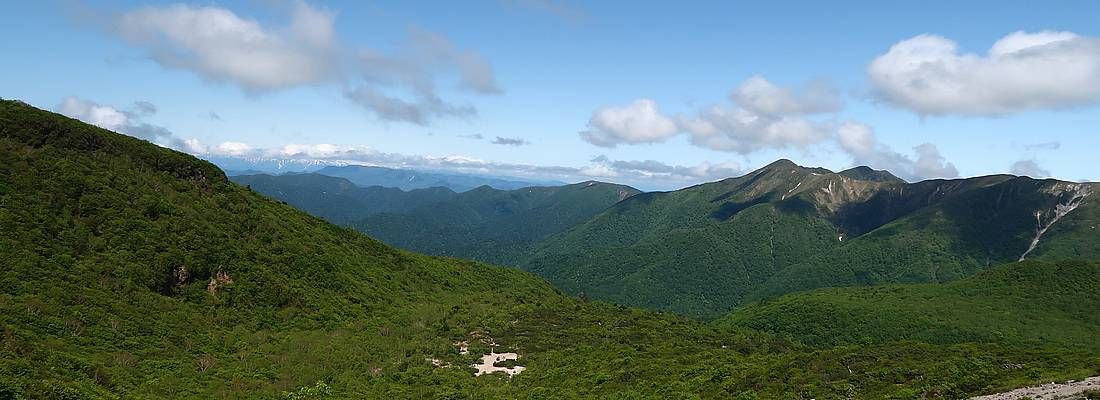
Step out of Nasushiobara Station and you’re met by a cool wind blowing down from the mountains, with forests and towering peaks all around. It doesn’t take long to see why this part of Tochigi Prefecture is such a popular destination. It’s an hour and a half by train from Tokyo, yet it takes you somewhere else entirely, a world of silence and waterfalls, of sulfur-scented hot springs and trails climbing up Mount Nasu.
Part of Nikko National Park, Nasu-Shiobara brings together two hot spring villages, Nasu Onsen on the slopes of the volcano and Shiobara Onsen down in the valley. If you want a mix of relaxation and nature close to the capital, it’s the perfect place.
Contents
- What to see and do in Nasu-Shiobara
- Relaxing body and mind in the onsen
- Hiking or taking the ropeway up Mount Nasu
- Visiting the zoo in Nasu
- Crossing the big Momijidani suspension bridge
- The waterfalls
- Local specialties
- Winter sports
- The imperial villas
- Sessho-seki, the killing stone
- Getting There
- Useful Info
- Map
What to see and do in Nasu-Shiobara
Relaxing body and mind in the onsen
Soaking in an onsen is one of the most authentically Japanese experiences you can have, and Nasu-Shiobara is especially loved for its wealth of natural hot springs. Their water has several benefits for the skin and muscles and helps with a number of ailments.
Between the two villages you have plenty of options. There are modern and historic public bathhouses, and there are ryokan with their own onsen that also let visitors who aren’t staying there use the baths for a fee.
The outdoor baths are especially beautiful and memorable. Some sit in perfectly chosen spots right on the riverbanks, while others are surrounded by forest or have spectacular views of the mountains. Shiobara Onsen isn’t a single village but a group of eleven hot spring hamlets spread along the valley, with baths fed by around 150 different springs, so as you go from one bath to the next the water changes color, smell and texture. The first springs were discovered more than 1,200 years ago. Nasu Onsen, on the other hand, is mostly about the milky, sulfurous waters that come down from the volcano.
Hiking or taking the ropeway up Mount Nasu
For centuries Mount Nasu has drawn mountain lovers and people who like walking in nature. There are lots of trails of varying length and difficulty, winding through the forests at the foot of the mountain and up its slopes, and they let you take in the scents and colors of nature up close. In late May the meadows and bushes are bright with blooming azaleas, while in fall the landscape turns melancholy shades of red and yellow. Some trails lead to suspension bridges with beautiful views over Mount Nasu and the valley.
If you’d rather not walk, there’s always the ropeway, which leaves you about a 45-minute walk from the summit. Mount Nasu isn’t actually one peak but a group of volcanoes. The one most people climb is Chausu, which rises to 1,915 meters and is the only one still active, with sulfur fumaroles steaming on its flanks. On clear days you can see a very long way from the top. Anyone can manage the climb, but you’re still at high altitude, and wind and cold can be brutal even in summer, so pack a windbreaker.
Visiting the zoo in Nasu
Nasu Animal Kingdom is a small zoo designed for families and kids, with several shows starring domestic animals like cats and dogs, along with other species such as parrots and other birds, seals and gentle farm animals.
Kids really get involved here. During the shows they can interact with the animals, and in the dedicated areas they can take photos with their favorites, play with them a little and cuddle them.
Crossing the big Momijidani suspension bridge
Just outside the center of Shiobara Onsen, the Momijidani Ohtsuribashi is a pedestrian suspension bridge that stretches 320 meters across the reservoir of the Shiobara Dam. It’s the longest of its kind on Honshu, and since it doesn’t have the stiffening girders of ordinary bridges, it sways quite a bit under your feet. Crossing it gives you a little rush of adrenaline.
From the bridge you can take in the whole valley, and the view is at its best in fall, when the colors of the mountains are reflected in the water. At the entrance there’s also a small park with a heart-shaped bench, because the bridge is one of Japan’s officially recognized Lovers’ Sanctuaries.
The waterfalls
Waterfalls are one of the area’s big draws. Among the best known are Ryuka Falls, whose unusual shape is said to look like a flying dragon, and Mikaeri Falls, which drops 53 meters into the river. You get a clear view of Mikaeri from the lookout you reach by crossing the Mikaeri no Tsuribashi suspension bridge. Both falls are along the main road through Shiobara Onsen. Mikaeri is just a few minutes’ walk away, while for Ryuka you’ll need to walk about 20 minutes along a forest trail.
Local specialties
Nasu-Shiobara is known for its dairy products. Cheese Garden Nasu Honten is a well-known shop and café selling cheese and other dairy products, and I recommend stopping by to try some of the house specialties, which include handmade ice cream and a signature cheesecake.
If you’re into beer, visit the Nasu Kogen Beer brewery, founded in 1996. Its craft beers are fairly popular in the region, and every September the company holds its own beer festival.
Winter sports
The Hunter Mountain Shiobara ski resort is on the western slopes of Mount Takahara, with a range of runs for every level and play areas for kids. Besides the snow sports, you get spectacular views of the mountains of Tochigi Prefecture.
The imperial villas
You can tell how beautiful and well regarded Nasu-Shiobara is from the fact that Japan’s emperors, past and present, have enjoyed spending their vacations here. The Nasu Imperial Villa stands next to Heisei no Mori, a park that once belonged to the villa itself and is now open to the public, with lovely trails and viewpoints. The imperial family still uses the villa as a vacation home. In Shiobara Onsen, meanwhile, you’ll find the Emperor’s Room Memorial Park, which is all that’s left of Emperor Showa’s summer villa and is now open to the public as a museum.
Sessho-seki, the killing stone
Behind Nasu Yumoto the landscape turns bare and barren, with no trees and sulfur-smelling steam drifting across it. This is Sai no Kawara, a stretch of lava rock lined with hundreds of little Jizo statues in red caps.
In the middle of it you’ll find the Sessho-seki, literally the “killing stone.” Legend has it that this is where Tamamo no Mae ended up. She was the nine-tailed fox who was unmasked at court, turned to stone and went on poisoning everything that came near her. Today the stone is split in two, but the gas seeping out of the ground is no legend: when gas levels go up, the trail is closed for safety.
Getting There
From Tokyo, take the Tohoku Shinkansen: from Tokyo Station or Ueno it's just over an hour to Nasushiobara, with departures throughout the day. The trip is covered by both the Japan Rail Pass and the JR Tokyo Wide Pass, and Nasushiobara is the northernmost station where the Tokyo Wide Pass is valid.
Buses to the two hot spring villages leave from right outside the station: about an hour to Shiobara Onsen, and the same to Nasu Yumoto, the center of Nasu Onsen.
If you want to get around the waterfalls, suspension bridges and scattered ryokan without depending on bus schedules, you can pick up a rental car right by the station.
Useful Info
- Nasushiobara Station (JR Tohoku Shinkansen, JR Utsunomiya Line): JR buses to Shiobara Onsen, Kanto buses to Nasu Onsen
- Kuroiso Station (JR Utsunomiya Line): the most convenient for buses to Nasu Yumoto
- The Japan Rail Pass is valid on the JR buses to Shiobara.
Map
This place is on MarcoMaps
Nasu-Shiobara
My map of Japan: over 4,000 places I've tried myself, each with photos, rating, and hours. Filter by category and rating, find veg-friendly spots and places near you with GPS. No sign-up, right from your phone.
- 4,000+ places
- Rating, photos, and hours
- Veg friendly
- Near me (GPS)
- Favorites without login
- Works offline

