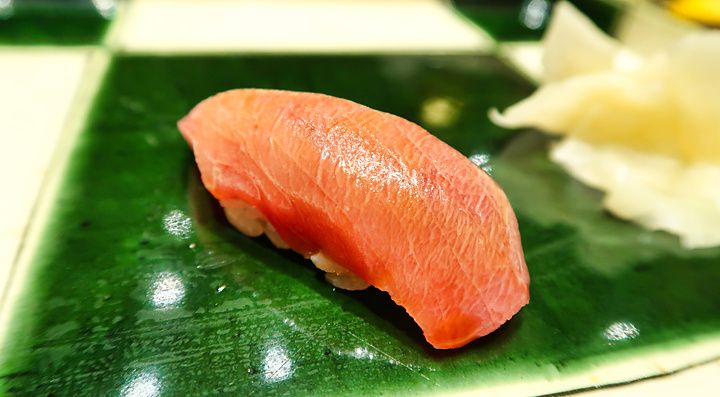
 100 m
Kyubey100 m
Counter omakase, with a big main location.
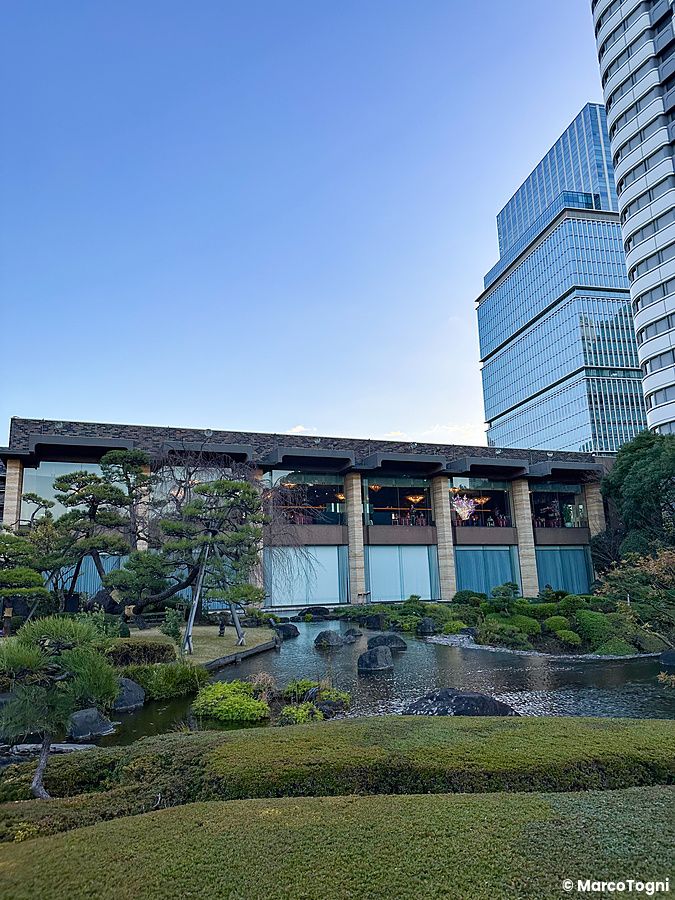
A large Japanese hotel in Tokyo’s Akasaka area, built around a garden with four centuries of history, where you’ll find a carp pond, a waterfall and a red arched bridge. You don’t come to the Hotel New Otani Tokyo for a view over the skyscrapers from the top floors. You come for rooms that are comfortable and well thought out, enough restaurants to last you a whole week, and the greenery outside the window while you eat breakfast.
I’d recommend it most of all if you’re staying in Tokyo for several days and want a hotel you actually look forward to coming back to in the evening, not just a bed to collapse into.
The complex is huge and split into several buildings. There’s the main building, called The Main, then the Garden Tower, which is the tallest, and finally the Executive House Zen, a small hotel within the hotel with its own private lounge where you check in and where you can get drinks and something to eat throughout the day.
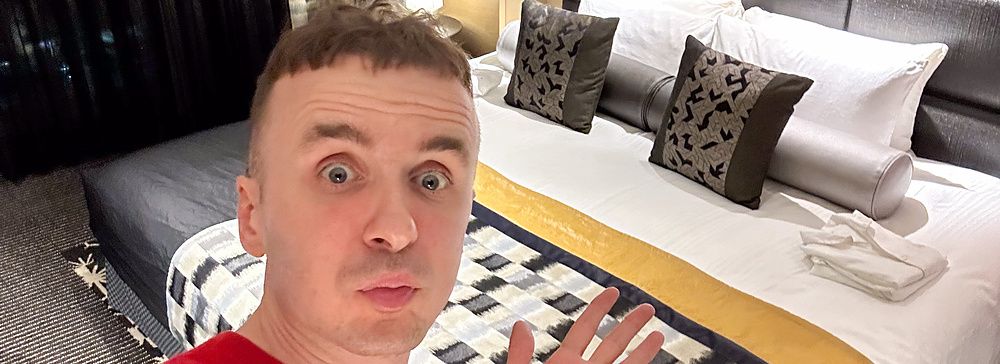
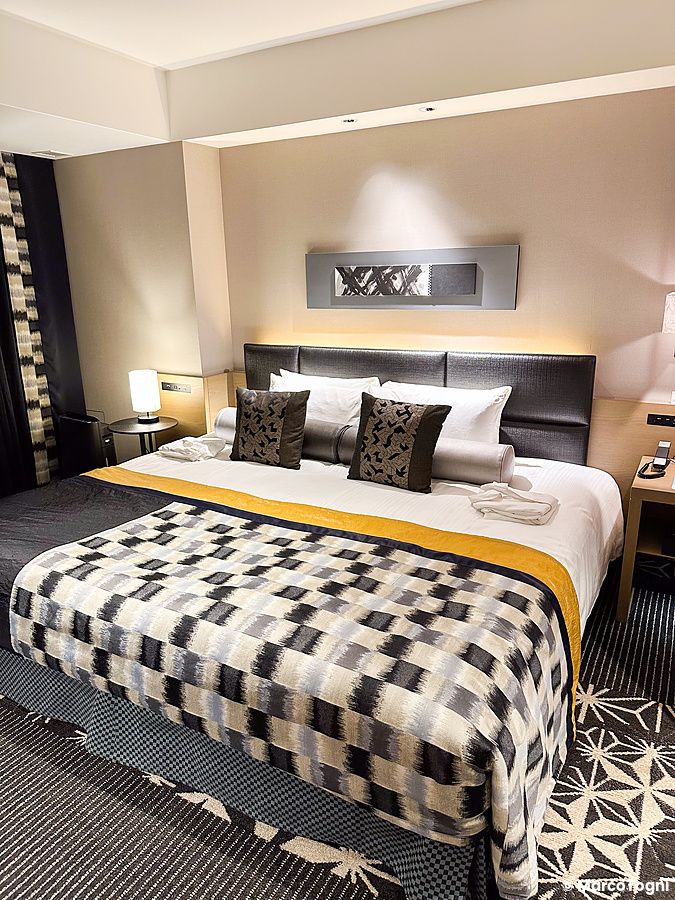
I went for the Shin-Edo Standard in the Main, and as far as I’m concerned it’s the room to book. It’s a 36-square-meter room designed around old Tokyo, back when the city was still called Edo: bedspreads and cushions with traditional geometric patterns, a padded headboard lit from behind, a dark oval table with a gray sofa next to it, and a wall of windows with blackout curtains.
The best part is the bathroom, which has a hinoki wood bathtub. The moment you open the door you can smell the cypress, and next to the tub there’s space to wash before you get in, the way you do in Japanese baths.
When you arrive, there’s a glass bowl with three lemons on the table, along with a couple of bottles and two small cups. These rooms always come with a bottle of sake and some rice crackers, and if you don’t drink alcohol they’ll swap it for something else. The bed is two meters wide, and the room has an espresso machine, a yukata, pajamas, a bathrobe and a garment steamer, which is handy when your shirts have spent the day in a suitcase.
These are the room types in the Main:
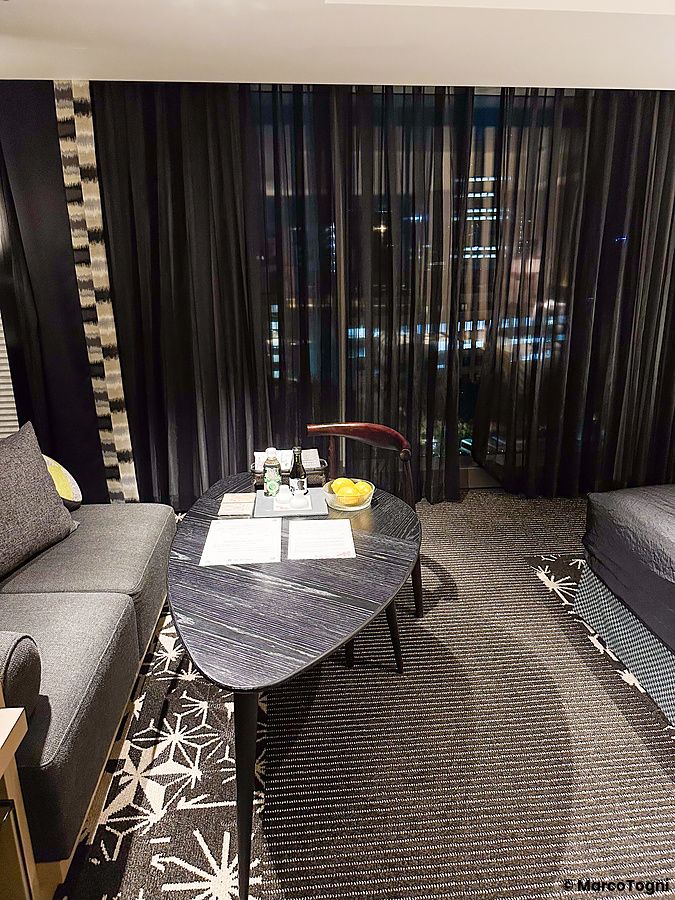

Not every room faces the garden. From mine, for example, I could see trees with city buildings behind them. If it matters to you, ask for the garden side when you book.
With the curtains closed, the room stays dark even in the middle of the morning, which helps a lot if you’ve flown in from Europe and your body clock is all over the place. If the standard pillow doesn’t work for you, you can ask for others, and there are quite a few other things you can borrow too.
If you’re looking for a small hotel where the front desk knows you by name, this isn’t it. It’s a hotel with groups, conferences and people constantly coming and going, and that’s what gives it its character.
Prices are at the upper end for Tokyo, though not as high as the skyscraper hotels in Marunouchi or Roppongi. It’s a hotel for people with a generous budget, and also for anyone who wants to treat themselves to a few special nights at the end of a trip or for an anniversary without having to be rich. Book early, and avoid cherry blossom season, Golden Week, Obon, New Year and Japanese long weekends, when prices go up and the Shin-Edo rooms are the first to sell out.
When people ask me where to stay in Tokyo for a week without switching hotels halfway through, this is one of the first names I give them. It has everything under one roof, from pastries to sushi, the room is comfortable enough to spend a rainy afternoon in, and in the morning you head out after a stroll past the carp.
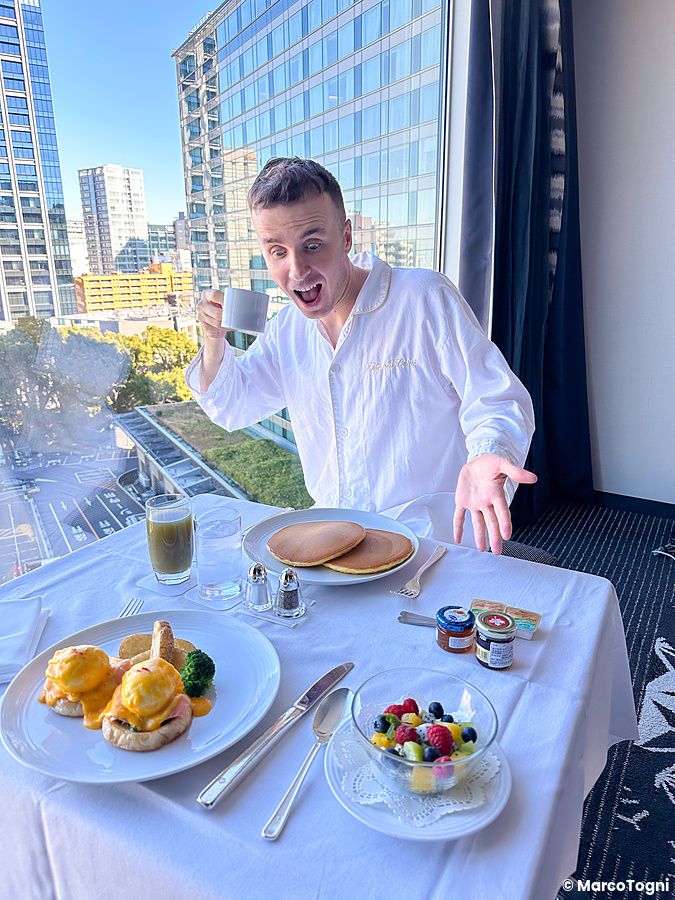
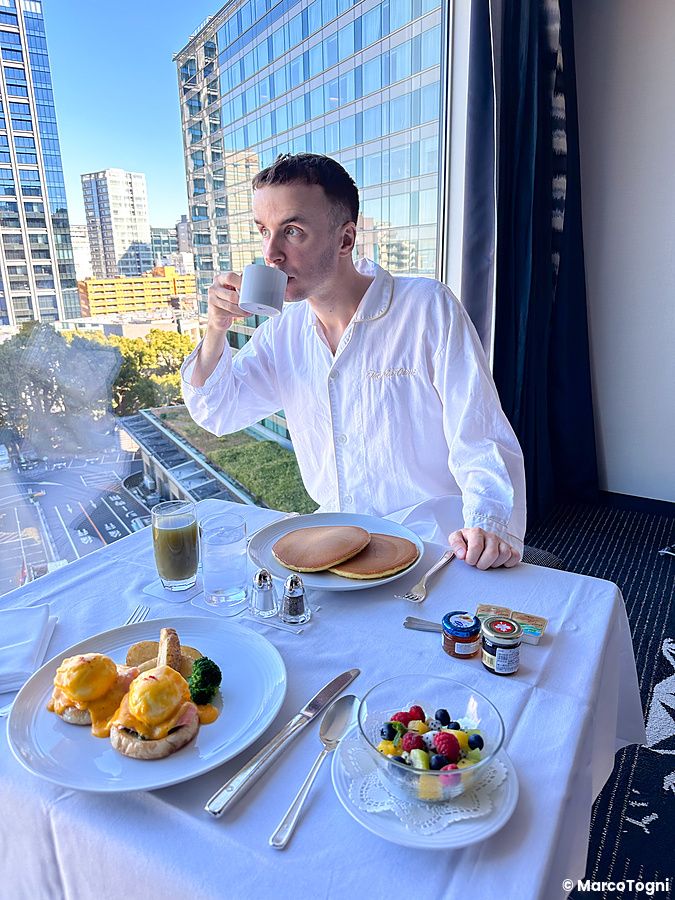
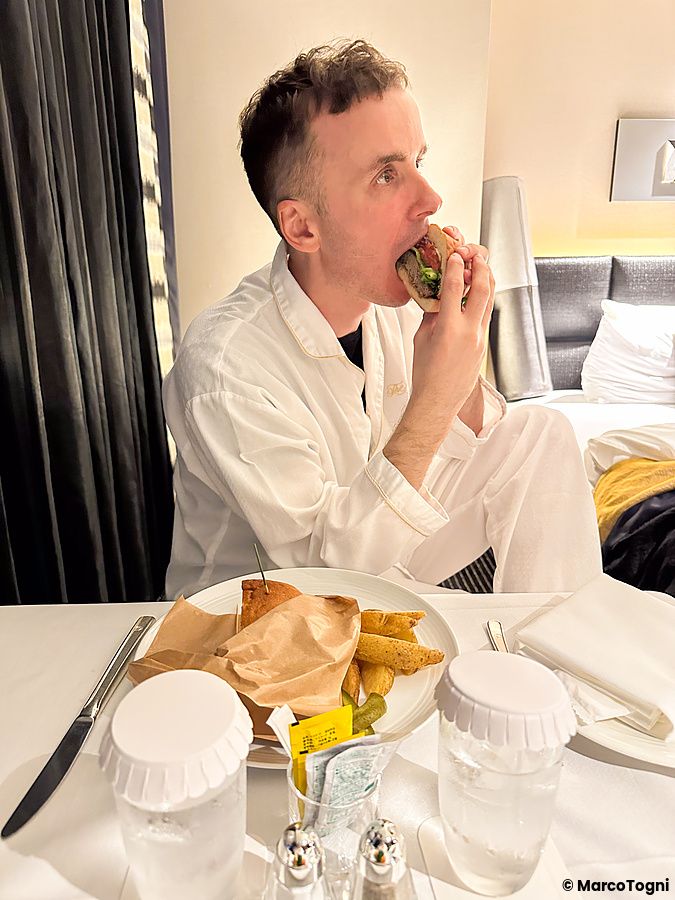
I really can’t recommend having breakfast in your room highly enough. A cart arrives with a white tablecloth, the staff set the small table in front of the window, and you eat with the garden below you and the skyscrapers in the distance.
I order eggs Benedict with potatoes and broccoli, pancakes, fresh fruit and a juice, then take my time over coffee while I look outside. The rest of the room service menu holds up too. Burgers and sandwiches come with fries and don’t taste reheated.
If you’d rather go downstairs, you can also have breakfast at the Garden Lounge, where the windows look out on the garden and there’s both an American breakfast menu and a buffet.
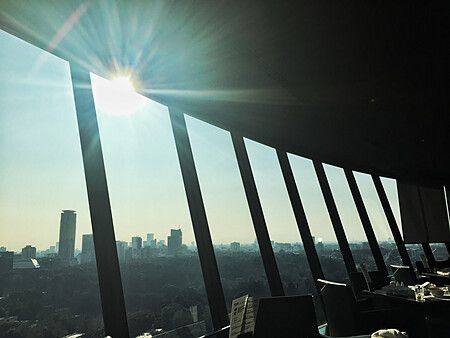
The restaurant I’m most attached to is The Sky, on the top floor of the Main. It’s a revolving restaurant that makes a full turn in just over an hour, so while you eat you watch Tokyo Tower, the Skytree and, on clear days, Mount Fuji go by.
It’s a buffet, with sushi made fresh right in front of you, a teppanyaki griddle, and Japanese, Western and Chinese dishes. I end up filling my plate with a shellfish risotto and some grilled meat, all made with good ingredients and nothing like hotel cafeteria food. It isn’t cheap, but the quality matches the price, and the melon cake is the reason a lot of Japanese people book a table.
There are loads of other restaurants, more than thirty across all the buildings: Kyubey for sushi, Nadaman for Japanese cuisine, Tour d’Argent for French, and Trader Vic’s for an evening cocktail. You could spend a week here without eating at the same place twice and without leaving the hotel.
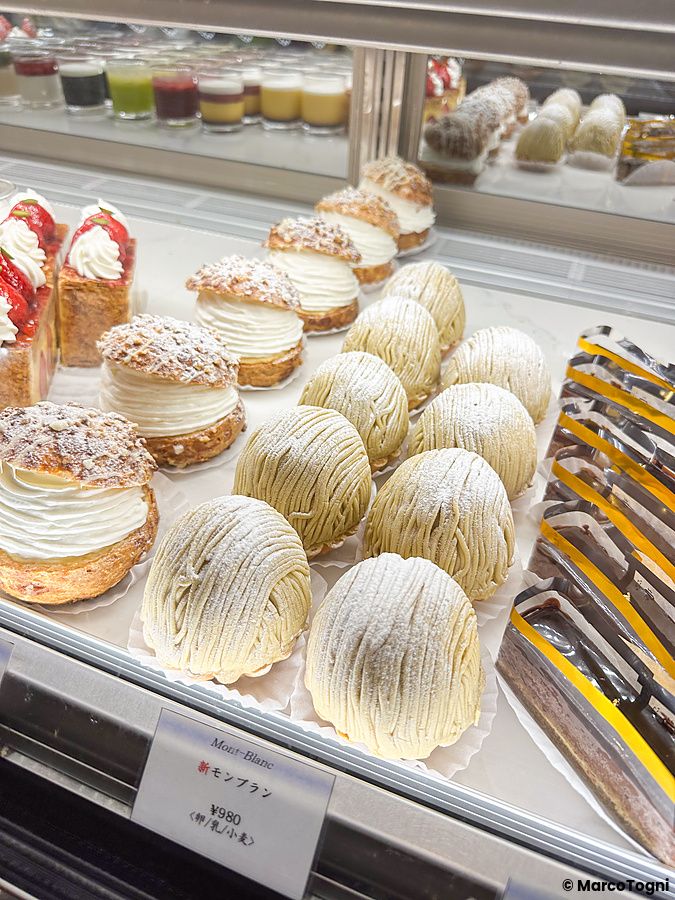
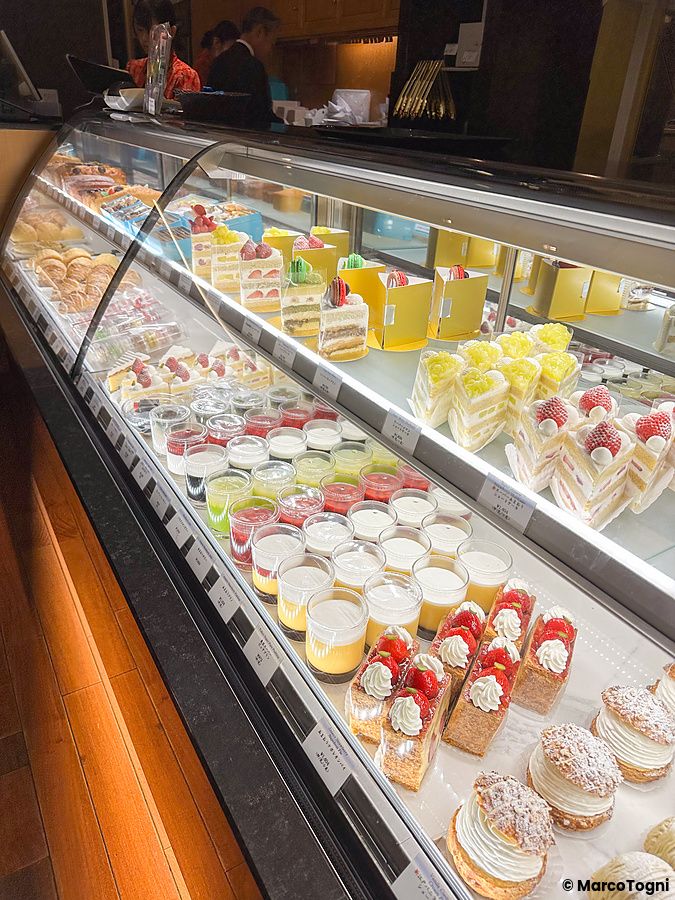
On the lobby floor of the Main you’ll find the Satsuki pastry shop, and I’d urge you to stop by at least once. The display case is full of Mont Blancs, chocolate cakes, cream puffs, puddings and desserts in glasses. The best-known items are the mille-feuille cake and the super fruit cake series, made with strawberries or whatever fruit is in season.
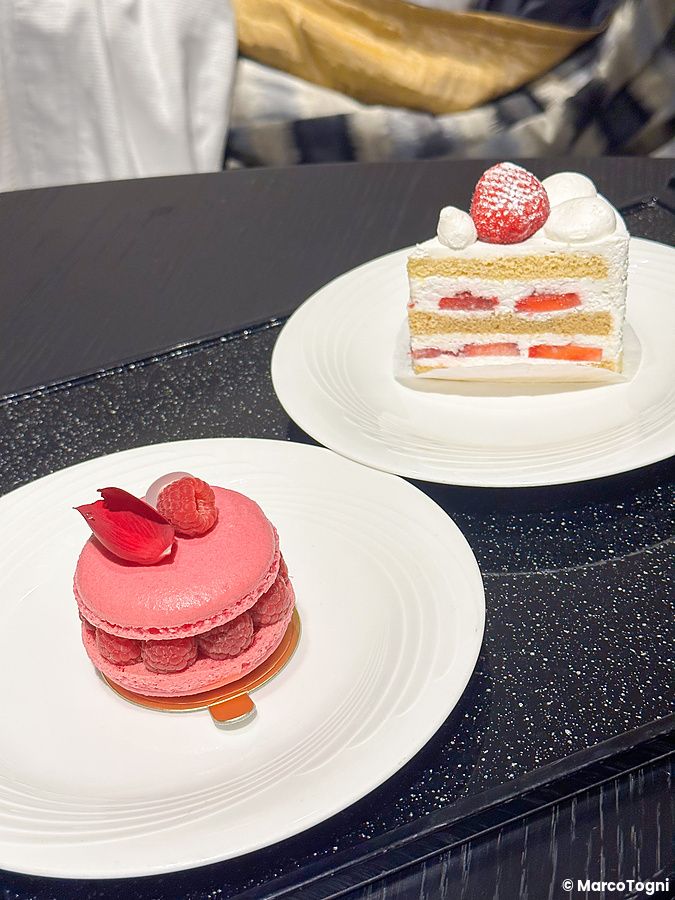
I take a pink macaron with fresh raspberries and a slice of strawberry and cream cake up to my room and eat them with an espresso from the machine. After a day walking around Tokyo, I can’t think of a better way to end it.
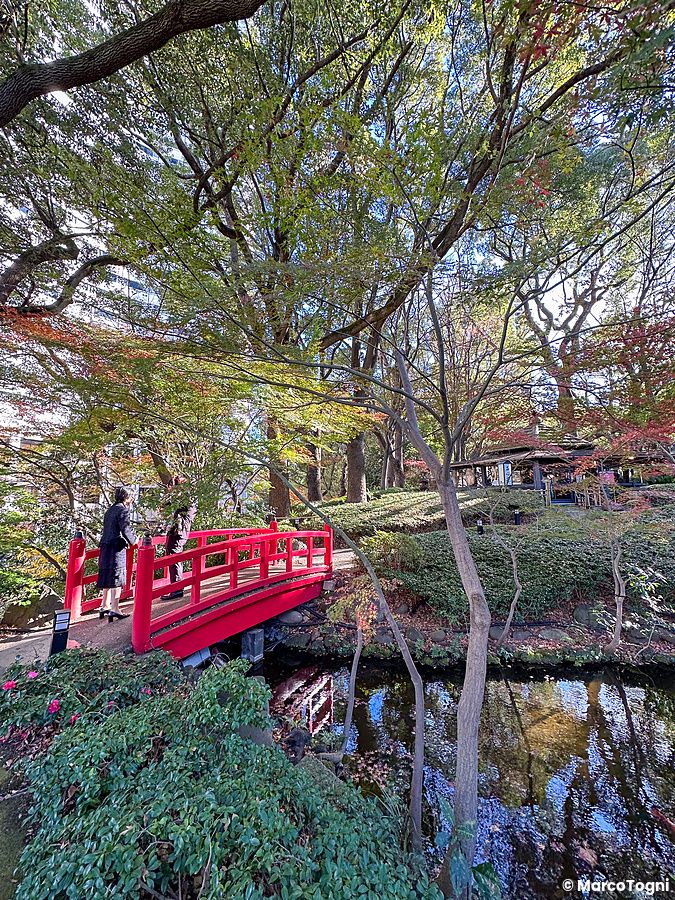
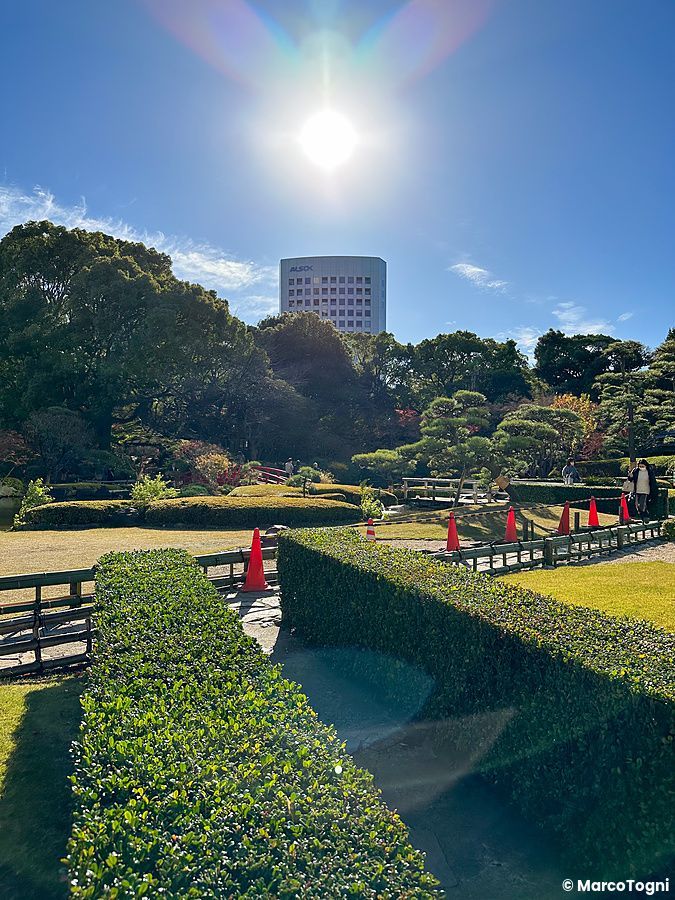
You have to take a walk in the garden, even if you’re only in town for a day. It covers about 33,000 square meters, with a path that loops around a pond, and the land has a long history. At the start of the Edo period this was the residence of the warlord Kato Kiyomasa, and later it passed to the Ii family, the lords of Hikone.
You walk past hedges clipped into cushion shapes, stone lanterns and centuries-old trees. A stream runs down between the rocks beside a wooden pavilion, then there’s the six-meter waterfall dropping into the pond full of carp, and the red arched bridge where everyone stops for a photo. Behind it all you can see the hotel buildings, and that contrast between the old garden and the modern buildings is the part I like most.
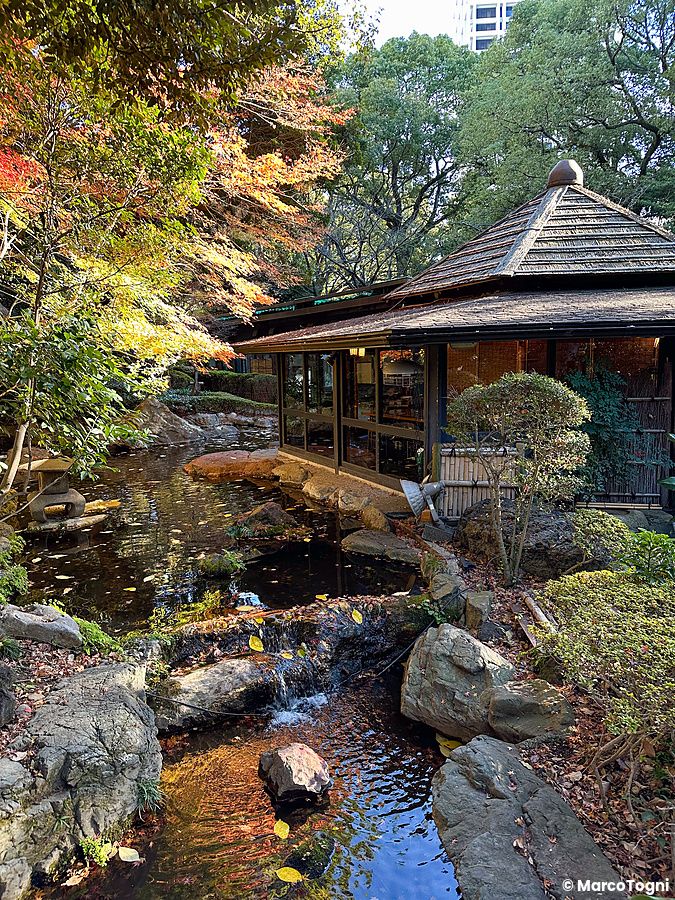
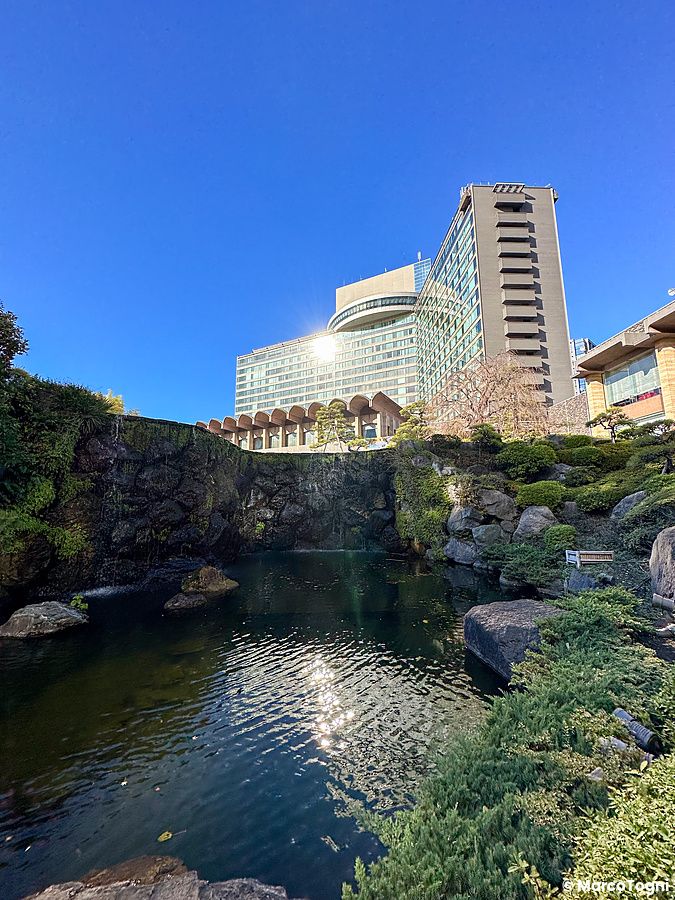
In autumn the maples around the pond turn red and orange, and that’s my favorite time to come back. The garden is open to people who aren’t staying here too, and entry is free, so during the day you’ll run into couples out for a stroll, families, and men in jackets coming out of the restaurants after lunch.
My advice is to go down early in the morning, before breakfast, when all you can hear on the paths is the water and the crows.
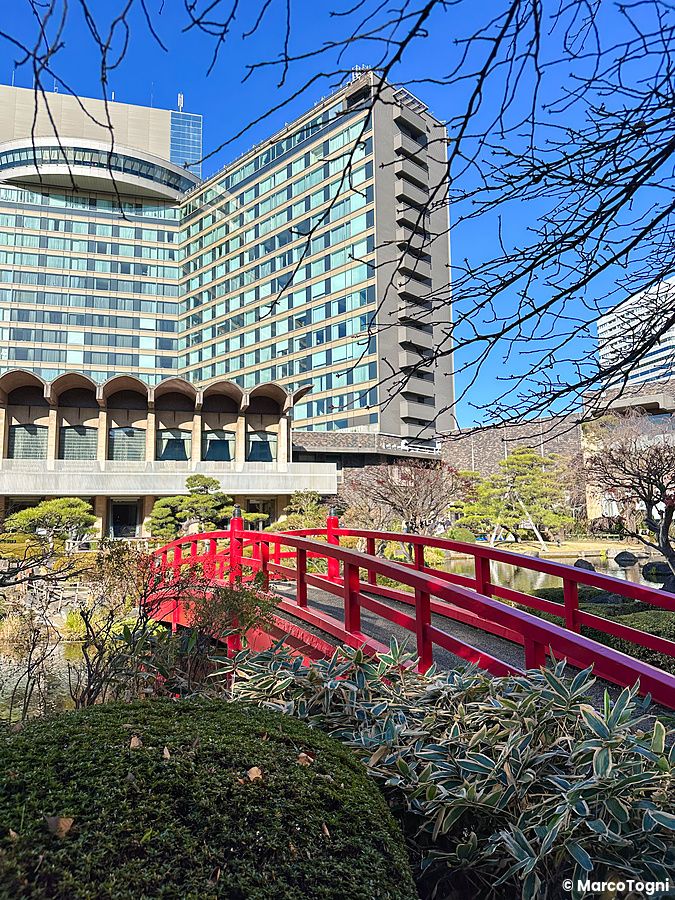
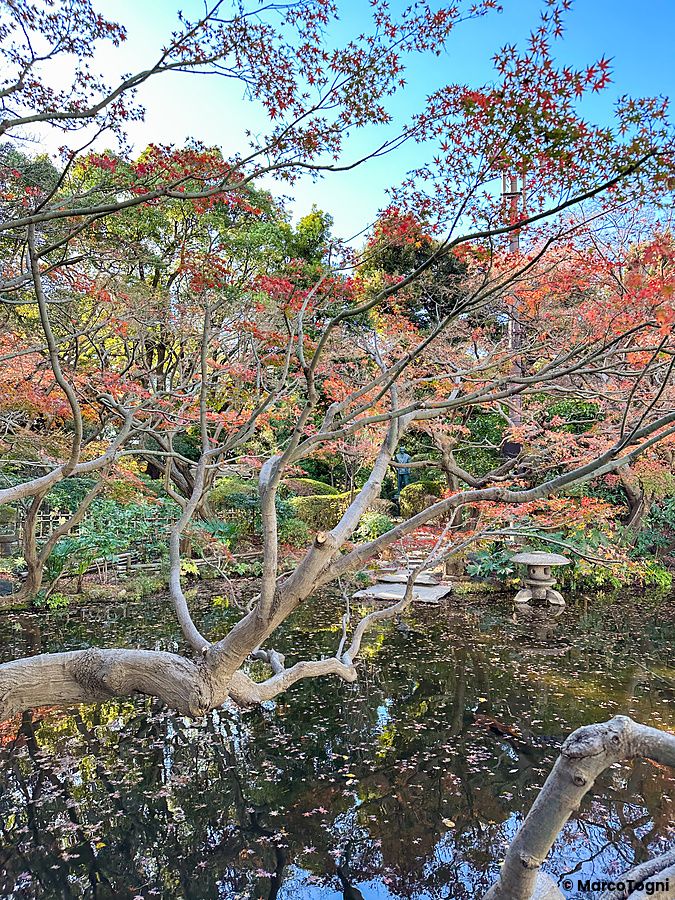
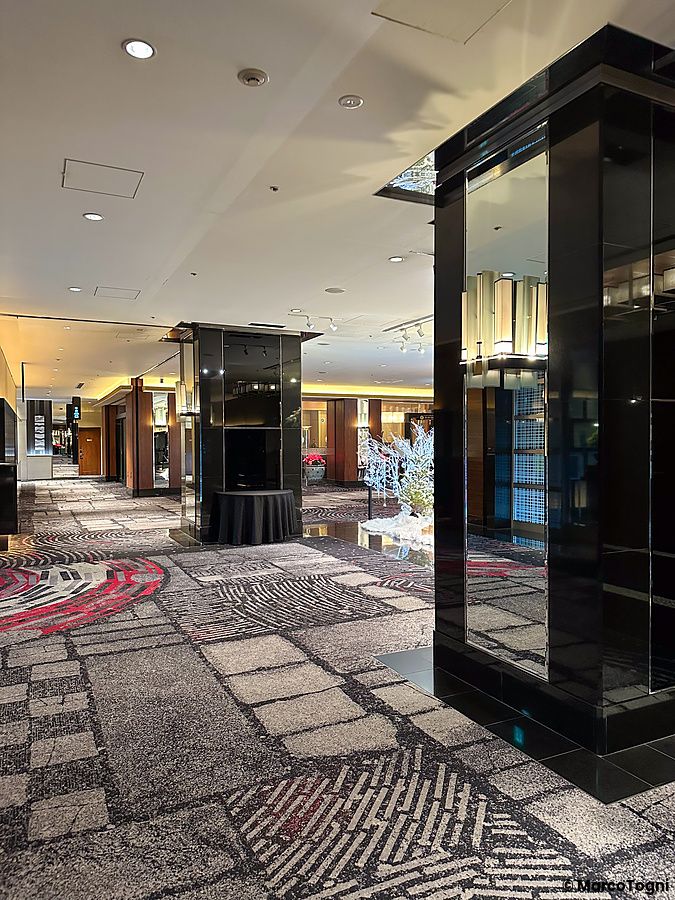
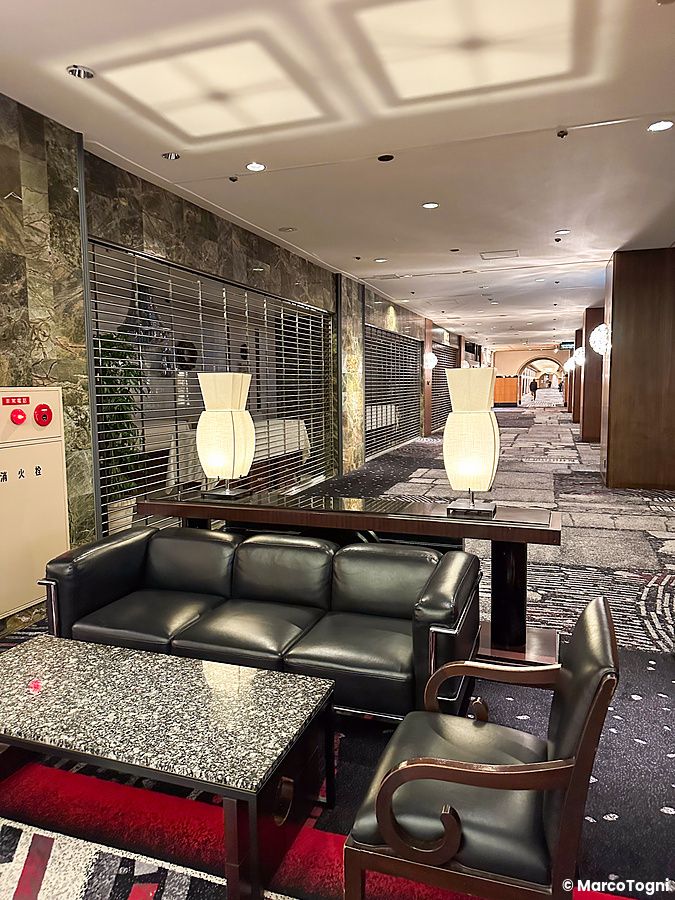
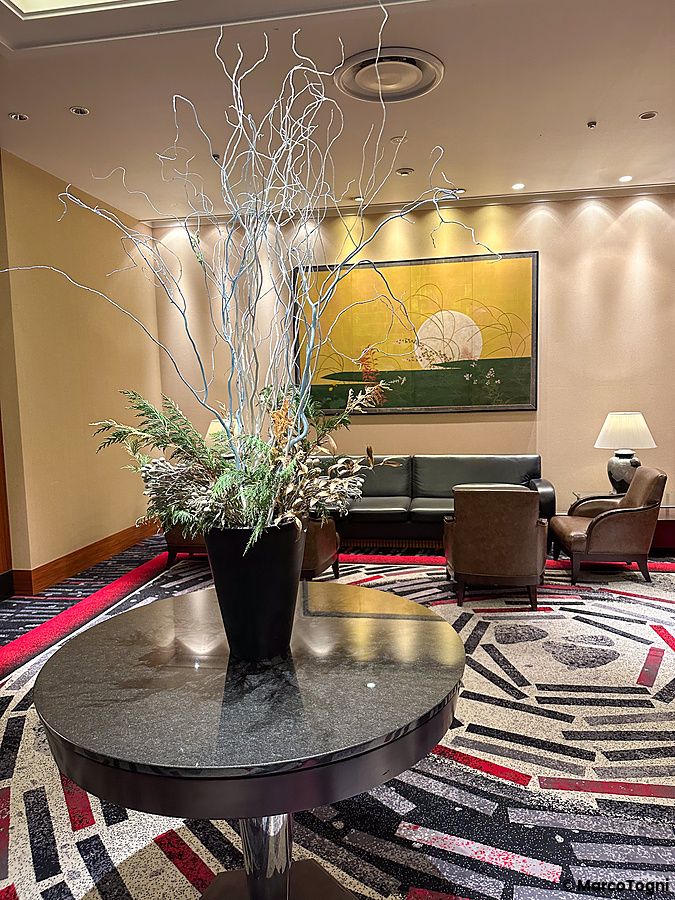
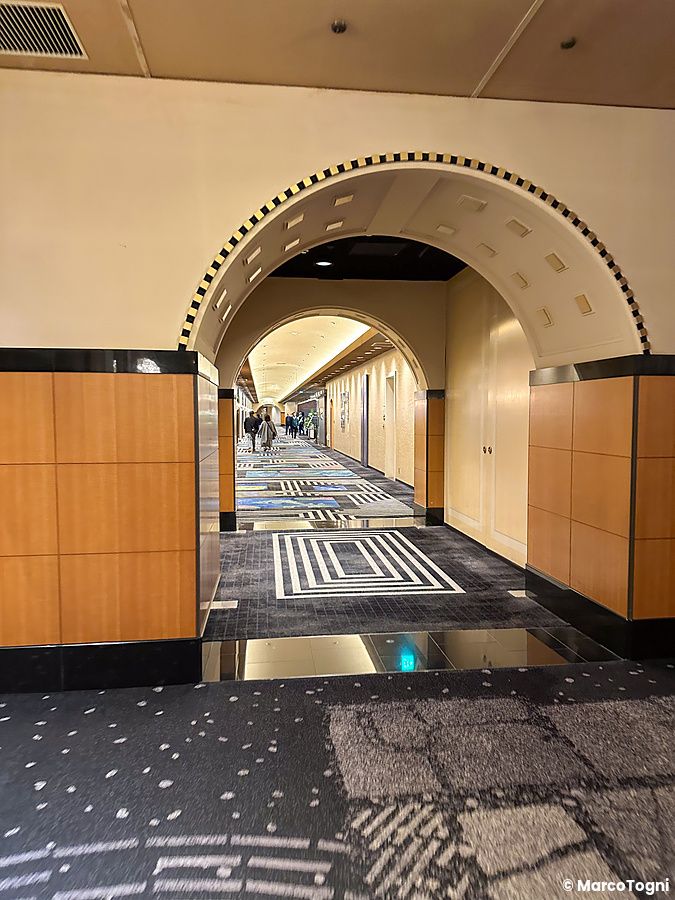
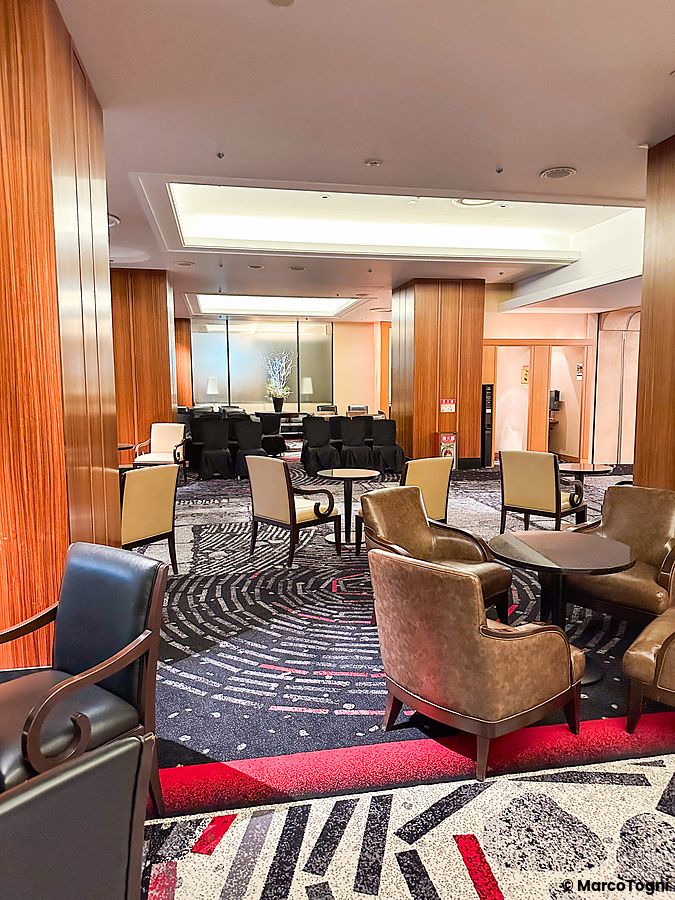
The lobby isn’t one of those double-height spaces with a giant chandelier. It’s a series of long passageways with carpet in a geometric pattern of black, white and red, columns clad in glossy black panels, and small seating areas with brown leather armchairs and marble tables. One corridor runs under a large arch.
Check-in is what you’d expect at a hotel with more than a thousand rooms. Sometimes there’s a bit of a line, but it only takes a few minutes, and the staff are friendly and smiling and work fast without rushing you. In the middle of the lobby there’s always an arrangement of flowers and woven branches that changes with the seasons.
The garden also has an outdoor pool. It costs extra and you have to book ahead, and hotel guests get priority. It’s seasonal and only opens in the warmer months, and if you’re staying at the Executive House Zen or in a suite you can use it for free. Over in the Garden Tower, the gym with an indoor pool and sauna is called Golden Spa. If you’re staying in the Main or the tower you pay to use it, while for Executive House Zen guests it’s included.
Step outside and on one side you have Akasaka, with its izakaya, yakiniku restaurants and bars that stay open late. On the other side are Sophia University, government buildings and tree-lined streets that empty out in the evening. You can have dinner in Akasaka and walk back, and within a few steps the noise of the bars gives way to silence. Up in your room you don’t hear the city at all, and you sleep as soundly as you would in the country.
Pros:
Cons:
Best for: anyone spending a week in Tokyo who wants a hotel with everything under one roof, from breakfast in your room to sushi at night
Room to ask for: Shin-Edo Standard, garden side
Atmosphere: a big, historic Japanese hotel, geometric-patterned carpets and leather armchairs, the carp pond below the windows
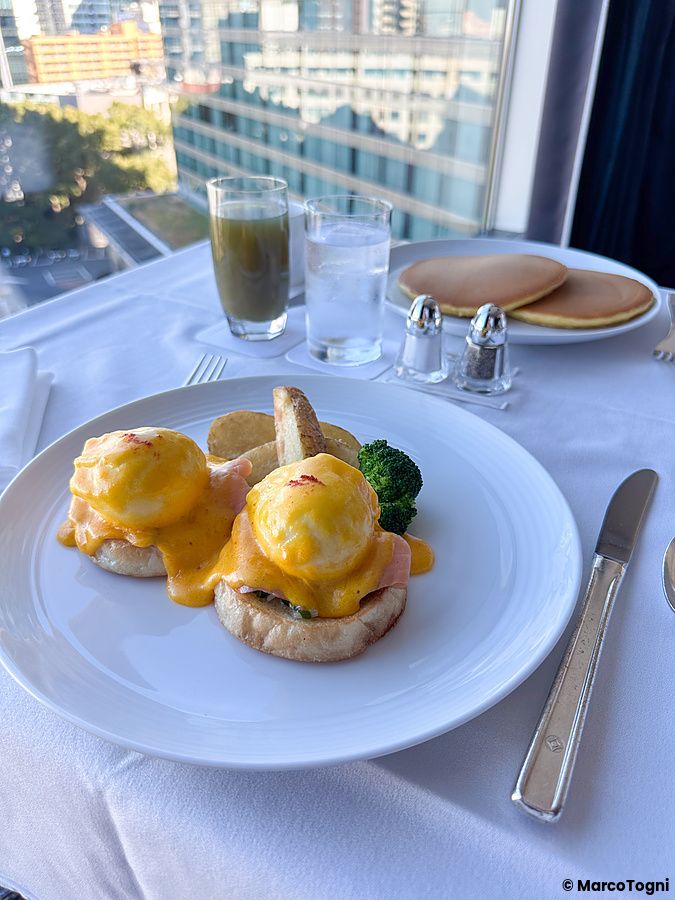
What stays with me about the New Otani is the hinoki tub filling up in the evening after a day of walking all over the city, with a slice of cake from Satsuki waiting on the table. Then the next morning there’s the breakfast cart by the window and the garden slowly waking up, with the gardeners already at work among the hedges.
It’s a hotel where you feel like part of the city rather than someone passing through, and you head out rested every morning. Book the Shin-Edo, have the eggs Benedict brought up to your room, and go down to the red bridge before anyone else gets there.
The subway is the easiest way to get here. From Akasaka-mitsuke Station, take Exit D and you'll reach the hotel in about 3 minutes on foot, on the Benkeibori moat side. It's also the way you'll walk back in the evening from the izakaya in Akasaka.
From Nagatacho Station, Exit 7 gets you to the hotel in 3 minutes, on a gentle uphill walk.
If you're coming on the JR Chuo Line, get off at Yotsuya, leave by the Kojimachi or Akasaka exit and walk about 8 minutes past Sophia University along a tree-lined street.
This place is on MarcoMaps
Hotel New Otani Tokyo
My map of Japan: over 4,000 places I've tried myself, each with photos, rating, and hours. Filter by category and rating, find veg-friendly spots and places near you with GPS. No sign-up, right from your phone.


Hotel New Otani Tokyo - nearby you will find:
100 mCounter omakase, with a big main location.
 261 m
Hearty breakfasts.
 471 m
Good, cheap standing sushi.
 590 m
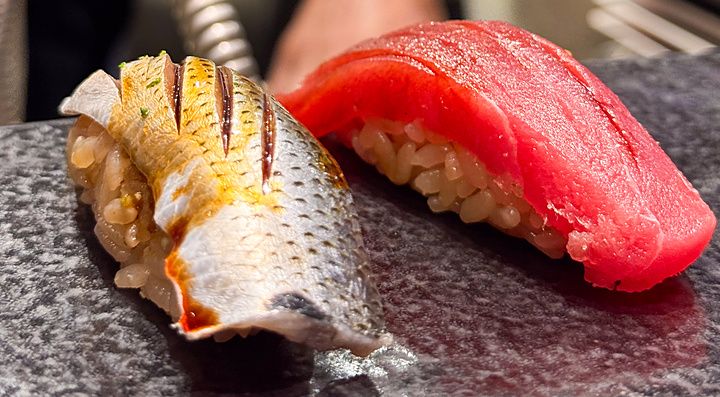
Chain with excellent sushi.
 742 m
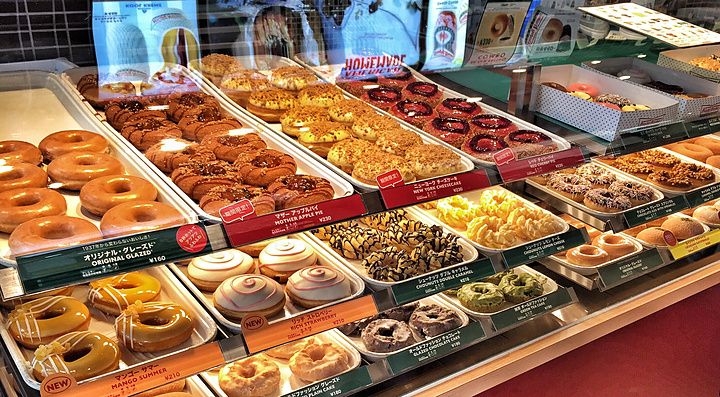
American glazed doughnut chain.
 745 m
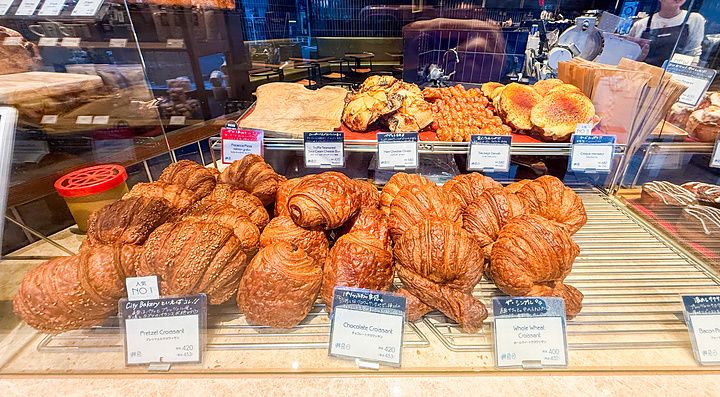
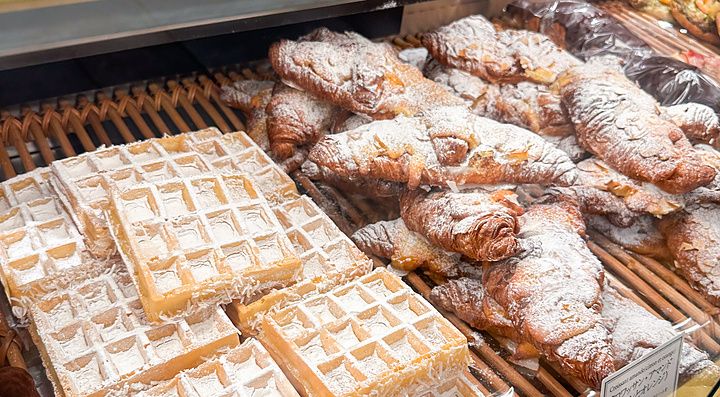
Bakery with sweet and savory croissants.