 239 m
Don Quijote239 m
Open 24 hours, and you can find anything.
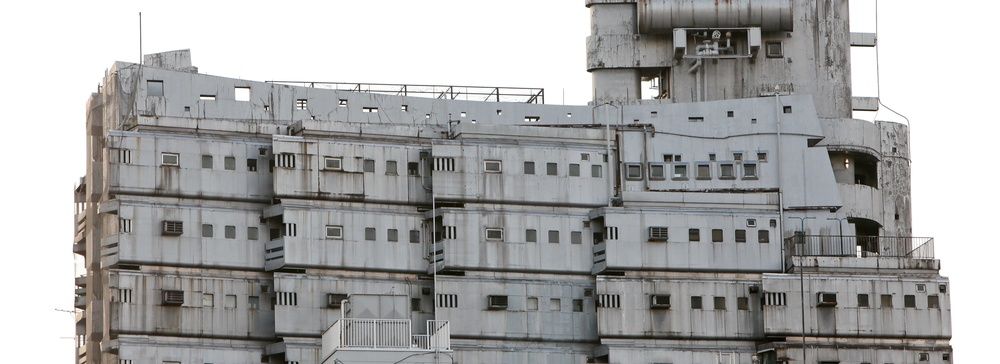
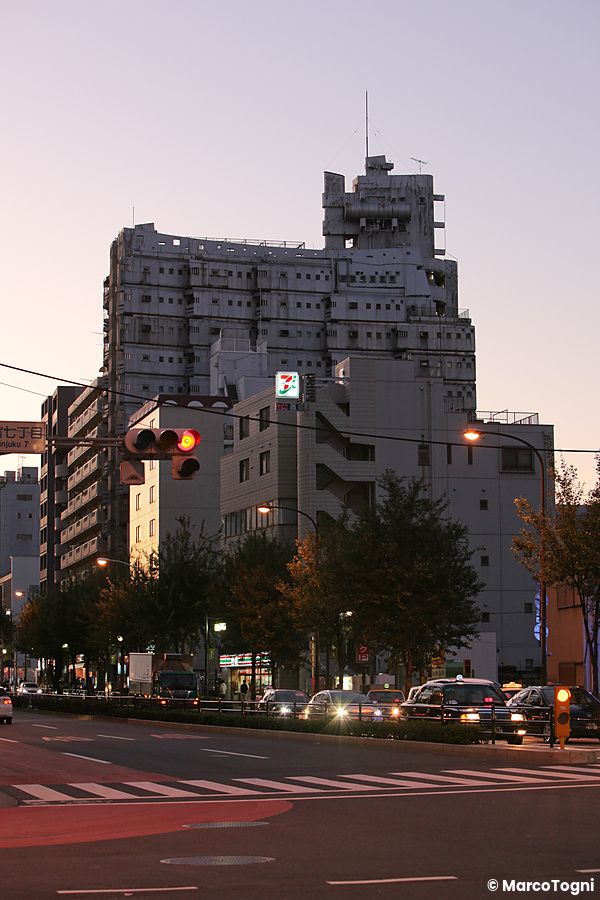
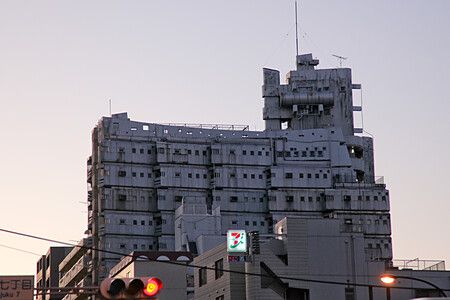
The New Sky Building in Shinjuku is a shock to the eye: a compact block that looks like a ship run aground among the surrounding buildings. Yoji Watanabe designed it in the late 1960s and it was finished in 1970. It’s known as “gunkan,” the Battleship. It isn’t a building you just glance at, and my advice is to go with an eye for its details and tensions, because every side of it tells the story of a Tokyo in transformation.
Watanabe thought in terms of modules and add-ons, and he conceived the building as an organism that could evolve. The imagery is industrial, almost military: cantilevered volumes like gun turrets, stair towers that turn into “bridges,” floors that open out like decks. It’s close to Japanese Metabolism, but rougher around the edges. You won’t find any glossy utopias here. The city is living matter, pushing and packing itself tighter.
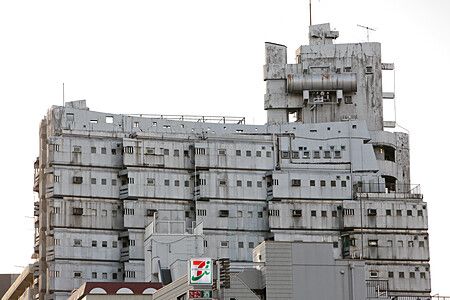
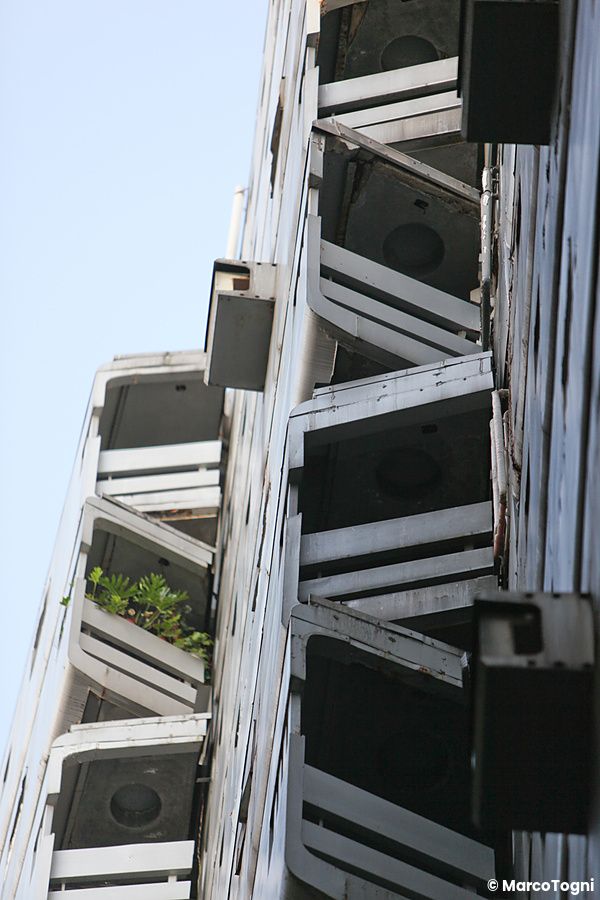
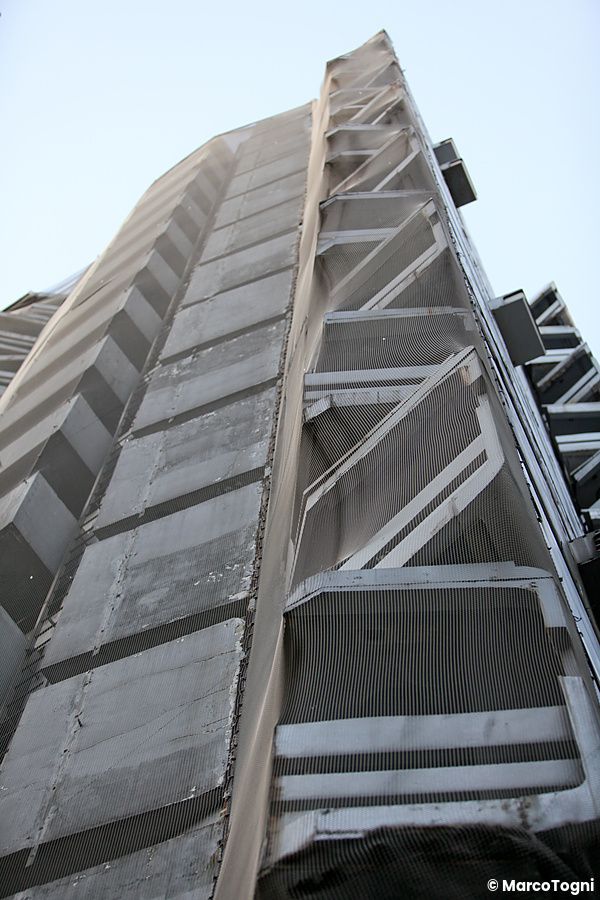
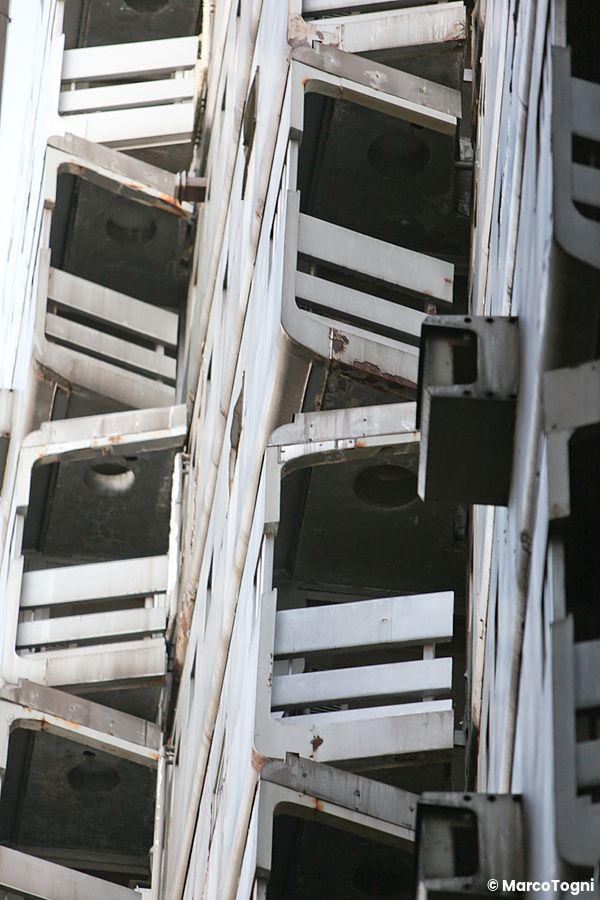
The facade isn’t trying to win you over. Rough surfaces, slanted balconies and railings add up to a ship-like texture, and the lines are angular and sharply cut. The vertical add-ons (stairs and service shafts) form ribs that make the mass feel lighter. The color, often seen as iron gray, reinforces the idea of a technical shell. It’s a “functional” look, and every part that sticks out has a reason to be there: shade, ventilation, utility runs.
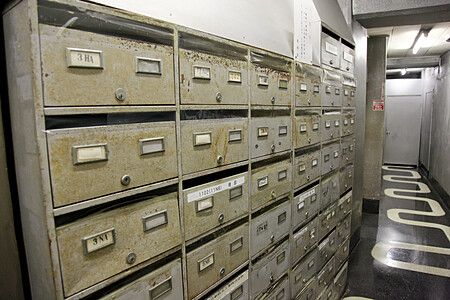
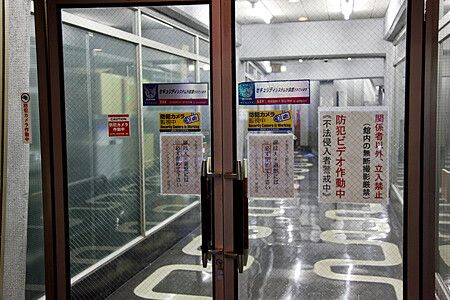
The interior is just as plain, with tight corridors and ramps and landings that play with natural light. The openings aren’t there for show. They’re surgical cuts that bring air and light exactly where they’re needed. What you feel is controlled density: spaces ready to be adapted, with no finish forcing a single style on them. It’s architecture that leaves the people who live there room to use it in their own way.
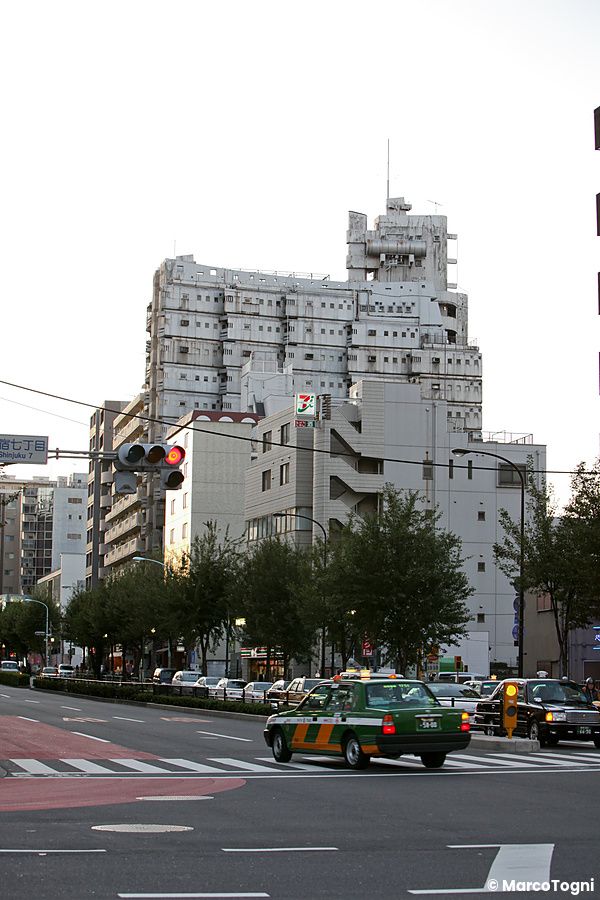
Up close the building intimidates you at first, then it wins you over. As you walk along Shokuan-dori, its silhouette looks like the bow of a ship. Low-angle light picks out the edges and recesses, and the balconies turn into scales. Nothing here is pretty for its own sake. What you get instead is compressed energy, almost a mechanical hum. If you love architecture that tells the story of a city at work, you’ll feel the layers of memory here, without any easy nostalgia.
Yoji Watanabe worked through Japan’s boom years with one clear idea: buildings had to stand up to the pressure of urban growth. His interest in modularity links him to the Metabolists, but his style is rougher. He wasn’t after a polished showpiece. He went for raw formal power that brings to mind construction sites, workshops and the industrial rhythm of postwar Tokyo. There’s a very concrete reason behind his obsession with ships, though. Before becoming an architect, Watanabe had served in the Navy, and those shapes stayed with him. It isn’t a highbrow reference but lived memory: bridges, turrets and portholes come back here as the natural vocabulary of someone who had seen ships from the inside.
Once you know that, the building looks different. It isn’t a design whim but the portrait of a man rebuilding Tokyo in the only language he truly felt was his own.
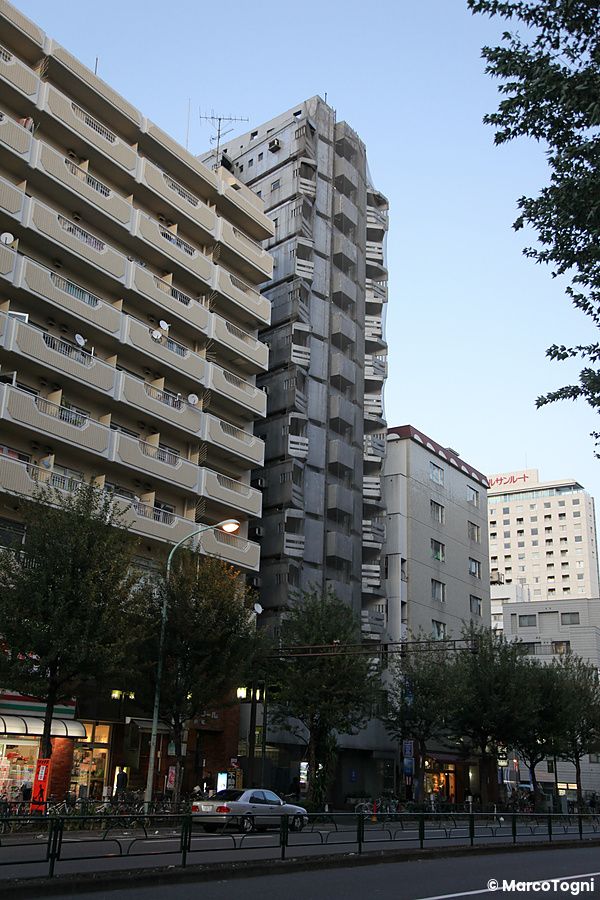
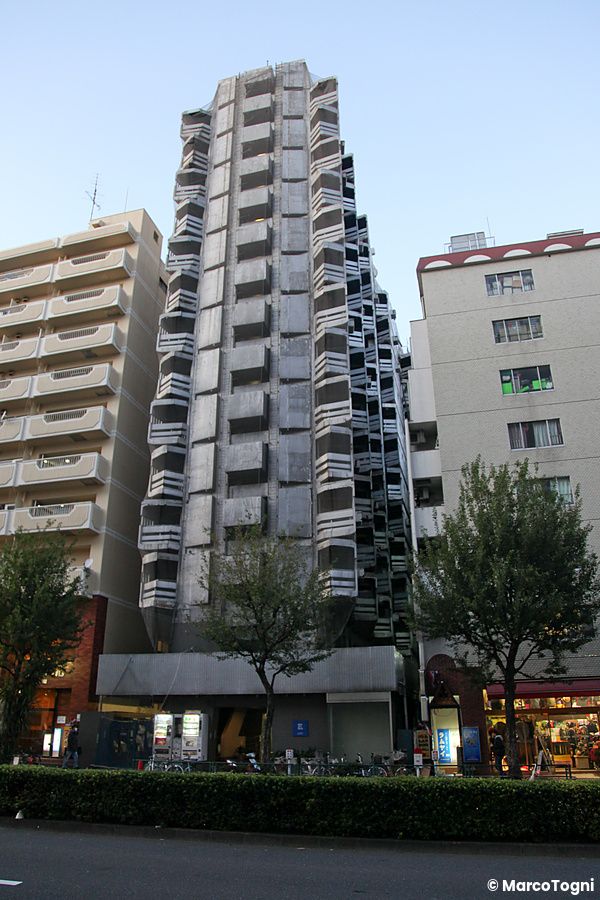
The building is in Higashi-Shinjuku/Okubo, on Shokuan-dori, and I suggest walking along the opposite side of the street to get a view of the “bow.” The street corner gives you a good look at it, with enough room to frame the cantilevered volumes. Whether you can get inside depends on what the spaces are being used for. Remember that it’s a building still in use, with businesses and residents, and keep a low profile.
There’s no museum behind those battleship facades. The building is still in use and completely private. The lower floors hold offices, the middle floors have shared workspaces for creatives and small businesses, and at the top are the apartments and the residents’ common areas.
That’s why there are no guided tours or visitor routes: you look, you take photos and you stay outside. On maps you’ll also find it as Gunkan Higashi-Shinjuku Building, its current name, but “New Sky Building” is the name it goes by in architectural history.
Low-angle light is what brings out the edges and recesses. Early in the morning or late in the afternoon, the slanted balconies cast clean shadows. If you want a more dramatic look, I recommend an overcast sky, because the flat gray makes the whole thing look even more like a ship.
Practical tips:
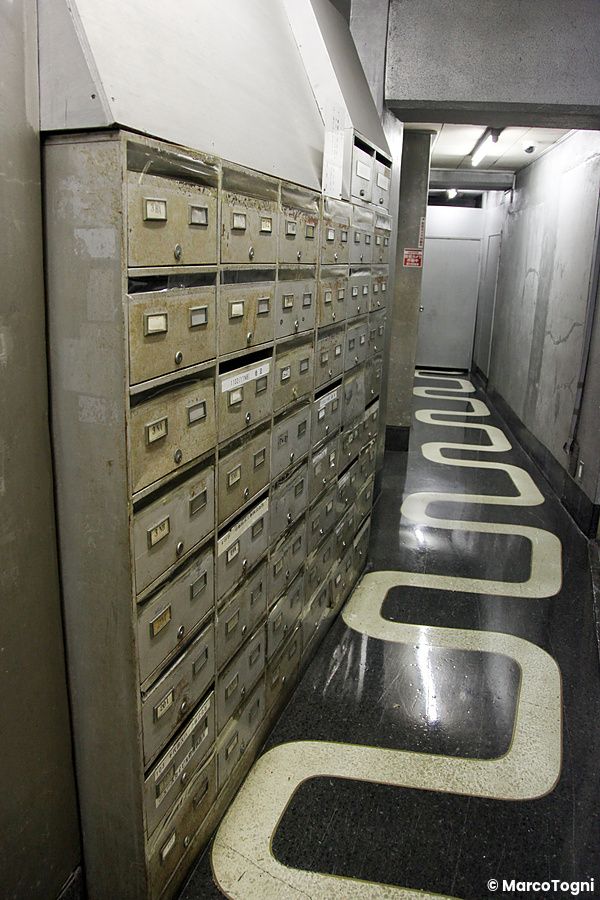
Look at the joints, because that’s where you can see the modular idea at work. The outdoor stairs show how circulation and structure work together, and the railings show that Watanabe wanted a skin that was functional rather than decorative. The exposed services (where there are any) point to the same honest approach: nothing is hidden, and everything is part of the language. Then look up at the roof. The cylindrical water tank rises out of the stair tower like the command tower on a ship, and it’s the detail that really completes the naval metaphor. Look for the round windows too, which are actual portholes, and the small boxes jutting out all along the side. Behind them are about 150 steel housing units, reached by corridors that split into a Y on every floor.
In a Shinjuku full of glass towers, the New Sky Building is a reminder of the days when Tokyo looked for its future through experimentation. It’s a landmark precisely because it doesn’t try to please everyone. It demands a careful eye and rewards anyone who loves architecture as a way of telling a city’s story. Photographers get rhythm and texture, and students of architecture get a textbook case of how modules can create identity.
Between 2000 and 2002, some residents, a few foreigners among them, threw small, low-key parties, sometimes even up on the building’s distinctive roof. Word of them bounced around the blogs and forums of the time and helped give the place its “cult” aura, judging by the accounts of people invited to rooftop parties and the urbex reports from those years.
The New Sky Building isn’t an “easy” landmark, and that’s exactly why it matters. It’s a piece of Tokyo that reminds you the city can be harsh and poetic at the same time. My advice is to take your time: walk all the way around it, find your own angle and let the cuts and shadows speak to you. If you love architecture and urban photography, you’ll find real boldness in the design here, and a character unlike anything else in the neighborhood.
The building is practically right outside the station at Higashi-Shinjuku. Take exit A1 or A2 and walk up Shokuan-dori, and in a couple of minutes you'll see it right in front of you at the Okubo 2-chome intersection.
If you're coming from Shinjuku or Kabukicho, walk: it's about ten minutes straight along Shokuan-dori. From Shin-Okubo, head south for about 8 minutes.
For the view “from the bow,” cross the street and stay on the opposite sidewalk. From there the building stands out from its neighbors and you can fit the whole thing in the frame.
This place is on MarcoMaps
New Sky Building
My map of Japan: over 4,000 places I've tried myself, each with photos, rating, and hours. Filter by category and rating, find veg-friendly spots and places near you with GPS. No sign-up, right from your phone.


New Sky Building - nearby you will find:
239 mOpen 24 hours, and you can find anything.
 374 m
Shinjuku's nightlife district.
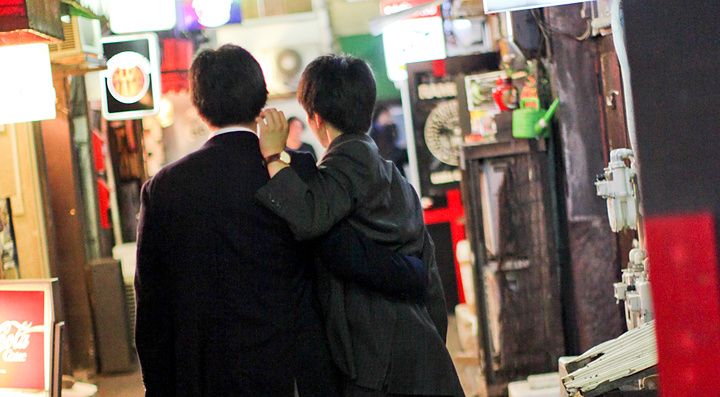 487 m
Packed with countless tiny bars. Really one of a kind!
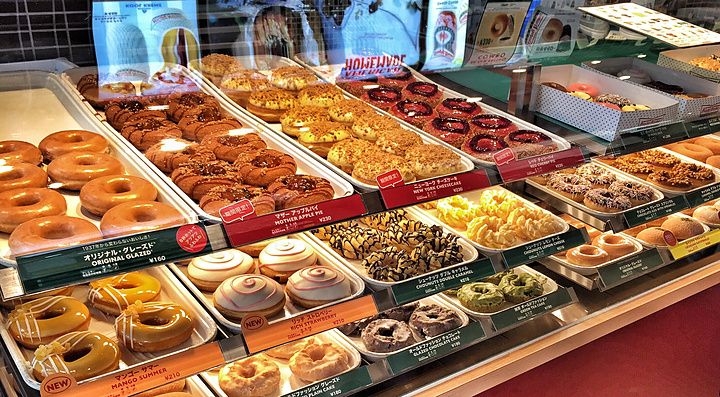 489 m
American glazed doughnut chain.
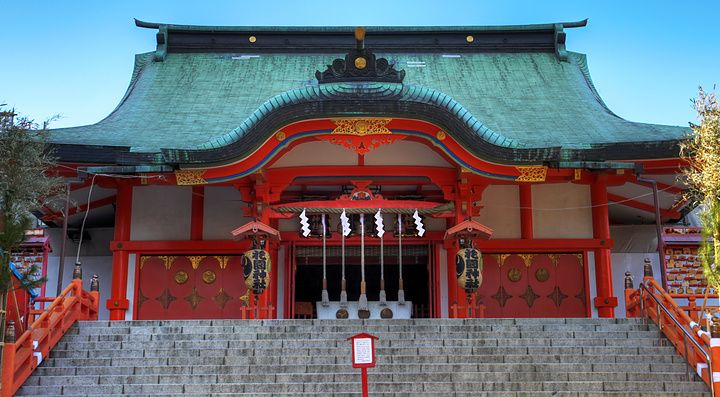 533 m
In central Shinjuku.
 545 m
Food hall, lanterns and neon.