
Nihonbashi
Nihonbashi is one of the easiest places to start exploring Tokyo. It’s a short walk from the Yaesu side of Tokyo Station, and in the Edo period it was the starting point of the great highways that led to the rest of Japan.
These days it’s mostly banks and offices, with a calmer, more grown-up feel than Shibuya or Shinjuku. You don’t come here for the nightlife. You come to walk past early 20th-century buildings and shops that have been around for generations, with a few newer complexes built up around them. You’ll get more out of it if you take your time, during the day.
Contents
Restaurants



Shops

Nightlife & fun
Cocktail Works
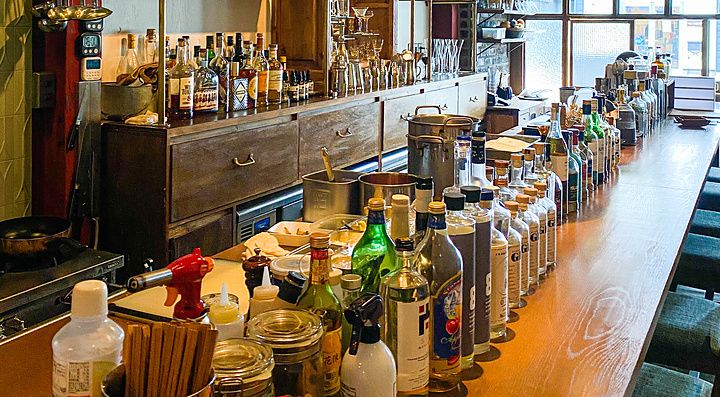
Mixology, gin, and Italian food.
Nearby neighborhoods


Yaesu
The bridge and its kirin
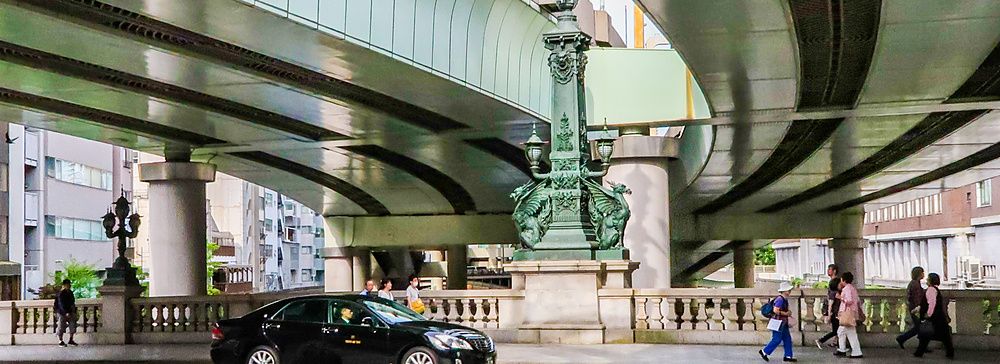
The whole area is named after the bridge over the river, and the first time you see it, it takes you by surprise. An elevated expressway, built around the time of the 1964 Olympics, runs right over it and blocks out a lot of the light. It’s still worth stopping, because in the middle of the bridge is the plaque marking the zero point from which every road distance in Japan is measured.
On either side you’ll find bronze statues: a winged kirin – the mythical creature, not the giraffe – and lions holding up the city emblem. The wings aren’t traditional. The sculptor added them to suggest Tokyo ready to take flight from this very spot.
The current stone bridge dates from 1911, but around twenty bridges have come and gone on this spot through cycles of fire and rebuilding, going back to the first wooden one built on the orders of Tokugawa Ieyasu. Once you know that, you look at it differently. This isn’t just any bridge. It’s the country’s kilometer zero. The expressway’s days are numbered, though. Work is underway to move it underground and open up the sky over the bridge again, a huge job that will go on for quite a while yet.
Until then, expect barriers and cranes everywhere. The postcard shot of the bridge without the expressway over it will have to wait.
Evenings and weekends
Nihonbashi is at its best during office hours, when the department stores are open and the streets between the office buildings fill up with people. Late in the evening and on weekends a lot of streets empty out, because first and foremost this is where people work. If you want somewhere lively at night, go elsewhere.
A couple of hours is enough for a visit, and I think it works best if you pair it with one of the nearby areas, all within walking distance or one subway stop:
- Ningyocho: for streets of low-rise buildings and old shops.
- Ginza: if you want to keep window-shopping.
- Tokyo Station: if you want an easy place to end your walk.
Staying here makes the most sense if you travel a lot by train, since you’re in the middle of everything and close to the main station. Just be ready for business-district prices and quieter evenings than you might expect.
The old shops that held on
Shops that have been in business for generations are called shinise in Japanese, and here the word is no exaggeration. Many of them made it through fires, the 1923 earthquake and the wartime bombing without moving a single block. Between Chuo-dori and Coredo Muromachi you’ll pass a whole string of them: Kiya, open since 1792, for knives made the old way; Yamamoto Yama, selling tea and nori since 1690; and Haibara, selling washi paper since 1806.
At Ninben, which has been selling katsuobushi since 1699, you can order a cup of hot dashi at the counter. You drink it standing up, like a coffee, and it’s about the most Japanese thing you can do in ten minutes.
Mitsukoshi grew out of these same streets. It started as Echigoya, a kimono shop founded in 1673, and went on to become Japan’s first department store. Go in even if it’s just for the lobby, and take a look at the two bronze lions by the entrance, which Japanese people have long used as a meeting spot.
The river under the bridge
Walking around, you barely notice the river. It’s squeezed between buildings and covered by the expressway, and from above it looks like little more than a service canal. The way to actually see it is to go down to the pier at the foot of the bridge and take one of the boats that leave from there.
From the water it’s a different place. You pass under the expressway, between its pillars, past locks and concrete embankment walls, and you get to see the bridge’s stone arches, which you’d never spot from up top.
It’s also the easiest way to picture old Edo, when goods came into the city by water and the fish market stood right here by the bridge, before it moved to Tsukiji.
Getting There
If you're heading for the bridge and the department stores on Chuo-dori, get off at Nihonbashi Station: from the north-side exits you're on the bridge in two minutes.
For Coredo Muromachi and the northern part of the neighborhood, Mitsukoshimae is the better choice. Exits A4 and A6 come up inside the buildings, so when it rains you never have to step outside.
You can also walk from Tokyo Station in about ten minutes from the Yaesu side, but the whole route runs underground through corridors and shops, with nothing to see. In good weather you might as well ride the subway for a couple of stops.
Useful Info
Name: Nihonbashi
Time needed: A couple of hours for the bridge, Chuo-dori and a look around the department stores; half a day if you add Coredo Muromachi, the old shops and a lunch stop
Closed: It's an office district, so many restaurants and cafés close on Sundays and public holidays, while the department stores and Coredo Muromachi stay open every day (apart from the New Year break)
Tips: The actual zero point is a bronze plaque set into the middle of the roadway, where you can't safely get close to it, which is why there's a replica in the small plaza at the bridge's northwest corner. Also take a look at the signs on the pillars: that “Nihonbashi” is written in the last shogun's calligraphy.
Getting there:
- Nihonbashi Station (Tokyo Metro Ginza and Tozai lines, Toei Asakusa line): south side, the bridge and Chuo-dori
- Mitsukoshimae Station (Tokyo Metro Ginza and Hanzomon lines): exits A4 and A6, inside Coredo Muromachi
- About ten minutes on foot from Tokyo Station, Yaesu side
Map
MarcoMaps100% free
This place is on MarcoMaps
Nihonbashi
My map of Japan: over 4,000 places I've tried myself, each with photos, rating, and hours. Filter by category and rating, find veg-friendly spots and places near you with GPS. No sign-up, right from your phone.
- 4,000+ places
- Rating, photos, and hours
- Veg friendly
- Near me (GPS)
- Favorites without login
- Works offline

