 142 m
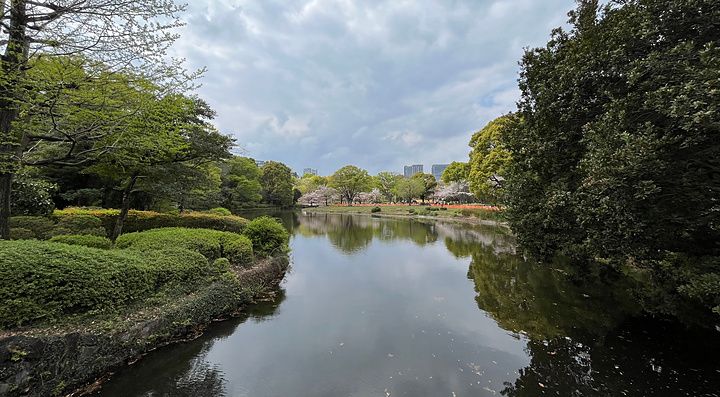
Kitanomaru Park142 m
Pond, woods and historic gates.
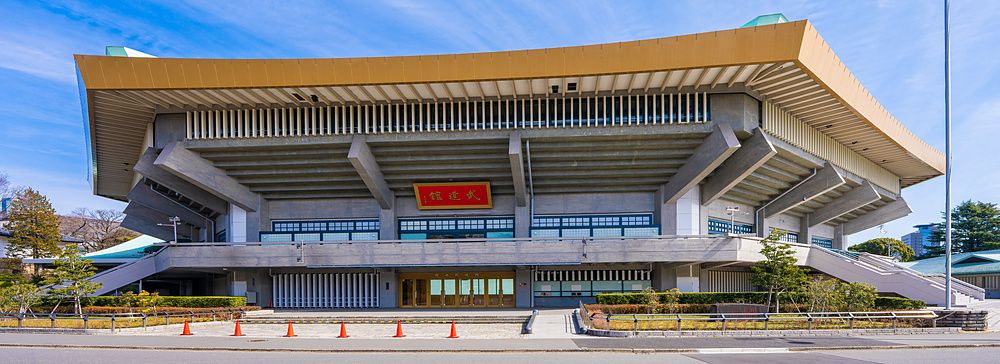 ©yu_photo - Shutterstock
Surrounded by the greenery of Kitanomaru Park in central Tokyo, the Nippon Budokan is the temple of Japanese martial arts and one of rock’s most legendary stages.
Budokan literally means “martial arts hall.” The arena was built in 1964 to host the judo events at the Tokyo Olympics, and only two years later the Beatles played here.
Today its octagonal hall switches between judo and kendo tournaments and big concerts, in a building with a traditional feel that’s worth seeing even from the outside.
The Beatles played here back in 1966, and “Yesterday” still seems to echo through the big hall. The concert caused quite a controversy at the time, because the Nippon Budokan is seen as an almost sacred place, a temple of martial arts.
The architecture is classically traditional and gives visitors a real feel for Japan, yet the building is known for the big rock concerts it still hosts today.
Big international names have played here, from Bob Dylan and Eric Clapton to the Village People and Pearl Jam, and plenty of artists have released a live DVD recorded at the Budokan.
The Nippon Budokan puts on several concerts a year, but its main purpose is still sports. Every year it holds the national martial arts championships, covering karate, judo, kendo, and more, as well as big sporting events like wrestling and kickboxing matches. There are three halls, and the largest seats up to 14,000 people.
The Budokan was designed by Yamada Mamoru, who also designed Kyoto Tower, and he modeled it on the Yumedono at Horyuji, the famous octagonal hall at the temple near Nara. That’s why the arena has an octagonal floor plan, laid out so that no spectator is more than 40 meters from the center.
The large roof, with its gentle curves, echoes the slopes of Mount Fuji. At the very top gleams a golden giboshi, the onion-shaped ornament you see on Japanese bridges and temples, which here doubles as a lightning rod.
A visit to the Nippon Budokan means seeing a striking and very unusual building, but also soaking up the atmosphere of a place with a lot of history. If you’re lucky, you might catch athletes from martial arts schools training, a chance to see one of Japan’s best-loved sports up close.
The Budokan’s calendar follows the yearly cycle of Japanese martial arts. The year opens in January with Kagami biraki, the New Year ceremony where masters of the different disciplines demonstrate their art. February brings the kobudo gathering, where dozens of schools of ancient martial arts take turns performing.
In spring it’s time for the All Japan Judo Championships, an open-weight event that crowns the country’s best judoka. The kendo championships follow in November, and that’s the event fans care about most.
Many of these events are open to the public, and watching from the stands is the most authentic way to see the Budokan doing the job it was built for.
When there are no events or tournaments, though, you can’t go inside. There are no guided tours or exhibition spaces open to the public, so the rest of the time you can only see the Budokan from the outside, on a walk through Kitanomaru Park.
From Kudanshita Station, take Exit 2 and walk up the slope to the Tayasumon, the old Edo Castle gate. Once you're through the gate, the Budokan is right in front of you. The walk takes about 5 minutes.
If you're coming from the Imperial Palace area, you can get there with a walk through the park, entering Kitanomaru Park from the Takebashi side.
This place is on MarcoMaps
Nippon Budokan
My map of Japan: over 4,000 places I've tried myself, each with photos, rating, and hours. Filter by category and rating, find veg-friendly spots and places near you with GPS. No sign-up, right from your phone.


Nippon Budokan - nearby you will find: