Okonomiyaki
People often compare okonomiyaki to Western dishes, but the resemblance is pretty loose. Some call it an omelet, others a frittata, and the name I like best is Japanese pizza.
It’s a traditional dish from the Kansai region, Osaka to be exact, though there are plenty of other versions.
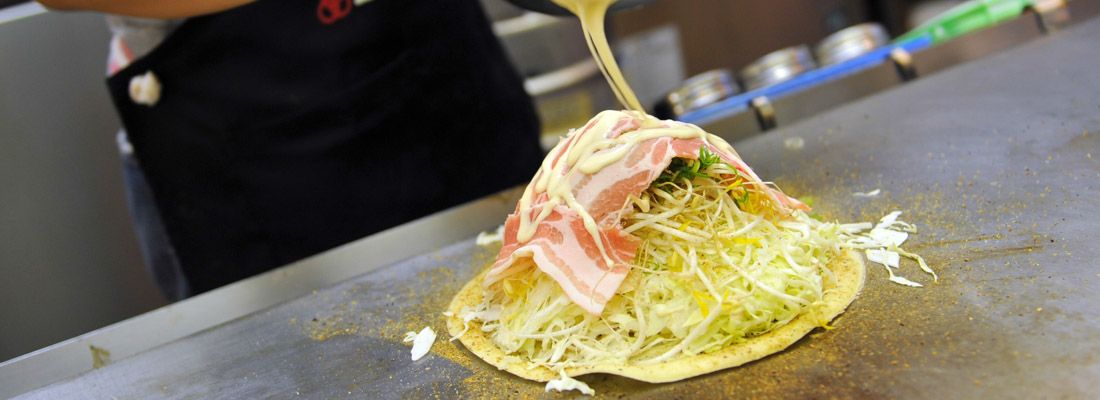
Okonomiyaki is a filling meal on its own. The base is flour, water and cabbage, and you can add all sorts of ingredients both inside and on top. The batter cooks on a griddle until it turns into a kind of pizza a couple of centimeters thick: simple and seriously tasty.
Contents
How to eat it
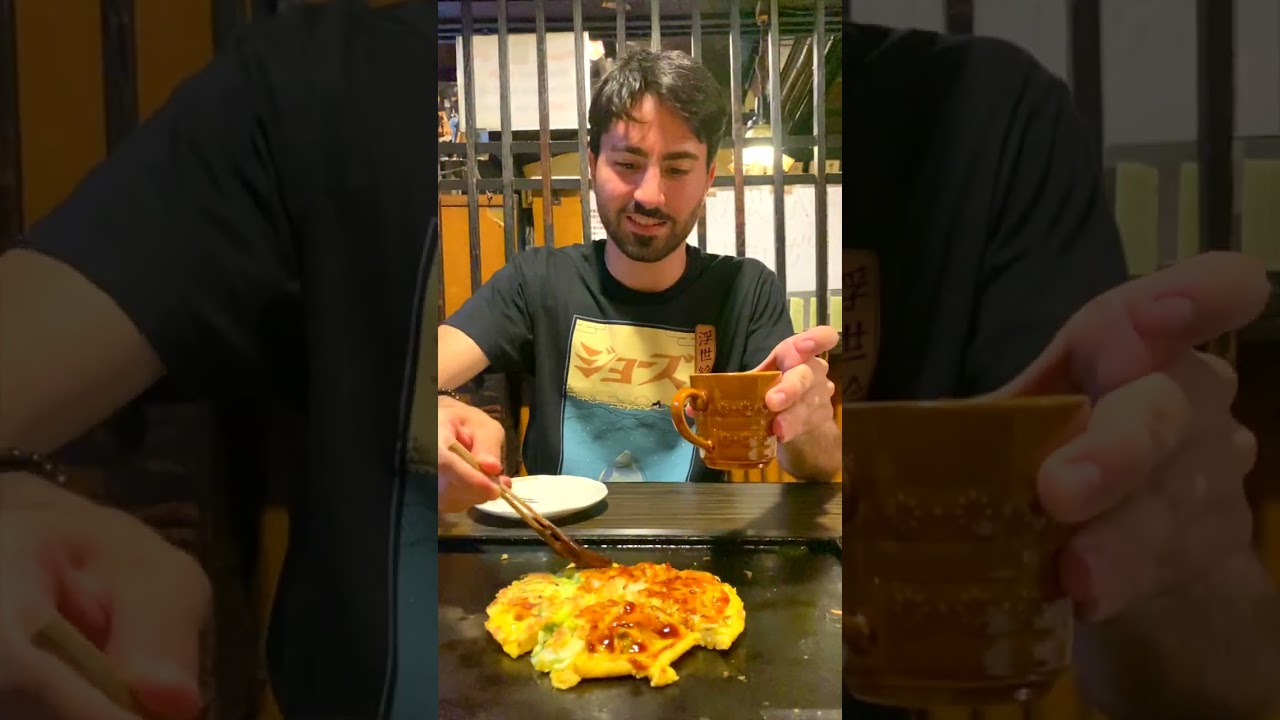
At some restaurants the cook makes the okonomiyaki for customers sitting around a big griddle. At others, each person gets a bowl of ingredients to mix, and you cook it yourself with your friends on a griddle at your table, which is half the fun. Either way, the okonomiyaki usually doesn’t go on a plate. You cut it into wedges and eat it straight off the griddle, which keeps it hot down to the last bite.
On the table you’ll find a small metal spatula called a hera. It’s for cutting, but a lot of people also eat with it instead of chopsticks. It feels a bit awkward at first, but after two or three bites you get the hang of it.
Where to eat it
The Osaka area has some wonderful okonomiyaki, and I especially recommend eating at one of the Chibo restaurants. It’s a really excellent chain. Expect to spend around 1,500–2,000 yen per person.
Okonomiyaki recipe
Making okonomiyaki at home is easy. Instead of a teppan, the classic Japanese griddle, you can just use a regular frying pan.
Difficulty: 3/5
Ingredients for 2 okonomiyaki
For the batter:
Flour: 300 grams
Eggs: 2
Water: 400ml
Cabbage: as needed
Bulldog sauce
Okonomiyaki mix
Fillings and toppings
“Okonomi” means “whatever you like,” so go wild and try new versions, including fusion versions with Italian ingredients. It’s also a great way to clear out the fridge.
For a seafood okonomiyaki, use cuttlefish, shrimp and octopus. For a meat version, use thinly sliced beef and pork belly.
Just before serving, you can top it with mayonnaise, ketchup or tonkatsu sauce, plus katsuobushi if you like. These are paper-thin flakes of dried bonito, and the heat of the dish makes them move as if they were alive.
To make it, mix the flour with the water, then add the cleaned, very finely shredded cabbage, followed by all the other ingredients, cut into small pieces.
Stir until the batter is well combined, then cook it in the pan over medium heat for a few minutes until it’s done.
You can also serve the okonomiyaki plain and let your guests pick their own toppings, with ketchup, mayonnaise, tonkatsu sauce and a small bowl of katsuobushi on the table.
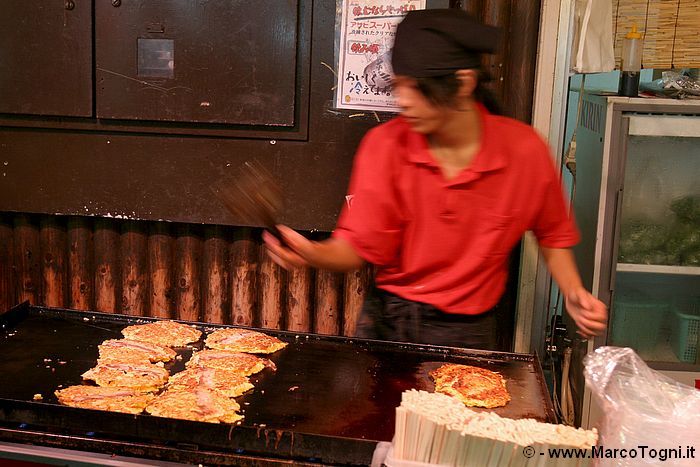
Okonomiyaki being made at a street stall in Osaka.
Okonomiyaki restaurants
Okonomiyaki is so popular that you’ll find restaurants serving it in every city and even in small towns. One of the best places to try the original is Chibo in Osaka, which has lots of branches all over the city.
It’s a casual place and not too expensive, and even the most loaded okonomiyaki on the menu is still reasonably priced.
One okonomiyaki is enough to fill you up.
Okonomiyaki for vegetarians
If you don’t eat meat or fish, okonomiyaki is trickier than it looks. Cabbage is the main ingredient, but the batter almost always contains fish-based dashi stock, and the dish normally comes topped with katsuobushi flakes and a sauce that contains fish extracts.
Some places are happy to make a meat-free version, but make it clear when you order and ask for your okonomiyaki without katsuobushi. Don’t assume the cook will think of it.
Regional versions
As I mentioned above, okonomiyaki is a Kansai tradition, but Japan has many variations, all fairly similar.
In Tokyo and the Kanto region, for example, monjayaki is popular. You can try it in Tsukishima, a Tokyo neighborhood packed with monja restaurants.
In Hiroshima the ingredients aren’t mixed. A thin crepe, the cabbage and soba or udon noodles are cooked in layers. In Hamamatsu, in Shizuoka Prefecture, they add takuan, pickled daikon radish, which gives the dish a distinctive flavor.
On Okinawa they make hirayachi, a kind of okonomiyaki that’s much thinner than the original. Osaka itself doesn’t stick to one version either. Modanyaki is a classic okonomiyaki with a layer of yakisoba noodles added, while negiyaki is much thinner, has no sweet sauce on top and comes covered in a mountain of green onions.
If you see them on the menu, they’re worth trying. They prove that okonomi, “whatever you like,” isn’t just a figure of speech.
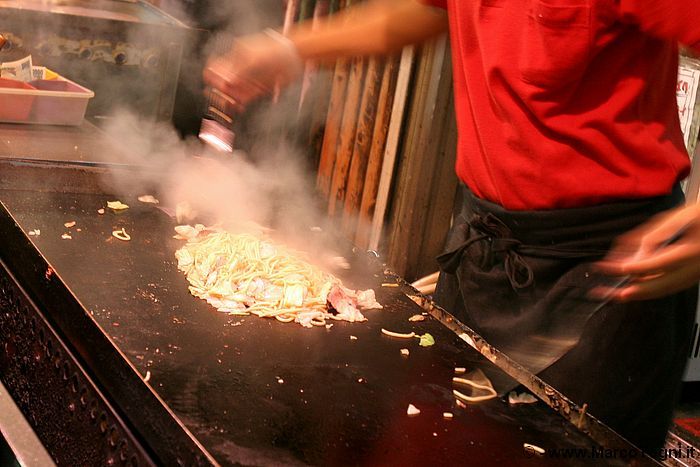
A young man making Hiroshima-style okonomiyaki.
Okonomiyaki in popular culture
The manga and anime Ranma 1/2 is full of little curiosities about Japan, and okonomiyaki restaurants turn up often. Ukyo Kuonji, in particular, runs a small okonomiyaki restaurant called Ucchan, where she does the cooking herself behind the counter.
In Ai Shite Knight, the heroine’s father runs an okonomiyaki restaurant, which you can see in the clip from the first episode below. The original manga dates from 1982.