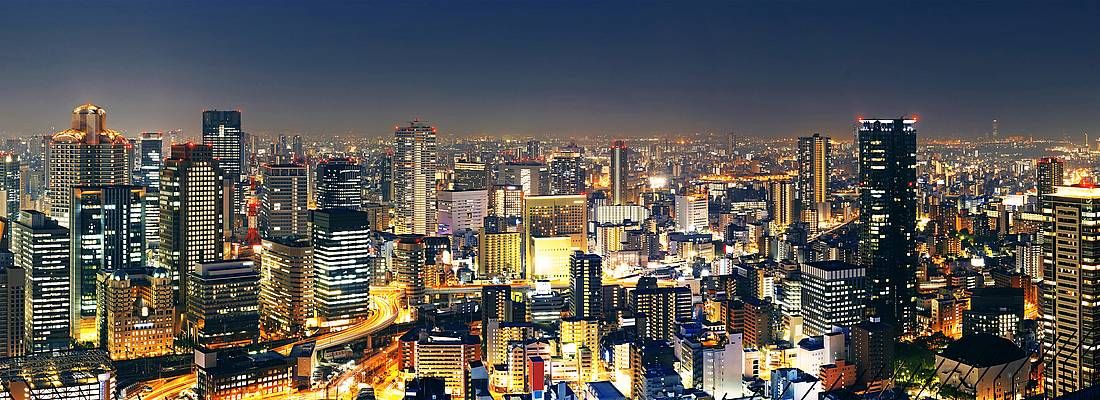
Things to Do in Osaka at Night
Osaka at night is a different city. Its liveliest areas are a long way from the elegance and composure you find in parts of Tokyo. Here you get neon signs, crowds pouring through the streets, street food and bars and restaurants that stay open late.
Osaka is a place you have to experience to understand, and you might not take to it the first time. But it’s after sunset that the city is at its best, with whole neighborhoods of izakaya, old-fashioned backstreets and views from high up.
If you’re in Kyoto and starting to get bored, you can be here in about half an hour.
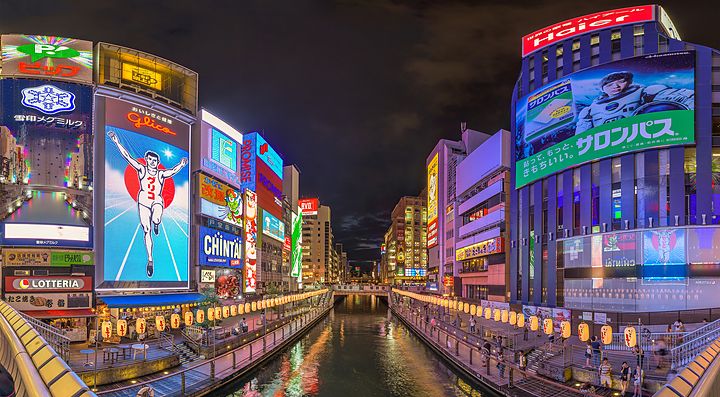
These are the central areas, perfect for an evening out. Crowds pour into the countless restaurants and shops, which stay open late. You can try all kinds of street food, especially takoyaki. If you’re young and into electronic music, check out Club Circus and Club Joule.
Hozenji Yokocho
Step out of the chaos of Dotonbori into a side alley and a moment later you’re on a stone-paved lane only a few meters wide, lit by restaurant lanterns. It’s one of those places that looks completely different at night. During the day you could walk past without noticing it, but after dark it turns quiet and intimate.
In the middle stands the small Hozenji temple, with its statue of Fudo Myoo covered in moss. People passing by splash a ladleful of water over it and stop for a moment to pray, and that’s exactly how the moss grew, one ladleful after another.
Shinsekai
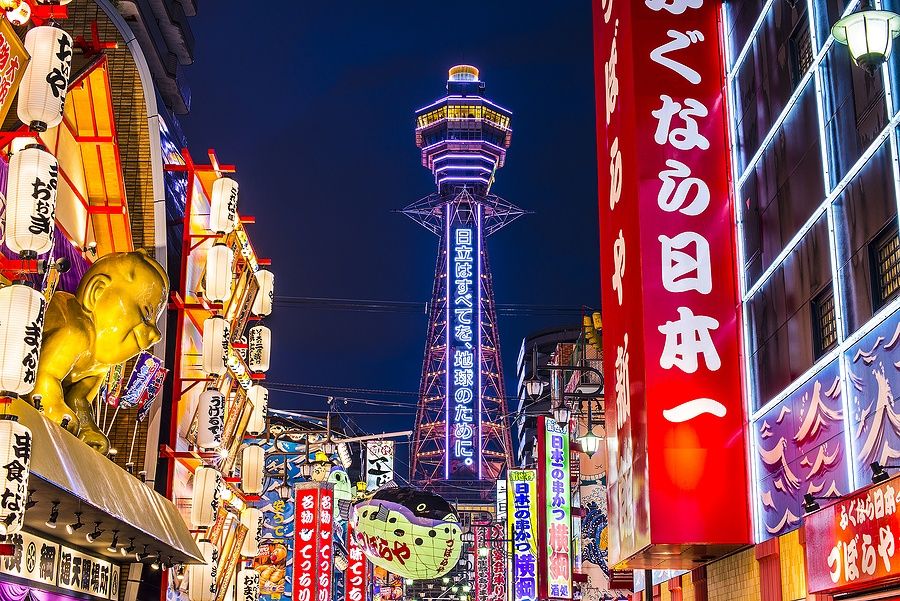
Shinsekai is a historic district built in the early 1900s, and the original idea, at least, was for it to look vaguely like Paris and New York. During the day it isn’t very interesting, but once the sun goes down the area takes on a very retro, old-Japan feel. Plenty of restaurants here serve pufferfish, although the local specialty is kushi-katsu (deep-fried skewers).
The heart of the area is Janjan Yokocho, a covered alley packed with skewer joints, soba counters and old game parlors where retirees still play shogi against each other. Towering over it all is Tsutenkaku Tower, which lights up in different colors at night.
At kushi-katsu places the sauce sits in a shared tray, and you dip only once. Around here, that’s the most important rule there is.
Spa World
This big complex of onsen and swimming pools sits right inside Shinsekai. It’s open all night and only closes for cleaning from 8:45 to 10:00 in the morning. The onsen are full of character, with interiors that evoke both Europe and Asia, and there are some nice saunas of different kinds too. It’s perfect for unwinding for a few hours.
Men and women swap between the European and Asian areas every month. Which one you get depends on when you go, so don’t be surprised if the people you’re traveling with describe baths that are nothing like yours. There are also pools and water slides that families love, while in the middle of the night it’s mostly just the bathing area that’s in use, and that’s the quietest time to go.
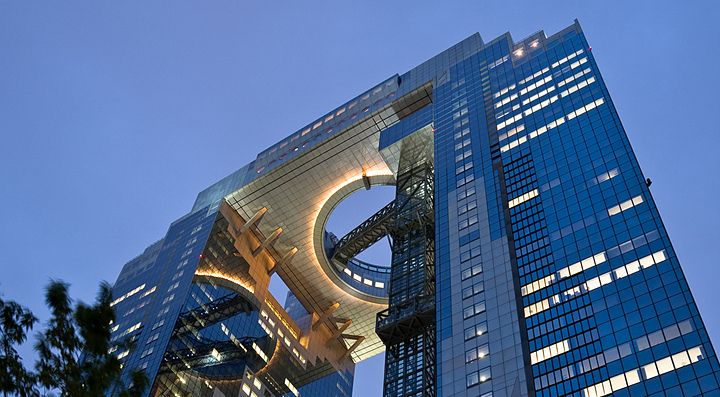
The building is in Umeda. From the top floor, 170 meters up, you get a gorgeous 360° view. If you’ve already seen a Japanese city from above, it isn’t essential, but if you’re nearby and want to look out over Osaka, it’s definitely a nice spot, especially at night! It’s open until 22:30. Nearby you’ll also find the modern Osaka Station City and Grand Front Osaka shopping centers, with restaurants open until 23:00.
Abeno Harukas
If you want a view from high up but you’re in the south of the city, the alternative is Abeno Harukas, a 300-meter skyscraper in Tennoji. The observatory takes up the top three floors and is glass all the way around. You walk a full circuit, and you can also step out onto an open-air terrace.
At night you can see all of Osaka lit up as far as the bay, and when the air is clear you can make out the outline of the Kansai mountains. The floors below hold a department store and restaurants, so you can have dinner and head up without going anywhere else.
Kitashinchi
If the shopping centers I just mentioned feel too polished and you want something more down-to-earth, walk 700 to 800 meters south to Kitashinchi. At night the whole area comes alive, with tons of small restaurants and bars. It’s getting more and more popular with travelers, but it still isn’t very touristy, so it’s worth a look if you want a taste of the real Japan.
Keep in mind that Kitashinchi lives off the business crowd. It fills up Monday through Friday, while on Sundays many places stay closed and the backstreets feel like a different neighborhood. Behind the signs on the buildings, often reached by tiny elevators, there are members-only clubs you can’t just walk into from the street. On the ground floors, though, you’ll find lots of tiny counter bars, izakaya and ramen shops where people end the night.
Tenma
If you want to drink like the locals, head to Tenma, just north of the center. Around the station, and especially under the tracks, you’ll find one of the densest clusters of izakaya in Japan, with plastic tables out on the sidewalk, curtains hanging over the entrances and people hopping from one place to the next for a plate of food and a beer.
There still aren’t many tourists here, menus are often in Japanese only, and prices are much lower than in Namba. Tenjinbashisuji, the longest covered shopping arcade in Japan, also runs through the area. The shops close in the evening, but the stretch with the restaurants stays lively.