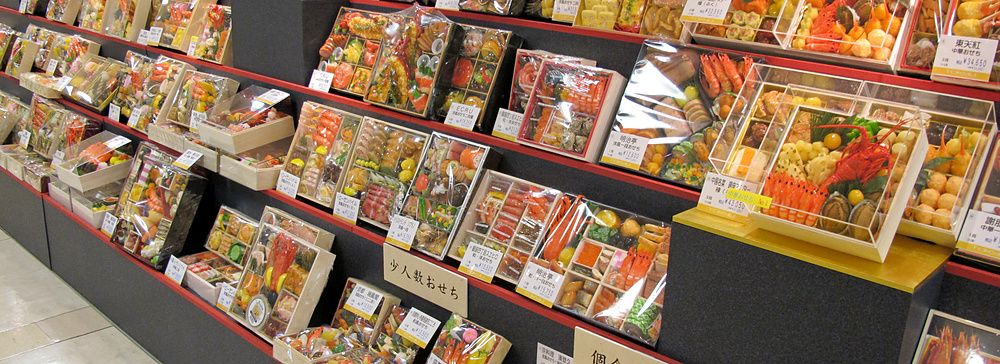
Osechi Ryori
Osechi ryori is the Japanese New Year meal, and it’s one of the most beautiful things you’ll see on a family’s table here. It comes in stacked lacquered boxes packed with small, colorful dishes, and each dish has a specific meaning: health, children, money, a good harvest.
Inside you’ll find black beans in syrup, herring roe, shrimp and sweet omelets, and almost all of it is eaten cold. It all tastes good, but a full box costs a lot, which is why I never buy one.
Contents
What osechi is
Osechi ryori is the set of dishes people in Japan eat during the first few days of the year, usually January 1 to 3. It isn’t one dish but a whole range of different foods, neatly arranged inside the jubako, a lacquered wooden box with two, three or four tiers stacked on top of each other.
The stacking has a meaning too: piling one tier on another stands for building up good fortune, with each good year adding to the one before. When the family sits down, each tier is lifted off and set on the table, and everyone helps themselves with chopsticks.

The name comes from osechiku, the food offerings made to the gods on the days that marked the turn of the seasons. At the imperial court in the Heian period, these offerings were part of official ceremonies. The custom of making a lavish meal just for New Year’s only spread among ordinary people during the Edo period. Over time the other occasions faded away, and the name osechi came to be used only for the food of the first day of the year, which in Japan is by far the most important holiday.
Why it’s eaten cold
Almost everything in an osechi is eaten at room temperature or cold from the fridge. People trying it for the first time are always a little puzzled, because they expect a hot, steaming meal.
The reason is both practical and traditional. In the first days of January you’re not supposed to cook: the hearth fire was left to rest and, above all, so were the women of the house, who spent the rest of the year at the stove. So osechi was made in the last days of December, and it had to last three days without spoiling.
That’s also why so many of the dishes taste the way they do. To make the food last, people used lots of sugar, soy sauce, salt and vinegar, so osechi is full of sweet, salty and sweet-and-sour flavors, much stronger than in everyday Japanese cooking.
If you’re expecting the light flavors of a sushi meal, be ready for black beans in syrup, omelets so sweet they could pass for dessert, and sweet-and-sour vegetables. I like it precisely because it’s unlike anything else you eat all year, but I can see why some people are sick of the sugar by day three.
What’s inside
Each dish gets its meaning from a play on words or from the shape of the ingredient. Knowing what you’re eating makes it a lot more fun, so here are the ones you’ll find almost every time.
- Kuromame: black beans cooked for a long time in syrup. Mame is also a word for working hard and staying healthy, so the beans are a wish for a good year.
- Kazunoko: marinated herring roe, crunchy and a little salty. There are countless eggs all stuck together, so they’re a wish for lots of children and a big family.
- Tazukuri: small dried sardines candied with soy sauce and sugar. They were once used as fertilizer in the rice paddies, and the name itself roughly means “making the fields,” so they’re a wish for a good harvest.
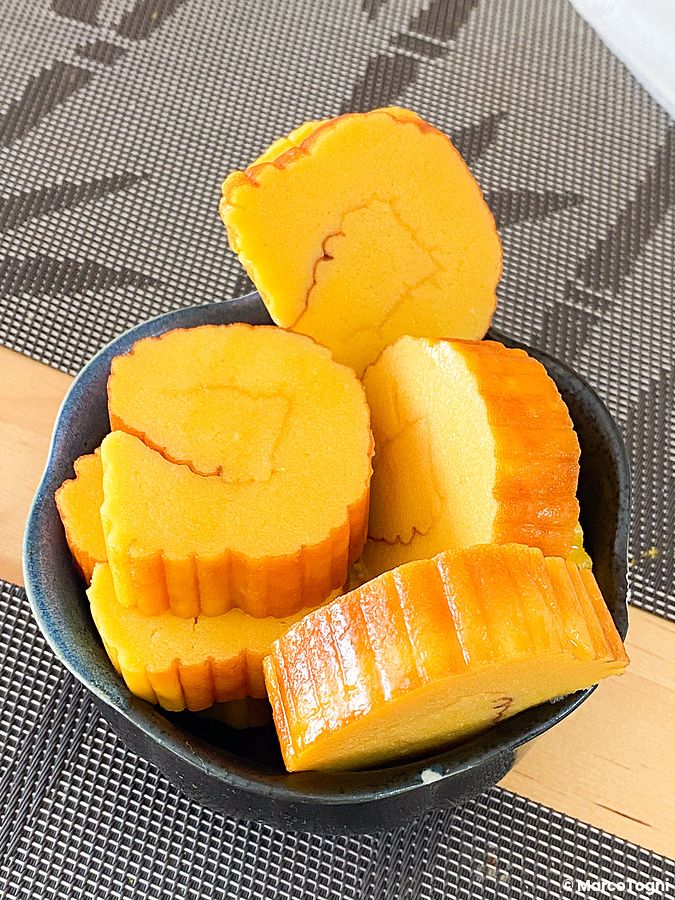
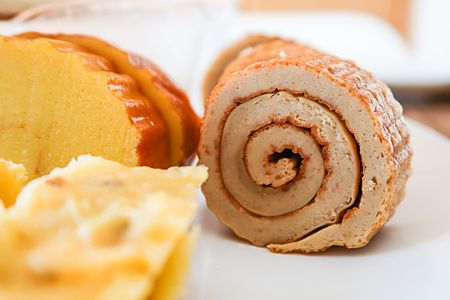
- Datemaki: a rolled omelet made with fish paste, soft and very sweet. Its shape looks like an old paper scroll, so it’s linked to study and learning.
- Kurikinton: a golden sweet potato mash with chestnuts in syrup. The gold color is a wish for wealth, and kids usually like it.
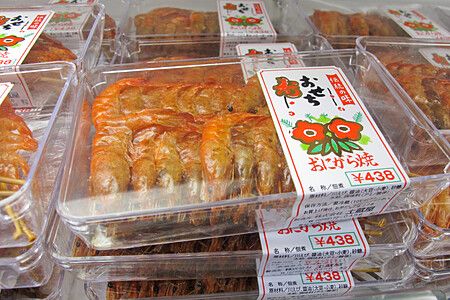
- Shrimp: cooked whole, with their backs curled. The shape looks like an old man bent over, so they’re a wish for a long life.
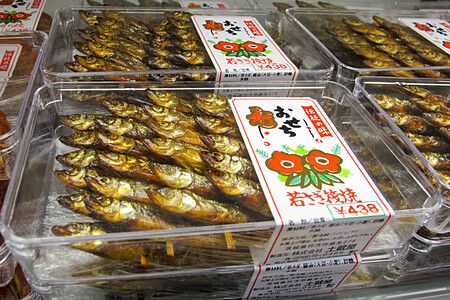
You’ll almost always find kamaboko too, slices of fish paste in white and red, the festive colors in Japan, and kohaku namasu, thinly sliced daikon and carrot in a sweet-and-sour dressing in the same two colors. The lower tiers often hold nishime, root vegetables cooked slowly in broth: burdock, carrots cut into flower shapes, shiitake mushrooms, konnyaku and lotus root, whose holes let you see far into the future.
Then there’s kobumaki, little rolls of kombu seaweed tied with a strip of dried gourd. They’re there because kombu sounds like yorokobu, “to be happy.” The more lavish boxes also include sea bream, lobster or beef, which have little to do with tradition but look impressive.
Regional differences
Osechi varies a lot from one part of Japan to another, and even from one family to the next. The usual example is the three basic dishes, the ones no osechi can do without. In the Tokyo area they’re black beans, candied sardines and herring roe, while around Osaka and Kyoto the candied sardines are often replaced by tataki gobo, boiled and pounded burdock dressed with sesame and vinegar.
The fish varies by region too, and many families add their own recipes, handed down from one generation to the next.
On New Year’s, osechi almost always comes with ozoni, a soup with mochi, the pounded rice cake. This one is actually hot, and the regional differences are even sharper: clear broth and square mochi in Tokyo, white miso and round mochi in Kyoto, and endless variations in between.
Many families have otoso with the meal, a sake flavored with medicinal herbs that people sip on the morning of January 1 to wish for good health.
How the tiers are arranged
A jubako used to have as many as five tiers, but today the most common version has three. The order isn’t random, though every family and every shop does it a little differently.
The top tier usually holds the celebratory dishes and the snacks that go with sake: black beans, herring roe, sardines, kamaboko, datemaki and kurikinton. The second tier is for fish and meat, often grilled or marinated, like shrimp, sea bream or salmon. The third holds the vegetables cooked in broth, which are also the most filling part.
In theory each compartment should hold an odd number of pieces, because in Japan odd numbers are lucky. Hardly anyone bothers with this in store-bought boxes, but in homes where osechi is still made at home, people stick to the rule.
Osechi gets photographed constantly because of what you see when you lift the lid: every compartment is filled to the brim, and the colors are picked to look good side by side.
How much it costs
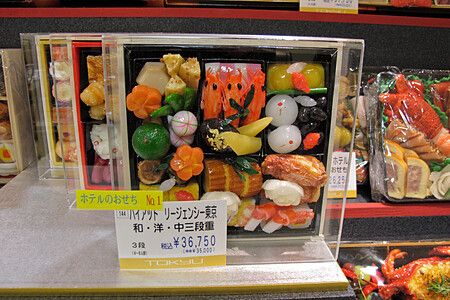
Now for the painful part. A full osechi for three or four people costs around 25,000–30,000 yen on average, but it’s a good idea to check current prices before you order.
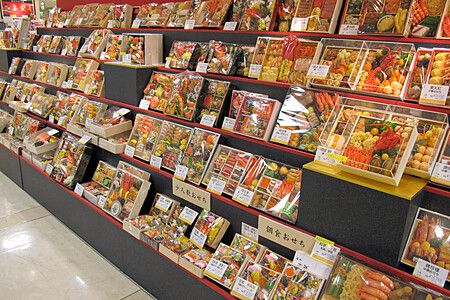
That’s just the average. There are cheaper versions, but there are also boxes from department stores and famous restaurants that easily top 50,000 or 100,000 yen. At the best-known department stores, the catalog runs from around 10,000 yen up to prices that look like a typo: hundreds of thousands of yen for boxes from fine-dining Japanese restaurants.
Honestly, it’s all good and some dishes are excellent, but for me what you eat isn’t worth what you pay, so every New Year’s I skip it.
An average box is full of small portions, and part of what you pay covers the presentation and the work done by hand, and part is just because it’s New Year’s. Buying the ingredients separately at the supermarket isn’t cheap either, because in the last days of December things like herring roe, kamaboko and shrimp cost much more than usual.
Where to buy it
Today most Japanese families no longer make osechi from scratch. They buy it ready-made, or go half and half, making some dishes at home and buying the rest. There are plenty of options, and the price varies a lot depending on where you order.
- Department stores like Takashimaya, Mitsukoshi and Daimaru have huge catalogs with versions made by famous restaurants, not just Japanese but French, Italian and Chinese too. They’re the most expensive option, but also the one with the most variety.
- Supermarkets like Aeon and Ito Yokado sell full osechi at lower prices, and you can reserve them in store or online.
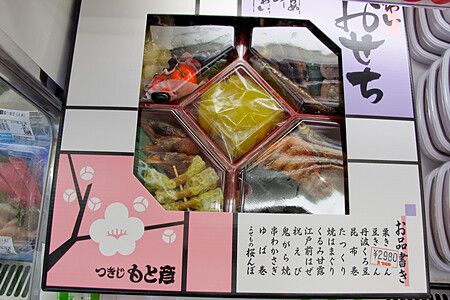
- Konbini like Seven-Eleven, Lawson and FamilyMart take preorders for their own boxes, and that’s the easiest option if you live in Japan.
- Online shops and restaurants deliver to your home, often with a choice between frozen and chilled osechi.
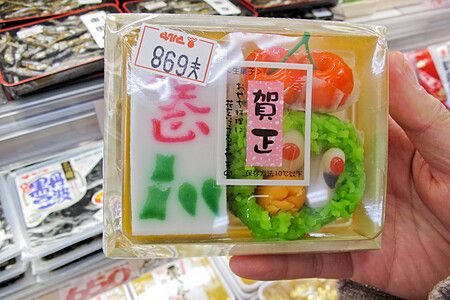
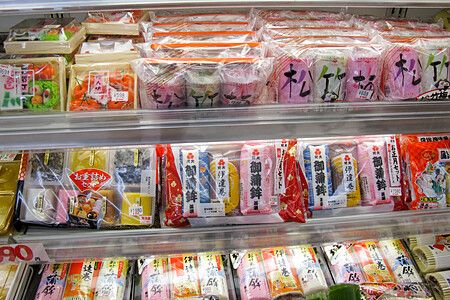
- At the end of December, department store food halls and supermarkets also sell individual dishes in small containers.
Frozen osechi thaws in the fridge for about a day before you eat it, and it has the advantage of arriving with plenty of time to spare. Chilled osechi is closer to homemade, but it only arrives in the last days of the year and has to be eaten quickly. Make sure you read the thawing instructions carefully: if you take it out at the last minute, you’ll sit down to eat with half the dishes still frozen.
When to order
Reservations open very early, between late summer and early fall, and department stores put out their catalogs while it’s still hot out. Ordering early often gets you an early-bird discount too.
Deadlines usually fall between mid- and late December, with delivery or pickup set for December 30 to January 1. The most popular boxes from famous restaurants, though, sell out long before the official deadline.
If you put it off too long, you still have options. In the last days of the year, many supermarkets and department stores sell small osechi for one or two people that you can buy on the spot, and individual dishes are everywhere.
The busiest day is December 31, when department store food halls are packed with people doing their last-minute shopping and there are long lines at the fish and sweets counters. If you’re just going to look around, it’s quite a sight, but if you actually need to buy something, I’d go earlier.
Trying it as a visitor
If you’re traveling in Japan over the New Year holidays, you can try osechi without buying a whole box. The easiest way is to stay at a ryokan or hotel that offers a New Year’s package. Many of them serve osechi, or a smaller version of it, at breakfast or dinner during the first few days of January, often with ozoni.
The osechi comes with the room, but rates go up at that time of year because it’s peak season for Japanese travelers.
The other option, and in my opinion the smartest one, is to go to the big department store food halls in late December and pick up three or four individual dishes to eat in your room or in a park. A small pack of black beans, a slice of datemaki, a little kurikinton and two slices of kamaboko are enough to get the idea, and you’ll pay a fraction of the price of a box.
They’re also the easiest dishes to enjoy if you’re not used to this kind of food. They’re sweet and soft, with no challenging flavors. Herring roe and caramelized sardines are less of a hit the first time around, but you should try them at least once.
During the first few days of the year a lot of restaurants and small shops are closed, so if you’re planning to eat out on January 1, check ahead. Konbini and chains stay open, and konbini often carry a few osechi dishes in single-serving packs.
Is it worth it?
It depends on what you’re after. If you have family or a group of friends in Japan and want to do New Year’s the way people do it here, ordering a full osechi is a lovely way to spend January 1 around a table, lifting off the tiers one at a time and telling each other what every dish means.
If there are just two of you or you’re traveling alone, a box for three or four people is too much food and too expensive, and you could end up eating black beans for three days.
Honestly, every year when I see the catalogs in the shops, I stop to look at them and then move on. It’s not that I don’t like osechi. Far from it: it’s one of the most beautiful dishes in Japanese cuisine, and I don’t just mean the way it looks.
But for that money I can eat out several times and pick what I eat. If I were you, I’d try the individual dishes you’re most curious about and leave the lacquered box to people with a table full of relatives to feed. Which would you go for, the whole box or two small packs from the supermarket?