 592 m
Adashino Nenbutsu-ji592 m
With over 8,000 statues.
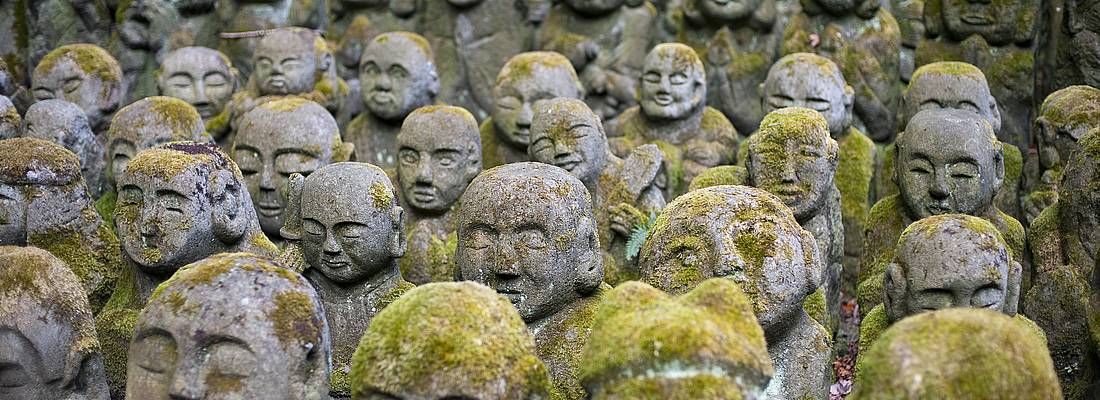
A little-known temple on the edge of Kyoto, hidden in the hills of the western Arashiyama district, about a 30-minute walk from the famous bamboo forest. Otagi Nenbutsu-ji rarely shows up in guidebooks, but it’s absolutely worth the trip. Curious travelers who make it out here are rewarded with an unusual sight: over 1,200 quirky, one-of-a-kind statues.
The statues are known as rakan. They depict the disciples of the historical Buddha, who are also seen as enlightened beings with supernatural powers. Their funny, eccentric expressions are part of the appeal, but what really makes them special is that every statue is different, and no two are alike. The statues only started filling the temple grounds fairly recently, while the temple itself has a long history with plenty of bad luck along the way.
The temple’s origins go back to 766, when Empress Shotoku had it built in a different part of the city, on the banks of the Kamo River. A flood swept it away, and it was rebuilt as a branch temple of Enryaku-ji. That wasn’t the end of its misfortunes. Wars, earthquakes and typhoons destroyed most of its buildings, and the temple had to relocate several times before it ended up where it stands today. Things started looking up in 1955, when the sculptor and monk Kocho Nishimura stepped in. With help from local people, he restored the temple to its former glory.
It was Nishimura himself who came up with the idea of having local people and the temple’s visitors carve the statues, whether they were skilled carvers or complete beginners. They made them under his guidance and with his help between 1981 and 1991. The result is a collection of kawaii sculptures with all kinds of funny expressions: some are smiling, some look serious, some seem to be waving and others are meditating. Together they make up a really surprising cast of characters that often reflect the people who made them, down to small details like glasses, sports gear and cups of tea. The most fun part of visiting is going from one statue to the next and picking out what sets each one apart. Although the statues are recent, they’re partly covered in moss, which makes them look old and adds a lot to the atmosphere.
The original goal was much more modest: 500 statues. Over ten years, worshipers carved and contributed 1,200, and the project only stopped because the temple ran out of room. Nishimura used to say that if you carve without thinking about anything, the face that comes out ends up looking like whoever is holding the chisel. That’s why you’ll spot ordinary faces among the rakan, almost like portraits of everyday people.
Once you’ve seen the statues, take a look at the rest of the temple. It’s small, but very pretty. Two Nio statues, the guardians who protect the temple, stand watch at the entrance, and beyond them are three golden bells that are considered sacred and highly valued. Finally, at the top of the hill, you come to the heart of the temple, a small building dedicated to Kannon and surrounded by statues. Take some time to explore the gardens and enjoy the silence and calm of this magical place.
The statues may be recent, but the temple itself is anything but. The main hall is a Kamakura-period building designated an Important Cultural Property, and it houses a thousand-armed Kannon worshiped as a protector against misfortune. Given this place’s troubled history, that says a lot. The Nio gate is centuries old too. It dates back to the Edo period.
The temple is in the upper part of Sagano, beyond Arashiyama. From JR Saga-Arashiyama Station, a taxi is the fastest option and drops you at the entrance in just a few minutes.
The bus takes about twenty minutes from Arashiyama to the stop right in front of the temple.
The nicest way to get there, though, is to walk from the bamboo forest along the old Saga-Toriimoto street, past thatched-roof houses, small shops and little restaurants. Allow 40–45 minutes, almost all of it gently uphill.
This place is on MarcoMaps
Otagi Nenbutsu-ji Temple
My map of Japan: over 4,000 places I've tried myself, each with photos, rating, and hours. Filter by category and rating, find veg-friendly spots and places near you with GPS. No sign-up, right from your phone.


If you can choose when to come, the best time is late November. The maples around the edge of the garden turn red, and fallen leaves settle on the heads and shoulders of the rakan, who look like they’re wearing them. In spring and summer, the greenery takes over instead, along with the bright moss after it rains, when the stone darkens and the statues look even older.
Whatever season you pick, it’s still a surprisingly quiet spot. Even on days when Arashiyama is packed, you’ll almost always share it with just a handful of people.
Otagi Nenbutsu-ji Temple - nearby you will find: