Philosopher’s Path
The Philosopher’s Path is a quiet footpath along a small canal in the northern part of Higashiyama. It starts near Ginkakuji and winds south for about two kilometers, almost all the way to Nanzenji.
It’s named after Nishida Kitaro, a philosophy professor who lived from the late 1800s to the mid-1900s and walked it every day on his way to work at Kyoto University.
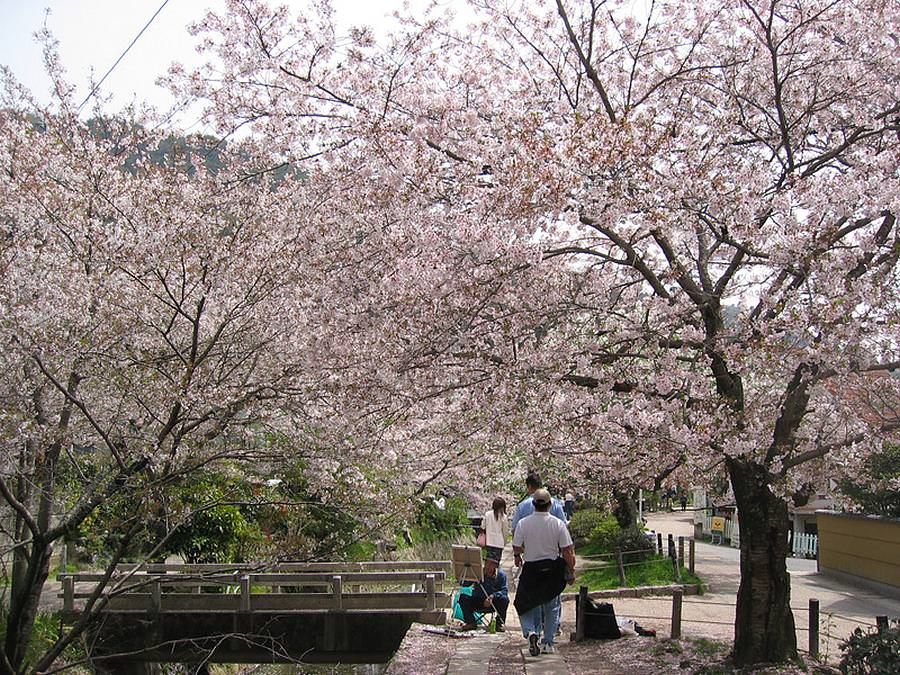
It gets very busy, especially in cherry blossom season. Outside spring and the mild days of fall, it isn’t at its best.
Contents
Getting There
It's best to start from the north end, near Ginkakuji. Get off the bus at Ginkakuji-mae or Ginkakuji-michi and you'll reach the canal in a few minutes on foot.
If you're coming by train, from Demachiyanagi Station (Keihan Line) you can take a bus to Ginkakuji-michi or walk for about 30 minutes.
The walk ends to the south near Eikando. From there, going past Nanzenji, you'll reach Keage subway station in about 20 minutes on foot.
Useful Info
- Ginkakuji-mae and Ginkakuji-michi stops (buses 5, 17, 100 and others): north end
- Keage Station (Tozai subway line): south end, 20 minutes on foot
- From Demachiyanagi (Keihan), buses 102 and 203 to Ginkakuji-michi
Map
This place is on MarcoMaps
Philosopher's Path
My map of Japan: over 4,000 places I've tried myself, each with photos, rating, and hours. Filter by category and rating, find veg-friendly spots and places near you with GPS. No sign-up, right from your phone.
- 4,000+ places
- Rating, photos, and hours
- Veg friendly
- Near me (GPS)
- Favorites without login
- Works offline


Creative Commons opencontent

Creative Commons robertpaulyoung
Creative Commons Lost in Japan, by Miguel Michán
Creative Commons Lost in Japan, by Miguel Michán
The canal and Kansetsu’s cherry trees
The path follows a small canal that branches off the Lake Biwa Canal, which was built in the late 1800s to bring water to Kyoto from Japan’s largest lake. The banks are lined with stone, and every so often little bridges lead across the canal to houses and temples.
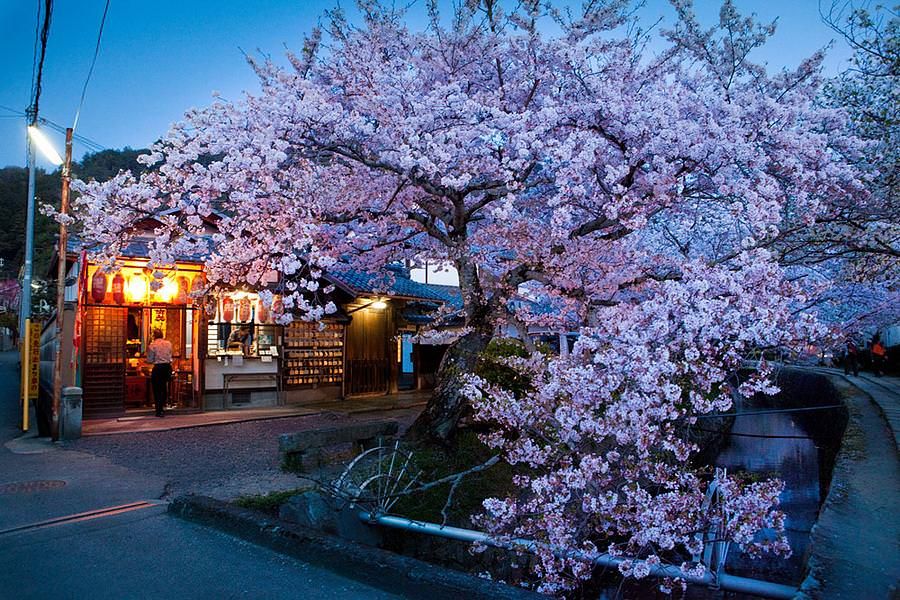
The cherry trees the walk is famous for go back to 1922, when the painter Hashimoto Kansetsu, who lived right here, had them planted. That’s why they’re called Kansetsu-zakura.
When the blossoms are over, the petals fall into the canal and form pink carpets that drift slowly downstream. In the fall, it’s the red maples that color the path, especially along the southern stretch.
Temples along the way
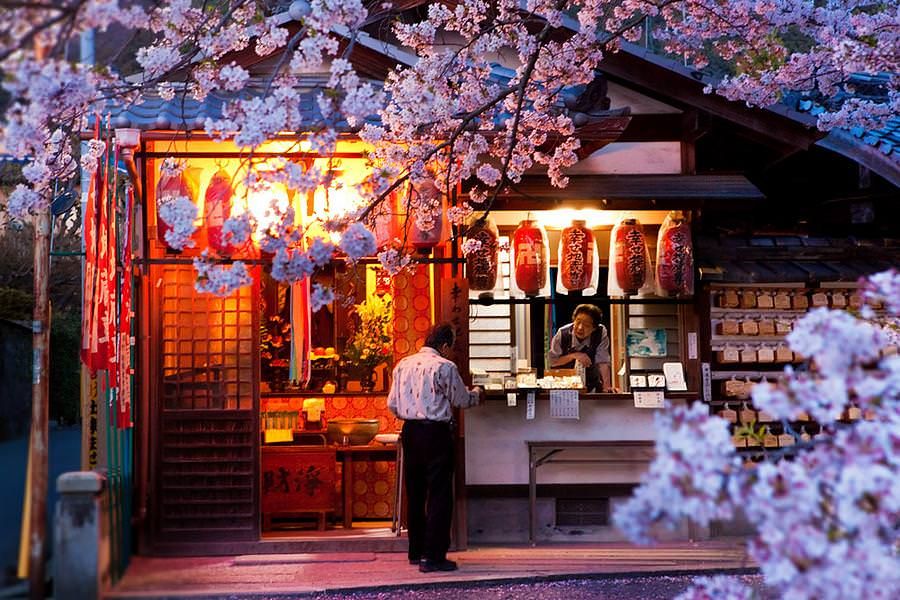
Above all, the walk strings together small temples and shrines, and they’re usually not very crowded. The most unusual is Otoyo jinja. Instead of the usual lion-dogs guarding the shrine, you’ll find two stone mice, because legend says a mouse once saved the life of the god worshipped here.
Other temples, like Anrakuji and Reikanji, are open only at certain times in spring and fall, so you might find them closed.
At the southern end, Nyakuoji Shrine marks the end of the path. Just steps away is Eikando, one of Kyoto’s best-loved temples for its red fall leaves.
Nishida Kitaro and the path’s name
Nishida Kitaro is considered the father of modern Japanese philosophy and the founder of the so-called Kyoto School, which tried to bring Western thought and Zen Buddhism together.
The path only got its current name, Tetsugaku no michi, in the 1970s, thanks to local residents who had worked to protect the canal.
Along the way, look for the stone engraved with one of his poems. It says, roughly: “Others are others, I am I. Whatever happens, I walk my own path.” It’s a fitting thought for a walk you should take slowly.