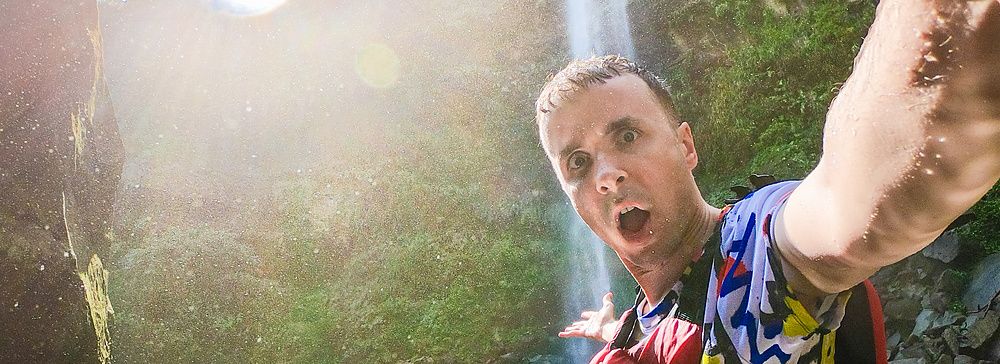
Pinaisara Falls
A waterfall in the middle of the subtropical jungle in northern Iriomote, reached first by canoe through the mangroves and then on foot through the forest, where the trip ends with you jumping into the water right below the falls. Pinaisara Falls is the tallest waterfall in Okinawa, and you can see it from below while you swim in the pool, or from above, with the forest and the sea spread out beneath you.
It’s the trip I recommend to anyone coming to Iriomote, even for just a day. It sounds like an expedition, but families, couples and people who’ve never held a paddle all do it.
Contents
What you’ll see
Reaching the falls is the payoff, but the whole route is part of the trip. Here’s what you come across, in order:
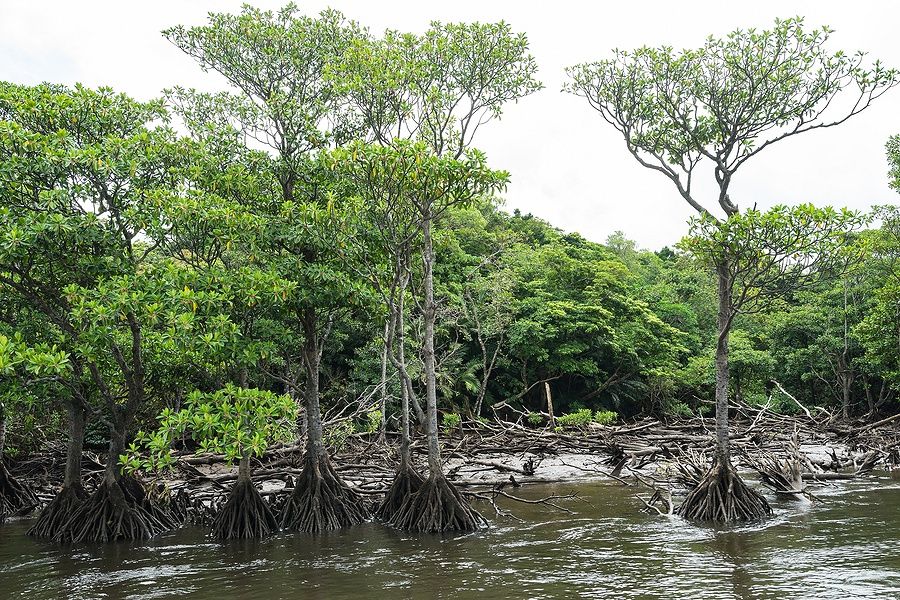
- Canoeing on the Hinai River: you paddle through the mangroves, with roots sticking out of the water along both banks. The river is wide and still, more like a lake than a river.
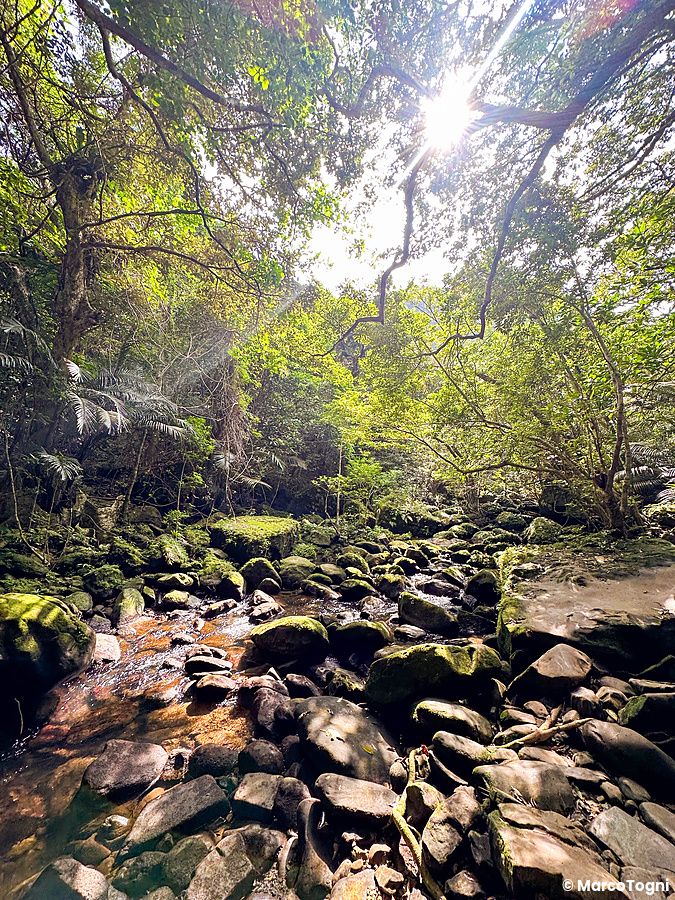
- The jungle trail: moss-covered rocks, a stream so clear you can see every pebble on the bottom, and towering trees shading everything.
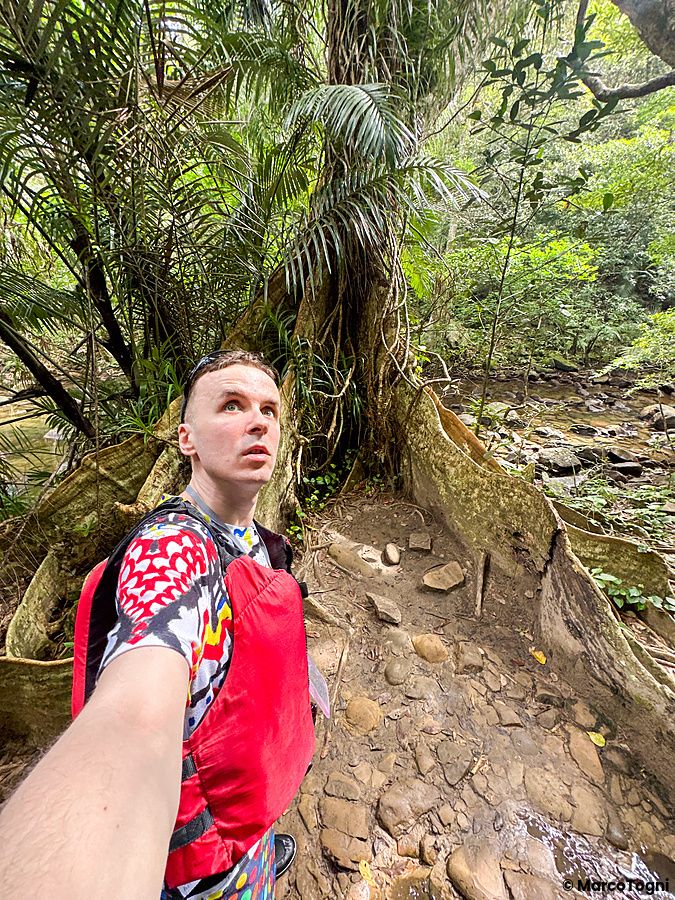
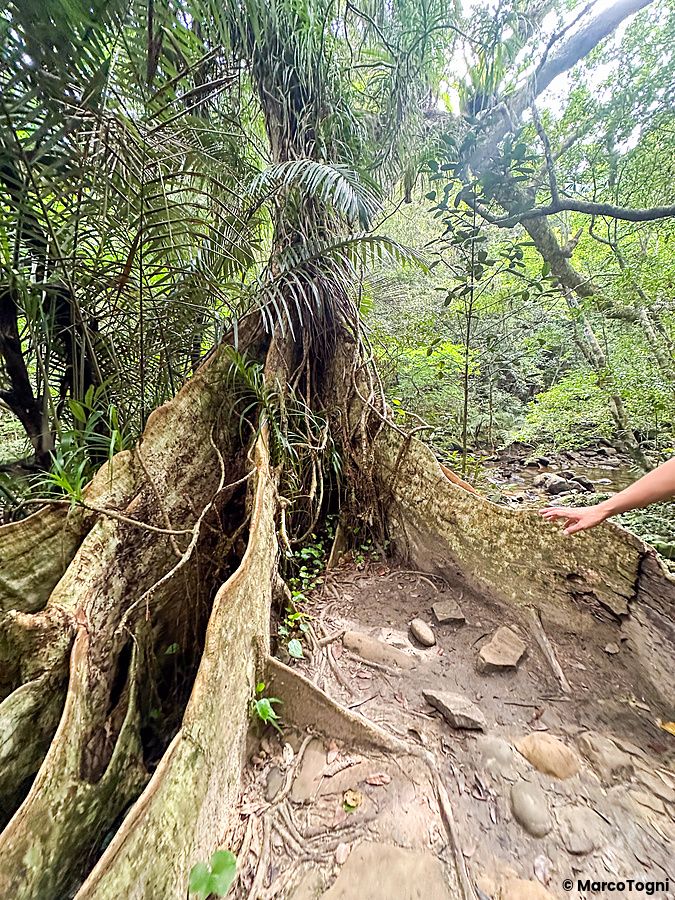
- Buttress-root trees: along the trail, tropical trees grow flat roots as tall as walls that fan out from the trunk. You’ll definitely end up touching one, because you won’t be able to help it.
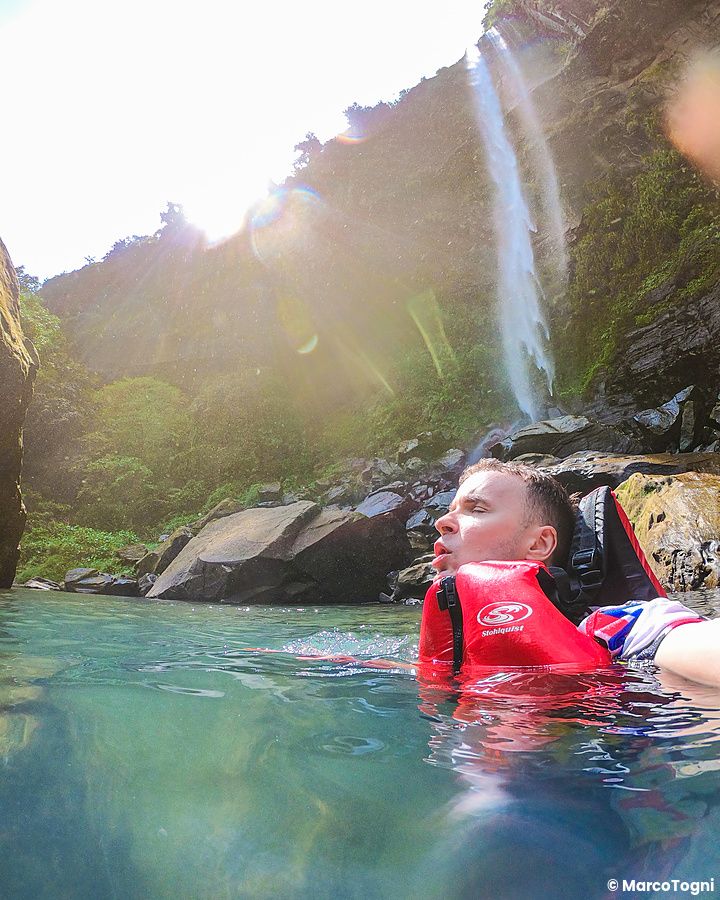
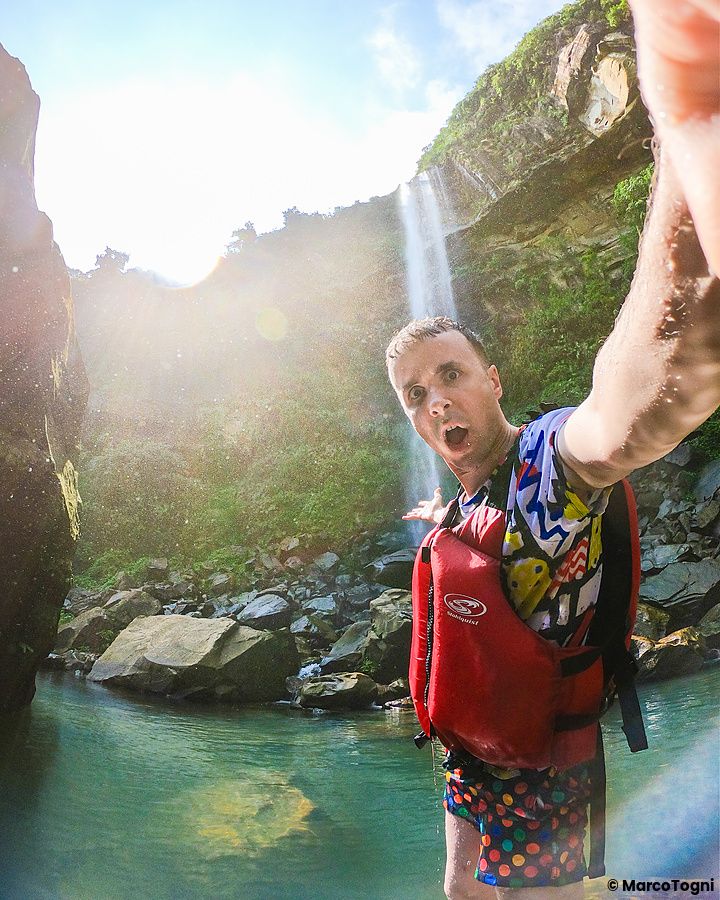
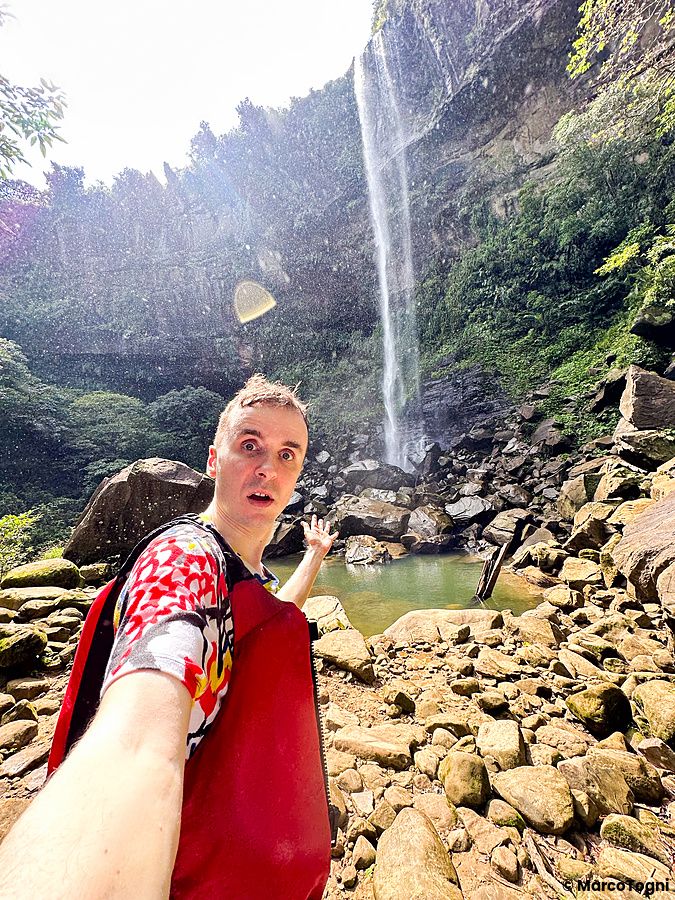
- The pool under the falls: water somewhere between green and turquoise, a rock face covered in plants, and the waterfall dropping straight down from above, white and thin like a beard. That comparison isn’t mine. In the island dialect the name means something like a hanging white beard, because of the way the water slides 55 meters down the rock face.
- The top of the falls: from up there you can see the forest running down to the mangroves, the bay, and the open sea with the small islands off the coast.
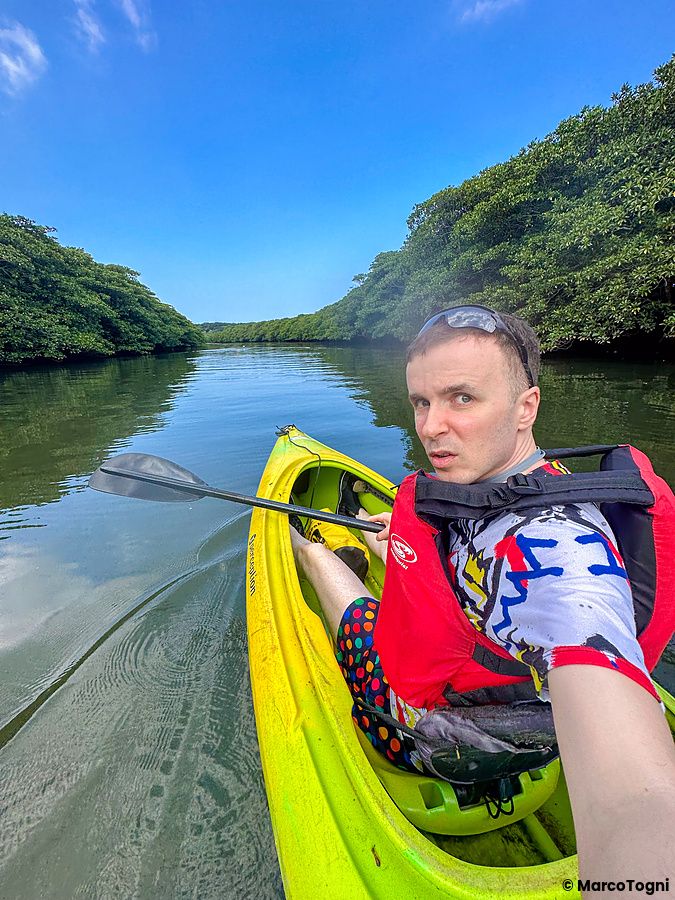
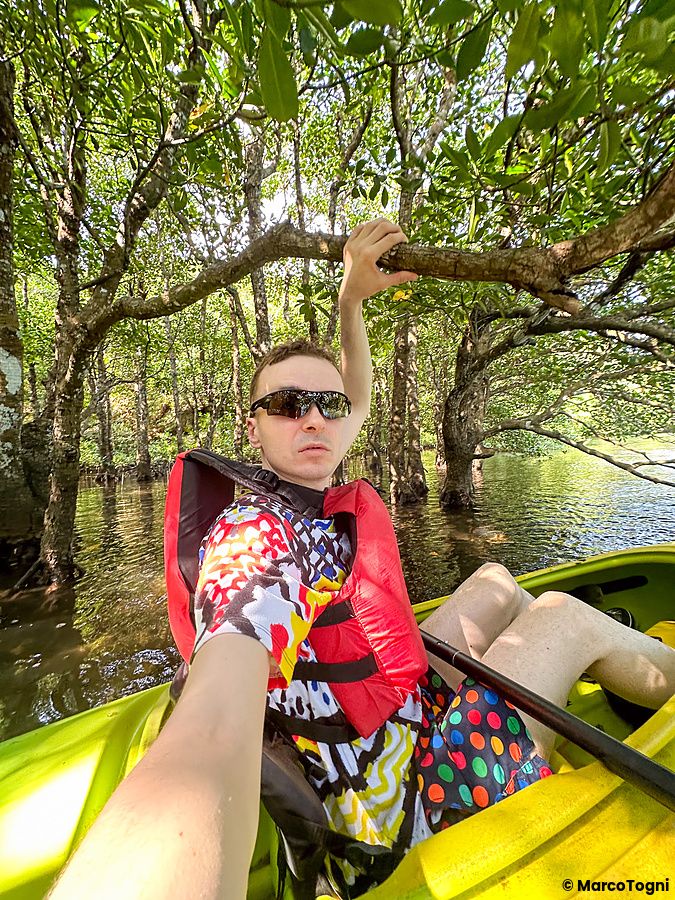
Canoeing is easier than it looks. The canoes are wide and stable and don’t tip over, so even if you’ve never paddled before, you’ll get the hang of it after a few strokes.
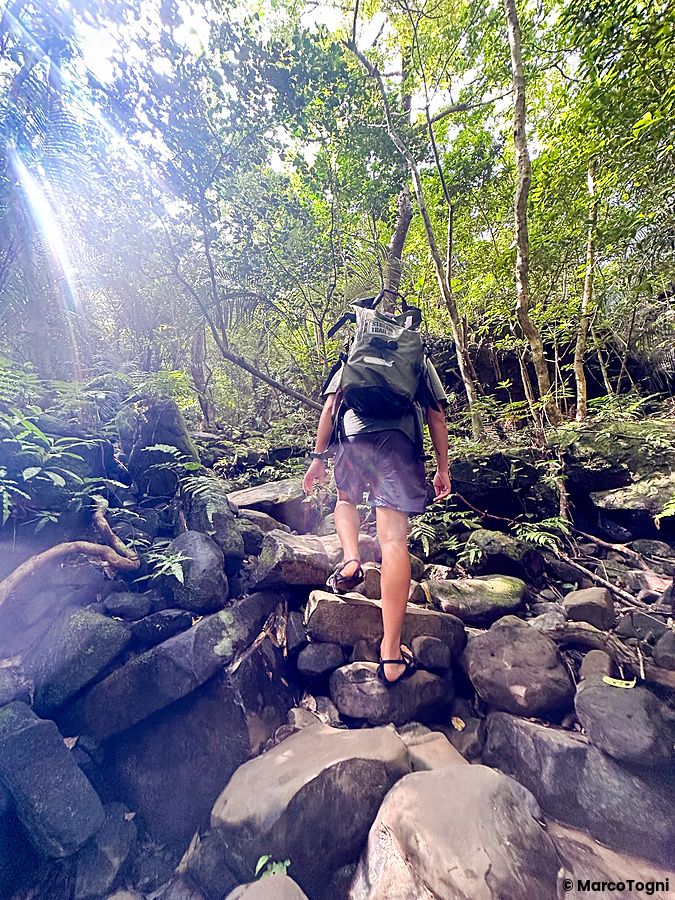
The trail is a different story, and you need to take it seriously. You climb through the forest over roots and rocks, with some steep stretches and a few narrow spots, and after rain there’s mud everywhere. If you have bad knees or struggle with stairs, you’ll feel it.
Not every tour covers both. The shorter trips go either to the pool or to the top, and if you want both, you need the long tour.
If you have to pick one, I’d say go for the pool. From the top you get the whole landscape, but you don’t really see the waterfall, because you’re standing on top of it. From below, you have the whole thing right in front of you, with the water hitting your face and the roar drowning out everyone’s voices.
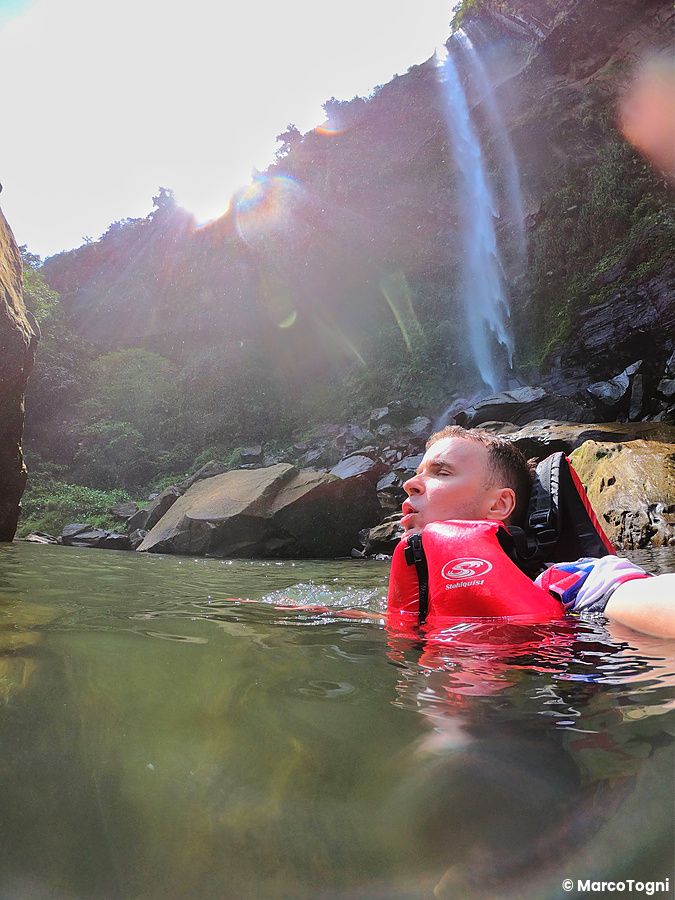
You get in the water wearing a life jacket, so you float easily even if you’re not a strong swimmer. The water is colder than the sea, but after the climb through the humid jungle you won’t notice it at all.
You can’t get to these falls on your own. The area is protected. You can only go in with an authorized guide, and there’s a daily cap on visitors. The guides are locals who know every plant and every bird, and they stop to explain things along the way, which makes the walk feel much shorter than it is.
It ends up feeling like the adventure of a lifetime, and maybe it really is, but it’s a simple trip and anyone can do it. When people ask me what to do in Okinawa besides the beach, this is always my answer, because in a single outing you paddle along a mangrove river, hike through a jungle of giant trees and finish with a swim under a waterfall. It’s a side of Japan almost nobody imagines.
When to go
The falls change with the seasons more than you’d think. From summer into fall, people come for a swim. It’s hot, you’ll happily stay in the pool for a long time, and the light filters through the leaves all the way down to the water.
In winter, swimming is for the brave few, but the falls are still beautiful, and after a few days of rain they’re fuller, with more water coming down and a louder roar. If getting in the water matters most to you, pick the warm months.
Crowds aren’t an issue here, precisely because of that cap on visitors. In the pool you’ll find a few other groups with their guides, some people taking photos and others floating, but nobody’s jostling.
The weather matters much more. In heavy rain the trail gets slippery and trips can be canceled, and when it’s overcast, the sea you see from the top loses all its color. Sunny days after a few dry ones are when both the hike and the view from above are at their best.
What to bring and how hard it is
There’s no way to stay dry. You step out of the canoe into the water, wade across streams and sweat a lot. Wear your swimsuit under your clothes from the start and choose things that dry fast, no skirts. You also need shoes with good grip on wet rock, because the trail is risky in flip-flops.
The climb is the hard part. It isn’t long, but it doesn’t let up. The air is humid, and you always have to watch where you put your feet. On the plus side, almost the whole trail is shaded by trees.
You can do it with kids, as long as they’re old enough to paddle a bit on their own and walk the whole way themselves. It’s not suitable for small children or for anyone with a stroller.
For photos, the pool is the best spot. Get in the water facing the falls and frame the shot vertically so the whole drop fits in, from the plants at the top down to the foam. The red life jacket against the turquoise water catches the eye right away.
At a glance
- Highlight: swimming in the pool, with the waterfall dropping straight down in front of you.
- When to go: in the warm months for swimming, on a sunny day after a few days without rain.
- Best for: anyone who wants a day of adventure in Okinawa without being the sporty type, including families with older kids.
- Atmosphere: mangroves and still water on the way in, humid forest and giant roots, then the roar of the waterfall drowning out everything else.
Final thoughts
Pinaisara Falls isn’t something you just look at. It’s an outing where you paddle, climb over roots, get muddy and finally jump in. The waterfall itself is the reason to go, but the way there is what makes this trip different from anything else in Japan, and it’s worth every drop of sweat.
If you’re deciding what to do on Iriomote, start here. The only reason to skip it is if you can’t manage a steep, slippery trail. In that case, you can do the canoe trip through the mangroves on its own, and that already takes you a long way.
Getting There
The falls are in northern Iriomote, near Funaura Bay, and you can only get there on a tour, which starts by canoe from the mouth of the Hinai River. Almost every operator picks you up at Uehara Port or at your hotel, so you can take the ferry from Ishigaki without a car.
If you're staying in the east of the island, toward Ohara, check that the shuttle service goes there too, because it's about an hour's drive.
Useful Info
- Uehara Port: ferries from Ishigaki (about 45 minutes), the closest port to the falls
- Ohara Port: ferries from Ishigaki, useful when rough seas shut down the Uehara route
- Local buses along the coastal road between the two ports
Map
This place is on MarcoMaps
Pinaisara Falls
My map of Japan: over 4,000 places I've tried myself, each with photos, rating, and hours. Filter by category and rating, find veg-friendly spots and places near you with GPS. No sign-up, right from your phone.
- 4,000+ places
- Rating, photos, and hours
- Veg friendly
- Near me (GPS)
- Favorites without login
- Works offline

