 102 m
Comme des Garçons Aoyama102 m
Unusual window design.

In Aoyama, surrounded by some of Tokyo’s most elegant boutiques, stands one of the city’s most recognizable buildings. Prada Aoyama was designed by Swiss architects Herzog & de Meuron, and it’s a lot more than a luxury store. It’s a piece of architectural sculpture that experiments with glass, light, and perception. Every time I walk past it, I’m struck by how it manages to look solid and transparent at the same time, a building that plays off the city instead of imposing itself on it. I’d tell you to come even if you have no interest in fashion, because it’s a stop you shouldn’t skip if you love design and contemporary architecture.
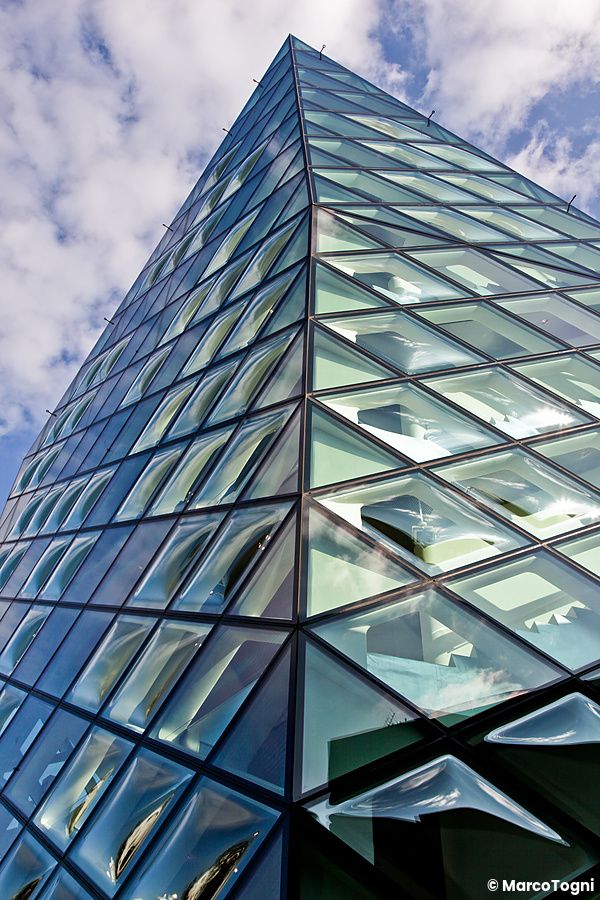
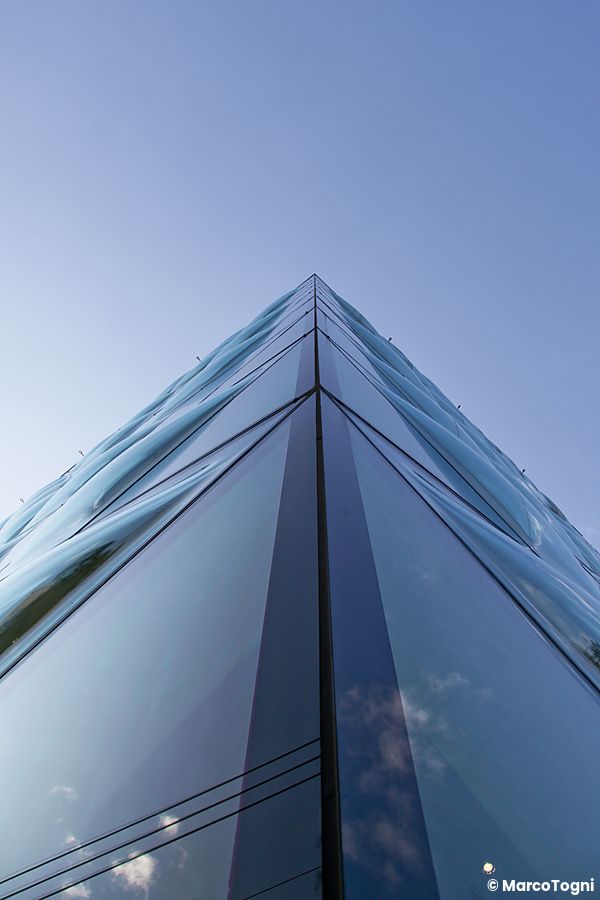
The six-story building is built around a diamond-shaped grid inspired by the idea of a Japanese lantern. The goal was a transparent, light, ever-changing building that would reflect the sky by day and glow at night. Glass isn’t just a practical material here. It’s the real star of the project, and every panel is angled differently, so the reflections and perspectives never stop shifting. The result feels like a living display case that breathes with the city, a blend of Swiss minimalism and Japanese sensibility.
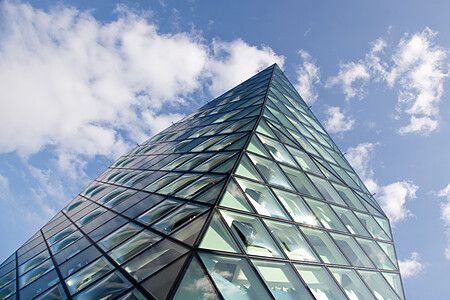
The facade is one of the most fascinating things about the building, because it does more than cover it: it brings it to life. Every glass panel, whether convex or concave, works like a lens that distorts, refracts, and magnifies the world around it. As you walk along the sidewalk, the building seems to change shape with every step, as if it were watching the people watching it. Some panels magnify the interior; others reflect the trees and the people walking by, so your view keeps shifting between inside and outside. It’s a living skin that changes how you perceive the space depending on the light, how you move, and where you stand.
The most radical choice isn’t the one you see when you look up. It’s on the ground. The building takes up only a third of the lot, and the rest was left open as a small public plaza, which is almost unthinkable in a neighborhood where every square meter is worth a fortune.
The wall that encloses it has a detail almost everyone misses: it’s covered in living moss, laid out in regular squares that form a soft, uneven surface. It’s the perfect contrast to the glass, which stays cold and sharp, while the moss grows, changes color with the seasons, and ages along with the building. Stopping for a moment in that empty space, with the glass towering over you, is the best way to understand the design.
Walking into Prada Aoyama feels like stepping over the line from design into stage design. The interiors, also by Herzog & de Meuron, are built around split levels, suspended walkways, and light staircases that make you want to explore every floor. The glossy resin floor reflects the light, and the walls alternate between metal, glass, and translucent surfaces. Every space is designed to show off the clothes on display, but also to give you a sensory experience unlike any other. Even people with no interest in shopping come away impressed by the attention to detail and the futuristic feel inside. Look more closely and you’ll spot a structural trick. The big horizontal tubes running through the space aren’t there for looks. They’re load-bearing elements that stiffen the building and also work as walk-in closets, with fitting rooms and service areas inside. Here, structure and furniture are the same thing. The materials play on contrasts too, with resin, silicone, and fiberglass next to leather and porous wood, the artificial set against the natural.
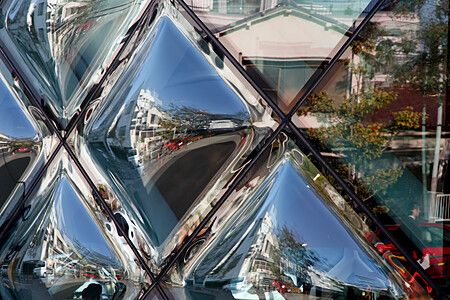

What gets me every time is the way light transforms this building. By day it reflects the sky, the clouds, and the trees in the neighborhood. In the evening it lights up like a quiet lantern, and the mood turns surreal and intimate. It’s one of those places where you can just stand outside looking at it and end up hypnotized. No two visits are the same: the light changes, the angle changes, the reflections change. And every time it gives you a new, almost meditative feeling.
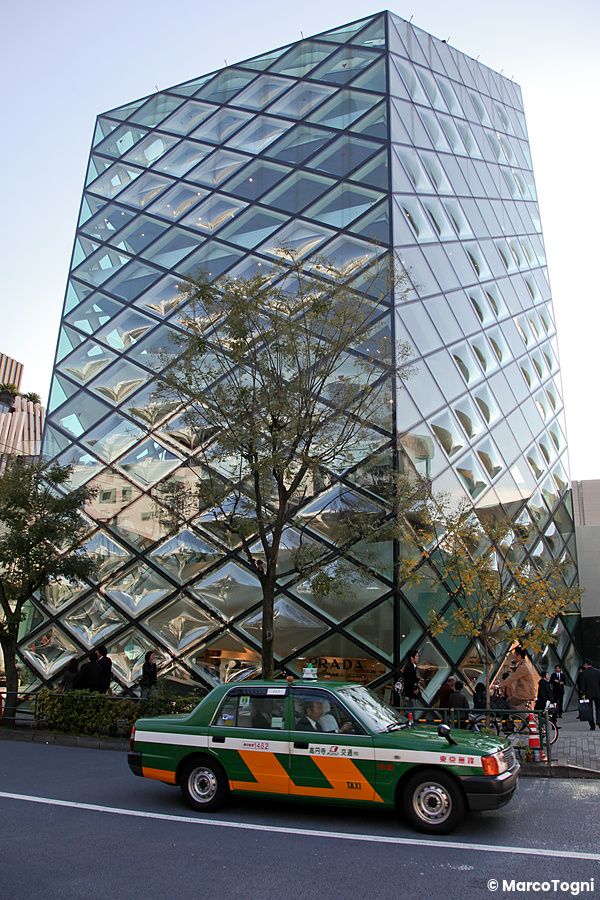

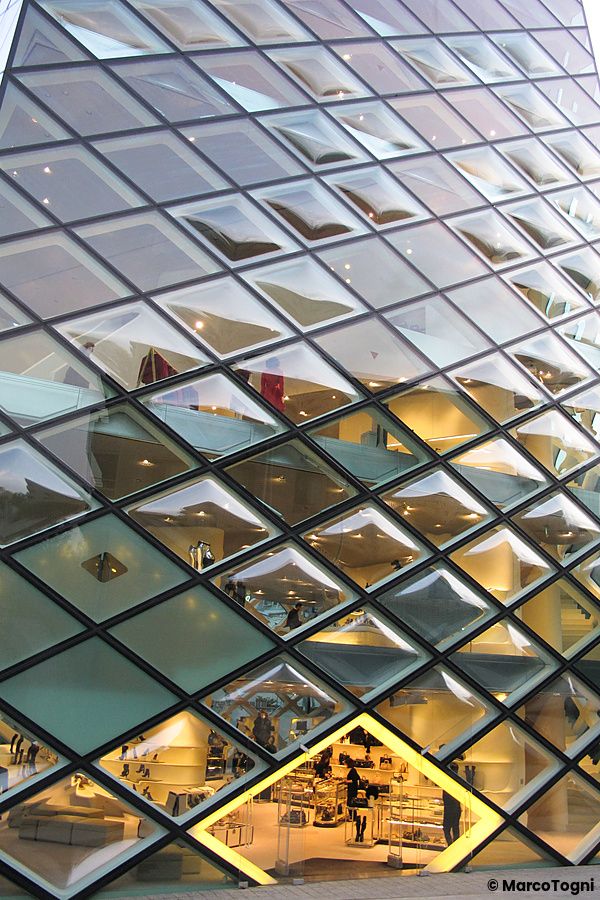

When it opened in 2003, Prada Aoyama marked a turning point for luxury retail. Back then, it was rare for a brand to give an architecture firm free rein to rethink the very idea of a boutique. Prada did, and the result was a building that doesn’t just sell fashion but creates visual culture. After this project, many other brands went down the “architectural flagship” route, but few have struck the same balance between innovation, elegance, and function. It’s still one of the most studied and photographed buildings in Tokyo. It wasn’t a one-off, either. Prada had launched a program of experimental stores, the Epicenters, and handed each one to a different architect. The first was in New York, designed by Rem Koolhaas, and Aoyama came right after it. The idea was to use the store as a research lab rather than just a showcase, and this is where the experiment left its deepest mark.
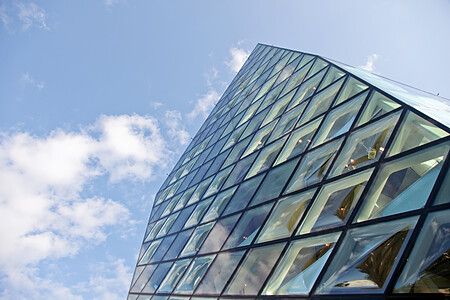
You can appreciate it perfectly well from the outside, but I’d recommend going in and heading up to the upper floors. The view over the neighborhood’s low rooftops is beautiful, and the quiet up there is almost surprising. It’s a store, of course, not a museum, but you still get to enjoy the architecture floor by floor. It’s ideal if you’re into architecture, photography, or art, or if you’re simply looking for an elegant, timeless place.
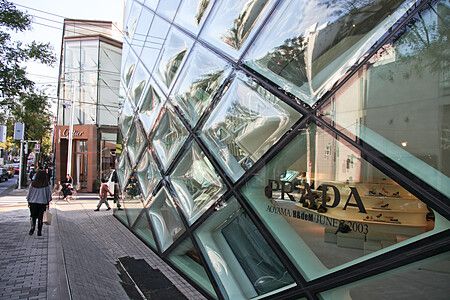
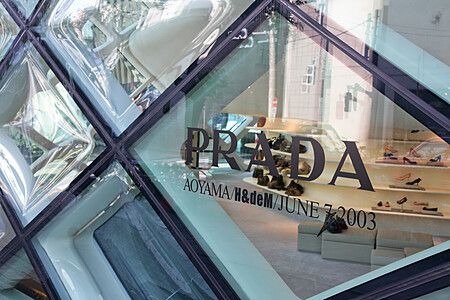
More than twenty years after it opened, Prada Aoyama still feels completely current. It doesn’t follow trends; it gets ahead of them. Every time I come back I find something I hadn’t noticed before: a detail in the structure, an unexpected reflection, a different way the light hits the glass. Maybe that’s exactly why I recommend visiting. It’s not just something to look at; it’s something to experience slowly, with your eyes and your heart.
The station you want is Omotesando. From Exit A5, take the street that heads down toward the Nezu Museum, and in four or five minutes you'll be standing in front of it. You can't mistake it for anything else around it.
If you're coming from Shibuya, you can also walk the whole way. It's about fifteen minutes up Omotesando, past the other architect-designed boutiques.
This place is on MarcoMaps
Prada Aoyama
My map of Japan: over 4,000 places I've tried myself, each with photos, rating, and hours. Filter by category and rating, find veg-friendly spots and places near you with GPS. No sign-up, right from your phone.


Prada Aoyama - nearby you will find:
102 mUnusual window design.
 456 m
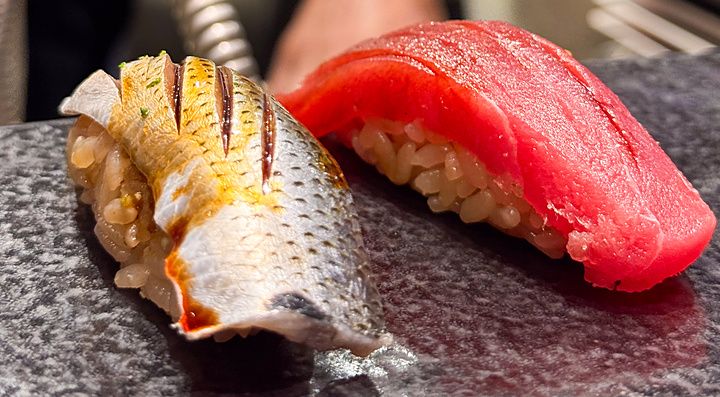
Chain with excellent sushi.
 459 m
An unusual building.
 495 m
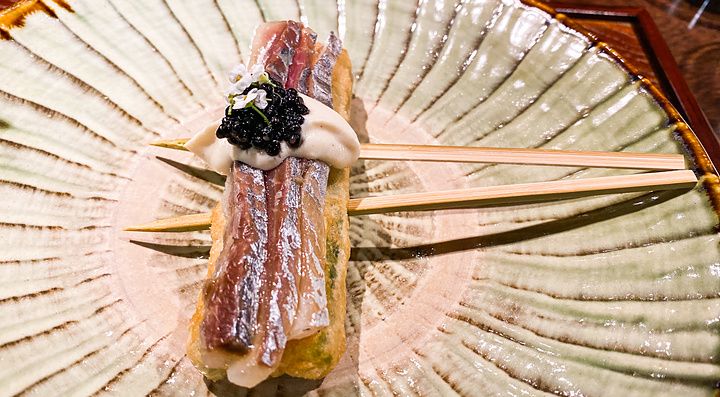
Japanese and French cuisine, side by side.
 536 m
Unbeatable tonkatsu.
 600 m
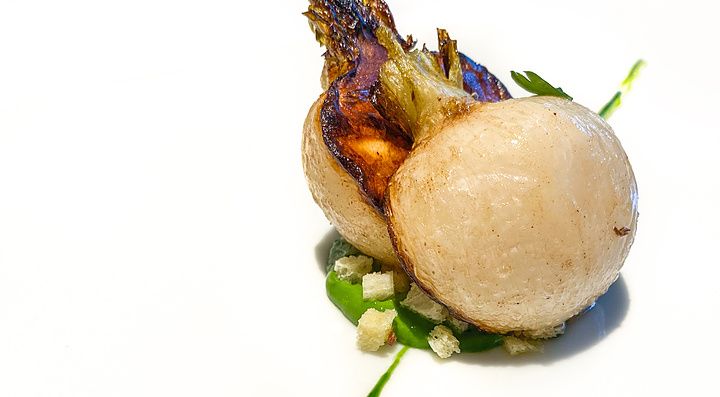
Contemporary French fine dining.