Reasons to Live in Japan
Whenever people talk about the upsides of something, someone always shows up with the usual exceptions, which only end up proving the rule.
NEVER listen to people who use isolated personal experiences to tell you how something works in Japan.
The upsides of living in Japan listed below are written from an anthropological, and therefore general, point of view.
Contents
- Safety
- Good manners
- Playing fair
- Amazing food
- Otaku culture
- Culture and traditions
- The four seasons
- Beautiful cities
- Fair wages
- Things to do
- Konbini that never close
- Elegance
- Perfectionism
- Healthcare that works
- Cleanliness
- Trains that run on time
- Reliable mail
- Video: Italy or Japan, which is better?
- Video: Pros and cons of living in Japan
- Video: Is Living in Japan Really That Expensive?
Safety
In Japan a woman can walk alone down any street even at 3 a.m., and it’s unlikely anything will happen to her. It’s an extremely safe country without much illegal immigration, and the police command respect. You notice it in the little things: bikes left without a lock, backpacks left on a café table to save a seat, elementary school kids walking to school on their own.
If you lose your wallet, more often than not you’ll get it back at the koban, the neighborhood police box, with all the money still inside.
Good manners
Japanese people always thank you profusely, they don’t cut in line, and they’re friendly and helpful at all times. In shops and restaurants the staff really go out of their way to make you comfortable and give you the best service they can.
Playing fair
Japan doesn’t have a culture of trying to get one over on people. As a people, the Japanese tend to treat others fairly.
Amazing food
You can eat well anywhere, and Japanese food is possibly the healthiest cuisine in the world, and possibly the best one too.
On top of that, you can eat out for next to nothing, with full dinners starting at around 700 yen.
Otaku culture
If you love anime, manga, video games, action figures and so on, Japan is paradise, plain and simple. For fans, it’s obviously the best country in the world.
Culture and traditions
Japan has more than 25 UNESCO World Heritage Sites, from the amazing southern islands to the nature parks of the far north, with temples and beautiful natural areas in between. Contrary to what a lot of people think, it’s a country with plenty of nature.
The four seasons
As a tourist you see one season. As a resident you live through all of them, and in Japan everything really changes. You go from cherry blossoms to summer matsuri with fireworks and yukata, then to the red leaves of fall and the snow up north.
Sweets, shop decorations and restaurant menus change with the seasons too, so there’s always something seasonal to try, and year after year it never gets old.
Beautiful cities
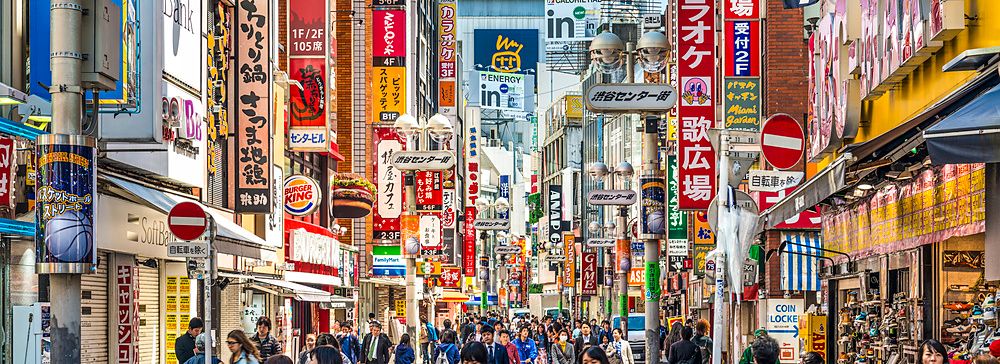
The big cities, Tokyo, Kyoto and Osaka among them, give you moments you won’t forget at every turn, and that holds even if you’ve lived there for years. Neighborhoods full of neon lights and nonstop energy are just a few steps from temples and streets that look like they’re straight out of the distant past.
Fair wages
As a tourist, Japan is really cheap, but living here as a resident costs quite a bit. Wages, though, are fair for the work you do.
Things to do
In any city you only have to walk a few steps to find just about everything, and you’re truly spoiled for choice. Whenever you go out in Japan, you can do whatever you feel like.
Konbini that never close
When you live in Japan you quickly figure out that a konbini isn’t just a store. It’s more like an office that’s open 24/7. Just around the corner and at any hour, you can pay your bills, pick up a package, ship a suitcase, withdraw cash, print a document and grab dinner.
There’s no such thing as a Sunday night when you’re out of luck because everything’s closed. Once you get used to that kind of convenience, you never forget it.
Elegance
Japanese people are elegant, and not just in the way they dress. It shows in how they decorate, in how they present products, in everything they do.
Perfectionism
When a Japanese person does something, they do it right, every time.
Healthcare that works
Contrary to what some people say, healthcare in Japan works pretty well. Annual healthcare spending per person isn’t high, and the care is solid and of a high standard, with very well-trained doctors. You don’t have to see a primary care doctor before you can get to a specialist: you pick the clinic and go straight there, often without an appointment and with reasonable wait times.
Neighborhood clinics are everywhere, even inside office buildings, and that takes a lot of the stress out of living far from home.
Cleanliness
Try ten public restrooms in Japan and you’ll see how clean they are right away. Japan is meticulous about cleanliness, and you can see it in the little things, from the staff wiping down escalator handrails to the women in station restrooms who clean nonstop. What catches you off guard most is that there are almost no trash cans anywhere, yet you won’t find anything on the ground: everyone carries their own trash home.
Home is where the real work starts, because garbage has to be sorted into categories, with set collection days for each type. At first it seems excessive, then it becomes second nature.
Trains that run on time
Trains leave exactly when the timetable says, no earlier and no later. Hiccups happen, but they’re kept to a minimum, and Japanese trains are as punctual as Swiss ones. If a train runs a few minutes late, station staff hand you a delay certificate to show at work or school as proof, which says a lot about how much of an exception a delay is.
The flip side is that the last train leaves earlier than you’d think, and there’s no wiggle room: if you miss it, you’re stuck until morning.
Reliable mail
Whatever you send arrives quickly and with very little hassle. If you’re traveling between cities, you can ship your suitcase ahead for next to nothing, and for foodies there are refrigerated delivery services that can carry fresh food anywhere in Japan, including to private individuals.