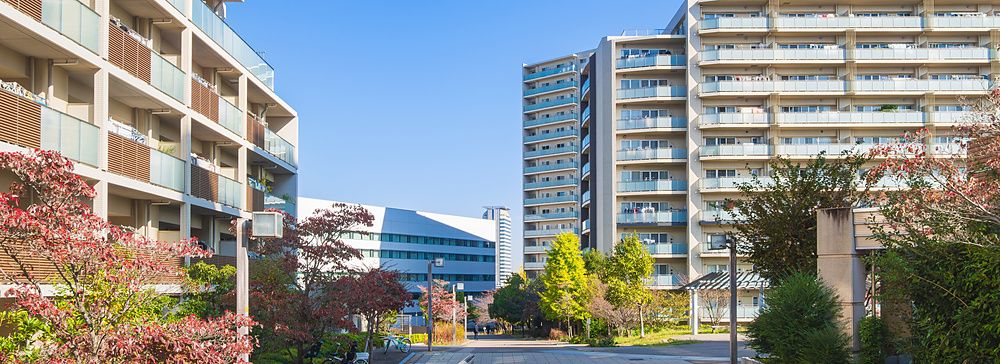
How to Rent an Apartment in Japan
Renting an apartment in Japan is easier than people make it sound, as long as you know how the system works before you start. What really sets it apart isn’t the language or the paperwork. It’s the bill you’re handed before you even get the keys.
You don’t just put down a deposit and move in. Some of the charges don’t exist in many other countries, and Japan has its own way of handling guarantees. Moving in costs several months’ rent all at once, and when a landlord turns you down, it almost always comes down to guarantees, not you.
Contents
How renting works
Almost every standard lease in Japan runs for two years. Keep that in mind from the start, because it shapes pretty much everything else. It’s not set in stone, and you can leave early if you give notice, but the costs are built around that two-year cycle. The notice period is usually one month, sometimes two. Some leases, especially the ones with no reikin, also charge an early termination fee if you move out within the first year.
Your search will almost always start at a real estate agency, the fudosan, which acts as the go-between for you and the landlord. You rarely deal with the landlord directly.
The agency shows you listings, takes you to see apartments, and prepares the paperwork. In return it charges a commission, which is always part of what you pay up front.
The price on the listing, the monthly rent, is only part of the bill. Sure, that’s what you’ll pay every month, but to move in you’ll need a much bigger sum.
That up-front payment is the biggest expense, and it’s the one to understand before you fall for an apartment.
Move-in costs
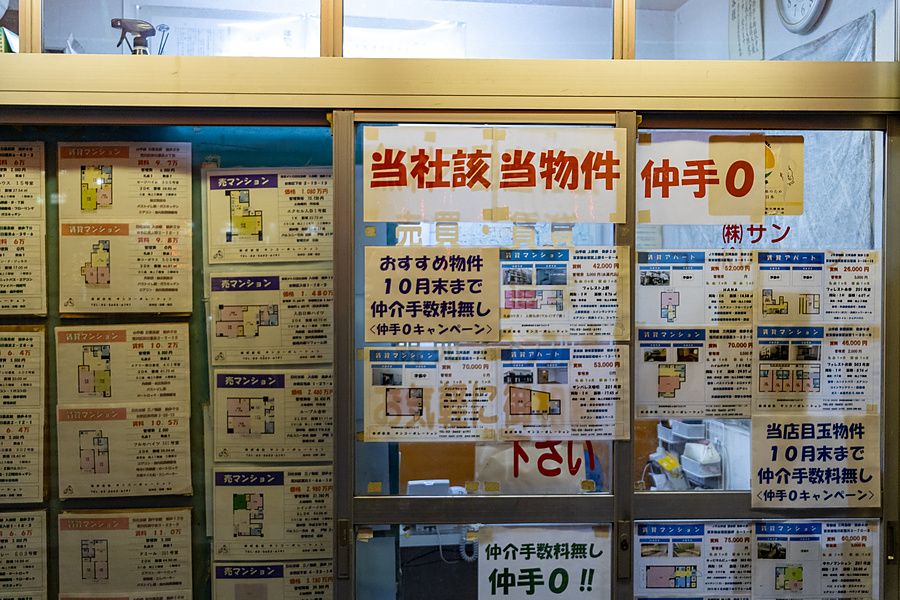
Brace yourself: moving into an apartment in Japan costs, on average, four to six months’ rent all at once. I’m not exaggerating. That’s normal.
The rent on its own doesn’t tell you much, because a lot of other charges get added on top. These are the main ones you’ll see when you sign the lease:
- The shikikin, the security deposit, usually one or two months’ rent. In theory you get it back when you move out, though almost never in full.
- The reikin, the thank-you money, also often one or two months’ rent, which you don’t get back under any circumstances. It’s a gift, pure and simple.
- The agency commission, usually around one month’s rent plus tax.
- Fire insurance, which is mandatory: a fixed cost of a few tens of thousands of yen for the two years.
- The guarantor company, which I’ll get into below.
On top of all that comes the first month’s rent, paid up front, because here you pay for a month before it starts, not after. Often there’s also a lock change, which costs about as much as the insurance, since landlords put in new locks for every new tenant.
Let me say it right away: the reikin is the one that hurts most, because that money is gone for good. That’s why so many people look for apartments listed as reikin zero.
The guarantor
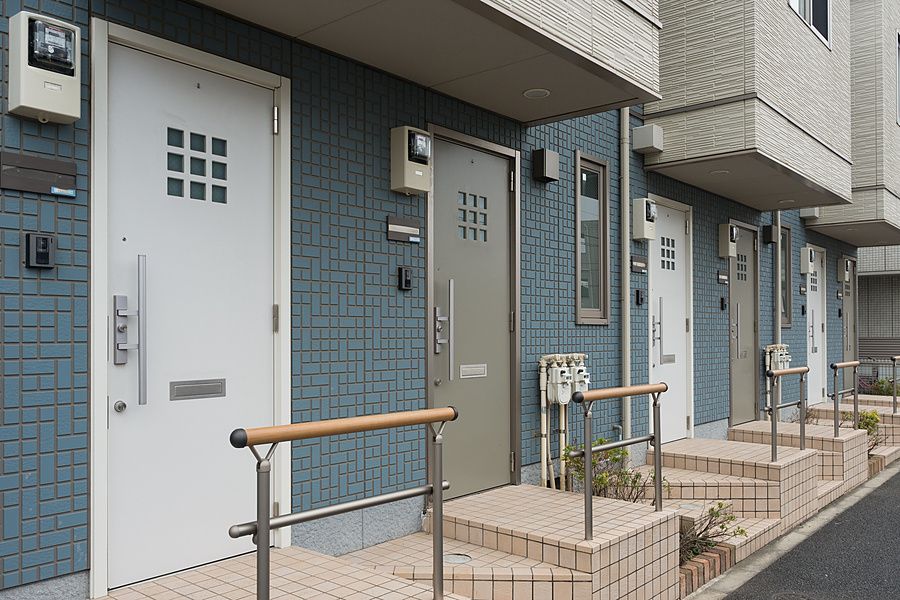
In Japan, having the money for rent isn’t enough. You also need someone to answer for you if you stop paying. That’s the guarantor system, and it’s where a lot of foreigners get stuck.
The traditional guarantor is an individual, a Japanese person with a steady income who signs and takes on the risk on your behalf. If you’ve come from abroad and don’t have local family or friends willing to sign, you’re obviously in a tough spot.
The most common solution is a guarantor company, a private firm that stands in for the individual. Basically, you pay them a fee and they cover the landlord if you don’t pay.
That fee is usually a percentage of the rent when you move in, often between half and a full month’s rent, plus a small periodic renewal fee. It’s not cheap, but it opens up a large share of the listings.
Honestly, if you don’t have roots here, a guarantor company is almost always the only way. Factor it in from the start and don’t think of it as an obstacle, because it’s just how things work.
UR apartments
There’s an option that people coming from abroad often don’t know about: UR apartments, run by a public housing agency. Most of the charges I listed above don’t apply here, because there’s no reikin and no commission, and no renewal fee either.
Above all, you don’t need a guarantor, either an individual or a company, and foreigners with a valid residence permit can rent one just like anyone else. All that’s left to pay is the security deposit and the first month’s rent.
The catch is that you have to show enough income for the rent, or enough savings. The apartments are often in large, somewhat dated complexes, not always in central areas, but if you want to skip the hassle of finding a guarantor, they’re worth keeping in mind.
Why landlords sometimes say no
It happens, and it helps to know ahead of time so you don’t take it personally. Some landlords state outright that they won’t rent to foreigners, and that can sting.
The reason, though, is almost never plain racism, even if that exists too. Mostly it comes down to missing guarantees.
Try putting yourself in the landlord’s shoes for a moment. If they rent to someone who might decide a year later to leave Japan and go home, they’re left with a broken lease, an empty apartment, and nobody to chase for unpaid rent or damage.
On top of that there’s the fear, often overblown, that they won’t be able to communicate because of the language, or that the tenant won’t know the rules for living with neighbors, like how to sort the trash or how much noise is OK at night.
You can get past most of these fears with the right tools, so don’t get discouraged by the first rejection. These are the things that help most:
- A reliable guarantor company, which takes the landlord’s main risk off the table.
- A steady job or clear proof of income, which shows you can pay.
- An agency used to working with foreigners, which already knows which landlords are open to foreign tenants and won’t waste your time.
- Following the house rules, from trash to noise, which is the most concrete thing landlords worry about.
I’ll be honest with you: most of the rejections you get aren’t about you as a person, they’re about the risk on paper. Lower that risk and doors start opening.
Reading the listings
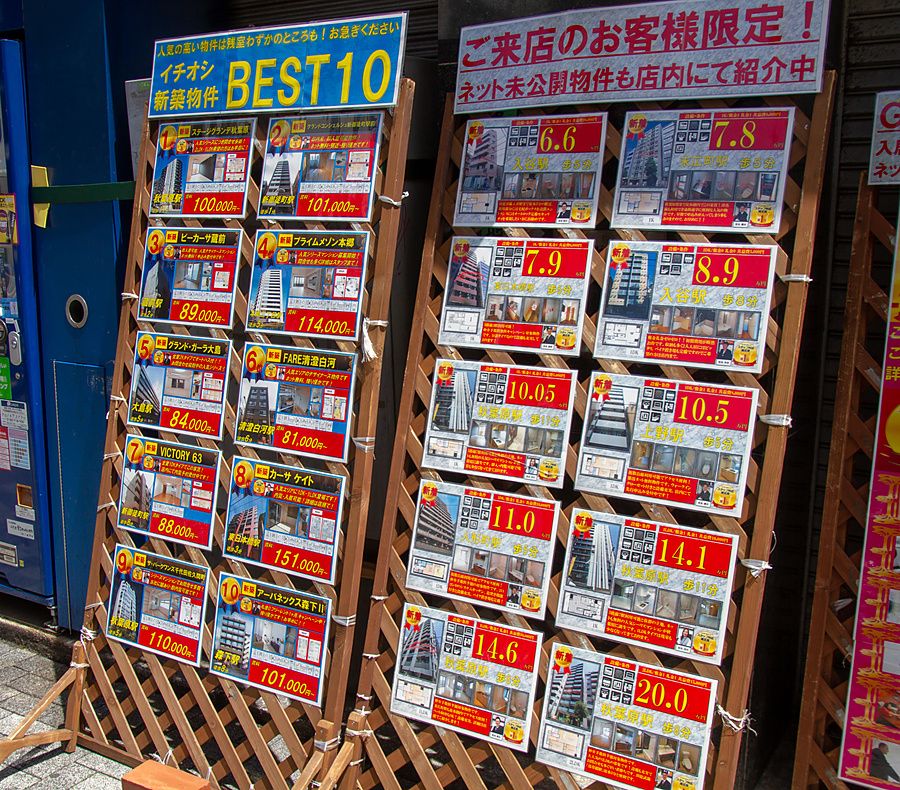
Once you start looking, you’ll run straight into codes like 1R, 1K, and 1LDK. They look cryptic, but they’re just the Japanese way of saying how many rooms there are and how they’re laid out.
The number in front tells you how many bedrooms there are, or at least main rooms, and the letters tell you what else there is. R means a single room where the kitchen and the bed share the same space, K adds a separate kitchen, L a living room, and D a dining area.
So a 1K is a single room with a separate kitchenette, typical for people living alone, while a 1LDK has a bedroom plus one open space for living, dining, and cooking, which already works well for a couple.
Room sizes are often given in jo, meaning the number of tatami mats, even when the floors are wood. One tatami is roughly one and a half square meters, so when you see six jo, you know right away it’s a room that’s small but livable for one person.
Keep in mind that homes in Japan are more compact on average, and that the floor area shrinks quite a bit once you subtract the entryway and the bathroom.
What you need to sign
Before you can sign anything, the landlord and the guarantor company want to see a few documents, and having them ready can save you weeks. Every application is screened, and without the right paperwork it goes nowhere.
You’ll usually be asked for your residence card, proof of income or employment, and the details of an emergency contact in Japan. You also need a Japanese bank account, because rent is almost always debited automatically every month.
If you’ve just arrived and can’t show income yet, you may run into a few more roadblocks. That’s when the type of guarantor company makes a difference, and sometimes so does paying several months in advance to reassure them.
One practical tip I often give people moving here: don’t go straight for your dream apartment the moment you land. Settle into something simpler first, maybe a share house where the requirements are lighter, and take your time finding a real home once you have a job, a bank account, and a bit of a track record here.
Expect an empty apartment
When you get the keys, be ready for a bare apartment. There’s usually no furniture, fridge, or washing machine, and often not even ceiling lights. There’s just the mount on the ceiling, and you buy the light fixture yourself.
Sometimes there’s an air conditioner and sometimes there isn’t, so ask beforehand, because if you have to buy one, it adds a lot to what you spend when you move in.
Electricity, gas, and water also have to be set up in your name, each with its own provider. For gas in particular, a technician has to come and turn it on while you’re there, so it’s best to book the appointment for moving day.
Renewal and moving out
The two-year lease doesn’t just end. It has to be renewed, and here too there’s a charge that catches people off guard. It’s called koshinryo, the renewal fee.
In many areas, especially Tokyo, you pay the landlord an extra month’s rent every two years to stay in the same apartment. It’s more tradition than logic, a leftover from when it was a goodwill gesture, but it’s still written into most leases.
When you’re doing the math over the long term, remember that every two years you’ll take that extra hit on top of your regular rent.
There’s one more thing to know about moving out, and it has to do with the deposit you paid at the start. When you leave, the landlord deducts cleaning costs from the shikikin, plus any repairs for damage beyond normal wear and tear.
The final cleaning is almost always on you, often at a flat rate set in advance, so don’t expect to get the full deposit back. If you’ve kept the place in good shape, some of it comes back, but count on losing part of it no matter what.
What it really costs
Exact figures don’t mean much, since they change from one area to the next, and you should always check current prices before you make a move. I can still give you a rough idea, though, and it’s easier to think in terms of months of rent than in specific yen amounts.
The number to remember is four to six times the monthly rent. That’s what leaves your bank account when you move in, so have it set aside before you sign anything. Even with an average rent, you’re looking at a hefty upfront bill, much higher than you’d guess from the monthly rent alone.
After that come the recurring costs: the renewal fee every two years, plus fixed monthly charges like building maintenance fees, which are often included in the rent or listed right next to it.
To make moving in cheaper, look for listings with zero reikin and a reduced shikikin, which cut out a big chunk of the money you’ll never see again. The trade-off is that the rent is sometimes a little higher, or there are special conditions when you move out, so read the fine print before you celebrate.
Once you understand how it all works, I think the real hurdle is just that move-in payment. After you get past it, renting here is pretty straightforward, with no surprises from one month to the next.
My advice
If I could give just one tip to anyone who wants to live here, it would be to run the numbers on your move-in costs before you even go see any apartments.
Put those four to six months of rent aside, go through an agency that works with foreigners, and don’t take it personally when someone turns you down. Once you’re in, living in a rental in Japan is convenient and orderly, and now at least you know what to expect before you sign.