Resort Shirakami Train
A scenic train that runs along the Sea of Japan between Akita and Aomori in northern Tohoku, with the sea right outside your window for a good five hours and a bit of Tsugaru coming on board with you. The Resort Shirakami train is an all-reserved rapid service that runs along the foot of the Shirakami mountains and slows down on purpose at the best spots. There’s live shamisen on board, local women sell things made in the area, and halfway through the trip you get off and walk on the rocks by the sea.
It’s for anyone traveling in northern Japan who wants to make a day of the journey. It also makes sense if you have a JR Pass.
Contents
What it’s like and what it costs
You board at Akita, Aomori or Hirosaki and take your seat. That doesn’t sound like much, but the day plays out in stages along the route, and something new happens every hour.
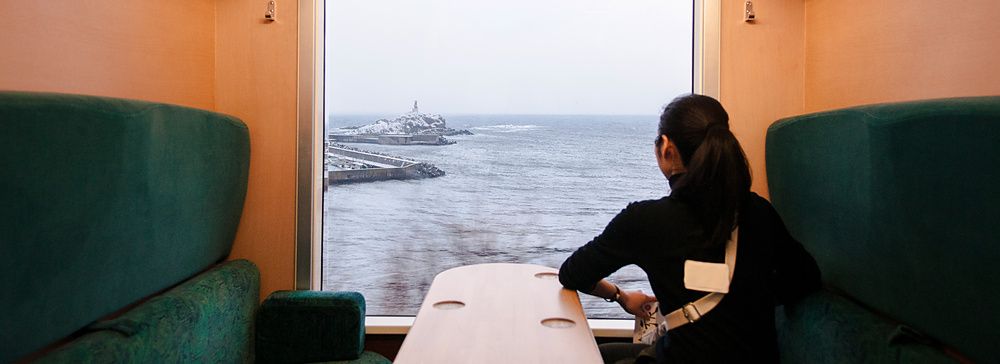
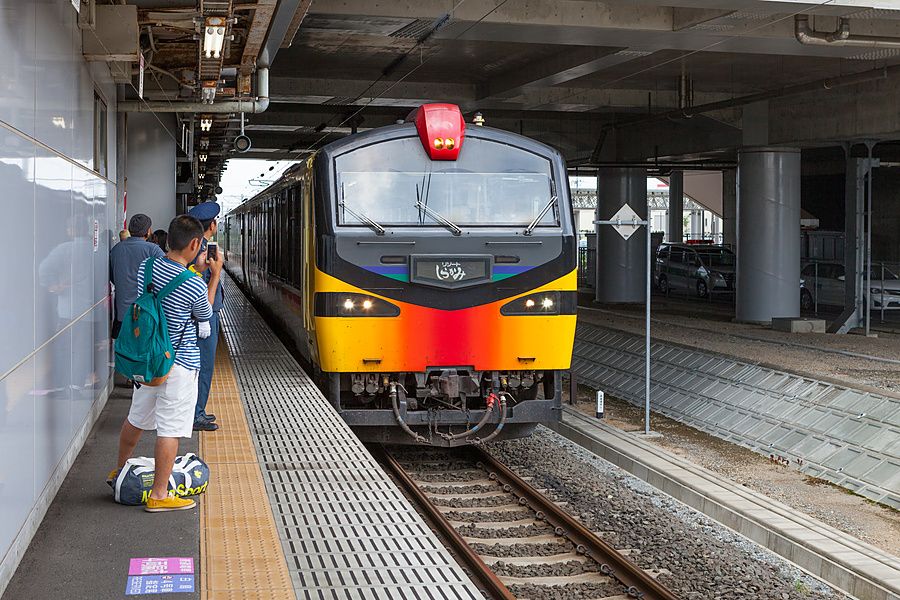
There are three trains, each with its own colors and interior: the green one paneled in beech wood, the blue one inspired by the ponds of the Shirakami mountains, and the sunset-orange one. Inside they’re basically the same, with wide seats, lots of legroom and huge windows.
- The coastal stretch: for a good part of the route the tracks run a few meters from the shore, and where the view is best the train slows down and the conductor tells you what you’re about to see.
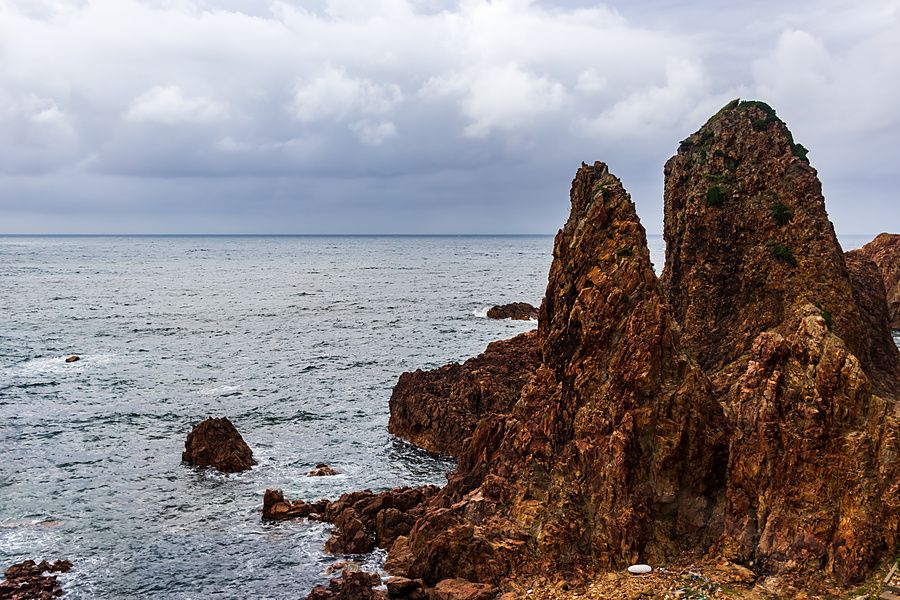
- The Senjojiki stop: a 15-minute stop where you get off and walk out onto a wide shelf of flat rock that reaches into the sea. Before it leaves, the train blows its whistle to call everyone back. The rock is an old seabed that the waves flattened and an earthquake pushed up out of the water at the end of the 18th century. The name means “a thousand tatami,” and the story goes that the lord of Tsugaru had mats laid out here for a banquet by the sea.
- Live Tsugaru shamisen: a musician plays in the observation car, just a couple of meters from you. It’s the sharp, fast sound this area is known for, and when the music starts it fills the whole car.
- Stories in dialect: on some weekend trains a storyteller gets on and tells old Tsugaru tales in the local dialect. You won’t understand a word, and neither would someone from Tokyo, but watching the Japanese passengers crack up gives you the idea.
- Local products for sale: people from the area come aboard with sweets, apple juice, pickles and other things you won’t find anywhere else, and sell them as they walk down the aisle.
- The observation car: at each end of the train there’s an area with big end windows, where people get up to watch the tracks running toward the sea.
When it comes to cost, the surprise is a good one: it costs less than you’d think. The train is a rapid, not a limited express, so you pay the regular train fare plus a reserved-seat fee of under 1,000 yen. Riding the whole way between Akita and Aomori costs over 4,000 yen in fare alone.
If you have the JR Pass or the JR East Tohoku pass, you pay nothing extra. There’s also a two-day pass for the line that costs around 4,000 yen and lets you get off and back on along the way.
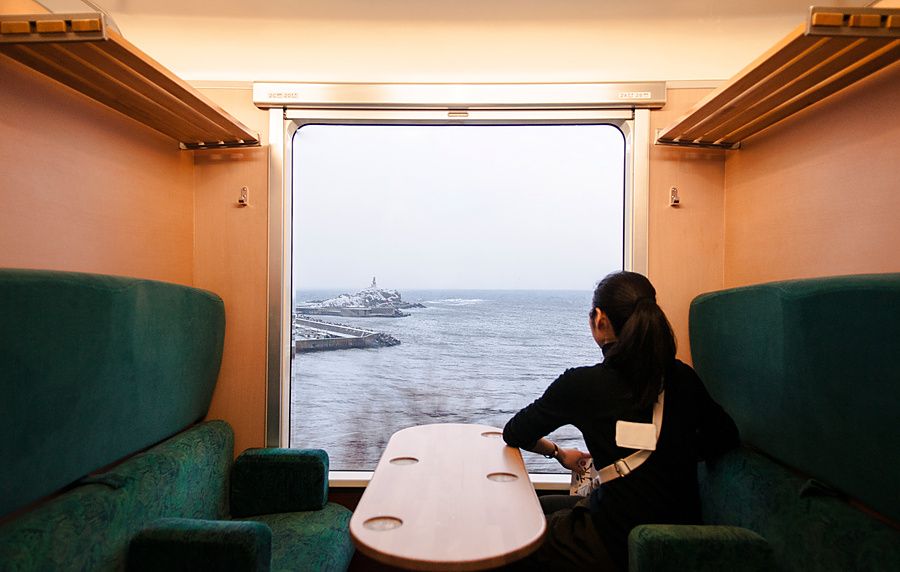
The most useful thing to know is that the sea is on one side only. Going from Akita toward Aomori it’s on the A-seat side, and those seats sell out first. If you end up on the mountain side, you’ll spend half the trip standing in the observation car or craning toward the windows across the aisle.
In the cars with four-seat booths, every seat looks out on the sea, but seats are sold individually. If there are two of you, you might end up with two strangers across from you for five hours, and if you get someone who sleeps the whole way or never stops eating, you’re stuck with them.
There’s no real food service with hot meals. Some cars have a counter selling snacks and drinks, plus whatever the local women bring on board. For a trip this long, bring a bento from the station.
What you really need to plan around is the length. End to end it’s more than five hours, so if you don’t like sitting still or hate having nothing to do, you can ride just part of the line. The best stretch is the coastal section in the middle, and it’s worth the trip on its own.
I go back every time someone asks me to take them to northern Japan. You have to get between Akita and Aomori somehow, and this way the journey becomes the first thing people talk about when they get home. For the price of a regular ticket plus a small fee, you get the kind of experience that elsewhere would cost as much as a ride on a high-end tourist train: wood, big windows, live music and a walk by the sea halfway through the trip.
It’s not a luxury train and doesn’t pretend to be. The seats are just good train seats, and the sea and the people who come on board do the rest.
When to go
The morning train from Akita runs along the coast in full daylight, and that’s the one I recommend if the coastal stretch is why you’re going. The afternoon trains toward Akita reach the coast later, and in the right months you’ll see the sun setting right over the Sea of Japan. The sea-side windows turn orange and the observation car fills up with people with their phones out.
Not every train does the same things. Not all of them stop at Senjojiki, and only some make the long stop. Before you book, check which train you’re on: it’s the difference between walking on the rocks and watching them go by through the window.
The season makes a big difference. April to November is the best time, with shamisen on board, a calm sea and the mountains fully green, and in fall the red leaves reach all the way down to the coast.
In winter, the snow by the gray sea is beautiful because everything turns white and gray, but there’s no shamisen from December to March. In strong winds and snow, the train gets halted or canceled, and this is one of the lines most likely to shut down.
Over the spring holidays, in August and at the height of fall, the seats on the sea side are gone the day reservations open, a month in advance. On an off-season weekday, though, you can get a seat just a few days before, and the observation car is half empty.
Reservations and rules
You can’t ride without a reservation. There are no unreserved seats and no standing tickets. You can book at a ticket office or online, and if you want one of the four-seat booths it’s worth going to the counter, where the staff are better at assigning them.
If you have a pass, you still need to reserve a seat, even though you don’t pay for it. This is the most common mistake: people who show up at the platform with just their pass get turned away, and on busy days there’s nothing you can do.
You don’t need to speak Japanese. The main announcements are also in English, and the sellers show you what they’ve got, so you just point and pay.
For the Senjojiki stop, wear shoes with good grip. The rock is wet and full of holes, and fifteen minutes goes by fast.
The best photo
When the train stops at Senjojiki, half the passengers skip the rocks and stand in front of the train to shoot it with the sea behind. It’s the best photo of the trip: the train’s colorful nose, the curving tracks, the rocks and the open sea.
From the observation car you can photograph the tracks running along the coast, but everyone wants the front-row spot, especially on the coastal stretch. Whoever gets it tends to stay put, so get there early, before the good part starts, not when the announcement says it’s coming up.
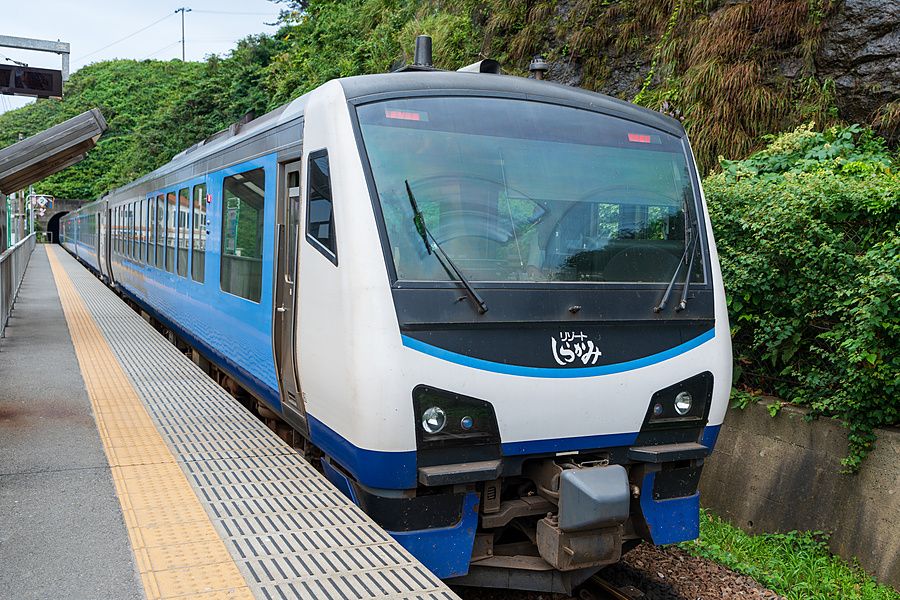
Quick take
Pros:
- tracks hugging the coast and slowdowns where the view is best
- live shamisen and Tsugaru products sold on board
- with the JR Pass it costs nothing, and even without one it’s cheap
Cons:
- during holiday periods the seats on the sea side sell out as soon as reservations open
- the full trip eats up the day, and there are no hot meals on board
Best for: anyone traveling around northern Japan who has to get between Akita and Aomori anyway
Booking: a month ahead during holiday periods, a few days ahead on off-season weekdays
Atmosphere: wood, big windows, a gray-blue sea and shamisen two meters away
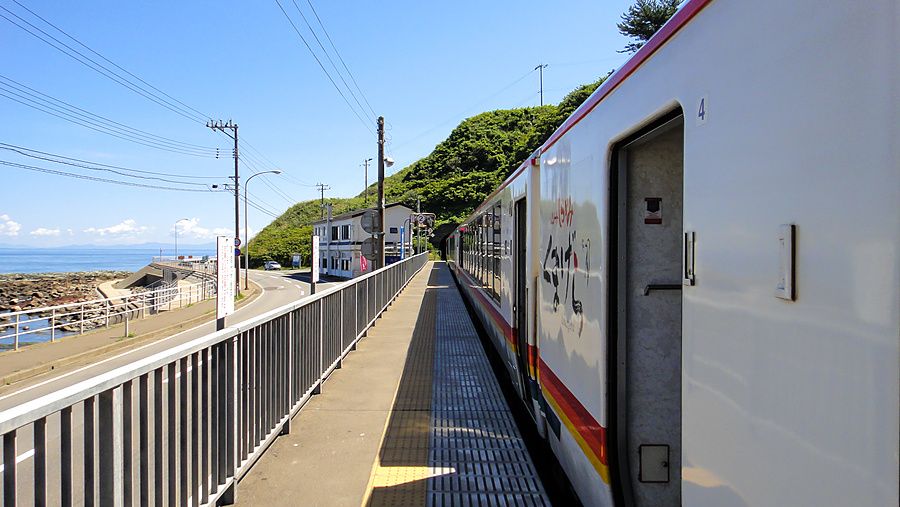
Final thoughts
The Resort Shirakami train is one of the few things in Japan where you spend very little and get a lot. You’re not paying for any special comfort. You’re paying for a ride along a stretch of coast you wouldn’t see otherwise, and Tsugaru supplies the rest with its music and its people. The five hours aren’t for everyone, and if you want to get there fast, you’re better off taking the shinkansen.
But if you have a JR Pass and a day to spare in northern Japan, there’s no better choice.