How to Ride the Bus in Osaka
Riding the bus in Osaka is one of the nicest ways to get around the city, because you watch the city go by through the window instead of walking through subway corridors.
Plenty of travelers never even consider it, since the subway covers almost everything and seems like the only sensible choice. On some trips, though, the bus gets you closer, lets you skip two transfers and costs next to nothing.
To use it well you only need two rules about getting on and paying, the right day pass, and a feel for when you’re better off heading underground instead. Airport buses, long-distance buses and the open-top sightseeing bus are a separate story, each with its own rules.
Contents
Who runs the buses
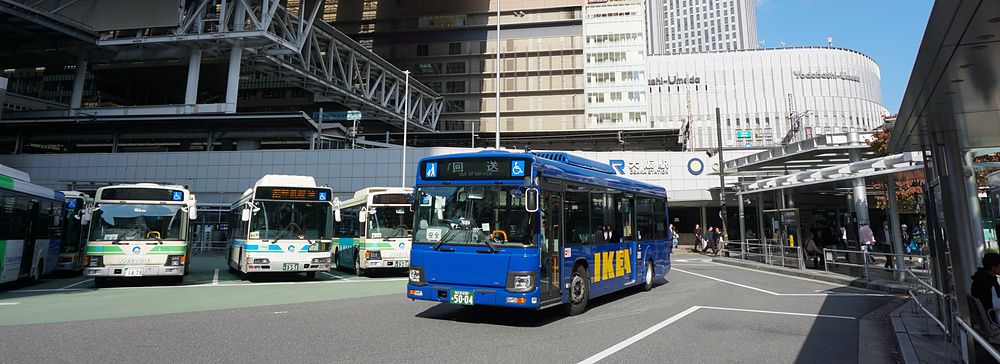
Osaka’s main city bus network is run by Osaka City Bus, a sister company of Osaka Metro, the same group that runs the subway. The buses are green and white, and there are about eighty routes spread across the whole city. Each bus shows its route number on the front, next to the final destination, which is written in Japanese and often in Roman letters too.
Having the buses and the subway under one group is handy, because a lot of day passes work on both.
Once you leave the city limits, though, everything changes. In the outer areas and the neighboring cities, the buses are run by private companies like Hankyu, Kintetsu and Nankai, which have different rules and fares that go up with distance. If your trip stays within Osaka, the vast majority of the time you’ll be riding the green buses of Osaka City Bus.
Getting on
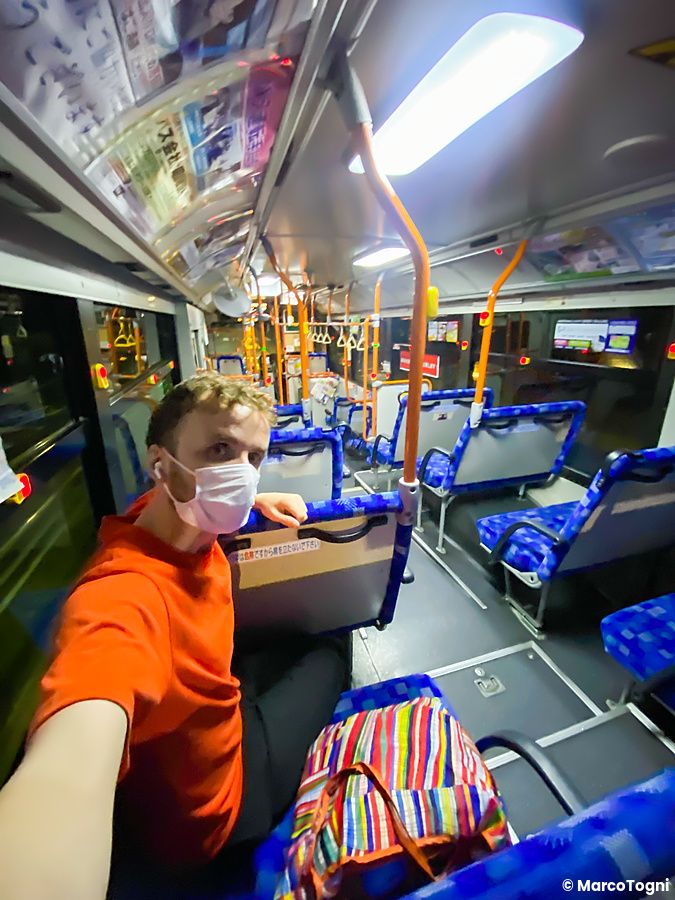
On Osaka’s city buses you get on through the rear door (or the middle one, depending on the model) and get off through the front door, next to the driver. You pay when you get off, not when you get on.
This is the part that trips up people coming from Tokyo the most, because there you usually board city buses at the front and pay right away. In Osaka you get on at the back without touching anything: there’s no reader to tap at the door and no numbered ticket to take.
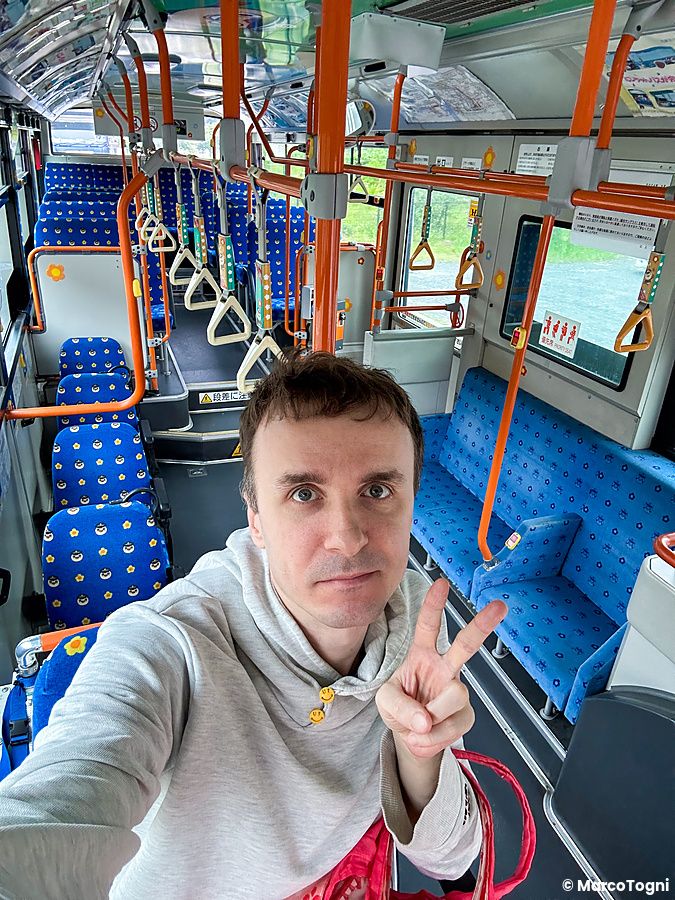
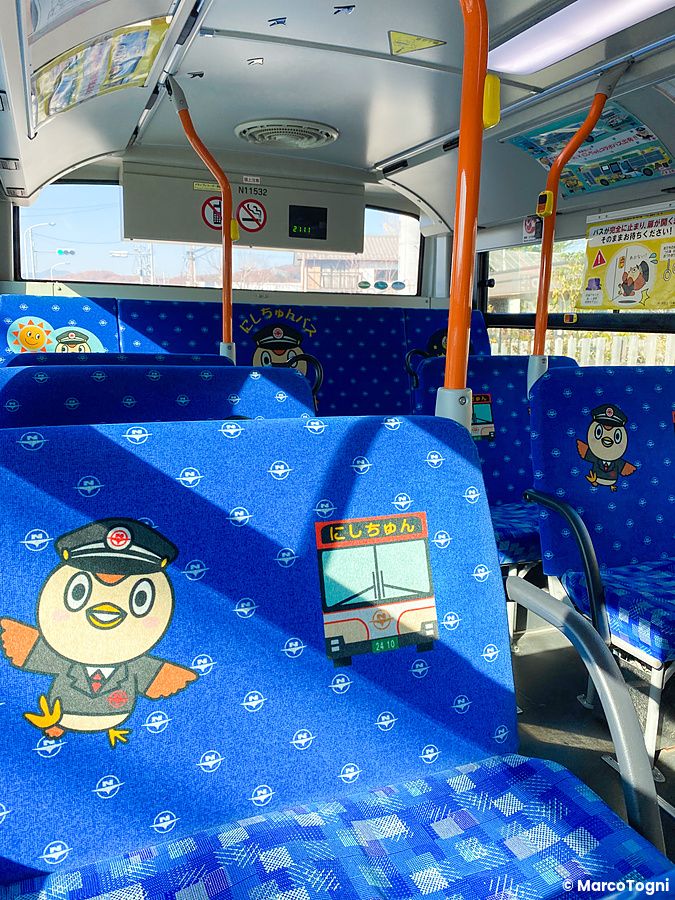
As you get close to your stop, press one of the stop buttons on the walls and near the seats. The overhead screen shows the name of the next stop, almost always in English too, and the same goes for the announcements.
Stay in your seat until the bus has come to a complete stop, then walk up to the driver and pay at the machine next to them. Getting up while the bus is still moving is frowned upon, and the drivers will let you know.
Fares and payment
On Osaka City Bus there’s one flat fare on almost every route: just over 200 yen for adults, about half that for kids aged 6 to 11, and free for younger children. Whether you ride two stops or all the way to the end of the line, the price stays the same.
The few exceptions are special routes, like the ones to the airport or to a few destinations outside the regular city network.
When you get off, you can pay in several ways:
- With an IC card like ICOCA, Suica or PiTaPa, by tapping it on the reader next to the driver: it’s the fastest way and the one I recommend.
- With a credit card or a contactless smartphone, by tapping the separate reader, on routes where it’s available (pretty much all the city routes).
- In cash, by putting coins or bills into the machine, which gives change: there’s no need to break bills beforehand.
- With a day pass, by showing it to the driver or feeding it into the reader if it’s a magnetic ticket.
Cash works, but trust me, feeding a 1,000-yen bill into the machine at rush hour with a line behind you is a bit stressful. Have coins ready or, even better, a loaded IC card. It’s still a good idea to check the current fares before you go, since they can change.
Day passes
If you take at least three or four rides in a day, a day pass pays for itself right away. There’s no bus-only pass. The go-to option is the Enjoy Eco Card, Osaka’s longstanding day pass, which is also the right pick for a day in areas the subway doesn’t serve well, or if you simply like getting around above ground. It’s valid on all Osaka Metro lines and almost all Osaka City Bus routes, and it costs under 1,000 yen on weekdays and less on weekends and holidays. You buy it from the machines in subway stations, and it also gets you a few discounts on admission to various attractions around the city.
Special routes, like the ones to the airport, Universal Studios Japan and Ikea, are usually not covered. There are also more comprehensive tourist passes that include museum entry and boat rides. They still cover buses and the subway, but they cost more and only make sense if you pack your day with sights.
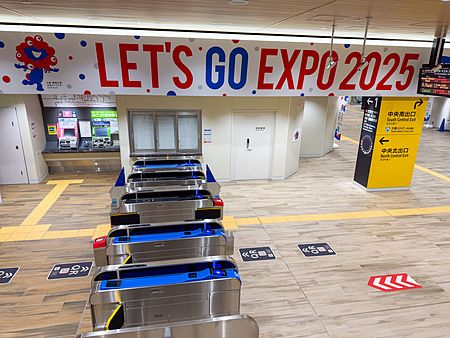
If you pay with an IC card and no pass, you get a small perk when you switch from the subway to the bus, or the other way around, within a certain amount of time: the discount is applied or the points are credited automatically, without you doing anything. The exact system changes every so often, so I wouldn’t do any precise math on it. Let’s be honest: it’s a nice extra, not a reason to pick one over the other.
When the bus makes sense
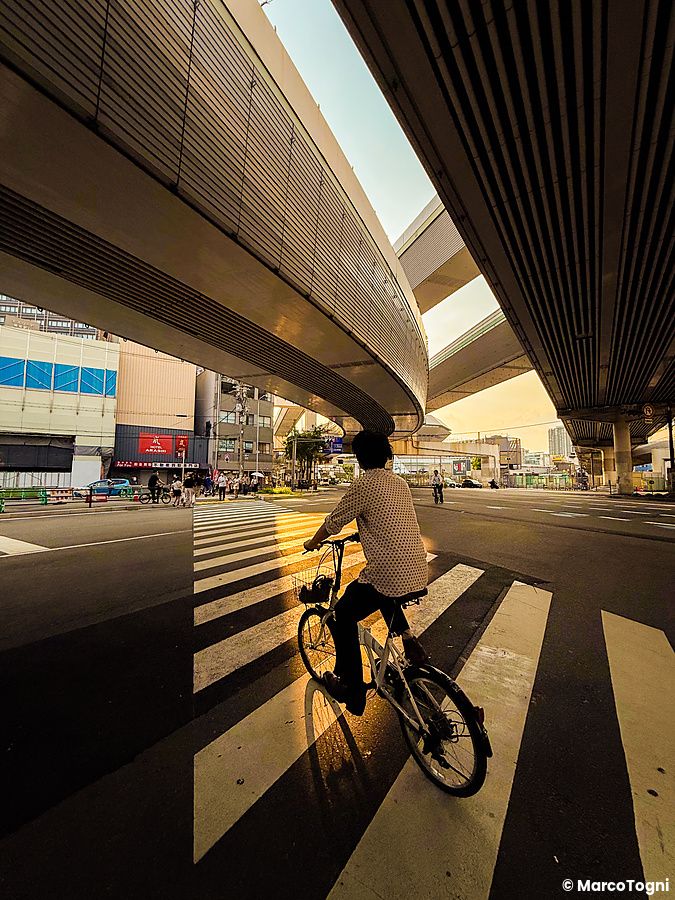
Osaka’s subway is fast and the network is dense, and on long north-south trips, like Umeda to Namba on the Midosuji Line, the bus can’t compete. Downtown streets are full of traffic lights, and when everyone leaves work, traffic slows down a lot.
The bus is at its best when it saves you a transfer or drops you right in front of where you’re going, while the nearest subway station is a ten-minute walk away.
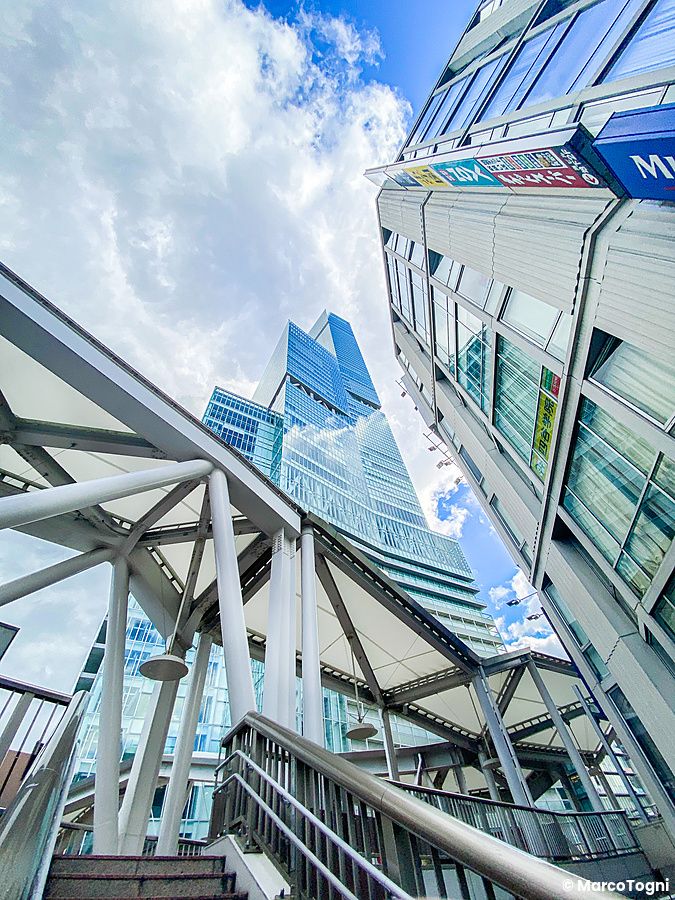
One route I often recommend is the 62. It starts from the big stop in front of Osaka Station, passes through Yodoyabashi, runs along the side of Osaka Castle toward Otemae, heads down to Tennoji and keeps going south into the Sumiyoshi area. In a single ride it connects Umeda, the castle, Tennoji and Abeno Harukas, with no stairs, ticket gates or corridors.
If you’re traveling with small kids or older people, or carrying a suitcase, that makes a real difference. Osaka’s subway stations do have elevators, but sometimes they’re at the end of endless corridors.
The bus also works better:
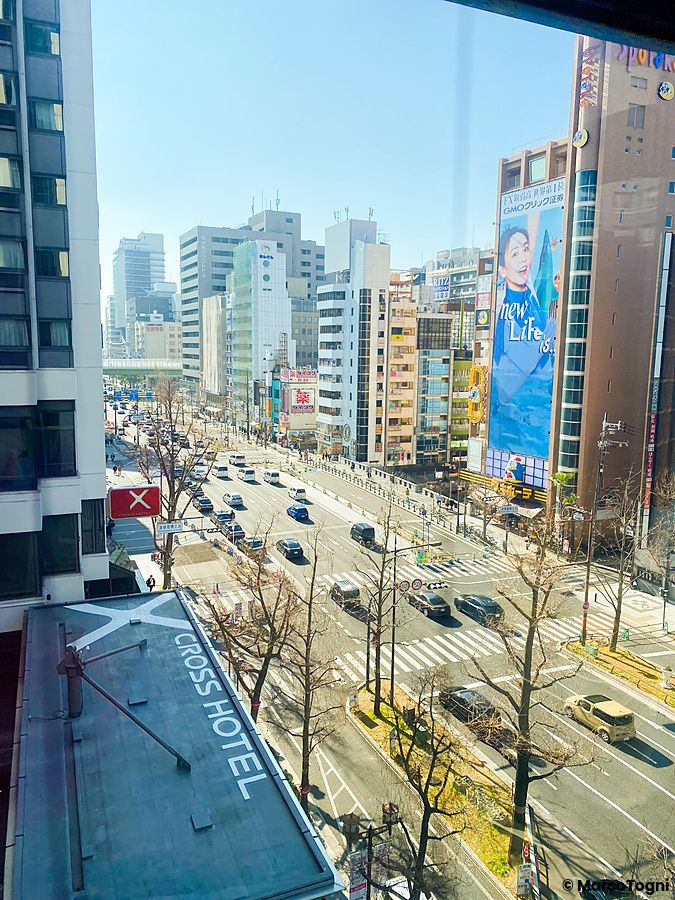
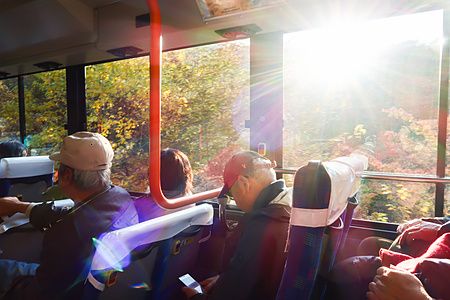
- When you want to see the city, because from the window you get a much better sense of how Osaka is laid out than you do moving from one tunnel to the next.
- For reaching residential neighborhoods, smaller temples or areas the subway doesn’t get close to, which is common in the outskirts.
- On rainy days, if the stop is right in front of where you’re going and the subway would make you walk.
- When you’re tired at the end of the day and would rather sit and look out the window than make two transfers.
I don’t think it’s a good fit, though, if you only have a few days and want to cover a lot of ground fast, or if you need to be somewhere at a set time, like for a restaurant reservation. The timetables posted at the stops are only a rough guide, and a ten-minute delay in traffic is normal.
Stops and timetables
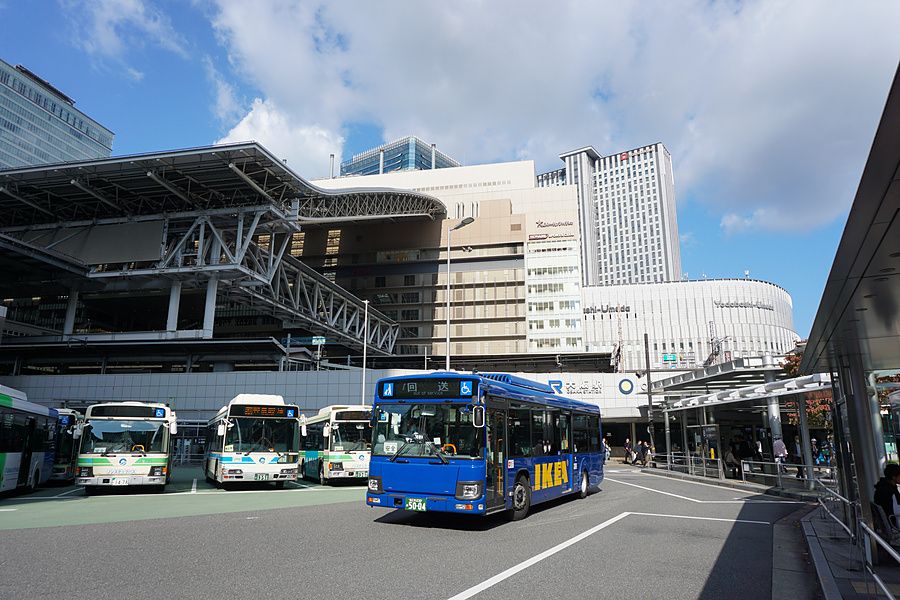
Every stop has a pole with its name, a list of the routes that stop there and the timetable, split into weekdays, Saturdays and holidays. The main ones, like those in front of Osaka Station, in Namba and in Tennoji, are full-blown bus plazas with lots of bays. There, look for your route number on the sign at each bay, because every route leaves from its own spot.
To avoid waiting around for nothing, use the Osaka City Bus website: it shows in real time where your bus is and how long it’ll be until it arrives. Google Maps also tells you the right routes, but the times it shows are the scheduled ones.
Frequency varies widely from route to route. On the main routes a bus comes every ten to fifteen minutes, while on the secondary ones you might wait as long as half an hour, especially in the evening and on holidays. My advice is to always check the last bus if you’re going out at night, because many routes stop running fairly early compared to the subway.
Airport buses
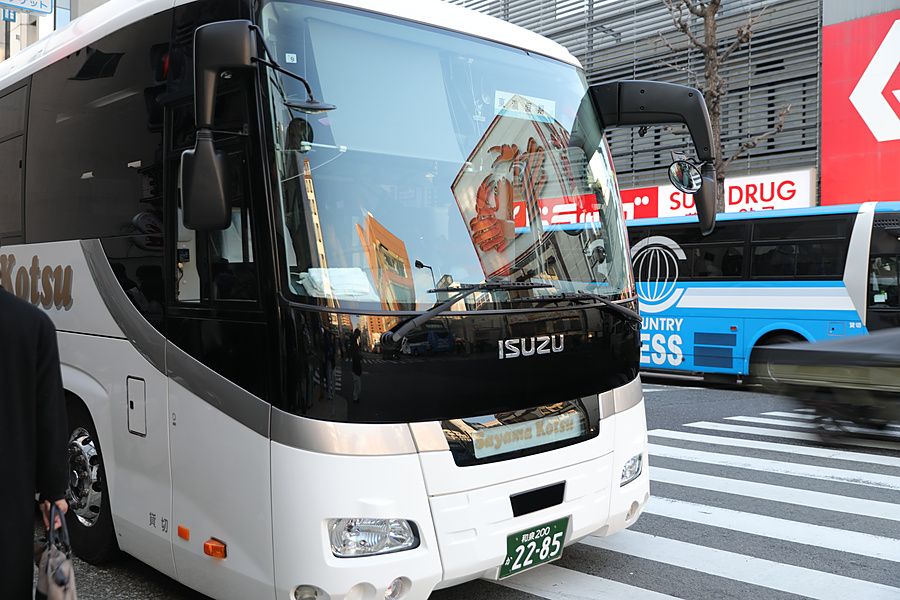
For getting into the city from the airports, the shuttle buses known as limousine buses are an alternative to the train worth knowing about. From Kansai International Airport, direct buses run to Osaka Station in Umeda, to Namba, to Shin-Osaka and to several big hotels. The ride takes about an hour, traffic permitting, and costs around 2,000 yen.
You buy your ticket from the machines next to the stops, just outside arrivals, and if you booked online, you pick it up from a nearby machine by scanning the QR code.
From Itami Airport, the one for domestic flights, the bus is often the simplest option, period. In about half an hour you’re at Osaka Station, for around 700 yen.
The advantages are clear: big suitcases go in the luggage hold, the staff give you a claim tag to collect them when you arrive, and everyone gets a seat. I like it precisely because after a long flight you get on, sit down and arrive without any transfers, which doesn’t always happen with the train from Kansai. Its weak spot is traffic: at rush hour or on holidays, the trip can take much longer.
Long-distance buses
Osaka is one of the major hubs for long-distance buses, both daytime and overnight, to Tokyo, Hiroshima, Shikoku, Kyushu and plenty of other destinations. They cost much less than the Shinkansen, and the overnight ones save you a night in a hotel as well.
The tricky part is figuring out where they leave from, because the Umeda area alone has several departure points:
- The JR bus terminal, on the north side of Osaka Station, with a row of bays, electronic departure boards and a waiting room.
- The stop on the west side of Osaka Station, under the elevated tracks, which is just a sidewalk with no waiting room and no air conditioning.
- The Hankyu Sanbangai terminal, inside the shopping mall connected to Hankyu’s Umeda Station, where buses from Hankyu and other private companies depart.
In Namba, the place to know is OCAT, a building connected to JR Namba Station with its bus terminal on the second floor, which serves both long-distance buses and buses to Kansai Airport. There are also several stops around Shin-Osaka Station.
Honestly, it’s very easy to get confused, because sometimes the same route has departures from different terminals depending on the company. Check your ticket for the exact name of the departure point, and get there a little early.
The sightseeing bus
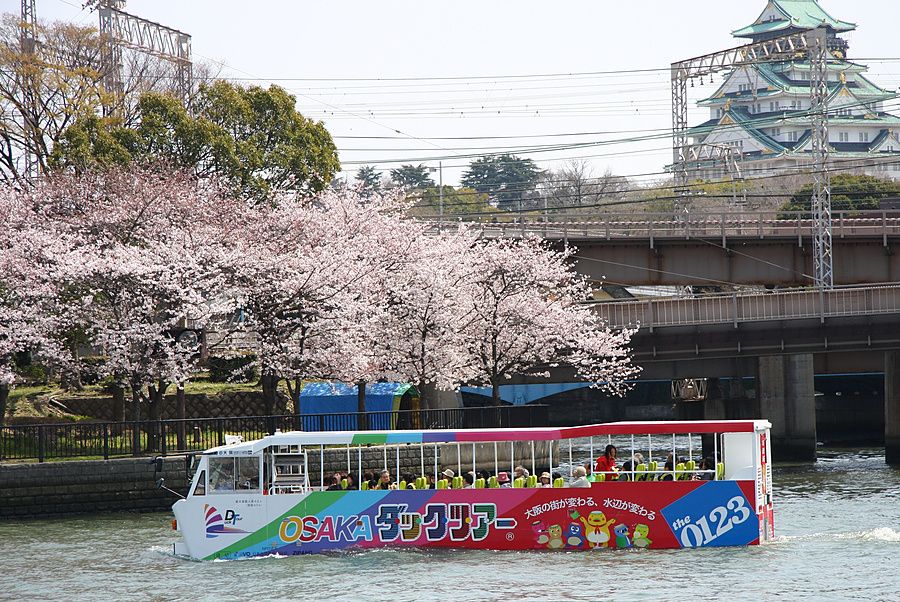
If you’d rather sit back and see the sights, there’s also an open-top double-decker that runs a loop with about fifteen stops around the best-known parts of the city. It goes past Osaka Castle, Shinsaibashi, Dotonbori, Namba, Shinsekai, Shitennoji, Tennoji and the area around Osaka Station, and you can hop on and off as many times as you like while your ticket is valid.
A one-day ticket costs around 3,000 yen, and the two-day option costs only a little more. Prices change, though, so check the current ones before you go. You can buy the ticket online or when you board.
It costs several times what a regular bus does and runs less often, but from the upper deck you get a really good look at the city, especially along the wide avenues downtown. I’d recommend it mainly if you’re traveling with kids, or if you only have one day and want a general feel for Osaka. If you like walking and planning your own day, a one-day pass for the city buses and a bit of patience will get you around more or less the same loop for a fraction of the price.
Bus etiquette
Osaka’s buses are clean, orderly and very quiet, and people expect visitors to behave the same way everyone else does. You don’t talk on the phone, you keep your voice down, and when the bus is crowded you take your backpack off.
The seats near the front door are reserved for seniors, pregnant women and people with disabilities. You can sit there if they’re free, but get up as soon as someone needs the seat.
City buses are a hassle with big suitcases, since there’s not much room between the seats and no space set aside for luggage. If you’re arriving with a checked bag, I’d take the subway to get around town, or drop your things at the hotel first and only use the bus after that, without your bags.
Keep in mind too that early in the morning and toward evening the buses on some lines fill up with commuters and students, and it’s not unusual to end up standing.
My advice
If it’s your first time in Osaka, I’m not telling you to give up on the subway. For long distances it’s still unbeatable. But take the bus at least once, maybe line 62 between Osaka Station, the castle and Tennoji, with your IC card already topped up in your pocket.
When I’m not in a hurry and need to get from one end of downtown to the other, I often pick the bus just so I can look out the window: the shop signs, the covered markets, people on bikes zipping along the sidewalk. You don’t see any of that from the subway. So next time, would you board at the back, or stay underground?