How to Ride the Shinkansen
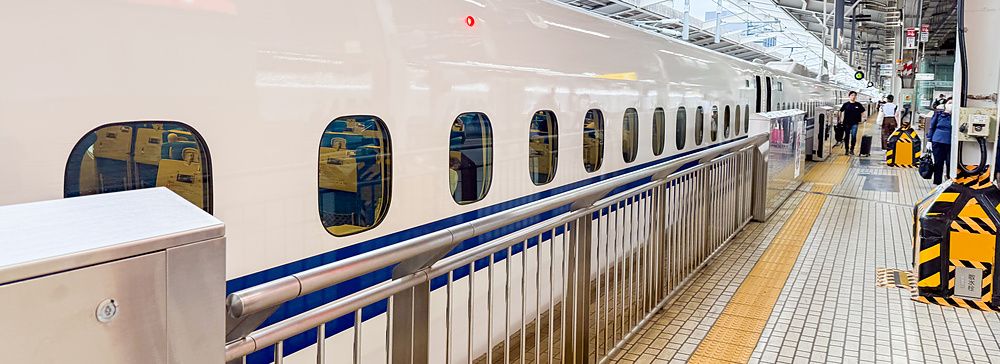
Japan has one of the most efficient rail systems in the world, yet riding the Shinkansen can look a lot more complicated than it really is. You have to make sense of the tickets, pick the right station, find the right platform and know what to do once you’re on board. The system runs beautifully, but it isn’t always obvious to a foreigner.
Trust me, getting it all straight ahead of time completely changes how your trip goes. Below I go through everything you need to board a Shinkansen like a pro, with no stress and no wasted time.
Contents
- Buying Shinkansen tickets
- Reserved or non-reserved?
- Types of Shinkansen trains
- Where to catch the Shinkansen
- How to ride the shinkansen
- Making sure it's your train
- Where to put your luggage
- Japan Rail Pass and the shinkansen
- Timing and punctuality
- Seats and cars
- Picking your seat
- Eating on the shinkansen
- Restrooms and other comforts
- If you get on the wrong train
- If your train is delayed or canceled
- Traveling with kids
- The best-known routes
- Final tips
- Video: The best Japanese trains - a documentary worth watching!
- Video: Eating on Japanese trains: bento
- Video: Trains in Japan: The Truth About Refunds
Buying Shinkansen tickets
There are three main ways to buy a ticket: at a machine, at a ticket counter or online. The ticket machines are convenient and often have an English option. If it’s your first time and you want to be sure you get it right, though, I recommend going to the Midori no Madoguchi counter. Just tell the staff your route (for example “Tokyo to Kyoto, tomorrow morning”) and they’ll help you sort out the rest: departure time, type of train and seat.
To book online, you can use the official JR East or JR West app, or sites like SmartEX, which is in English. And if you have an active Japan Rail Pass, you can reserve seats for free, even at the machines, by inserting your pass.
Keep in mind that a Shinkansen trip takes two tickets: the base fare ticket and the Shinkansen supplement. If you buy them together, as almost everyone does, you get a single ticket to feed through the ticket gates.
- From and to: 東京 is Tokyo, 京都 is Kyoto.
- Date and departure: 13:18発 means “departs at 13:18.”
- Train name and number: ひかり 513号 is Hikari 513. This is what you check against the departure board.
- Car and seat: 7号車 is car 7, and 3番E席 is row 3, seat E.
- What you’re holding: 乗車券 is the base fare ticket and 特急券 is the supplement. If you have two separate tickets, put them through the gate together.
This ticket was drawn as an example. Many tickets also show the stations, train and seat in Latin letters next to the kanji, like the gray text here, which makes things even easier.
Reserved or non-reserved?
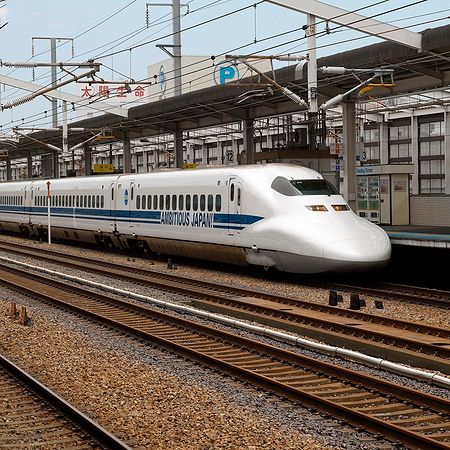
Shinkansen trains have both reserved cars and non-reserved cars. If you want to play it safe, reserve. A reserved seat costs the same or only slightly more, and you have your own assigned seat, so you can board without rushing. Be aware that on some trains, or at certain times of year, there may be no non-reserved cars at all.
For the non-reserved cars, it’s like catching a bus: you line up and get on. If there’s an empty seat, you sit down. If not, you stand in the aisle, which isn’t against the rules but is uncomfortable on a long ride. On routes popular with tourists or on holidays, the non-reserved cars can already be full when the train leaves.
If you already know where you’re going, I recommend booking at least the day before, or even earlier if you want to travel at a convenient time or on a specific train.
Types of Shinkansen trains
Shinkansen trains aren’t all the same. On a single route like Tokyo to Kyoto, some trains are faster, some are slower and some are cheaper. The main ones are:
- Nozomi: the fastest (not covered by the Japan Rail Pass)
- Hikari: a little slower, but covered by the Rail Pass
- Kodama: the slowest, stopping at every station
Other lines have trains with different names, like Sakura, Mizuho, Tsubame, Yamabiko, Komachi and Hayabusa. Each name stands for a different speed, line and type of service. And the difference is anything but small: between Tokyo and Osaka, a Kodama takes an hour and a half longer than a Nozomi because it stops everywhere.
| Train | Stops | Travel time | Japan Rail Pass |
|---|---|---|---|
| Nozomi | major stations only | about 2 hours 30 minutes | only with a supplement |
| Hikari | a few more stops | about 3 hours | covered |
| Kodama | every station | about 4 hours | covered |
The names change on other lines: Mizuho and Sakura run to Kyushu (like the Nozomi, the Mizuho needs a supplement if you’re using the pass), Hayabusa and Yamabiko head north, and Kagayaki and Hakutaka go to Kanazawa.
Where to catch the Shinkansen
Shinkansen trains leave from specific stations, which usually aren’t the same ones local trains use. In Tokyo, for example, you can catch one at:
- Tokyo Station (the main one)
- Shinagawa (more convenient if you’re in the south of the city)
- Ueno (convenient if you’re in Asakusa or the northeast)
Kyoto only has Kyoto Station, while in Osaka you board at Shin-Osaka. Careful: NOT at Osaka Station!
“Shin” at the start of a station’s name means “new.” High-speed lines often have their own stations, separate from the ones regular trains use, so don’t let the similar names trick you.
How to ride the shinkansen
When you get to the station, you’re not in the shinkansen area yet. First you go through the ticket gates with your ticket and into the “local” part of the station. If you have two tickets (base fare + supplement), put them in together. The gate reads both automatically and gives them right back. From then on, keep them on you at all times, ideally in the same pocket. You’ll need them for the shinkansen gate, for any ticket checks on board and above all to get out at your destination, where the gate keeps them for good. If you lose your ticket halfway through the trip, you’ll have to buy it again, so don’t leave it lying around on the tray table.
Get there 15-20 minutes early. The stations are huge, and it takes a while to find your way around the first time.
Once you’re inside, follow the signs that say “Shinkansen.” They take you to a separate area, often on a different floor. Sometimes there’s a second ticket gate to go through, so don’t expect to find your platform right away. That’s why I recommend getting there at least 15-20 minutes early. Japanese stations are huge, and if it’s your first time you could lose time just finding your way around.
When you reach the platform level, look for your train on the electronic boards. They show the departure time, train number and destination, plus the car numbers. Right on the platform floor there are numbers and symbols showing where to stand for each car. Line up in the right spot and wait your turn. Nobody runs or pushes here: people board quietly and calmly.
When the train pulls in, the doors open exactly in front of you. Get on, stow your suitcase, find your seat (if you’ve reserved one) and relax. Your trip is about to start.
Making sure it’s your train
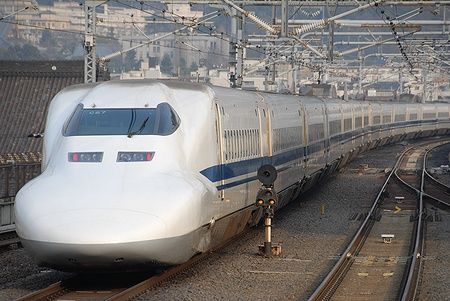
When you’re about to board, check your ticket carefully. Knowing the time or the destination isn’t enough. What really keeps you from making a mistake is the train number, which is usually printed near the top next to the train’s name (for example *Hikari 512* or *Kodama 726*).
The electronic boards in the station always show that same train number along with the departure time and direction. Make sure they match your ticket exactly. Even if you’re going to Kyoto, dozens of different trains run that route, at different times and with different stops.
One thing that helps: two different shinkansen almost never leave at the same time. If your train is at 13:18, it’s very unlikely there’s another one at that exact time. So if you see a 13:14 or a 13:22, don’t get on thinking it’s “close enough.” It isn’t.
Check the train number, departure time, direction and your assigned car. If everything matches, you’re in the right place. And if you’re unsure, ask one of the uniformed staff. They’re everywhere and happy to help, even if you only speak English.
Where to put your luggage
Until a few years ago, you just put your suitcase wherever you found room. Now, on some lines, you have to reserve space for oversized luggage, meaning anything over 160 cm in total (height + width + depth). That’s not as big as it sounds. A large 28-inch checked suitcase easily adds up to 160 cm. Measure yours before you leave. Reserving the space is free, but if you board without a reservation you could be charged a fee on the train.
Smaller bags go on the overhead racks above the seats. If you’re traveling light, it’s all very simple. If not, think ahead about how you’ll deal with your luggage. And if you really do have a big suitcase, the easiest thing is not to bring it on the train at all but to ship it. The front desk can send it from hotel to hotel by courier, and you ride the shinkansen with just your carry-on. No luggage space to book, no hauling a suitcase up and down station stairs, no roller bag to wedge between the seats.
Japan Rail Pass and the shinkansen
If you have a Japan Rail Pass, you can ride lots of shinkansen trains at no extra cost, but there are some important exceptions. The pass does NOT cover Nozomi and Mizuho trains. So on the Tokyo-Kyoto-Osaka line you’ll have to take a Hikari or a Kodama, unless you pay a supplement.
With the pass you can go to the ticket machines or counters and reserve a seat for free, or just get on without a reservation in the non-reserved cars.
Keep an eye on when your pass expires: it counts whole days, not hours. If you activate it on January 1, even at 18:00, it runs through January 7 and expires at midnight. I go into this in detail in my article on the Japan Rail Pass.
Timing and punctuality
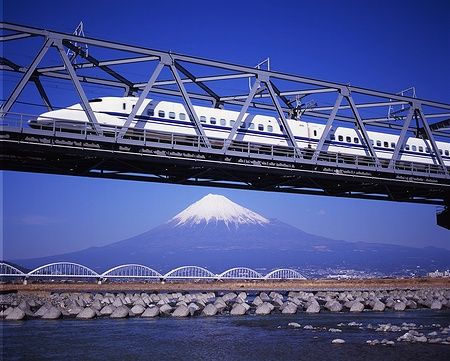
One reason the shinkansen is famous all over the world is that it runs like clockwork. Over a year, the average delay is just a few seconds. If a train leaves at 13:03, you can count on it leaving at 13:03 on the dot. So don’t show up at the last minute.
I’d get there at least 15-20 minutes early, especially if you don’t know the station well or still need to pick up your tickets. Japanese stations are huge, and you could get lost if you’re not used to them. And remember: if you miss your train, your ticket isn’t automatically valid for the next one, unless you bought a non-reserved ticket or one with flexible changes.
Seats and cars
Every car on the shinkansen is numbered. The ones at the front are often non-reserved, while the middle and rear cars have reserved seating. On some lines the last cars are for Green Class, which is first class, and the more modern trains also have Gran Class, a level above that, with reclining seats like in business class.
In standard class the seats are comfortable and wide, with plenty of legroom, power outlets and fold-down trays. You can recline the seat, raise the footrest, turn the seats around (yes, they really do turn!) and sit in peace for hours. The trains are spotless and quiet. If you want to chat or make a phone call, step out into the passageway or the area by the doors.
Picking your seat
When you book, you can also choose your seat, and it makes more of a difference than you’d think. In standard class the rows have five seats, lettered A to E. The window seats are A and E, while B, C and D are on the inside. If there are two of you, the side with only two seats, D and E, is the quietest, because nobody has to get past you.
On the Tokyo-Kyoto-Osaka line there’s a scenic reason to choose carefully, too. Heading west, Mount Fuji shows up on the right, which means seats D and E. On the way back it’s exactly the opposite.
Watch out for the last row in each car, though. The space behind the seatbacks isn’t available anymore, because on the Tokaido, Sanyo and Kyushu lines it’s reserved for oversized luggage.
Eating on the shinkansen
One of the best things about the shinkansen is eating while you travel. It’s not rude at all. In fact, it’s completely normal. Inside the stations you’ll find bento, ready-made meals for the trip with rice, meat, vegetables and fish. They cost between 700 and 1,500 yen, and some are regional specialties from the area where your train departs.
Plenty of Japanese passengers eat a bento and enjoy the view. If your trip is 2-3 hours long, I’d do the same. It’s a great way to enjoy the ride itself, and you’ll really feel like part of the country. You can bring your own food from home too, of course.
Restrooms and other comforts
Every shinkansen has clean restrooms, with separate sinks outside for washing your hands. Some cars also have space for passengers with disabilities, wheelchairs, strollers and special luggage, as well as baby changing tables.
On board, though, don’t expect a cart to come by. Cart service has been discontinued on the main lines, including the Tokaido and Sanyo. So buy everything before you get on, at the station shops or from the vending machines on the platform.
Every seat has a sunshade and a seat pocket with leaflets (in English too), and there’s usually free Wi-Fi, though it’s not always reliable. If you want to work, relax, read or watch movies, you’ll have everything you need. One thing to know if you smoke: smoking isn’t allowed on the shinkansen, and the old smoking rooms are gone too, even on the lines that kept them the longest. Your only option is to step off onto the platform during a longer stop and look for a smoking area, if there is one.
If you get on the wrong train
You might end up on the wrong platform, hop on the train before yours or board the wrong train altogether. If that happens, don’t panic. If you’re on a non-reserved ticket, you can simply get off at the next station and head back.
If you had a reserved seat on a different train, your ticket may no longer be valid. Still, if you go straight to a JR ticket counter and calmly explain what happened, the staff will often help you sort it out, especially when it’s an understandable mistake.
And whatever you do, don’t board a Nozomi if you have a JR Pass, because nobody will cut you any slack there and you could end up paying a steep surcharge.
If your train is delayed or canceled
It’s rare, but it happens: a typhoon, heavy snow or an earthquake, and service comes to a halt. When the cause is predictable, like an approaching typhoon, cancellations are announced the day before, so it’s worth checking the situation the evening before you leave.
If you’re already at the station, don’t just start wandering around. You’ll get updates in English too, on the displays and in the announcements on board, and at the ticket counter they’ll put you on the first available train. A ticket for a canceled train isn’t worthless: you can use it on another shinkansen, usually in the non-reserved cars.
If your train arrives more than two hours late, you’re entitled to a refund of the high-speed portion of your fare. With the Japan Rail Pass, though, there’s no refund, because the pass is valid for a set number of days, not for specific trains.
Traveling with kids
The shinkansen is perfect for families too. Kids up to age 5 ride free as long as they don’t take up a seat, meaning they sit on your lap or share a seat with an adult. If you want them to have their own seat, you can buy them a separate ticket, which still costs half the adult fare.
Children from 6 to 11 always pay half price, whether you book a reserved seat or ride in a non-reserved car. From age 12 up, they pay the same as an adult.
On board you’ll find restrooms with facilities for babies, changing tables, quieter cars and, above all, no annoying noise or jolts. The ride is smooth, comfortable and relaxing. For a lot of kids it’s also fun, because the train is modern and incredibly fast.
The best-known routes
Some of the best-known routes are:
- Tokyo – Kyoto – Osaka: the route tourists use most
- Tokyo – Kanazawa: very handy for getting to the Japanese Alps
- Tokyo – Sendai – Aomori: for exploring northern Japan
- Osaka – Hiroshima – Fukuoka: ideal for western Japan
Each one has its own character. Every so often themed trains show up, decorated with characters or special paint jobs, but they only run for limited periods. Some routes give you views of Mount Fuji or the coast. If you can, try different trains and destinations so you see Japan from a completely different angle than you get from the subway or a bus.
Final tips
If there’s one thing I’d recommend, it’s this: take the shinkansen at least once on your trip to Japan. It’s not just a way to get from A to B. It’s an experience you’ll remember. It costs a bit more than local trains, but it’s worth it. It’s comfortable, fast and reliable, and it’s hard to put into words how orderly and high-tech it all feels. Once you’re on board, sit down, open your bento, look out the window and enjoy the ride. It’s one of those moments when you really get how unique Japan is.


