Sajilo Clove
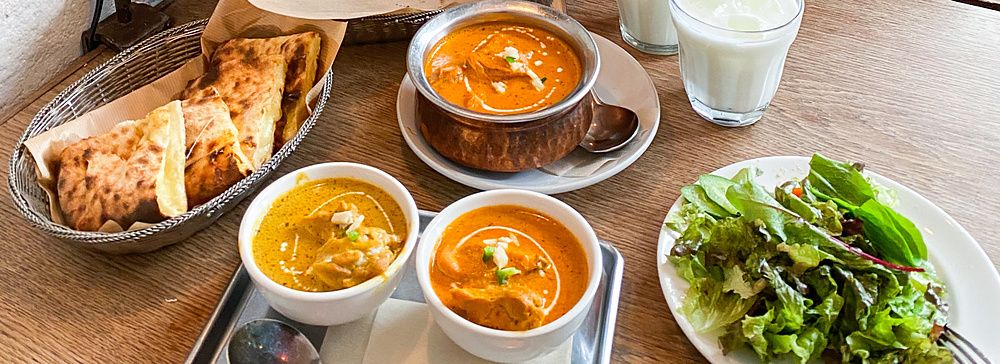
A Nepalese and Indian restaurant in Nishi Ogikubo, the quiet part of Tokyo near Kichijoji, where the curry is mild and the bread comes out of the oven still hot and puffy. At Sajilo Clove, almost everyone comes for the cheese naan.
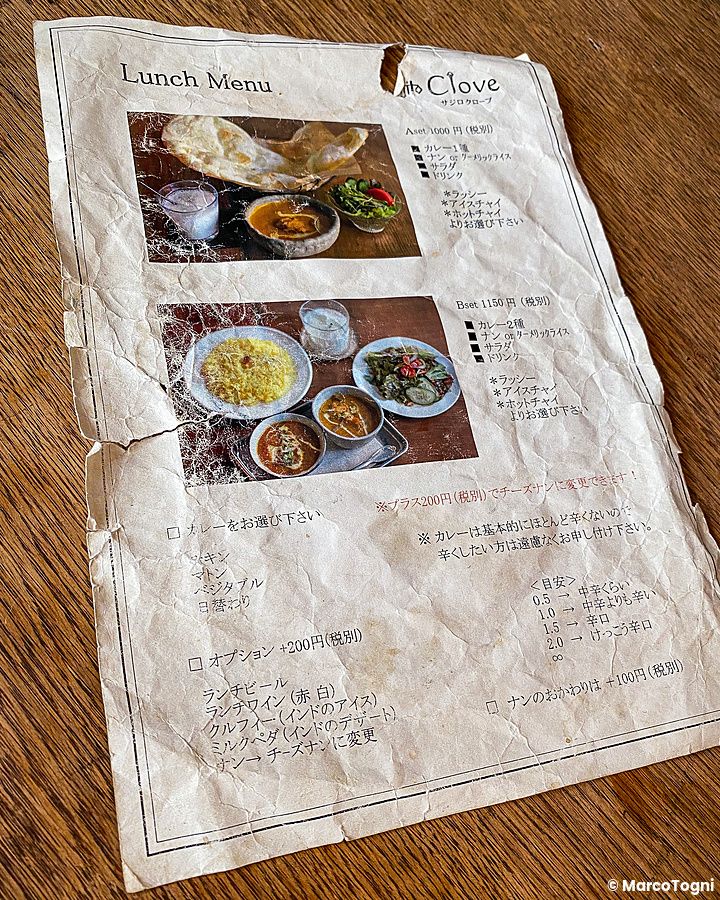
At lunch they offer set meals with your choice of curry, a salad and a drink. In the evening the menu expands to include biryani, dal bhat and real Nepalese dishes. For me it’s the right place if you want Indian food without setting your mouth on fire, and it’s a really comfortable place to eat on your own, too.
Contents
Food and prices
The basic set comes with one curry, and the bigger version comes with two on the same tray. Either way you choose between naan and turmeric rice, and you also get a salad and a drink.
Expect to spend around 1,300–1,700 yen per person at lunch and 2,000–3,000 yen at dinner, depending on how much you order. For what you get, that’s mid-range, not cheap but not special-occasion money either.
- Cheese naan: puffy and glossy, with cheese inside that stretches into strings
- Chicken curry: creamy and thick, not watery at all; you can taste the spice, but it doesn’t bite
- Chicken biryani: fragrant basmati rice with pieces of meat hidden inside, served with yogurt sauce, pickles and papad
- Dal bhat: basmati rice with raisins, lentil soup with fresh ginger, potatoes and vegetables with whole sesame seeds, pickles and boneless chicken
- Turmeric rice: yellow, with separate grains, and it holds its own against the curry better than you’d think
- Lassi and chai: the lassi is thick and cold, and the chai comes hot or iced

The curries here are mild, not spicy. If you’re coming from Shin Okubo looking for that kick at the back of your throat, you won’t get it here. There’s orange chili powder on the table and you can ask them to make it hotter, but the base flavor stays gentle, and they go easy on the salt.
The naan arrives hot and not greasy, and you notice the difference: two bites in, the curry still tastes like itself instead of being buried under fat. The salad isn’t the throwaway side you’d expect. Its dressing has a sharp hit of cumin that cleanses your palate between bites. In the dal bhat the chicken falls apart, and fresh cilantro goes on top at the end.
I think it’s excellent value for the money. A lunch set gets you a full tray with a drink included, and on top of that you can get a second naan for very little, which I rarely see anywhere else.
In the evening the bill goes up, but in return you get more choice, with biryani, dal bhat and freshly made bread. When I want Indian curry but don’t feel like sweating, this is the first place I think of, and what brings me back most is that bread. I tear it, dunk it in the curry, and I’m all set.
Inside
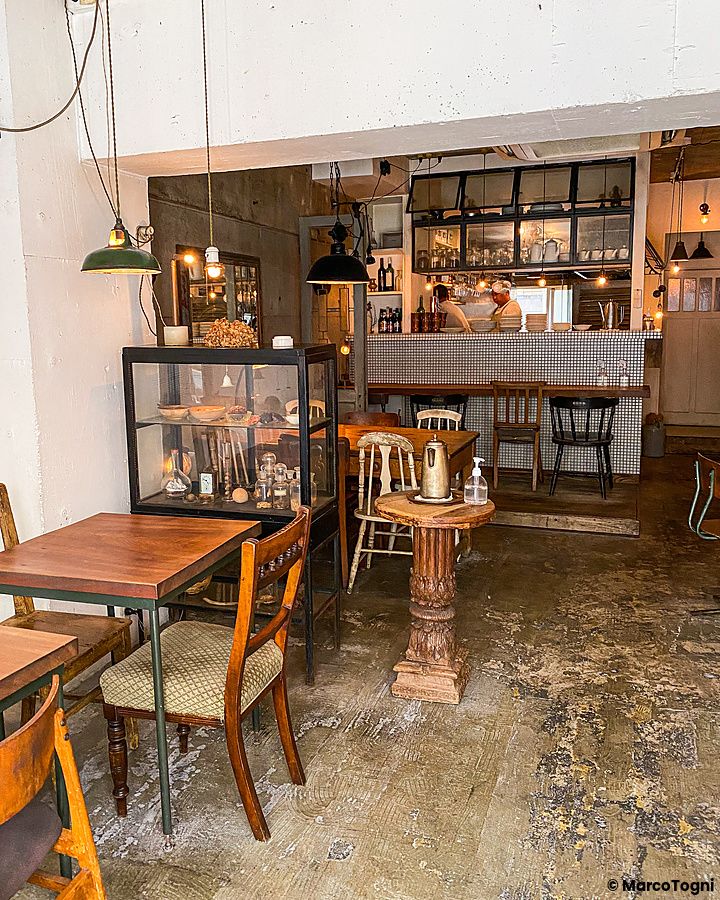
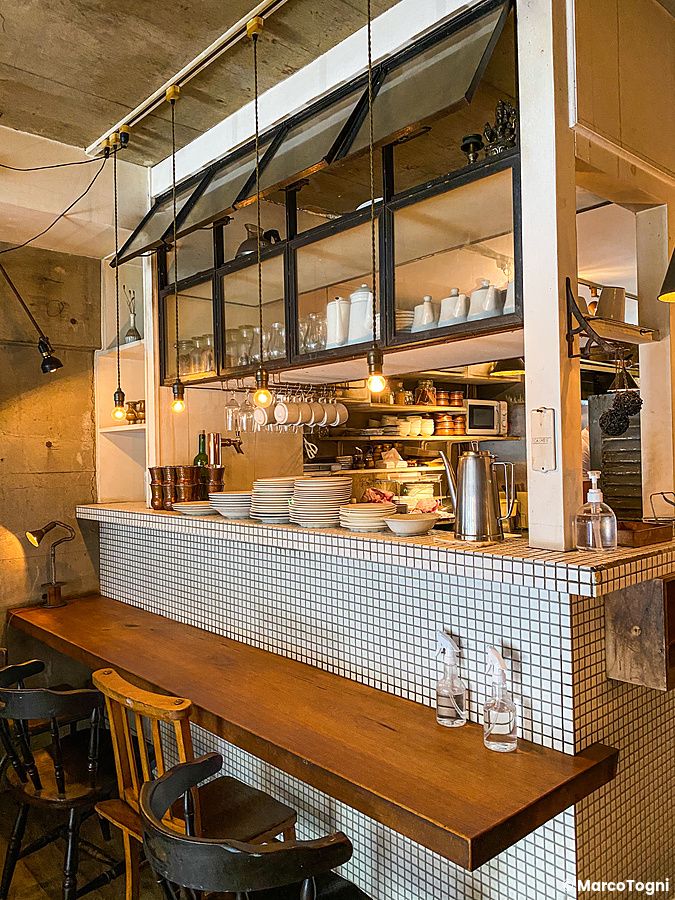
The first thing you see is the white-tiled counter, a grid of small squares with a dark wood top and high chairs in front. Above it, a glass partition with a black frame separates the kitchen, and through it you can make out rows of plates, cups and teapots.
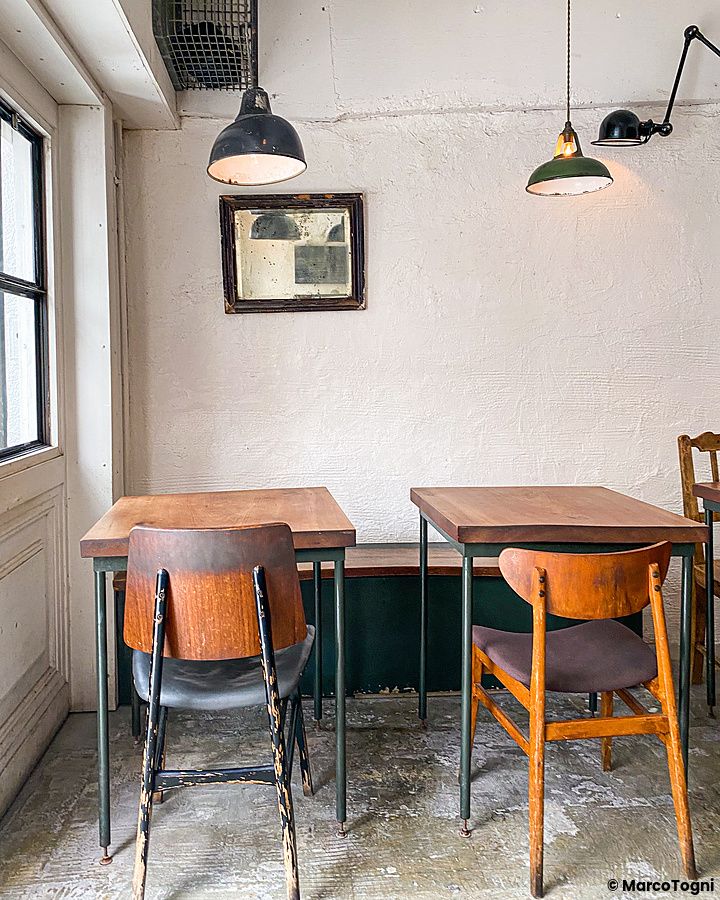
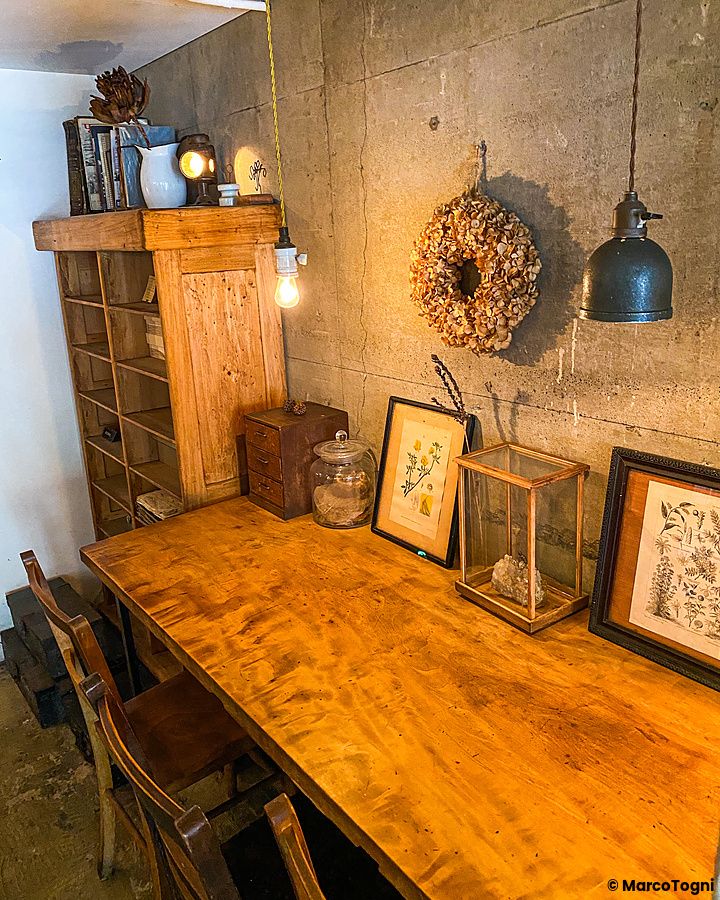
The walls are bare concrete, the floor is scuffed from foot traffic, and the tables are big slabs of rough wood pushed up against the wall. A dried-flower wreath hangs on one wall, next to a few framed prints of plants.
The lamps hang down from the ceiling and keep the lighting dim even at noon, so inside it always feels an hour later than it really is. The chairs are white and old, and no two match.
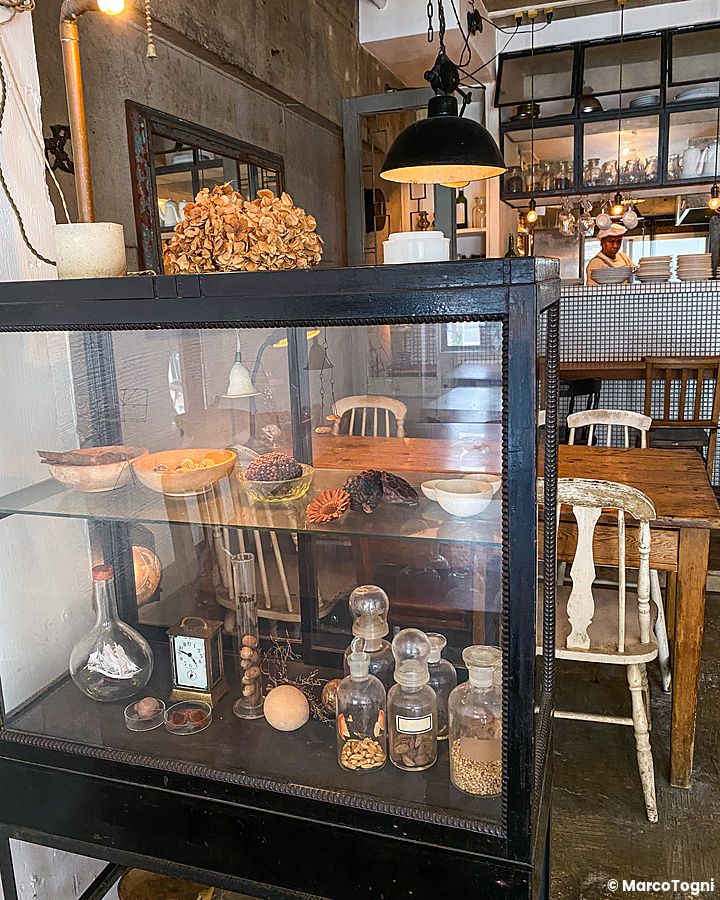
Near the tables there’s an old black wooden display cabinet full of glass vials, spices and odds and ends. It looks more like furniture from someone’s home than something you’d find in a restaurant. The ceiling, on the other hand, has been left raw, with exposed pipes.
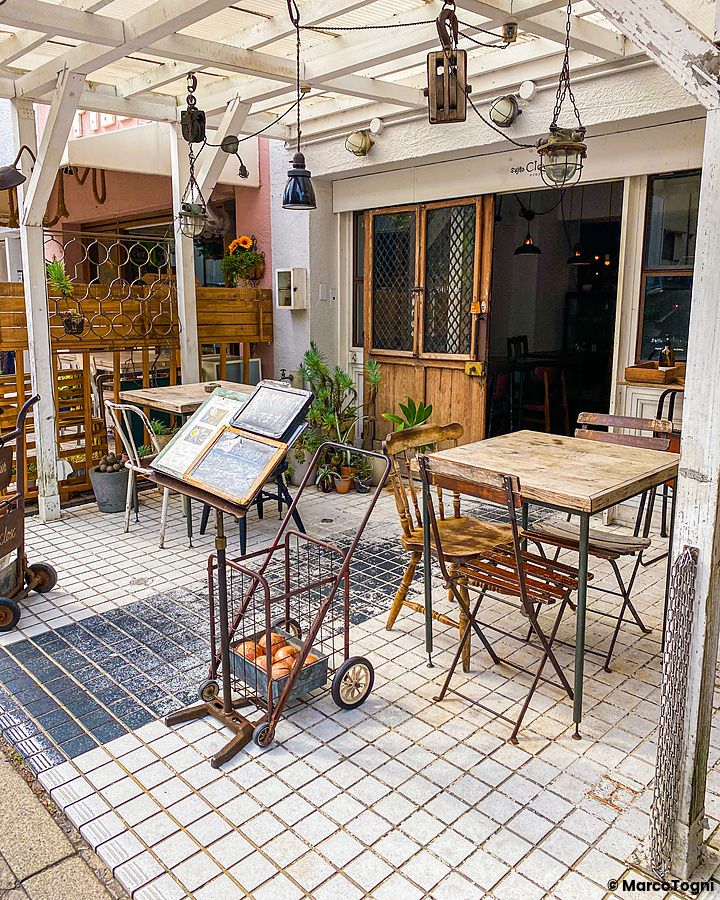
Just outside the entrance there’s a white-tiled area with more wooden tables and matching chairs, plus a metal cart with onions on it. On a nice day, eating outside is the best choice, with the sun on you and the naan still steaming.
Inside, the counter and tables seat about thirty people. It isn’t a cramped little hole, and you can move around without bumping into your neighbor.
Service and customers
From the counter you can see the kitchen staff in their chef’s hats, and the same people come out to the dining room to bring you your food. The staff are Nepalese. They smile, they’ll tell you what’s in the day’s curries if you ask, and they’re in no hurry at all to get you out of your seat.
The pace is relaxed. Your tray takes a few minutes longer to arrive than it would at a chain, because they make the bread to order. If you don’t have time to sit down, you can also get curry and naan to go.
At the tables you’ll find locals, quite a few people on their own, couples, and families with strollers. The counter is set up for people eating alone, and nobody gives you a look if you linger there finishing your chai.
When there’s music, it’s acoustic guitar, played softly enough that it doesn’t drown out conversation.
At noon you may have to wait, especially on weekends, when the whole room fills up at once. If you go in the early afternoon, you’ll walk straight in, with half the room empty and the cook calmly kneading dough behind the glass.
Downsides and things to know
You add the chili yourself, so if you only like curry that makes your eyes water, this place will leave you only half satisfied. It’s not a flaw in the cooking, it’s a choice, but you might as well know before you sit down.
If you’re after rough-edged Nepalese food, the salty, punchy kind, you’ll find everything here softer and more refined. Personally, I like it that way, but it’s only fair to say so.
It’s cash only. In Tokyo you get used to paying with your phone these days, but here you can’t.
In short
Pros:
- puffy cheese naan, hot and not greasy at all, one of the best I’ve had in Tokyo
- complete lunch sets, with a cumin-dressed salad and lassi or chai included
- a concrete-and-wood room with dim lighting, more café than curry house
Cons:
- mild curries: if you want it spicy, you have to ask or add it yourself at the table
- no cards, cash only
Best for: a slow lunch alone at the counter, or dinner with friends where nobody has to raise their voice
Atmosphere: dim light, old mismatched chairs, cabinets full of spices, people from the neighborhood
Final thoughts
What sticks with me from Sajilo Clove is the moment I tear open the cheese naan and the steam comes out all at once, with a string of cheese stretching all the way down to the tray. If you only go once, pair it with the chicken curry, which you can scoop up with the bread without it dripping, and if it’s sunny, grab a table outside.
It’s worth the trip out to Nishi Ogikubo for that moment alone. Take your time, finish with a chai, and I bet you’ll be back.
Getting There
From Nishi Ogikubo Station, take the North Exit and walk north for about 6 minutes through residential streets. The restaurant is on the ground floor of a white building, with very little signage and a cart of onions outside the entrance.
On weekends and holidays, Chuo Line Rapid trains don't stop at Nishi Ogikubo. From Shinjuku, take the local Chuo-Sobu Line, or get off at Kichijoji and ride one stop back.
Useful Info
- Nishi Ogikubo Station (JR Chuo Rapid on weekdays only, JR Chuo-Sobu): North Exit
Map
This place is on MarcoMaps
Sajilo Clove
My map of Japan: over 4,000 places I've tried myself, each with photos, rating, and hours. Filter by category and rating, find veg-friendly spots and places near you with GPS. No sign-up, right from your phone.
- 4,000+ places
- Rating, photos, and hours
- Veg friendly
- Near me (GPS)
- Favorites without login
- Works offline

