138 m
Don Quijote138 m
Open 24 hours, and you can find anything.
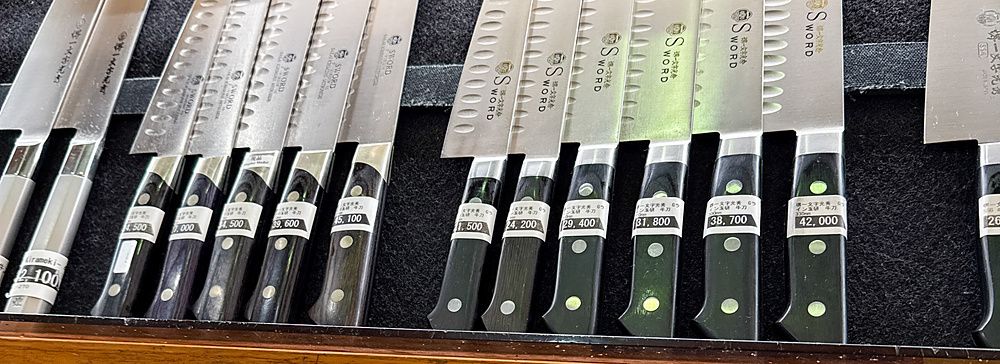
A kitchen knife shop in Namba, on Doguyasuji, the Osaka street where restaurant owners and chefs come to buy pots, tableware, and kitchen equipment. Sakai Ichimonji Mitsuhide mostly sells knives under its own brand, handmade by craftsmen in Sakai. That’s the city just south of Osaka that turns out most of the blades Japanese chefs use.
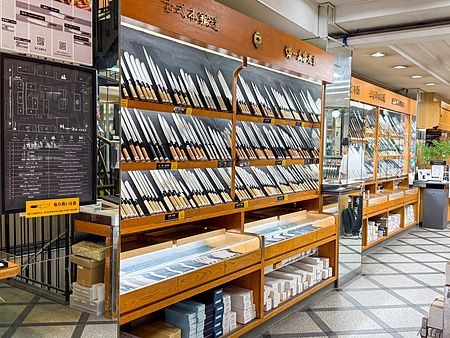
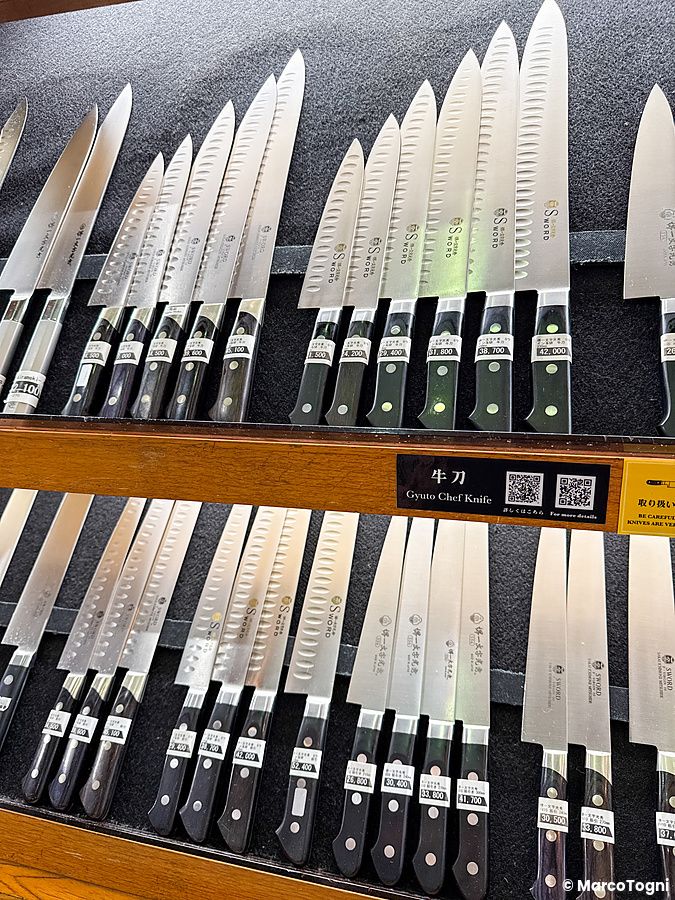
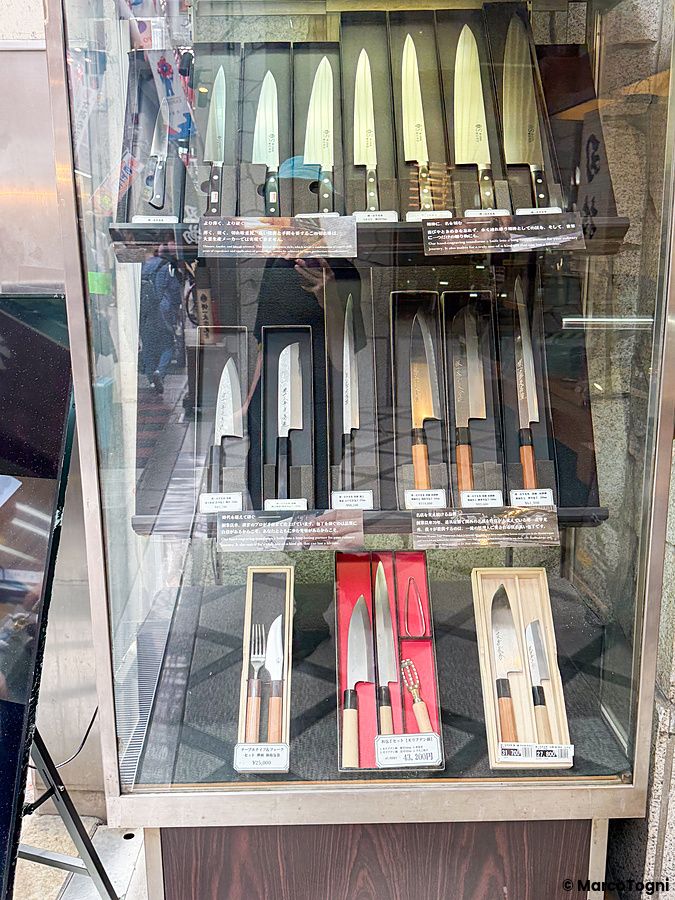
The display cases hold about 2,000 models, from everyday home knives to sushi knives. Go if you want to bring home a real Japanese knife, for yourself or as a gift, with a name engraved on the blade.
Nearly everything here is something that cuts, plus whatever you need to keep it in good shape. Knives take up most of the shop. Some are traditional Japanese styles and some have Western shapes, and each type comes in several steels and lengths.
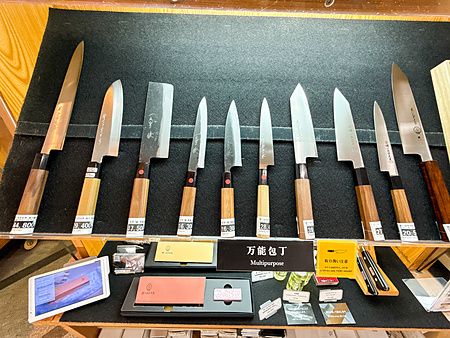
Traditional Japanese knives start at under 10,000 yen and go past 150,000 yen for collector’s pieces. A good gyuto runs about 25,000–45,000 yen and whetstones start at around 4,000 yen. The wooden cutting boards cost more than you’d expect, around 14,000–22,000 yen.
Prices fall in the mid-to-high range, but these knives are handmade by craftsmen who make nothing else, and the same blade costs quite a bit more in a shop in Europe.
Carbon steels cut best, but if you leave one wet in the sink, it’ll have rust spots the next day. If your knife at home tends to end up in the dishwasher or sit dirty on the counter, get stainless and stop worrying about it.
Single-bevel blades look great, but they’re awkward to use unless you already know what you’re doing with one. If you just make sashimi on the occasional Sunday, a gyuto does a better job than a 27-centimeter yanagiba.
Think about your luggage too. A knife has to go in your checked bag because it won’t get through security in your carry-on. If you’re traveling with just a backpack, you might as well buy a stone and leave it at that.
A 30,000-yen knife sounds like a lot until you’ve used it for a month. After that you start wondering why you spent your whole life cutting onions with anything else. The draw here isn’t the price. It’s being able to hold ten models in a row and feel how the weight and the handle change from one to the next before you choose.
When a friend visits and asks me where to buy a Japanese knife, I bring them here. In half an hour they walk out with the right knife for the way they cook and their name on the blade, not the first decorated knife they saw in a souvenir shop.
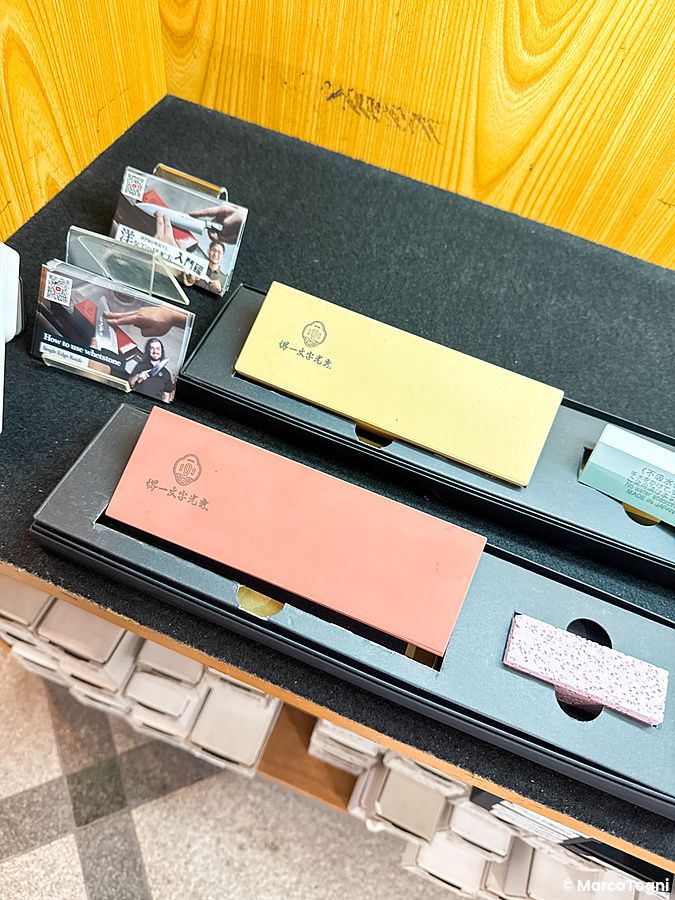
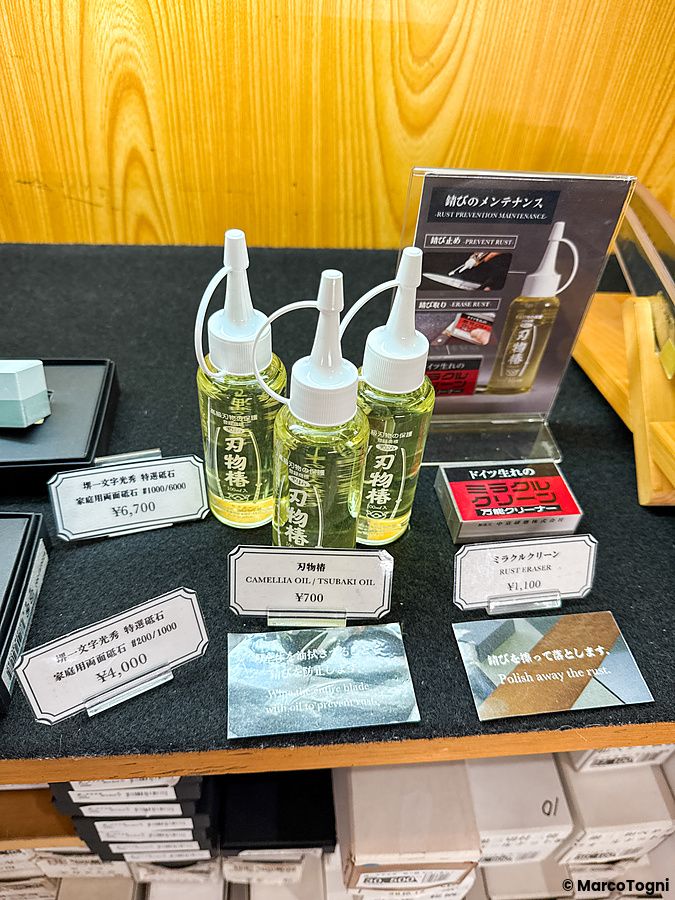
The shop has two floors. On the ground floor, the blades are displayed along the walls and in glass cases, sorted by type.
There’s also a station where you can test how a knife cuts and another where you can watch how to use a whetstone. It might seem like a tourist gimmick, but once you’ve tried it you’ll understand right away why one knife costs three times as much as another.
Upstairs is Ichitoi, a space devoted to cooking and kitchen tools. They hold events there, along with sharpening classes for beginners and for people who already have some experience.
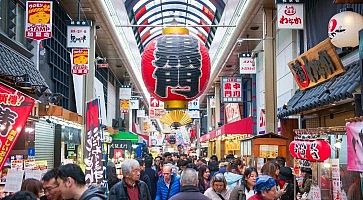
Out on Doguyasuji you’ll find tableware shops, plastic restaurant signs, and fake food samples. Inside the shop, everything is neater and quieter. It’s all wood and lit display cases, and the staff show you the blades one at a time.
The staff will be your biggest help here. They speak English and other languages too. Tell them what you cook and how you look after your knives at home, and they’ll give you a thoughtful recommendation without pushing you toward the most expensive model.
Ask them to hand you the same shape in two different steels. You’ll feel the difference more than you’d think.
Name engraving is free on the shop’s own knives, and they do it by hand with a hammer and chisel. You can ask for Roman letters too, but the shop decides where the name goes and what style it’s in. On Western-style knives there’s only room for about three characters.
Once a knife is engraved, you can’t exchange or return it, so double-check the spelling before you give them the name.
Your purchase also comes with a voucher for a free sharpening. It never expires and you can use it at the Osaka shop. People who live in Japan actually use it. If you’re flying home, it’s mostly a nice gesture, or an excuse to come back.
They offer tax-free shopping for tourists, so bring your passport. On a knife that costs a few tens of thousands of yen, you’ll notice the savings.
They take credit cards, mobile payments, and transit cards, so you don’t need to hit an ATM first.
Pros:
Cons:
Best for: anyone who wants a Japanese knife to actually cook with, or a special gift engraved with a name
Atmosphere: wood, light on the blades, chefs and travelers testing the edge
You don’t come to Sakai Ichimonji Mitsuhide to save money. You come to walk out with a well-chosen knife that will last you for years. You’ll spend what you’d spend on a good tool, not what you’d spend on a souvenir, but every yen goes into the steel, the craftsmanship, and the help finding the right model. If you cook every day at home, I can’t think of a better way to spend an afternoon in Osaka and part of your travel budget.
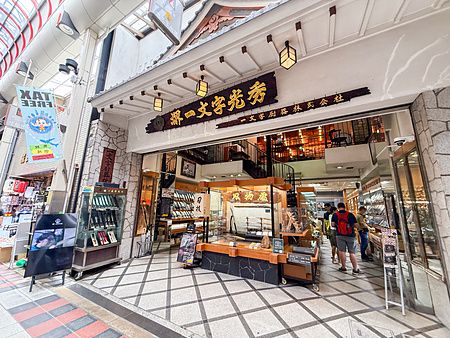
The shop is on Sennichimae Doguyasuji, the covered arcade lined with kitchen supply stores, about a 5-minute walk from the Namba stations.
From Namba, walk east to the Namba Grand Kagetsu theater. The arcade's south entrance is right next to it, and you'll find the shop along the covered street. It has a dark wood facade and a gold sign.
This place is on MarcoMaps
Sakai Ichimonji Mitsuhide
My map of Japan: over 4,000 places I've tried myself, each with photos, rating, and hours. Filter by category and rating, find veg-friendly spots and places near you with GPS. No sign-up, right from your phone.


Sakai Ichimonji Mitsuhide - nearby you will find: