Sangenjaya
Sangenjaya is one of those parts of Tokyo where I feel at ease without even trying. It’s only two stops from Shibuya, yet it moves at its own pace. People actually live here: they do their grocery shopping and stop for a drink after work.
Locals call it Sancha. The full name means “three teahouses” and comes from three old shops that stood near the spot where the road forked. Almost nothing is left of them today, but the urge to linger over food and a chat hasn’t changed a bit.
Here’s how to get around, what changes once evening falls, and what to pair it with.
Contents
Restaurants
Nearby neighborhoods

Gakugei-Daigaku
Yutenji
Streetcar and subway
The neighborhood’s landmark is Carrot Tower, which sits right on top of the station.
It’s the tall orange-brick building you see as soon as you come up, and you can’t miss it. On the 26th floor there’s a free observation deck about 100 meters up. From there you get a wide view over the city and, on clear days, Mount Fuji in the background. I like going up when I have half an hour and don’t want to spend any money.
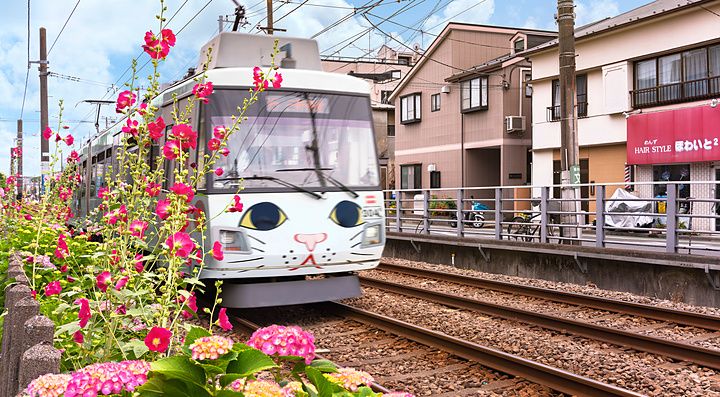
The Setagaya Line streetcar leaves from the same station. It’s one of only two streetcar lines left in Tokyo. The run is short, just a few kilometers to Shimotakaido with about ten little stops, but it cuts through a part of the city full of low-rise houses you’d never see from the main roads. It’s cheap, and there’s even a one-day pass if you want to hop on and off as you please. That’s exactly why I like it: it slows everything down.
Inside the triangle
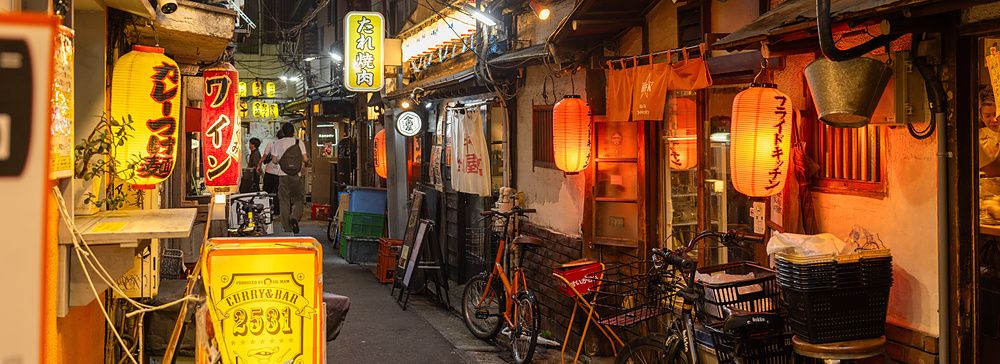
What keeps bringing me back to Sancha is Sankaku Chitai, the triangle. This tiny tangle of narrow alleys is squeezed into the wedge between Setagaya-dori and Tamagawa-dori, just north of the station, and you get lost within a few steps.
By day it’s almost silent, with a few cafés open and the shutters still down. In the evening it turns into a different place. The lanterns come on, smoke drifts out from the counters of izakaya where locals have been drinking since the postwar years, and people squeeze around the tiny tables elbow to elbow.
Many of these places have only a handful of seats, so expect to get turned away a few times and to take a lap or two of the alleys before you sit down. This isn’t a neighborhood built for tourists, and to me that’s what keeps it alive. Go in wherever you see happy faces and a menu you can’t make sense of, and take your chances.
On to Shimokitazawa
Sancha on its own takes half a day, so it makes sense to pair it with something else. Chazawa-dori starts here and heads toward Shimokitazawa. It’s about a twenty-minute walk past small shops and low-rise houses, and the two neighborhoods are pretty similar in spirit.
Along that road there’s something that makes everyone smile: a giant gorilla perched on top of a konbini, a sort of King Kong that’s been there so long that even locals aren’t really sure where it came from. It’s become a meeting point, as in “see you under the gorilla.” Take a good look at it. One hand reaches out toward the street, and on its palm sits a little girl, a detail almost nobody notices from the sidewalk. It’s been up there since 1979, and the most widely accepted story is that it was put there to draw people to the shopping street.
If you need to fit it all into one day, here’s how I’d do it:
- streetcar ride: in the afternoon, getting off at a random stop
- free views: up on the observation deck around sunset
- dinner in the alleys: just as the lights start coming on
Staying here only makes sense if you want a quiet base near Shibuya without paying Shibuya prices. You won’t find big hotels here. It’s mostly a few small places. For a first trip to Tokyo I’d stay somewhere more central, but if you’re back for a second visit, Sancha is a good compromise: away from the crowds, with Shibuya a few minutes away by train.
Getting There
From Shibuya, take the Tokyu Den-en-toshi Line. Sangen-jaya is the second stop, just a few minutes away. Come up toward Carrot Tower, the orange building above the station, and you'll find the alleys of Sankaku Chitai starting right behind it, a couple of minutes on foot.
If you're coming from Shimokitazawa, you can also walk along Chazawa-dori. It takes about twenty minutes.
Useful Info
Name: Sangenjaya
Time needed: Half a day, ideally from the afternoon into the evening
Closed: Carrot Tower observation deck: closed on the second Wednesday of each month and from December 29 to January 1
Tips: Go up to the free observation deck at Carrot Tower shortly before sunset, then head straight down into Sankaku Chitai. In a few minutes you go from views over the city to counters where you sit elbow to elbow. On clear winter days you have a better chance of seeing Mount Fuji.
Getting there:
- Sangen-jaya Station (Tokyu Den-en-toshi Line): second stop from Shibuya
- Sangen-jaya streetcar stop (Tokyu Setagaya Line)
- Many Den-en-toshi Line trains run straight through onto the Hanzomon subway line
Map
MarcoMaps100% free
This place is on MarcoMaps
Sangenjaya
My map of Japan: over 4,000 places I've tried myself, each with photos, rating, and hours. Filter by category and rating, find veg-friendly spots and places near you with GPS. No sign-up, right from your phone.
- 4,000+ places
- Rating, photos, and hours
- Veg friendly
- Near me (GPS)
- Favorites without login
- Works offline

