 294 m
Maisen294 m
Unbeatable tonkatsu.
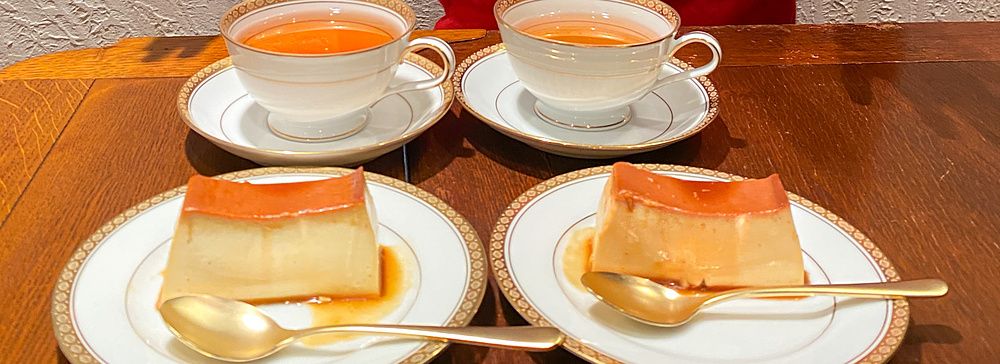
An old-style Japanese coffee shop in Shibuya, on the Aoyama side, tucked away at the end of a hallway in a building that gives nothing away from the outside. Inside, Satella is an old-school kissaten, with dark wood and orange light, porcelain cups and coffee poured by hand one cup at a time.
The specialty is the pudding, firm and dense, but there’s something savory too if you’re hungry. Go if you’re curious about the slow ritual of the Japanese coffee shop and have a good half hour to spare without checking the time.
The menu fits on a single page, and the place doesn’t try to be a restaurant. There are desserts, toast, one hot dish and a list of drinks where the coffee matters more than anything else.

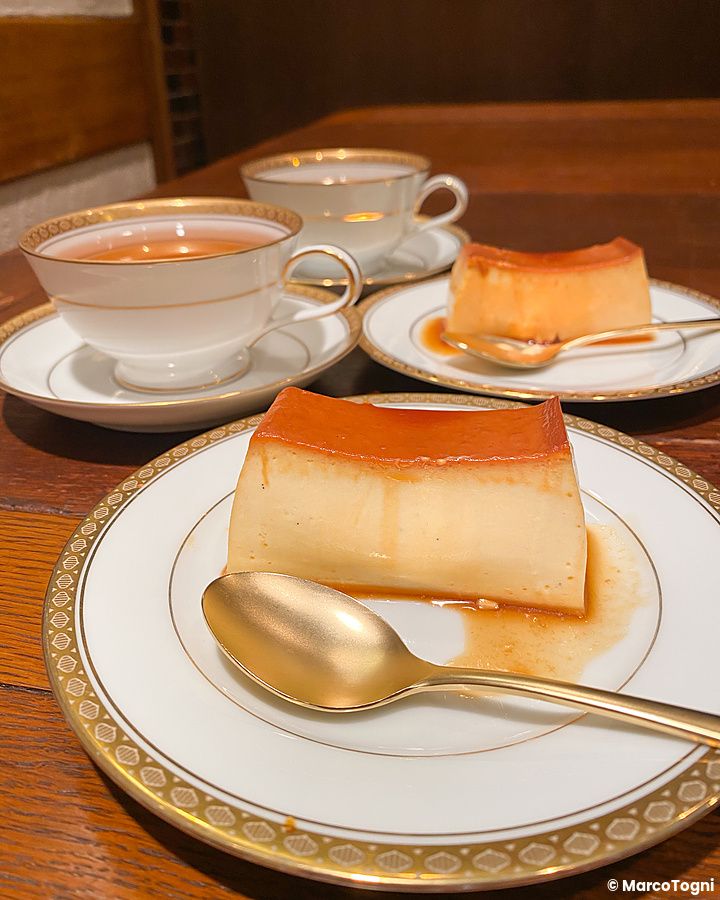
The pudding is really firm. You cut it with a teaspoon and it holds its shape, so if you love the kind that melts the moment you touch it, you’ll find the opposite here. You can taste the cheese, which adds a tangy edge and cuts through the sweetness of the condensed milk, and that’s what sets it apart from the countless café puddings around the city.
The coffee is bitter and full-bodied, with little acidity. It’s meant to go with something sweet, not to be knocked back in two sips.
Expect to spend around 1,500–2,000 yen per person for a dessert and a coffee, which is average for a café and not much for Shibuya. It’s not an everyday breakfast but a stop you choose to make. They take cards, e-money and QR code payments, which isn’t a given at old-school kissaten, where you sometimes still need to pull out cash.
When I want to unwind for an hour without leaving Shibuya, it’s one of the first places that comes to mind. For about 1,500 yen I sit down with a pudding and a hand-poured coffee, and nobody rushes me.
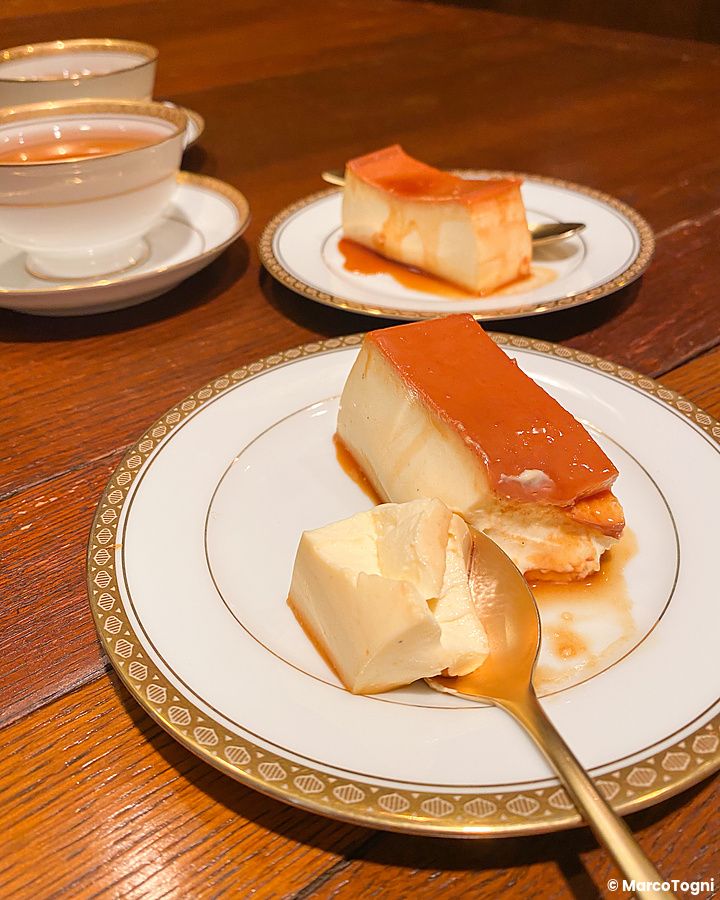
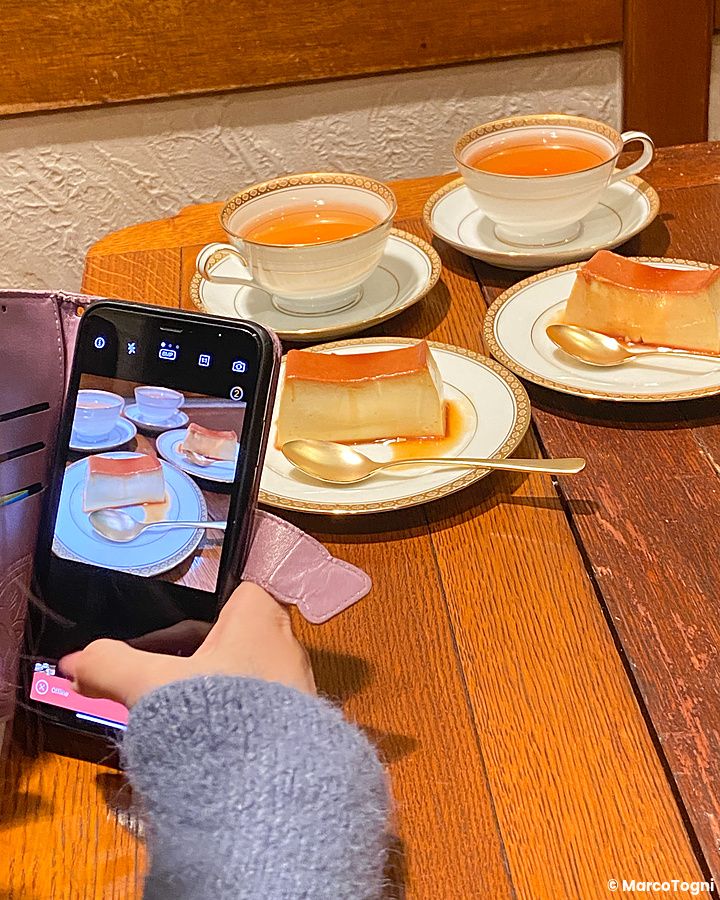
There are sixteen seats in total: a four-seat counter, a few tables and a more secluded corner at the back, walled off by carved wooden partitions. You can hear what people are saying at the next table, and that’s part of the deal.
Low lamps give off a warm amber light, while sheer lace curtains on the windows soften the view of the street.
An old wooden column holds up a tabletop, and the cupboard behind the counter still has its original doors. None of it is there for show. The brick walls and handcrafted woodwork are genuinely old.
The sound you hear most is water pouring from the kettle into the filter. The baristas work right in front of you, one cup at a time, and your coffee comes when it’s ready, not before.
It’s nonsmoking and has wifi and power outlets, but even so it’s not the kind of place where people camp out with a laptop for half the day. You sit, you drink, you talk quietly.
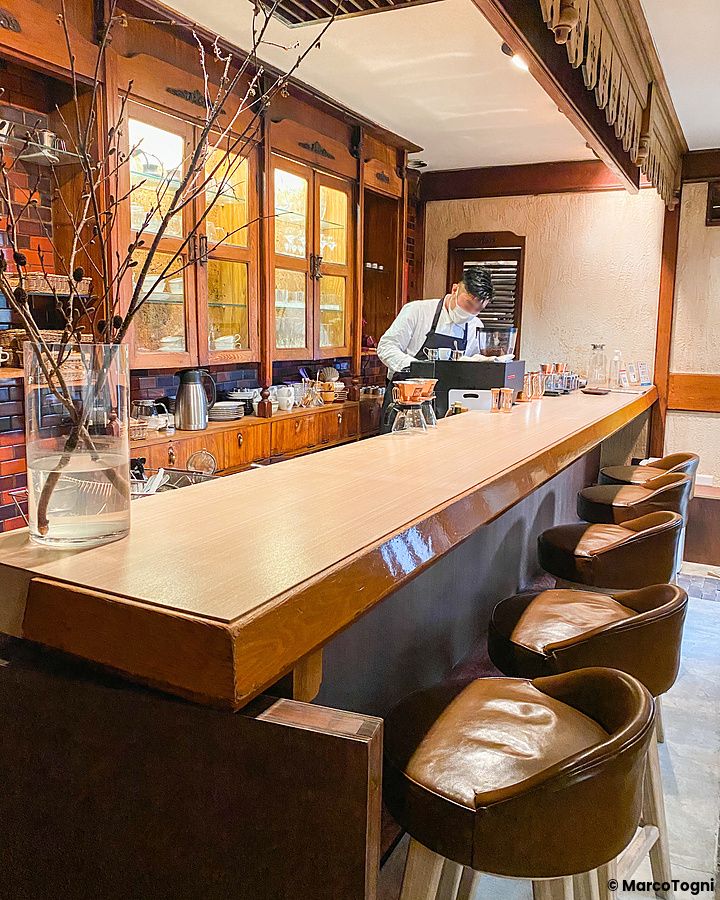
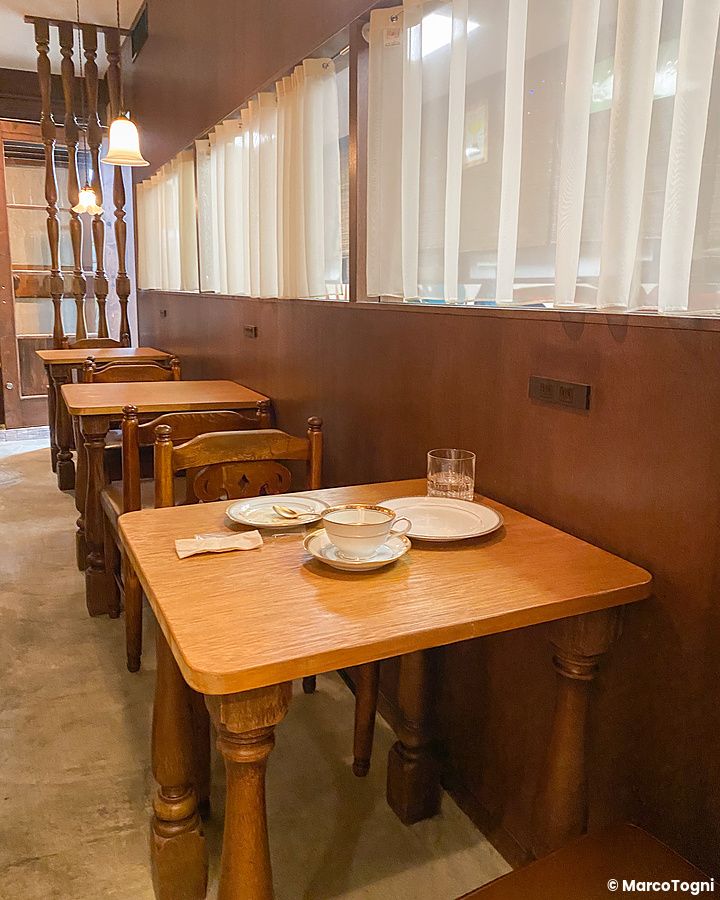
On weekends you wait outside, standing in the building’s hallway under the neon lights of the other businesses. It’s about twenty minutes on a good day and much longer on busy ones, and the line grows fast because with so few seats it doesn’t take much.
If you can, go early in the morning on a weekday. Otherwise, count on your break starting before you even get in.
The staff are genuinely kind, not just polite for show. They’ll explain the difference between one roast and another and tell you what’s seasonal without pushing you to order.
Before you join the line, keep in mind that the pudding can sell out. They make it in limited quantities and on packed days it disappears, so if that’s what you’re coming for, aim for a quiet time of day.
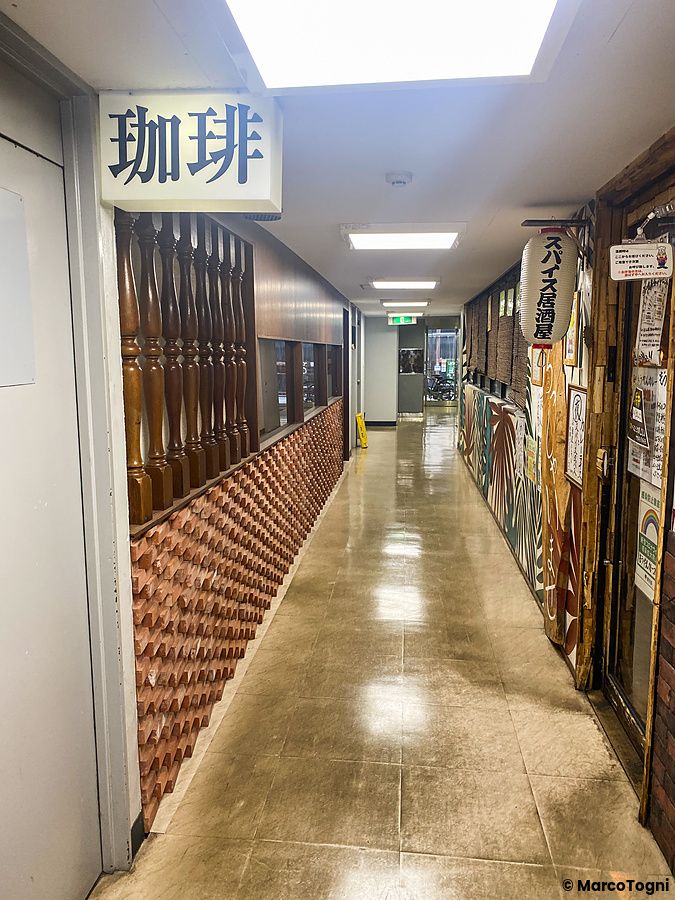
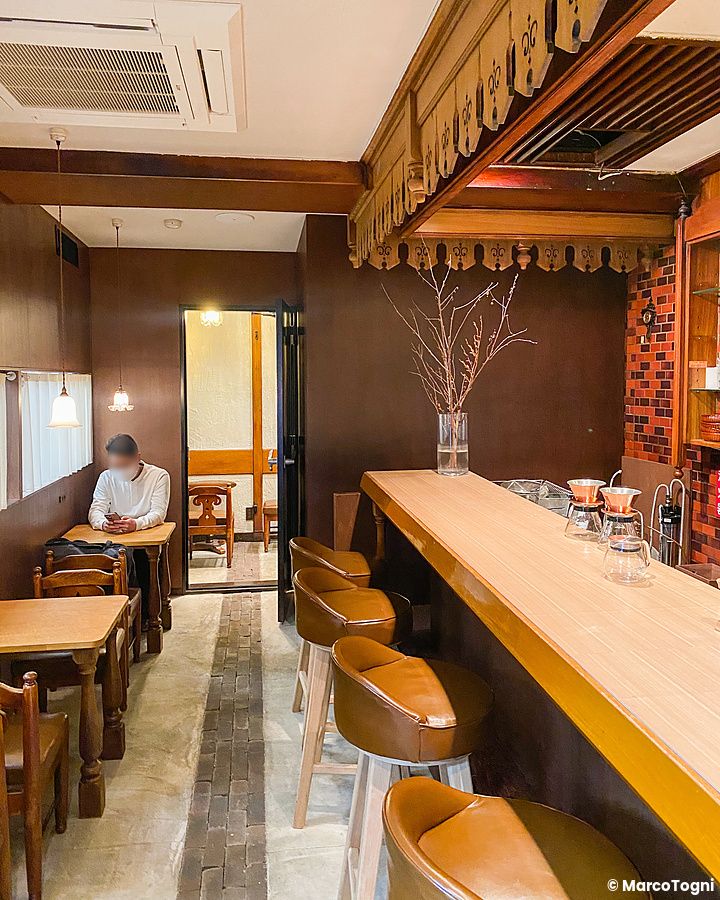
If you want a quick coffee to drink standing up, skip it. Here time is part of what you’re paying for: the wait outside, the coffee that arrives at its own pace, and a check that never comes until you ask for it.
If you’ve never set foot in a kissaten, you might not get why a pudding and a cup of coffee cost as much as a full lunch somewhere else. But if you’re after that world, with its good cups, its wood and its slowness, this is one of the best versions of it in central Tokyo.
I think it’s worth the detour above all if you’re traveling alone. The counter is made for people sitting on their own, and watching your coffee being poured lets you spend an hour in a way you rarely can in a city this fast.
It works for two as well, less so for groups. Four people only get seated together if the corner at the back is free, and there you can stay an hour at most.
Pros:
Cons:
Best for: solo travelers who want a slow hour without leaving Shibuya
Atmosphere: dark wood room with low lighting, customers of all ages talking in low voices
If you sit at the counter, watch the barista’s hand as they pour. The water goes in slow circles and you can see the coffee grounds swell in the filter, and that’s what stays with you, more than the taste. Ask for the pudding of the month if they have it, since everyone gets the regular one and the seasonal version is the more fun gamble.
If you’re only coming once, have it with the house coffee rather than the coffee jelly, because the contrast between bitter and tangy is the whole point of coming here. It breaks up a day of wandering around Shibuya better than any shop, so go, sit down and order that pudding.
This place is on MarcoMaps
Satella
My map of Japan: over 4,000 places I've tried myself, each with photos, rating, and hours. Filter by category and rating, find veg-friendly spots and places near you with GPS. No sign-up, right from your phone.


Satella - nearby you will find:
294 mUnbeatable tonkatsu.
 344 m
Widespread tonkatsu chain.
 392 m
One of the best-known electronics chains.
 432 m
Japanese and French cuisine, side by side.
 479 m
A store that sells everything. Great.
 484 m
Great ramen chain.