Where to Go on a Second Trip to Japan
On your first trip you saw Tokyo, Kyoto, Nara, maybe Hiroshima too. You fell in love with Japan, and now you can’t wait to go back. On a second trip to Japan there’s still a huge amount to do. The country keeps surprising you even on your tenth visit, and the second time around you can finally explore the areas you skipped the first time because you ran out of time.
Below are what I think are the best itineraries for a second trip to Japan, with plenty of alternatives depending on the season, what you enjoy and how much time you have.
Contents
- Kanazawa and the mountain villages
- Mount Fuji
- Hokkaido and its wild nature
- Kyushu for volcanoes, onsen and a different history
- Okinawa, a different Japan
- Tohoku, the north hardly anyone visits
- Kurashiki and Okayama
- The Kumano Kodo pilgrimage
- The Izu Peninsula for the sea and onsen
- Day trips from Tokyo to Nikko or Kamakura
- Rural Japan in Tottori and Matsue
- Nature and tradition on the Shikoku coast
- Sleeping in a Buddhist monastery
- Art and nature on the Seto Inland Sea islands
- Ryokan stays in lesser-known towns
- Capsule hotels, minshuku and unusual places to stay
- Seeing Tokyo and Kyoto with fresh eyes
- Conclusion
- Video: The real Japan, away from the tourists: Takamatsu
- Video: Shirakawa-go, Japan's UNESCO village
- Video: The best of Japan in Oita, Kyushu
Kanazawa and the mountain villages
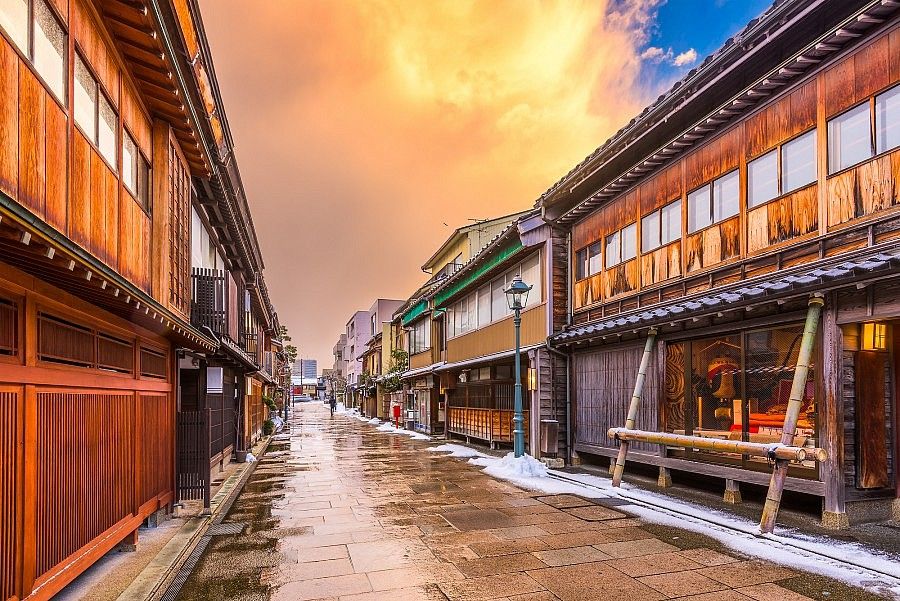
Kanazawa is an elegant, historic city. It’s famous for Kenroku-en, one of Japan’s three most beautiful gardens, and for Higashi Chaya, the geisha district, where you can still feel the atmosphere of the past. It also has excellent museums and fish markets where you can try local specialties. If you like contemporary art, Kanazawa has one of the most fun museums in Japan, the 21st Century Museum, a building that’s all glass and circles, where Leandro Erlich’s famous swimming pool lets you look at the world from underwater. And just a short walk from the center, Nagamachi, the old samurai district, has survived with its earthen walls and canals running between the houses. It’s the best-preserved part of the city.
Shirakawago is a small mountain village known for its traditional gassho-zukuri houses with steep thatched roofs. Covered in snow in winter, it looks like something out of a fairy tale, and in summer everything is lush and green. It works perfectly as a day trip from Kanazawa or Takayama, but if you can spend a night there, you’ll get even more out of it.
Takayama has a gorgeous old town, with historic streets full of traditional shops, sake breweries and inns. If you happen to be there for one of its festivals, in spring or fall, you’ll feel like you’ve gone back in time. Even in the quiet months, though, it’s a place that stays with you.
Mount Fuji
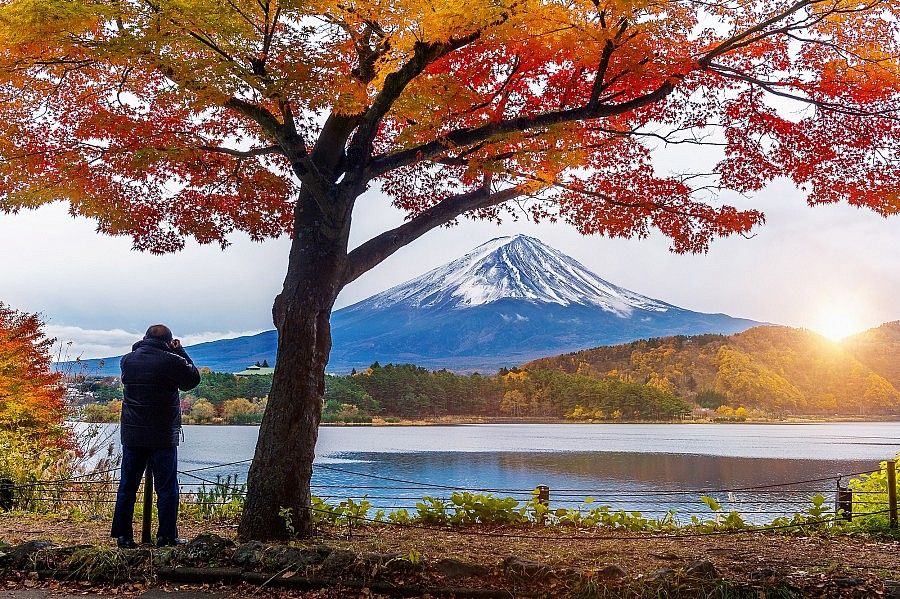
Kawaguchiko is the one I recommend if your main goal is a good view of Mount Fuji. On clear days the view is spectacular, especially from famous spots like the Chureito Pagoda or the lake itself. The area is quieter, with lots of nice places to stay and a relaxed feel, so it’s perfect for enjoying nature and taking amazing photos.
Hakone is much more varied and packed with things to do, but you often see little or nothing of Fuji, especially if the weather isn’t perfect. It has another big advantage, though: lots of ryokan with spectacular onsen, interesting museums like the Hakone Open-Air Museum, and a scenic ropeway too. If your idea of heaven is soaking in a hot bath with a view of the mountains, Hakone is it.
If you’ve already been to one of the two, this is your chance to do the other. If you haven’t been to either, pick based on your priorities. For a perfect view of Fuji, go to Kawaguchiko. For onsen, relaxation and plenty to do, go to Hakone.
Hokkaido and its wild nature
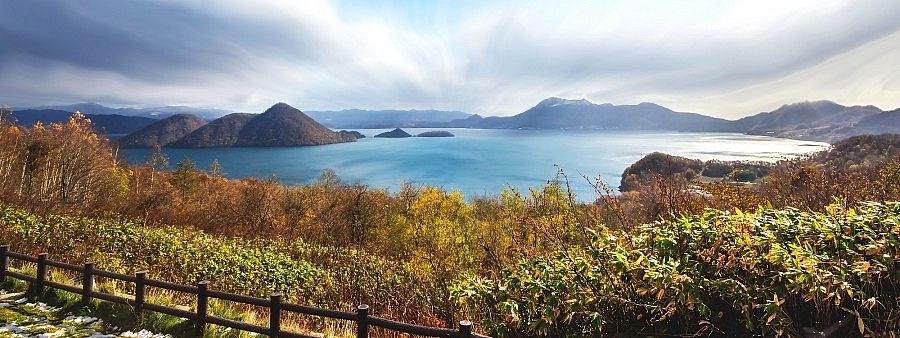
If you’ve already seen central and southern Japan, on your second trip you can aim higher. Literally. Hokkaido is Japan’s northernmost region, and it’s completely different from the rest of the country. You’ll find wide-open landscapes, unspoiled nature and a much harsher climate, perfect if you love mountains, big parks and spending time close to the land.
In winter, Hokkaido is one of the best places in the world for snow lovers. Resorts like Niseko, Furano and Rusutsu draw skiers from all over the world with their light, deep powder, dreamlike scenery and onsen to sink into after a day on the slopes.
Summer and fall have a lot to offer too. July and August are perfect for escaping the heat and visiting the flower-covered hills of Furano and Biei, famous for their lavender fields, rolling countryside and photogenic views. September and October are ideal for catching the first fall colors, which arrive here earlier than in the rest of Japan.
Don’t skip Sapporo, the main city, which is modern but pleasant to explore and famous for its beer and its Snow Festival in February. And if you love wild places, I recommend national parks like Shiretoko or Daisetsuzan, where you might even spot deer, foxes and bears (from a distance!).
Hokkaido is perfect for exploring by car, especially if you like traveling freely and stopping wherever you feel like it. It’s big, less populated and far more laid-back than Honshu, and that’s exactly why I suggest going when you feel the need to see a less urban Japan, one with more depth.
Kyushu for volcanoes, onsen and a different history
If you stuck to Tokyo and Kyoto on your first trip, Kyushu may be the easiest and most rewarding place to discover on your second. It’s a volcanic, very green island with a history unlike that of the rest of the country. In Nagasaki you can still feel the legacy of its contact with Europe, while Kagoshima lives in the shadow of Sakurajima, a volcano that’s always active and now and then leaves a film of ash over the city.
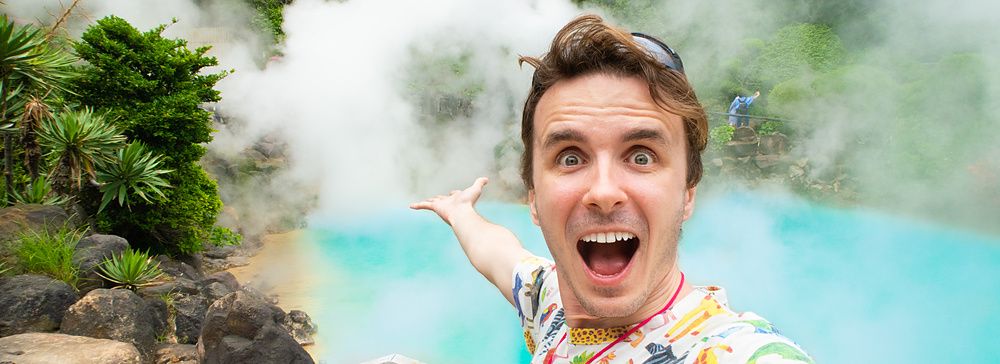
Kyushu is also onsen country. There’s Beppu, with steam rising out of the manholes, the more intimate, well-kept Yufuin, and Kurokawa, with its baths along the stream. Fukuoka will win you over with its food, from tonkotsu ramen to the yatai, the food stalls that open along the river in the evening. And if you’re after real wilderness, there’s Yakushima, with its thousand-year-old forests of giant cedars, or the Takachiho gorge, tied to the myths about Japan’s origins.
Okinawa, a different Japan
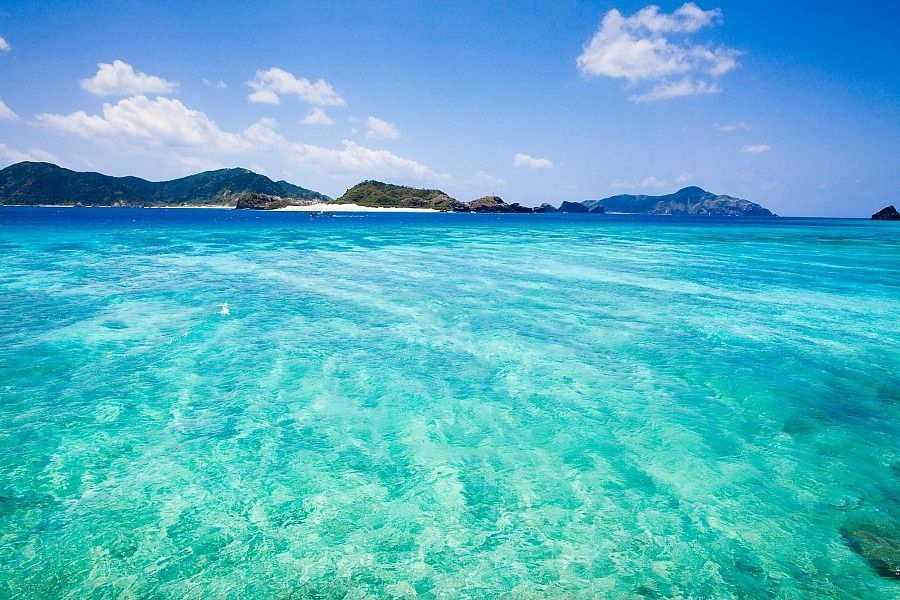
You can start on the main island, home to Naha, the largest city, but I recommend heading out to the smaller islands too, like Ishigaki, Miyako or Taketomi, each with its own charm. If you’re after dream beaches, snorkeling over coral, clear water and very few Western tourists, these are the places to go.
Okinawa isn’t just about the sea, though. It also has a complex history, with Chinese, Japanese and American influences you can see in the temples, the Ryukyu-style castles and even the food. Try goya champuru, a local dish made with bitter melon, or taco rice, a quirky Japanese-American mash-up.
The best time to visit is from April to early July, before typhoon season arrives, but you can also find good weather and warm water in late October or November. I recommend Okinawa to people who have already seen the big cities and now want to switch off completely. If you’re looking for relaxation, nature and a fascinating, different culture, it will surprise you.
Tohoku, the north hardly anyone visits
The other region that almost never makes it onto a first trip is Tohoku, the north of Honshu. The shinkansen runs right through it, yet you see very few foreigners. Up here you’ll find mountains, valleys and onsen that feel like they’re from another century, like Nyuto, with wooden tubs in the middle of the forest, or Ginzan, with its wooden inns lining the stream.
There’s history too. In Hiraizumi, Chusonji’s golden hall is a UNESCO World Heritage Site, and Yamadera is a temple clinging to a rock face that you reach by climbing a thousand steps through the forest. In spring, Tohoku has a huge advantage: the cherry trees bloom later, so if you arrive when it’s all over in Tokyo and Kyoto, you can more than make up for it at Hirosaki Castle.
Kurashiki and Okayama
If you want an area that sees fewer visitors, I recommend Okayama and Kurashiki. Kurashiki is a lovely small town with a historic quarter along the river that looks a little European but feels Japanese at heart. It has art museums, vintage shops, carefully designed cafes and charming ryokan. The historic quarter is also home to the Ohara Museum, the first museum in Japan to put Western art on permanent display. Inside you’ll find El Greco, Monet and Gauguin, in a small town where you’d never expect them. The best time of day, though, is the evening, when the tour buses leave and the white storehouses are reflected in the lit-up canal.
Okayama, just down the road, is famous for Koraku-en, another of Japan’s three most beautiful gardens, and for its black castle, which sits right on the river. The area is perfect if you’re looking for a quiet, poetic stop, with scenery that changes completely from one season to the next.
The Kumano Kodo pilgrimage
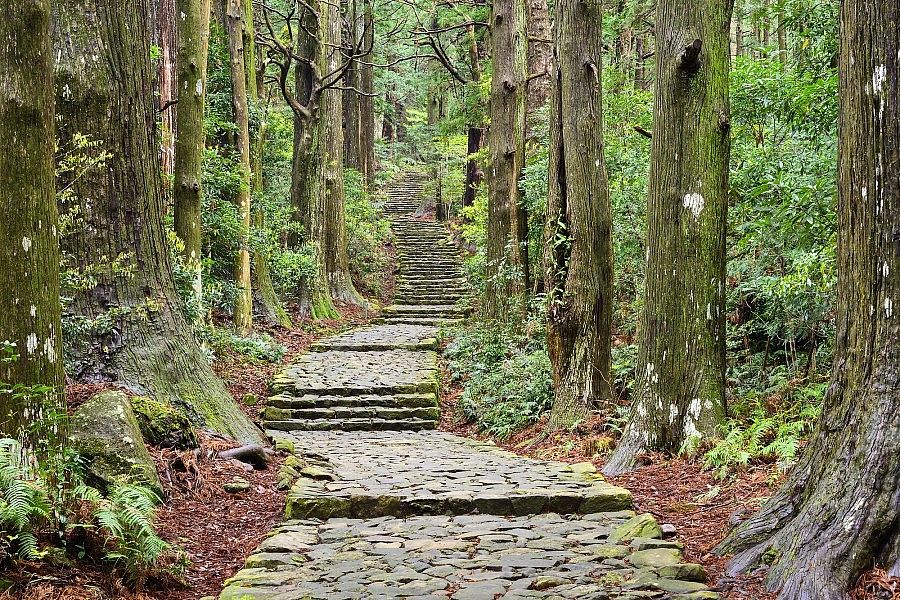
You can walk just a section over two or three days, sleeping in traditional ryokan along the way. Some of the most beautiful stops are Nachi Taisha, with its famous waterfall in the background, and Hongu Taisha, surrounded by sacred forest. It’s a different experience from urban Japan, much quieter and more intimate.
The Izu Peninsula for the sea and onsen
If you’re traveling in spring or summer and like the idea of seeing Japan’s coastal side, consider the Izu Peninsula, which is easy to reach from Tokyo. It has pretty little towns like Shimoda, sandy beaches, dramatic cliffs at Jogasaki and lots of onsen with ocean views.
Plenty of Japanese people go there to unwind, and it’s also perfect for a quiet weekend surrounded by nature, soaking in hot baths. If you rent a car, you can explore the whole coast more freely.
Day trips from Tokyo to Nikko or Kamakura
If you focused only on Tokyo on your first trip, this time you could add a day trip to Nikko or Kamakura, two very different places that are equally fascinating.
Nikko is famous for its colorful, lavishly decorated shrines, especially Toshogu, a UNESCO World Heritage Site. In the fall, with the leaves changing, it’s spectacular. Kamakura is a seaside town with temples surrounded by nature and an enormous statue of the Great Buddha, often wrapped in morning mist.
Both are also a good way to change the pace of your trip, and they’re very easy to reach by train from Tokyo.
Rural Japan in Tottori and Matsue
If you want something truly different from the classic tourist routes, I recommend looking west, to the San’in region, one of the least visited and most fascinating parts of Japan. Tottori is famous for its sand dunes, an almost surreal landscape you don’t expect to find in Japan. You can walk across the dunes, visit the Sand Museum and, if you’re there in summer, even swim in the Sea of Japan.
Not far away is Matsue, a small lakeside city with one of the few original castles left in Japan. It’s quiet, steeped in history and perfect if you want to dive into everyday Japanese life away from the tourist circuit. Nearby you’ll also find Izumo Taisha, one of the oldest and most revered shrines in the country, tied to legends of love and fate.
Nature and tradition on the Shikoku coast
Another region that’s off most itineraries but full of charm is Shikoku, especially the southern coast of Kochi Prefecture. It’s perfect if you’re after sea, mountains and local culture away from the usual routes. You can walk a stretch of the 88 Temple Pilgrimage, wander through the fish markets and swim in crystal-clear rivers like the Shimanto River.
Kochi City itself is worth your time too. It has a well-preserved castle, a quiet old town and delicious food, and it’s famous for flame-seared bonito (katsuo), often served with garlic and scallions. The place to try it is Hirome Ichiba, a covered market packed with stalls and long shared tables. You watch the straw fire sear the katsuo right in front of you, then sit down next to whoever happens to be there. On Sundays, the street leading up to the castle fills with a kilometer-long market that has been running for centuries. Vegetables, plants, knives and street food are sold at stalls run by local farmers.
Sleeping in a Buddhist monastery
If you want something intense and completely different, you can spend the night in a Buddhist monastery. The best-known place to do it is Mount Koya (Koyasan), which you reach from Osaka by train and then a scenic cable car. Up there you can stay in temples run by monks, sit in on the morning meditation and eat shojin ryori, traditional Japanese vegetarian cooking.
At night you can visit Okunoin, a huge cemetery in the forest lit only by lanterns. It’s one of the most atmospheric and mystical places I’ve ever seen. I recommend this kind of trip above all to people who love Japan’s quiet, spiritual side and want a break from the chaos of the cities.
Art and nature on the Seto Inland Sea islands
If you want the perfect mix of relaxing scenery and contemporary art, don’t miss the islands of the Seto Inland Sea, especially Naoshima, Teshima and Inujima. They’re known for their futuristic museums, open-air installations and houses turned into works of art.
Naoshima is the best known, with the Benesse House Museum and Yayoi Kusama’s pumpkin. Make time for the Chichu Art Museum, built into the hillside by Tadao Ando and lit only by natural light. It holds Monet’s Water Lilies and James Turrell’s light rooms, and depending on the time of day and the sky, the works change completely. In the village of Honmura, the Art House Project has turned old abandoned houses into installations. You wander around on foot from one house to the next, with no idea what’s waiting inside. Teshima has some incredible places too, like the Teshima Art Museum, a structure so organic it looks like part of the landscape.
It’s a different experience from traditional Japan, but I highly recommend it if you love art, design and nature. You can get there by ferry from Takamatsu or Okayama and spend a night on one of the islands.
Ryokan stays in lesser-known towns
Another thing I recommend on your second trip is looking for ryokan and onsen outside the usual tourist areas. Hakone and Beppu aren’t your only options. Japan has loads of beautiful, less-visited onsen towns where you can have a more genuine and much quieter experience.
Kinosaki Onsen, for example, is a small onsen town that looks like it came straight out of an anime. You get around on foot in a yukata, going from one bath to the next, and in the evening you have dinner in lovely little ryokan. Or you could try Yudanaka and Shibu Onsen, near the famous snow monkeys. It’s perfect in winter.
Look for ryokan in rural areas with fewer foreign tourists, and consider booking a night with a traditional dinner and breakfast. Even a single night can make your trip memorable.
Capsule hotels, minshuku and unusual places to stay
On a second trip you can also have fun trying alternative, unusual places to stay, which makes the trip even more memorable. Capsule hotels are perfect for a night in Tokyo or Osaka. Some are very modern, clean and even stylish, with roomy capsules and futuristic amenities.
You can also look for minshuku, family-run inns that are simpler than ryokan but much more genuine. You’ll often find them in rural or coastal areas, and they give you a taste of real Japanese hospitality, with home-cooked meals and traditional-style rooms.
Then there are themed hotels and odd experiences like sleeping in bookstores, disused stations or strikingly designed buildings. Japan has a unique knack for surprising you, even when it comes to where you sleep.
Seeing Tokyo and Kyoto with fresh eyes
There’s nothing wrong with returning to Tokyo and Kyoto on your second trip. The point is to look at them from a different angle. In Tokyo, skip the usual stops in Shibuya and Asakusa and head for the neighborhoods where people actually live: Yanaka’s narrow streets, little shops and big cemetery, the record shops and vintage stores of Shimokitazawa, the izakaya under the tracks in Koenji, and the quiet sloping streets of Kagurazaka.
In Kyoto, the smart move is getting out of the center. Try the Ohara valley with its temples among the vegetable gardens, Kurama and Kibune with their restaurants built over the river, the Takao hills when the leaves turn red, or Uji, the home of matcha, with the Byodoin you see on the 10-yen coin. Every time, the same thing happens: the city turns into a different place as soon as you’re a few stops out.
Conclusion
A second trip to Japan is one of the most rewarding trips you can take, because it lets you go beyond the classic stops and discover a deeper, more varied country that often surprises you even more than it did the first time. My advice is not to just redo what you’ve already seen. Go out and discover new places instead, often less touristy but full of experiences that can move you.
On my site you’ll find plenty of articles that cover the areas I’ve recommended here in more depth. Look for ideas, take notes and get ready to experience Japan in an even more genuine, personal way.


