Sendagaya
Sendagaya is one of the Tokyo neighborhoods I like to send people to once they’ve already seen the famous sights. It’s wedged between Shinjuku, Harajuku and the huge Shinjuku Gyoen park, yet it stays quiet, with low-rise buildings, fashion brand offices and small cafes lining its streets.
There’s no giant landmark to check off your list, and that’s fine. You come here to take your time wandering, somewhere between a huge stadium and a shrine with a fake Mount Fuji you can climb. Here’s how to get around, when to go and what not to expect.
Contents
What to see

Nearby neighborhoods


Aoyama
Yotsuya
Wedged between giants
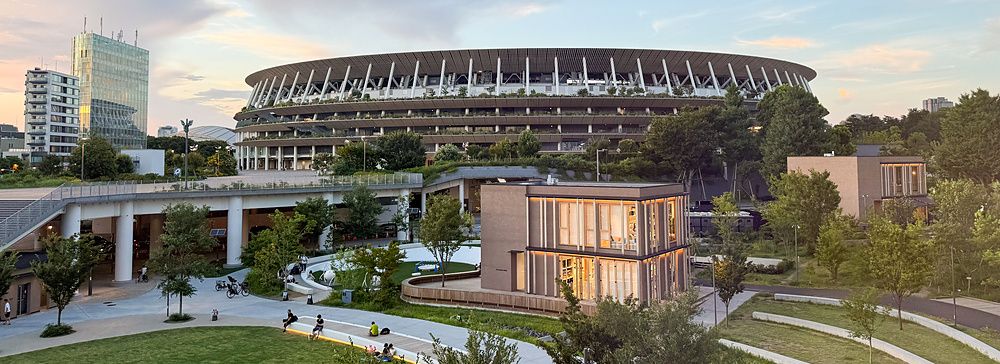
As soon as you walk out of the station, the Tokyo Metropolitan Gymnasium is right in front of you, and the National Stadium comes into view a little further on. They’re two massive buildings dropped into a low-rise neighborhood full of small apartment blocks.
What really makes Sendagaya handy, though, is how much you can reach from here on foot:
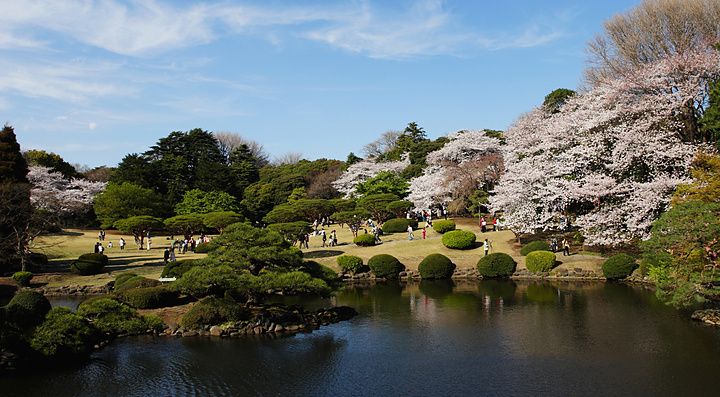
- Shinjuku Gyoen: one of the most beautiful parks in the city, a few minutes north.
- Harajuku and Omotesando: about fifteen minutes on foot.
- The skyscraper district: handy if you want to end the day looking out over the city from up high.
My advice is not to come here only to turn around and leave. Sendagaya works best when you combine it with something bigger nearby.
The big building outside the station
The gray block with the metal roof you see as you leave the station is the Tokyo Metropolitan Gymnasium, designed by Fumihiko Maki. From the outside it looks like an upturned ship, and it’s one of the area’s most photographed buildings, even if you just walk around the outside.
What almost nobody knows is that you can go inside. There are two indoor pools, one of them 50 meters long, plus a weight room and a running track, and they aren’t just for teams. Anyone can show up, tourists passing through included.
If you have a free afternoon and feel like swimming a few laps in a venue that hosted the Olympics, it’s one of the strangest and easiest things you can do in Tokyo.
Fashion and cafes
Sendagaya runs on fashion, though not the flashy-storefront kind. Well-known Japanese studios and brands such as A Bathing Ape are based here, and plenty of clothing warehouses hold sample sales that draw a small crowd of bargain hunters.
That gives the neighborhood a feel all its own, with people who work in creative fields, showrooms that are usually closed to the public, and tiny shops that sell just one thing and do it well. There’s even one that claims to be the world’s first shop devoted only to white T-shirts, which tells you the kind of place this is.
Small cafes are tucked in between the offices, often with a few plants and only a handful of tables, and in the morning you’ll find people taking their time over breakfast before heading to work. Prices are a bit above average, as you’d expect this close to Harajuku, but nothing crazy.
I think the area is at its best during the day, when the streets fill with people going in and out of the shops. In the evening it goes quiet early and turns back into a sleepy residential neighborhood, so don’t expect any nightlife.
A miniature Mount Fuji
The place that stays with me most here is Hatonomori Hachiman Shrine, a couple of minutes south of the station. On the shrine grounds there’s a fujizuka, a small-scale replica of Mount Fuji built in the late 1700s and recognized as the oldest one still standing in Tokyo.
It’s about six meters high, and you really do climb it: a narrow path winds between the rocks and gets you to the top in a couple of minutes. It was meant for ordinary people who couldn’t afford the real pilgrimage, so they climbed this one instead to receive the same blessing. The rocks under your feet aren’t just for show. They’re lava rock brought from the real Fuji, and at the top there’s a tiny shrine to the mountain’s deity.
What makes it rare is that you can climb it whenever you like. Almost all the other surviving fujizuka in Tokyo sit behind fences and are open one day a year, but not this one.
Sendagaya is also Tokyo’s shogi neighborhood, the home of Japanese chess. The shogi federation’s headquarters is a short walk from the station, and on the shrine grounds there’s a small six-sided room dedicated to the game, with a giant shogi piece donated by the professional players. It doesn’t draw big crowds, and that’s what I like most about it: you walk in, climb your fake Fuji, and in half an hour you leave having seen a corner of Tokyo that hardly anyone notices.
I wouldn’t make a special trip just for this. But if you’re already near Shinjuku Gyoen or the stadium, a wander around here is what I’d do without thinking twice.
Getting There
From Shinjuku it couldn't be easier: take the Chuo-Sobu Line, the one with the yellow trains, and two stops later you're in Sendagaya. The station is small and served by a single line, so it's hard to get lost. As soon as you step outside, the Tokyo Metropolitan Gymnasium is right in front of you.
Hatonomori Hachiman Shrine is a five-minute walk south, through the back streets.
From Harajuku and Omotesando you're better off walking, a little under fifteen minutes along quiet streets. If you're heading straight for the National Stadium, you can take the Oedo subway line instead and get off at Kokuritsu-kyogijo, which leaves you right in front of the stadium.
Useful Info
Name: Sendagaya
Time needed: A couple of hours at an easy pace. Half an hour is enough for the shrine and the climb up the fujizuka, and you can spend the rest wandering between cafes and shops.
Tips: Sendagaya goes quiet early, so come during the day, when the showrooms and cafes are open, and fit it in between Shinjuku Gyoen and Harajuku. Allow half an hour for the shrine, because climbing the fake Fuji is the part you'll remember.
Getting there:
- Sendagaya Station (JR Chuo-Sobu Line): right by the Tokyo Metropolitan Gymnasium
- Kokuritsu-kyogijo Station (Oedo subway line): the most convenient for the National Stadium
- Kita-sando Station (Fukutoshin subway line): useful if you're coming from the Harajuku side
Map
MarcoMaps100% free
This place is on MarcoMaps
Sendagaya
My map of Japan: over 4,000 places I've tried myself, each with photos, rating, and hours. Filter by category and rating, find veg-friendly spots and places near you with GPS. No sign-up, right from your phone.
- 4,000+ places
- Rating, photos, and hours
- Veg friendly
- Near me (GPS)
- Favorites without login
- Works offline

