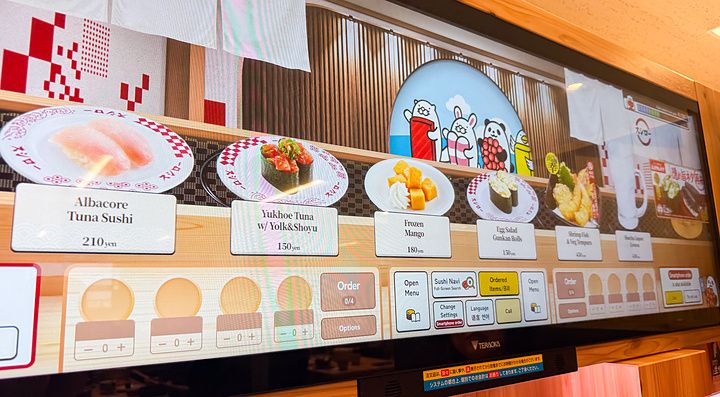
 244 m
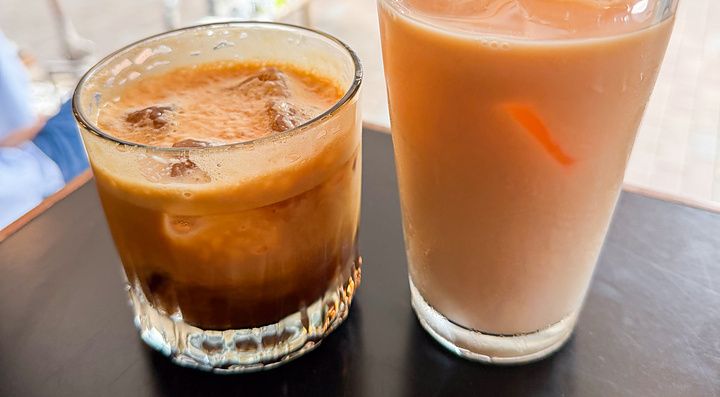
Fuglen244 m
Norwegian coffee, cocktails in the evening.
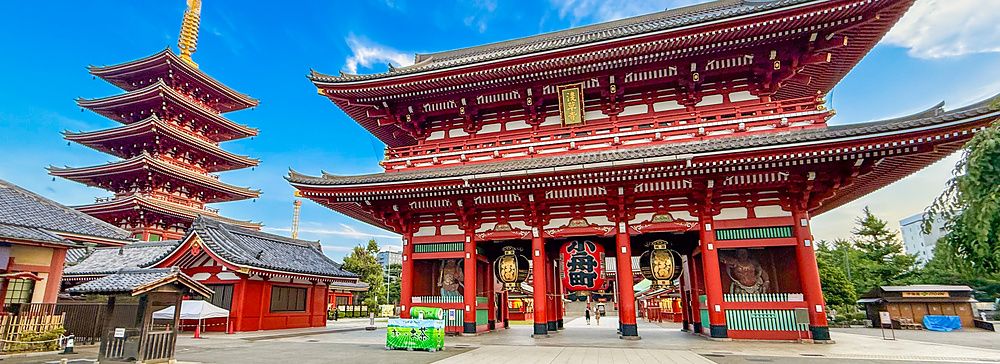
The ancient Buddhist temple of Senso-ji is one of the symbols of Tokyo. With more than a thousand years of history, it’s the most important and oldest temple in the city. It’s a favorite with tourists, and it’s also the center of a lively local community of friendly people who are always ready to give visitors any information they need.
Senso-ji stands in Asakusa, in Tokyo’s historic center. It originally belonged to the Tendai school, and today it’s an independent temple.
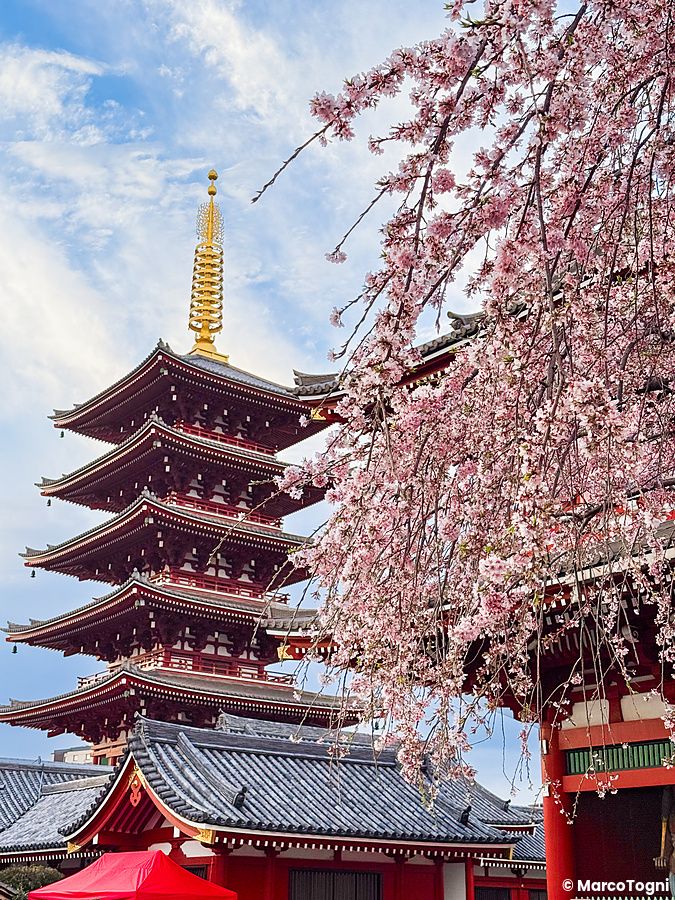
Almost everyone arrives at Asakusa Station. From exit 1 you're just steps from Kaminarimon, the red gate where Nakamise begins, and in under five minutes you're standing in front of the main hall.
From the station's other exits the walk is just as short and still brings you out onto Nakamise.
If you get off at the Tsukuba Express Asakusa Station, though, you'll end up on the opposite side of the neighborhood. Allow about ten minutes on foot. It's a pleasant walk anyway, since it takes you through the covered shopping streets.
This place is on MarcoMaps
Senso-ji Temple
My map of Japan: over 4,000 places I've tried myself, each with photos, rating, and hours. Filter by category and rating, find veg-friendly spots and places near you with GPS. No sign-up, right from your phone.


The temple’s story goes all the way back to 628. According to legend, in the small village of Asakusa, two brothers, Hinokuma Hamanari and Hinokuma Takenari, were fishing in the Sumida River when they found a statue of the deity Kannon. The village chief decided to build a temple to house and worship the statue, and that’s how Senso-ji was born. Word of the legend soon spread across the country, and crowds of pilgrims made their way to Asakusa to see the statue and pray to Kannon. The temple’s golden age came under the shogun Tokugawa Ieyasu, when the complex was expanded with the Nishinomiya shrine and a torii gate, and the town of Asakusa grew up around it. Senso-ji effectively became the guardian temple of the Tokugawa dynasty.
The temple was destroyed by bombing during World War II and later rebuilt as a symbol of rebirth and peace for the Japanese people.
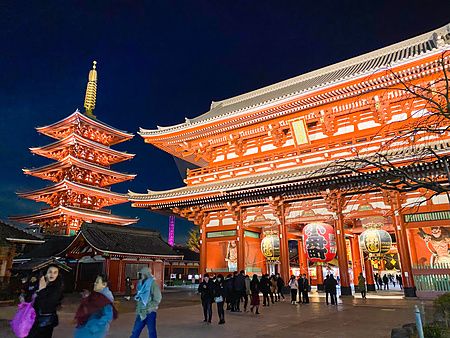
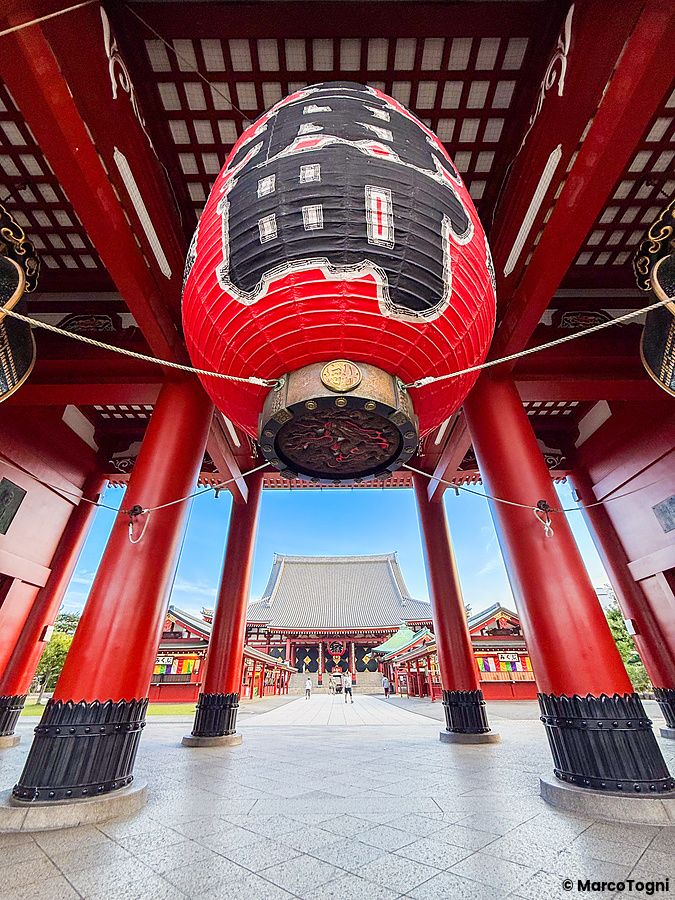
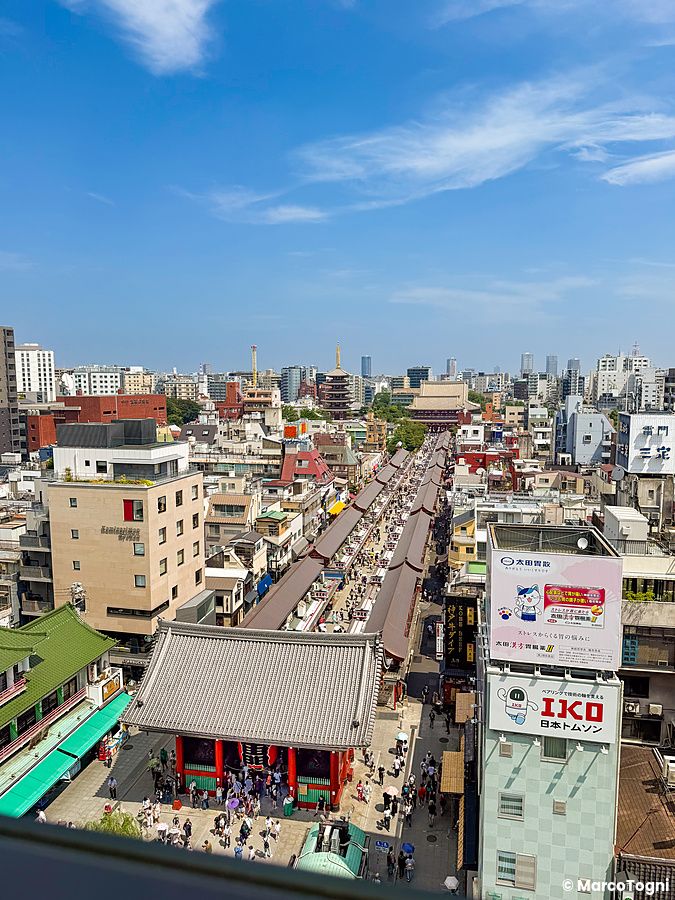
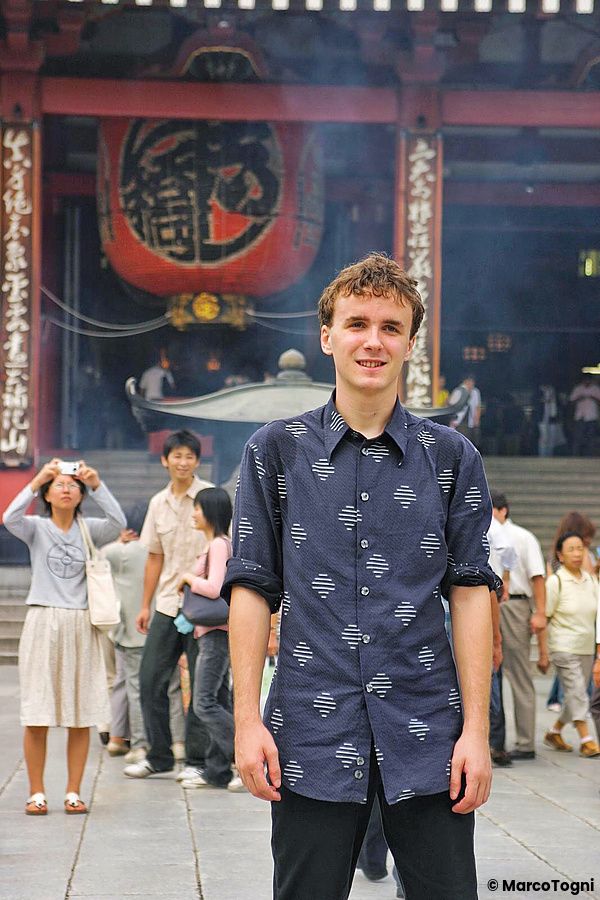
When you reach the temple entrance, the first thing that hits you is the size and beauty of the famous Kaminarimon, also known as the “Thunder Gate.” It’s the image everyone associates with the temple, and also the most popular souvenir! Two deities guard the entrance and greet you as you arrive: Fujin-sama, the god of wind, and Raijin-sama, the god of thunder and lightning, who gave the gate its name. A giant lantern hangs from the gate, painted in deep reds and blacks that suggest clouds and lightning. It bears the characters for “Kaminarimon,” or “thunder gate,” and on its base there’s a dragon, a nod to the temple’s official name, “Kinryuzan,” or “Golden Dragon Mountain.”
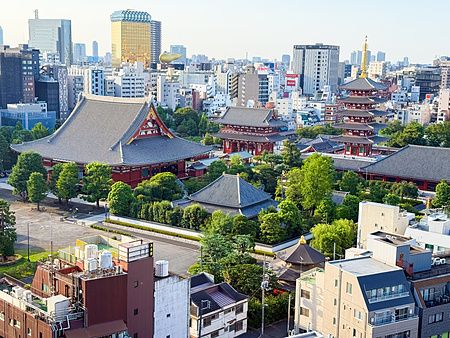
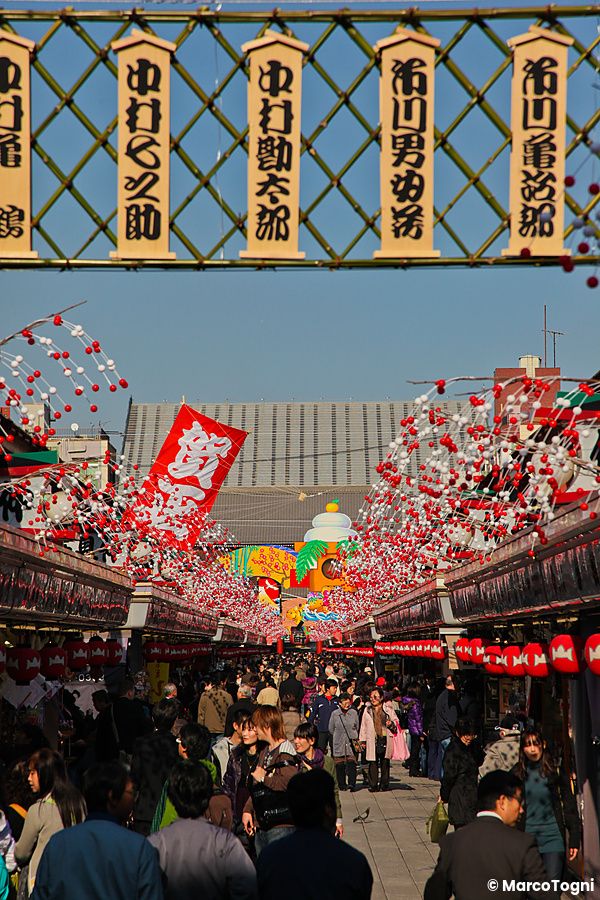
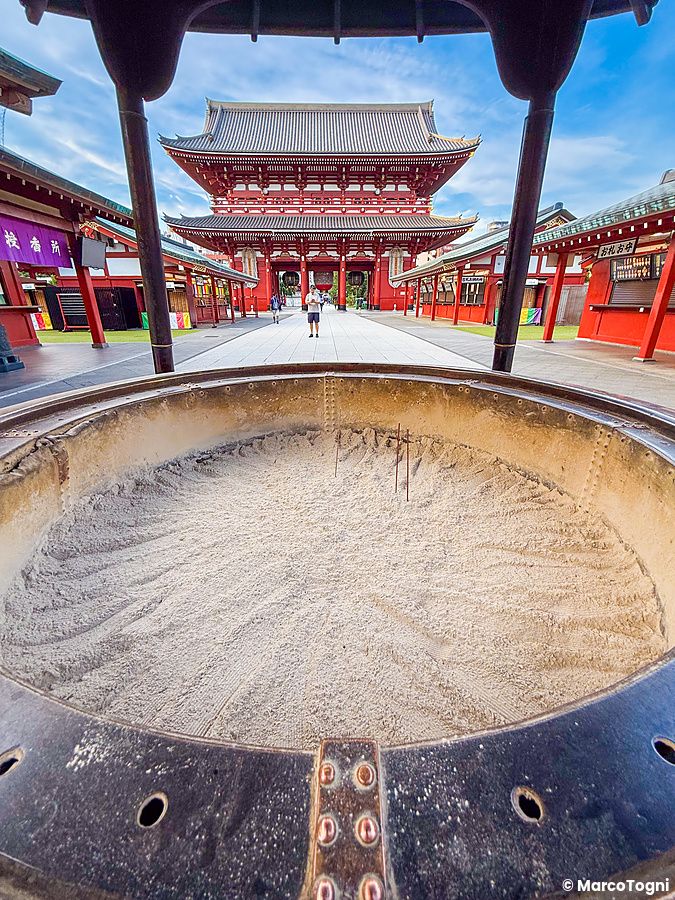
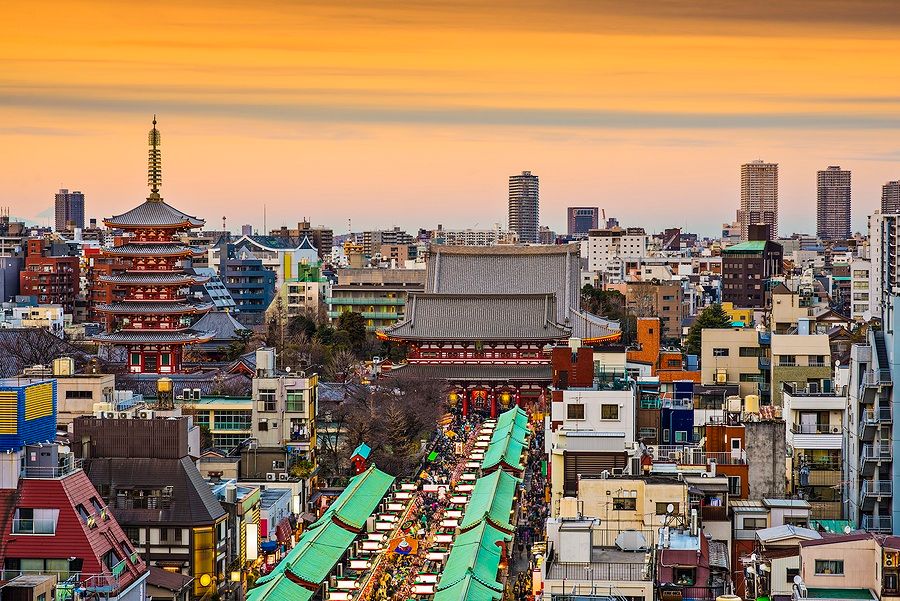
Past the gate, you reach the temple by walking the length of Nakamise Dori, a long street crammed with little shops selling souvenirs, books, talismans and so on. At the far end stands Hozomon, Senso-ji’s main gate. It’s guarded by two Nio statues that are said to look like Kitanoumi and Myobudani Kiyoshi, two sumo wrestlers from the 1960s. The gate you see today is a reconstruction of the original, which dated back to the 10th century. Right beside it stands the majestic five-story pagoda, Goju no To. It’s a real rarity, since Tokyo has very few of them! So get your camera out and photograph its lovely exterior, because unfortunately you can’t go inside. The pagoda is actually a very sacred place that holds the memorial tablets of thousands of families and individuals, so only relatives of the deceased are allowed in, and even they only get in on rare occasions.
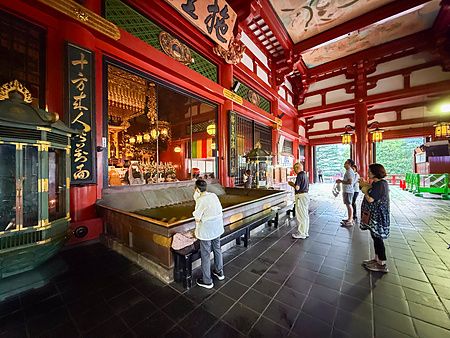
Finally you’ll reach the temple’s main building, the Hondo or Kannon-do, which houses the ancient statue of Kannon found in the river 1,400 years ago. Inside, there are also beautiful paintings on the ceiling and walls. You can’t enter the room where religious ceremonies are held, but its doors are always open, so you can still see it from a distance.
When you come out of the Hondo, you can turn right toward Asakusa Jinja, the Shinto shrine dedicated to Senso-ji’s founders, or turn left and wander through the remains of the temple’s original complex. There you’ll find a few old halls: Yogodo, with a beautiful rock garden that’s perfect for meditation, Yakushido and Awashimado. They date back to the Edo period, and walking among them gives you an idea of what Senso-ji looked like in the past.
If there’s one thing you can’t skip at Senso-ji, it’s drawing an omikuji. You shake the metal container, slide out the numbered stick and open the matching drawer to read your fortune.
The catch is that kyo, bad luck, comes up far more often here than elsewhere. The temple still uses the old split of one hundred fortunes, where about 30% are bad, while almost everywhere else in Japan they’ve cut the number of bad ones so worshippers go home happy. They’re not doing it to spite you. They’re just sticking to tradition.
And if you do get one, it’s no big deal. Fold the slip and tie it to one of the metal racks nearby, so the bad luck stays at the temple instead of following you home.
Before you leave, visit the hilly area next to Asakusa Jinja called Bentendo. Up there you’ll find a huge bell and a lovely garden with two old sculptures of Seishi and Kannon.
The 250 meters between Kaminarimon and the Hozomon gate are lined with about ninety shops, several of which have been in the same families for generations. Among the souvenirs, the big sellers are fans, tenugui towels, dolls and good-luck charms.
The best part, though, is the sweets. There are ningyo-yaki, little cakes filled with red bean paste and baked in pagoda- or lantern-shaped molds, freshly grilled senbei, kibi dango rolled in soy flour, and kaminari okoshi, a puffed rice brittle named after the Thunder Gate.
Just remember to eat by the stall. Walking down the street while munching on something is considered rude here, and plenty of shops post signs saying so.
Senso-ji hosts one of the most spectacular and famous Shinto festivals, the Sanja Matsuri. It lasts 3-4 days toward the end of spring. It’s not the only event worth planning your visit around, though. In mid-July the courtyard fills with stalls for the hozuki fair, where they sell Chinese lantern plants. It coincides with the day that counts as 46,000 days of prayer. In mid-December the temple holds the hagoita market, where stalls sell wooden paddles decorated with the faces of kabuki actors.
And twice a year, in March and October, there’s the golden dragon dance: a very long dragon, carried on the shoulders of a team of men, snakes its way through the crowd in honor of the temple’s official name.
Senso-ji Temple - nearby you will find: