Shichi-Go-San
Shichi-Go-San is the Japanese festival for children. It’s held every year on November 15 and celebrates kids growing up as they reach the milestone ages of 3, 5 and 7, which in East Asian numerology are considered lucky numbers. That’s where the name comes from: Shichi-Go-San literally means “seven, five, three.”
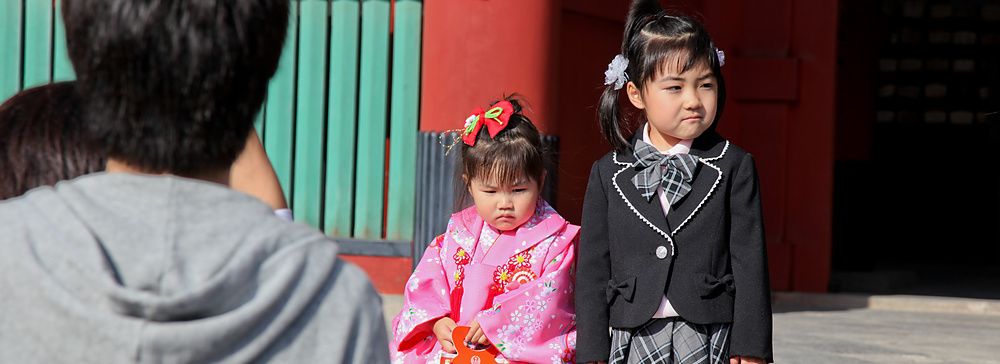
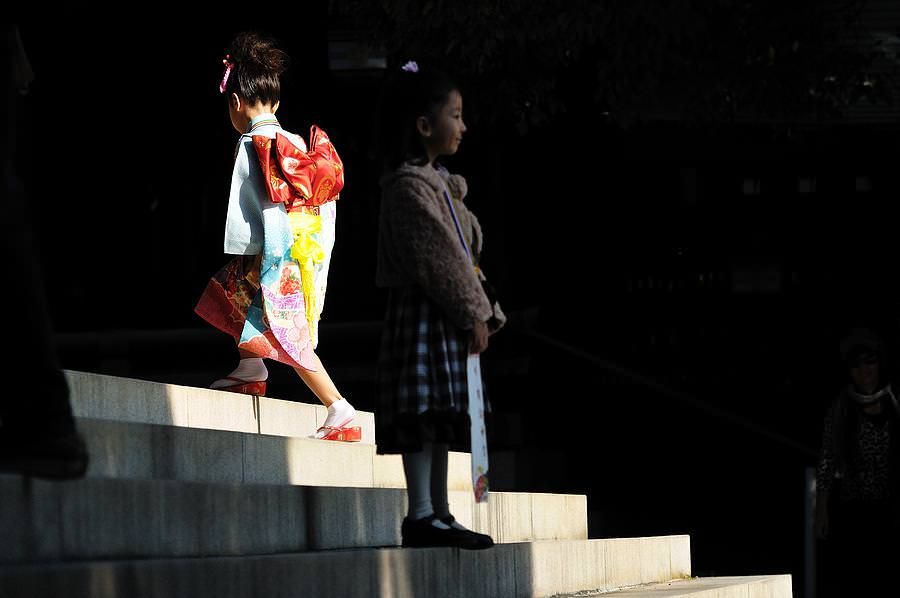
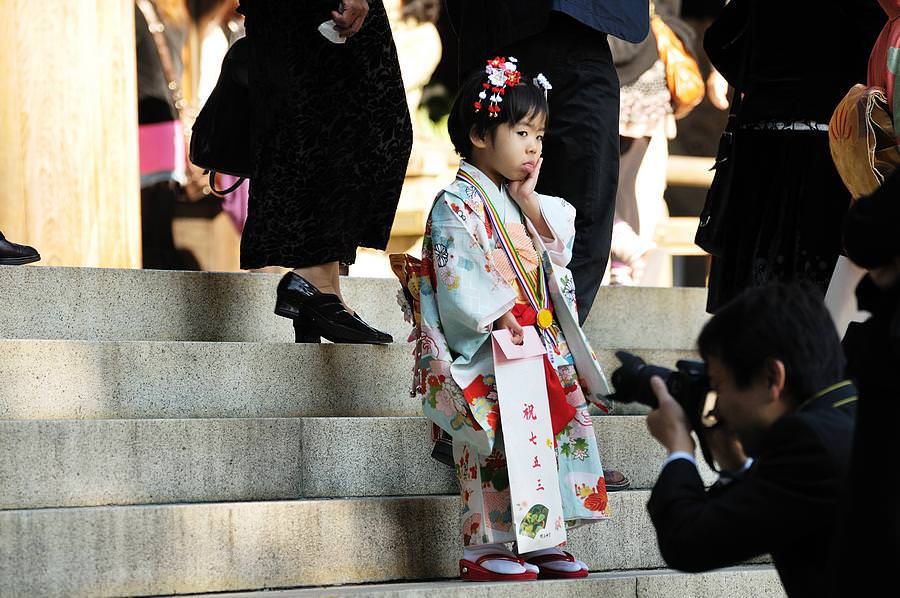
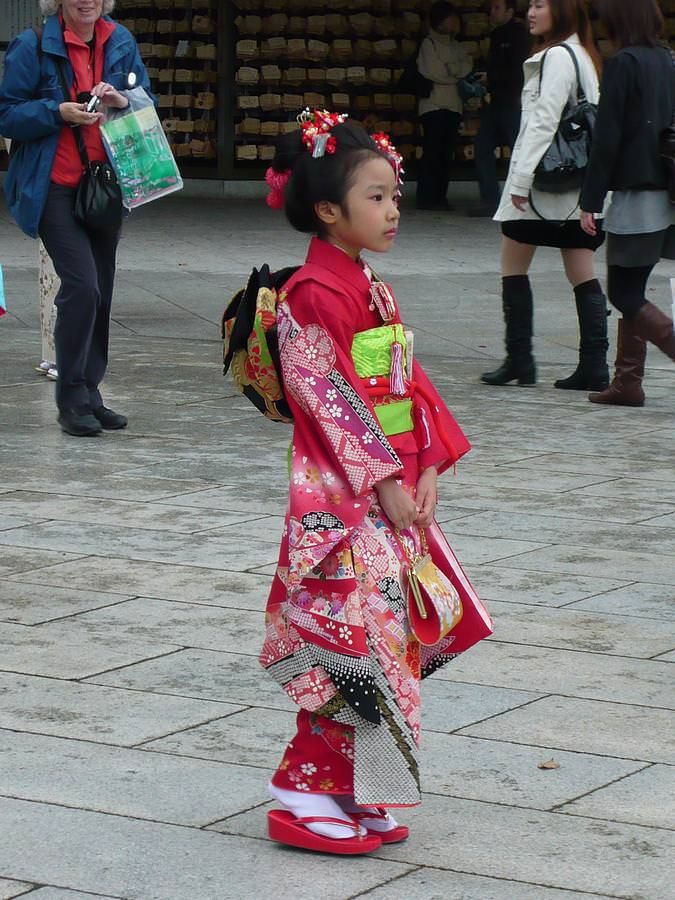
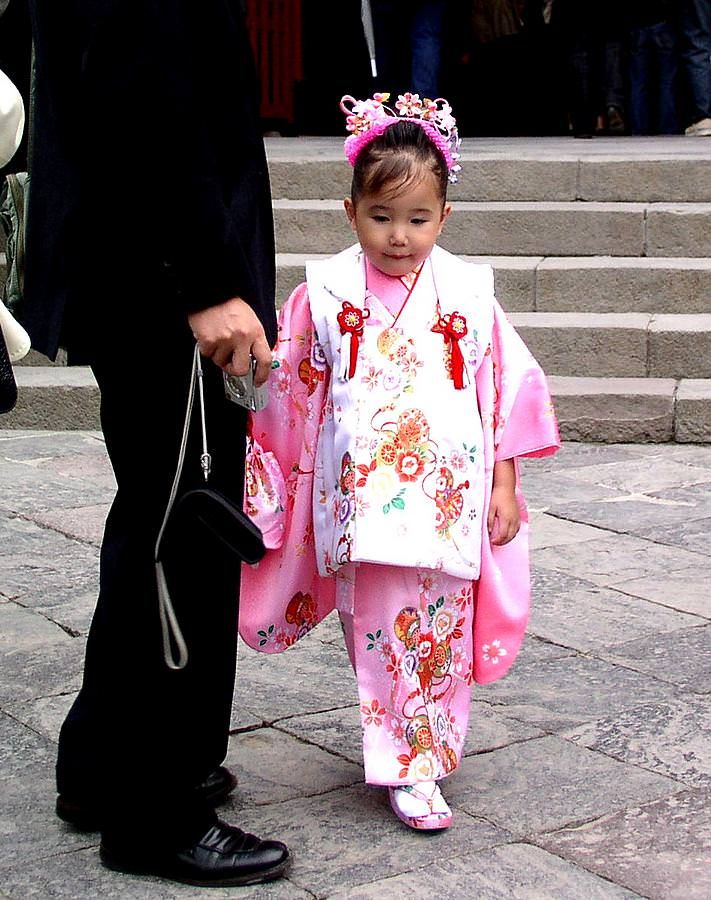
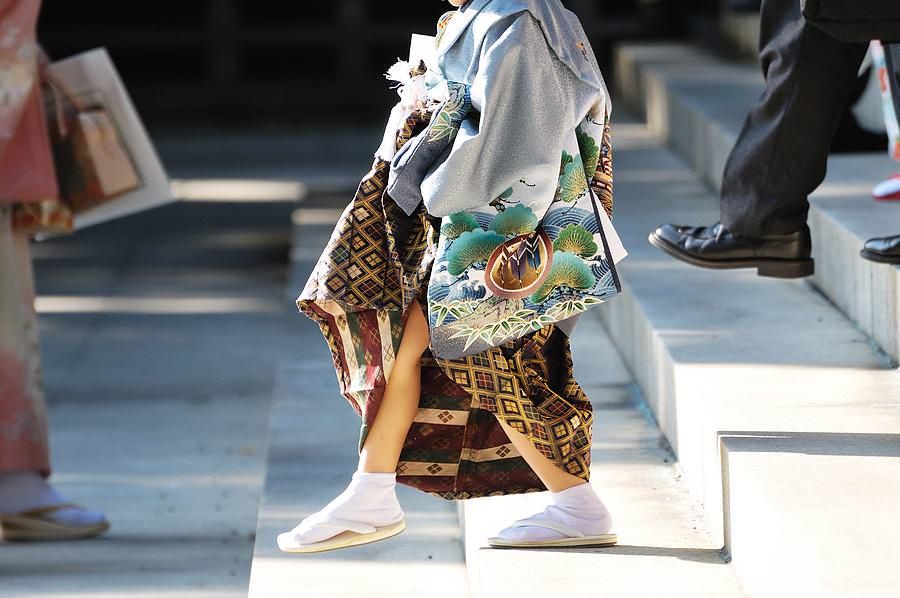
On this day parents dress their kids up in kimono and hakama, take them to a shrine and photograph them with a bag of chitose ame candy.
In the Japanese almanac, November 15 has always been considered one of the most auspicious days of the year. Shichi-Go-San isn’t a national holiday, though, so families celebrate it on the nearest weekend.
Contents
How it started
The celebration goes back to the Heian period (794-1185), when court nobles used to mark the moment their children reached school age. Later, during the Kamakura period (1185-1333), it was fixed on the fifteenth of the month. The choice of November 15 is traced back to 1681, when the fifth Tokugawa shogun, Tsunayoshi, is said to have celebrated his son Tokumatsu growing up on that very day.
Over time, more rituals were added. Three-year-olds were allowed to grow out their hair, instead of having their heads shaved as tradition had required until then. Five-year-old boys got to wear hakama for the first time, and seven-year-old girls began tying their kimono with a traditional obi. During the Edo period (1603-1868) and then the Meiji period (1868-1912), Shichi-Go-San spread to ordinary people, and with it came the custom of visiting a shrine to drive away evil spirits and pray for a long, peaceful life.
Shichi-Go-San today
The tradition around children’s hair has been dropped, but the customs around clothing are still alive, including kimono for girls aged three and seven.
Taking photos of the kids is very much part of Shichi-Go-San, and so is giving them chitose ame, long, thin red-and-white candy sticks that stand for longevity and healthy growth. They’re wrapped in a thin, transparent film of edible paper and come in bags decorated with symbolic motifs. The bag always shows the same good-luck symbols: the crane and the turtle, pine, bamboo and plum, all images tied to long life. The name says it all, too, since chitose means “a thousand years,” and even the length of the stick carries a wish: the longer it is, the longer the child will live.
You don’t have to go to a shrine to get them, because around the time of the festival you’ll also find them in candy shops and supermarkets.
Today parents celebrate boys when they’re three or five and girls when they’re three or seven. Boys wear a traditional outfit with a jacket and hakama pants, and girls wear a ceremonial kimono with an obi sash, although more Western-style clothes have also become common in recent years. On Shichi-Go-San, families usually visit a shrine and buy chitose ame to wish their children a long, prosperous life.
At the shrine
The heart of the day is the prayer at the shrine, and it’s more than just stopping by to bow in front of the altar. The family checks in at the shrine office and is shown into the prayer hall. There a priest performs the purification rite, waving a wand with white paper streamers over the child, then reads aloud a prayer that includes the child’s name and age.
At the end, the kids receive an amulet, a few small gifts and a bag of chitose ame.
At the larger shrines you book the prayer service in advance, almost always online, while elsewhere you just show up and get in line. On November weekends, though, expect a long wait, with families entering in groups and the hallways full of children in kimono.
Counting age the traditional way
Some families count their child’s age with a traditional system, kazoedoshi, in which every child turns one the moment they’re born. Babies start at one and gain a year with each new lunar year instead of on their birthday. In other words, the first year of life counts as “year one” rather than “year zero.” Because age goes up with the lunar year, people can be 1 or 2 years older by the traditional count than by the Western one.
Kazoedoshi lost its official status with a 1902 law, when Japan adopted the Western system. Many families kept using the old one anyway, so in 1950 another law was passed to push people to switch to the Western count for good.
Where and when to see it
If you’re in Japan in the fall, you’ll come across Shichi-Go-San celebrations without even looking for them. Families don’t all go on November 15. The season stretches all through November, and many start as early as October to avoid the crowds and get a slot at a photo studio.
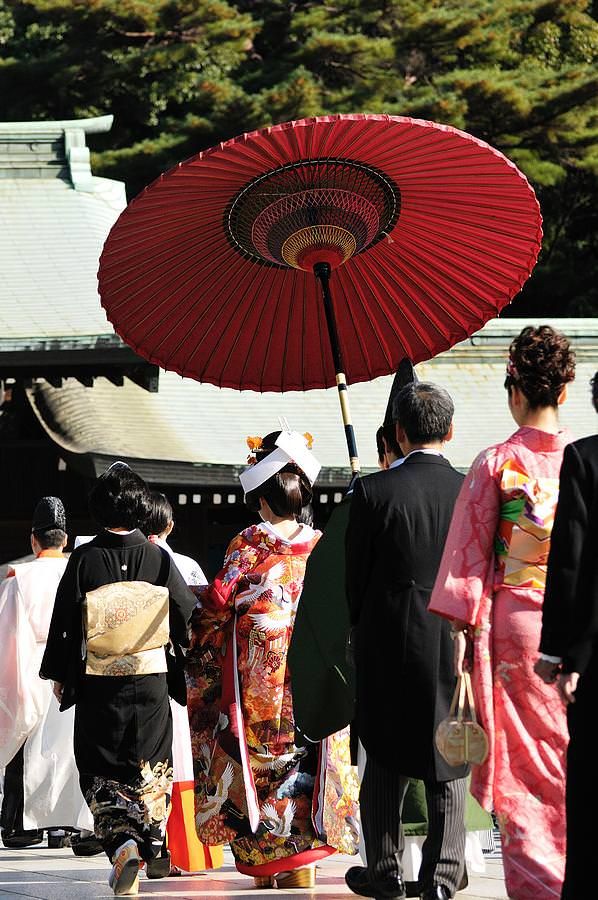
You’ll notice the festival most at the big shrines, from Meiji Jingu in Tokyo to Heian Jingu in Kyoto and Sumiyoshi Taisha in Osaka. On November weekends there’s a constant stream of dressed-up kids, grandparents and photographers coming and going. A neighborhood shrine is well worth a look too, with far smaller crowds and quieter scenes.
Keep in mind that these are children at a family celebration, so don’t take close-up photos without asking the parents first.
Photos
Creative Commons ajari
Creative Commons ajari
Creative Commons Jessica Spengler
Creative Commons Jennifer
Creative Commons ajari
Creative Commons ajari