What Are Shide?
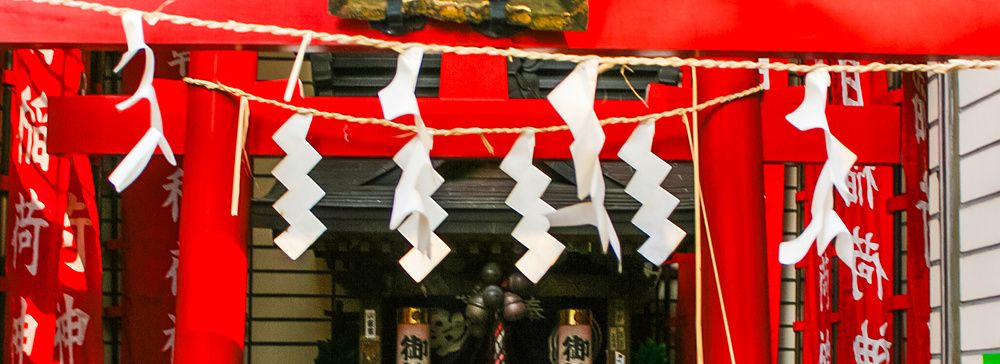
Shide are the zigzag strips of white paper you see hanging from ropes, branches and sticks at shrines, and they’re one of the symbols you’ll see most often in Japan. You’ll find them on shrine gates, around sacred trees, on front doors at New Year’s and even on the highest-ranked sumo wrestlers.
Almost everyone takes pictures of them, and almost nobody knows what they are. Yet there’s a very specific idea behind those little pieces of folded paper: they mark the boundary between everyday space and sacred space. Once you understand that, you start to make sense of what you’re looking at whenever you visit a shrine.
Contents
What shide are
A shide is a sheet of white paper cut and folded into a sort of lightning bolt, with sharp angles stepping downward. The Japanese characters for it mean hanging paper, but you’ll also see it written with the characters for four and hand, or with just the kanji for hanging.
The paper is almost always washi, traditional Japanese paper, usually the thicker, smoother kind used for ceremonial documents, or the more common hanshi used for calligraphy. Less often, hemp fibers take the place of paper, mostly on older objects or ones used in specific rituals.
On their own, shide don’t do much. They make sense because they hang from something: a sacred rope, a branch offered to the gods or a wooden stick. Wherever they hang, the message is the same. There’s something pure there, or it’s a place where a kami, a Shinto deity, can come down and stay.

Name and origins
The name comes from an old Japanese verb meaning to hang, to dangle, the same root behind words for things that fall or droop downward. The spelling with the characters for four and hand is purely phonetic, and it doesn’t mean a shide has to have four parts.
Before paper there was yushide, a thread made from the bark of plants in the paper mulberry family, the same plants still used to make washi today. People hung these white threads on branches as offerings, and over time paper took their place.
Shide already show up in the Kojiki, Japan’s oldest collection of myths. In the story of the heavenly cave, the sun goddess Amaterasu shuts herself inside and the world goes dark, so the other gods hang a series of offerings on a tree to coax her out. Among them are the white strips that shide come from.
So shide have very deep roots in Shinto. They’re not a decoration added later on, but one of the oldest ritual objects there is.
Why the lightning bolt shape
The zigzag looks like lightning, and that’s no accident. In rural Japan, lightning meant a storm, and a storm meant water for the rice paddies. That’s why shide are also tied to the idea of a plentiful harvest.
There’s also a second meaning, more closely tied to the sacred. Lightning is seen as the sign of a deity coming down from the sky, and its power keeps away anything impure or unlucky.
There’s more than one explanation for where the shape comes from, and none of them is official. What I’d keep in mind is the practical point: wherever you see a shide, you’re looking at a boundary. On one side is ordinary space, on the other a purified one, and the white of the paper is the color of purity.
Where you’ll see them
Once you start noticing them, shide are everywhere in Japan. These are the places where you’ll spot them most:
- On sacred ropes hanging from torii, the gates at shrine entrances, or above the prayer hall where you toss a coin and ring the bell.
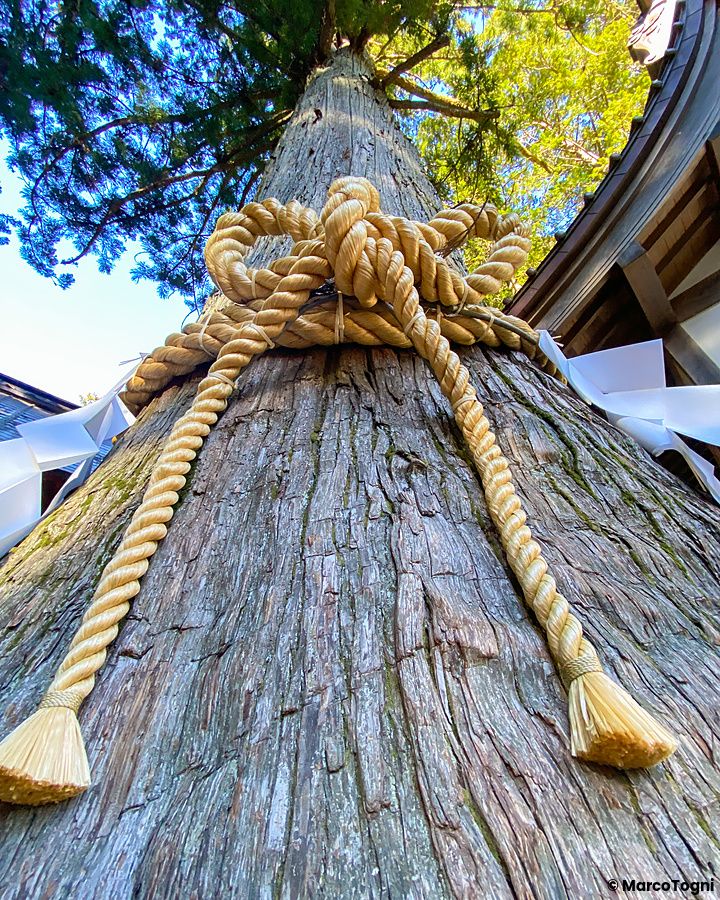
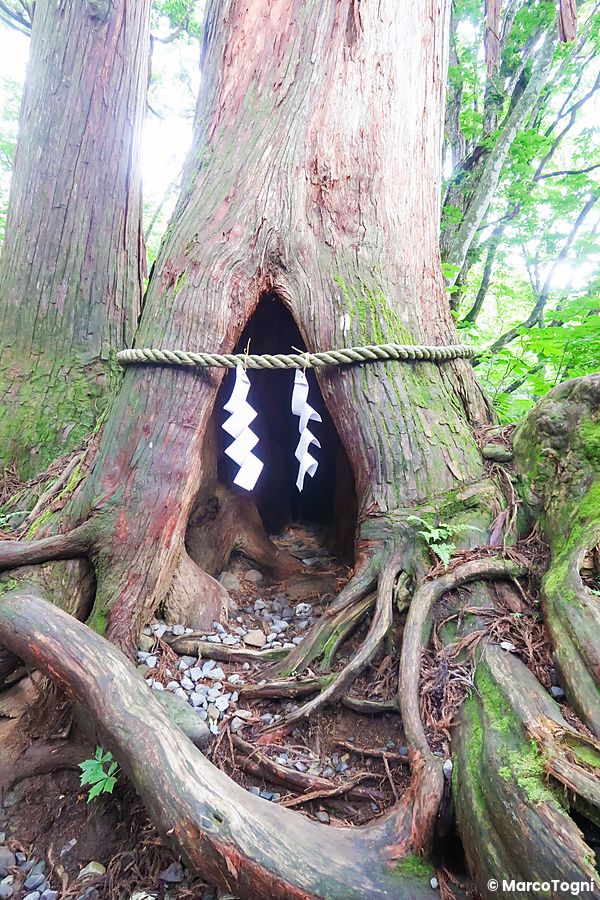
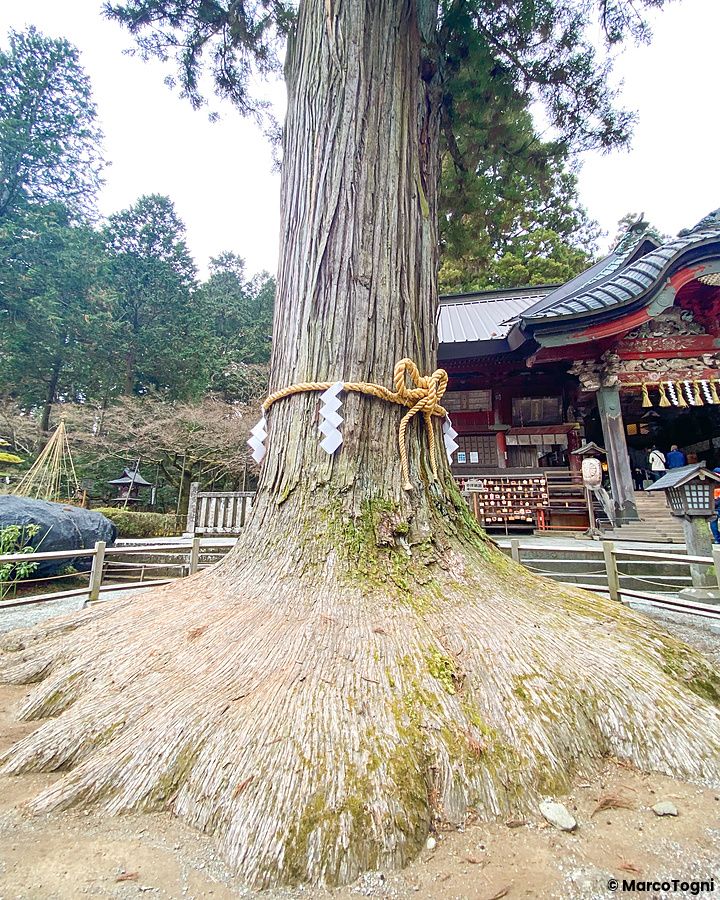
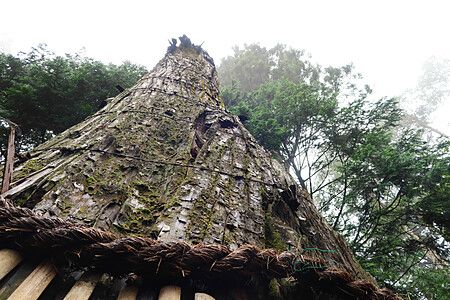
- Around sacred trees, the huge old ones with a rope tied around the trunk, which many shrines consider the kami’s home.
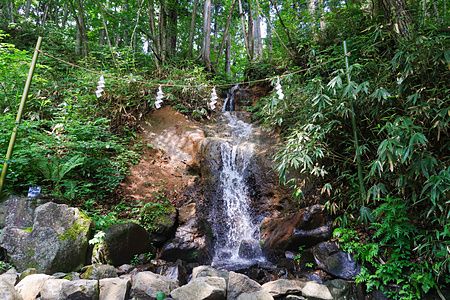
- On rocks, waterfalls and mountains considered sacred: a rope with shide strung between two rocks in the sea or in front of a stone tells you right away that people revere the place.
- In homes at New Year’s, hanging from the straw decorations on the front door, and all year round on kamidana, the small home altars.
- At construction sites during jichinsai, the ceremony held before a house is built: four bamboo poles and a rope with lots of shide hanging from it mark off a square, and inside it the priest purifies the ground.

For visitors, the most curious example is sumo. During their ring-entering ceremony, yokozuna, sumo’s highest-ranked wrestlers, wear a thick white rope over their belt. It’s braided, with shide hanging from it.
It’s the same setup you see at shrines, applied to a person. The rope marks whoever wears it as somehow pure and protected, and the yokozuna rank is actually named after it. The rope is called tsuna, and yokozuna literally means horizontal rope, the one the champion wears tied around his waist. There are five shide hanging from the front, folded into lightning bolts just like the ones at shrines.
Shide and shimenawa
The shimenawa, Shinto’s sacred rope, is where you’ll find shide most often. Shimenawa were originally made of hemp, but today they’re mostly braided rice straw, and their job is to enclose or mark a sacred space.
The two work as a pair. The rope draws the line, and the shide make it visible and give it its sacred character. You’ll sometimes come across a rope without shide, but shide hanging on their own from an ordinary rope are much rarer.
Shimenawa vary enormously from one shrine to the next. Some are thin and even, others are fat in the middle and narrow at the ends, and some are huge. The one at Izumo Taisha in Shimane Prefecture is among the most famous in Japan precisely because of its size, and it’s quite something to see in person.
Shide, on the other hand, stay more or less the same, white and folded into lightning bolts, though the number on the rope and the kind of fold can change. When I visit a new shrine they’re one of the first things I look at, because they’re also an easy way to tell how well it’s cared for. Crisp white paper means someone changes it often, while yellowed, frayed paper points to a shrine that’s been somewhat neglected.
The priests’ wands
The lightning-bolt paper doesn’t only hang from ropes. It also ends up in priests’ hands. One of the most important objects in Shinto is the gohei, also called heihaku: a small wooden stick with a slit at the top, where a strip of shide is slipped in so it hangs down both sides. You’ll see it on altars, inside shrines’ main halls and on kamidana, and it represents an offering to the kami or, in some cases, the kami itself.
The haraegushi, the purification wand, is very similar. It has a bundle of paper shide at the top, sometimes with hemp threads, and the priest waves it over people, objects or a newly bought car, moving it left, right and left again.
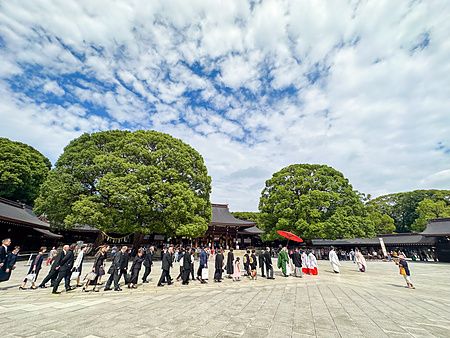
If you get the chance to watch a ceremony, like a Shinto wedding or a blessing, that’s when you’ll see shide in action. The rustle of the paper is part of the ritual, because the moving white strips are there to sweep away impurities, literally.
To be honest, what strikes you first is how simple the gesture is compared with so many other religious rites. A wand, some white paper, a few seconds, and the purification is done.
Different folding styles
At first glance they all look identical, but shide aren’t all the same. There are several folding traditions, handed down by priestly families and major shrines, and the three best known are the Yoshida, Shirakawa and Ise styles.
What changes is the number of cuts, the order of the folds, the length of each part and the final shape. They range from simple versions with only two folds to longer, denser ones with eight, and each shrine follows the tradition it belongs to.
As a visitor you’ll have a hard time spotting these differences, and honestly you don’t need to be able to tell them apart. What does become clear after visiting lots of shrines is that the shape is never random. Even at the smallest neighborhood shrines, the shide on a rope all match, folded the same way. If you have a good eye and photograph shrines a lot, put pictures from different places side by side and you’ll notice the variations.
Making them at home
Making your own is easier than it looks, and plenty of Japanese families actually do it, especially at the end of the year, when they tidy up the kamidana and change the decorations for New Year’s. Leaving aside the details of each tradition, the basic method goes like this:
- Take a sheet of white Japanese paper (hanshi works fine) and cut it in half or into long strips, depending on how big you want the shide to be.
- Fold the strip in half lengthwise to mark the center, then open it back up.
- Make three parallel cuts, alternating the side you start from and stopping short of the edge, so the pieces stay joined.
- Fold the sections toward you one after another, so the paper zigzags down in steps, forming the classic lightning bolt.
- Leave a small uncut section at the top, which you’ll use to attach the shide to the rope or slip it into the stick.
The exact measurements and the order of the folds depend on the style you follow. If you want to make them properly for a real altar, my advice is to ask at a shrine, because many priests are happy to explain how they do it.
If they’re just for decoration, there are also simplified versions made with origami paper, which kids in Japan make at school or at home before New Year’s. These often use paper that’s red on one side and white on the other, so folding it gives you a two-tone effect in festive colors.
If you don’t feel like making them, you can buy shide ready-made. Lots of home goods stores and department stores carry them around the end of the year, often already attached to small shimenawa for the kamidana, and prices are low, a few hundred yen for the simple packs. Some shrines also sell them alongside amulets and paper talismans.
Shide etiquette
There’s no real ritual to follow around shide, but a little care will keep you from embarrassing yourself. Mostly it comes down to remembering that they mark sacred space and treating them that way:
- Don’t touch them or tug on them, not even to see how they’re folded. The paper is fragile and, more importantly, they’re ritual objects.
- Don’t take them as souvenirs, even if you find one lying on the ground. If you want a shide to keep, buy one or make it yourself.
- Don’t step over ropes hung with shide, and don’t walk into the spaces they close off, like the fenced area around a sacred tree or a construction site that’s been prepared for a jichinsai.
- Photos are usually fine, but always check for signs. You can’t take photos in some shrines’ inner halls, not even of the shide.
I often see visitors lean against the trunk of a sacred tree for a photo, right under the rope with the shide. It’s nothing serious and nobody’s going to scold you, but to people who regularly visit that shrine it comes across as a bit out of place, kind of like sitting on a church altar.
On the other hand, people appreciate it if you pause for a moment and give a small bow in front of a torii hung with shide, even if you’re not a believer. You don’t have to, but it shows you understand where you are.
Best time to see them
They’re around all year, but you’ll notice them most at the end of December and the beginning of January. That’s when shrines replace the ropes and the paper, people hang decorations on their front doors, and even shops, offices and restaurants put small shimenawa with shide at their entrances.
It’s also when the paper is at its whitest and cleanest, since it’s just been replaced. During the rest of the year, especially outdoors, rain and sun turn it yellow, and some shrines replace it more often than others.
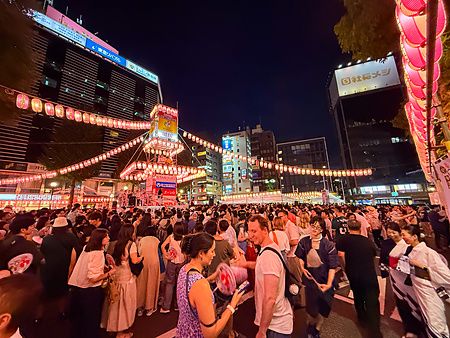
Local festivals, or matsuri, are another great chance to see them. The mikoshi, the portable shrines carried through the streets, are often decorated with ropes and shide, and neighborhoods hang garlands with shide along the streets to mark the route.
And if you’re into sumo, the yokozuna’s ring-entering ceremony during a tournament is the most spectacular way to see someone actually wearing shide, as the wrestler advances slowly across the ring.
My advice
Shide are one of those things you see a hundred times before you really look at them. Once you realize that every rope, every stick and every tree with that white paper is saying the same thing, shrines get easier to read, and even a tiny neighborhood shrine squeezed between two buildings starts to make sense.
Try this: next time you visit a shrine, before you head straight for the prayer hall, look for the shide. Count them, notice where they are and what they mark off. I promise that after a couple of shrines, you won’t be able to stop seeing them.