Shimoda Park
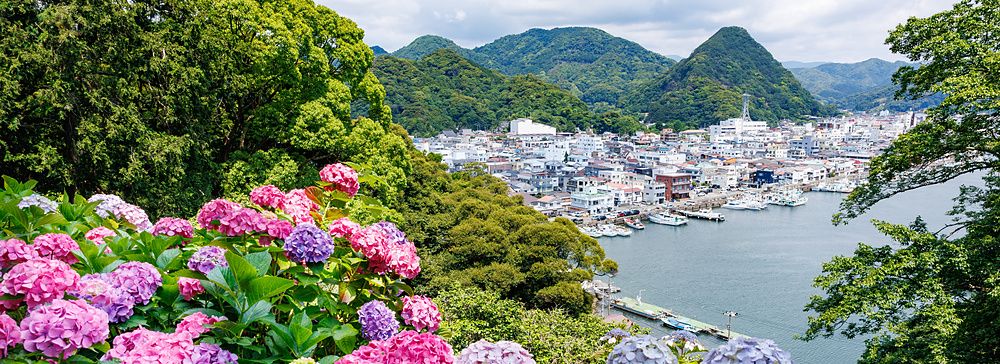
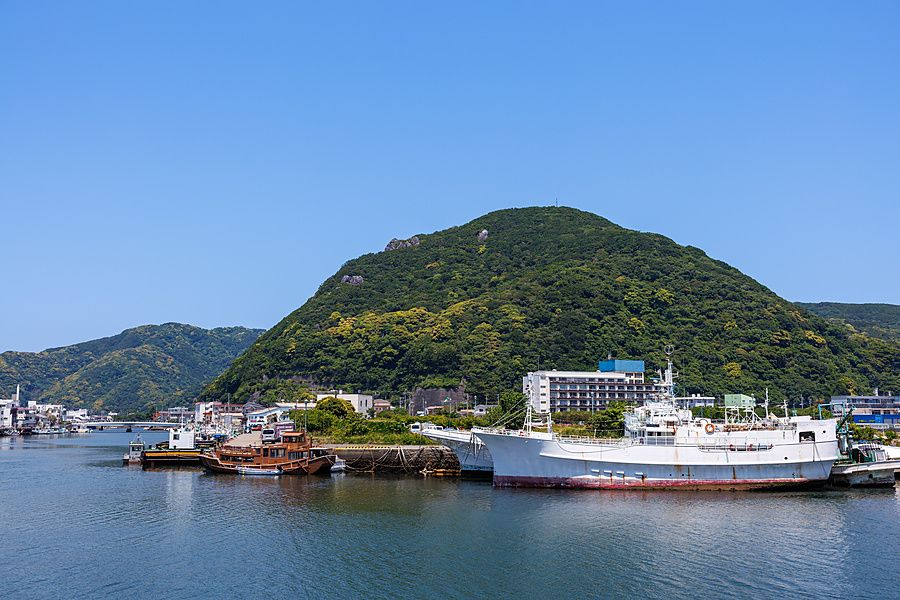
A hilltop park in Shimoda, at the southern tip of the Izu Peninsula, where in June the slopes are covered in hydrangeas and the harbor and its boats sit right below. Shimoda Park, which locals also call Shiroyama, is known mainly for those hydrangeas: 150,000 plants and three million flowers. But there’s more to it, with forest trails, the remains of a castle and several spots where you can see the whole bay.
If you’re traveling around Izu in early summer, this is the reason to come all the way down to Shimoda. The rest of the year it’s an uphill walk with the sea in front of you, worth doing if you’re in town and feel like a walk.
What to see
The park takes up the whole hill, and the trails go up and down on every side. There’s a lot to see, and not just the flowers.
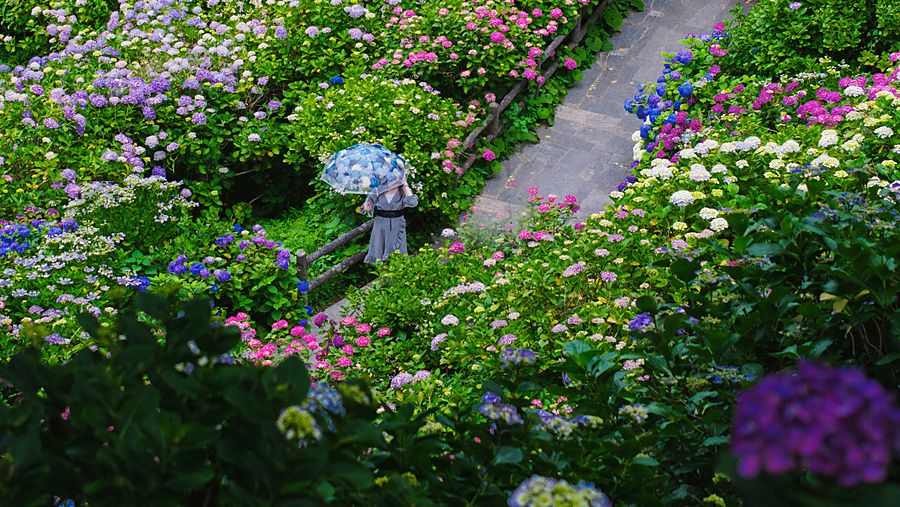
- Hydrangeas on the slopes: they line both sides of the stairways and paths, blooming in blue, purple, pink and white, with more than 100 varieties, including oakleaf hydrangeas and the white, ball-shaped Annabelles.
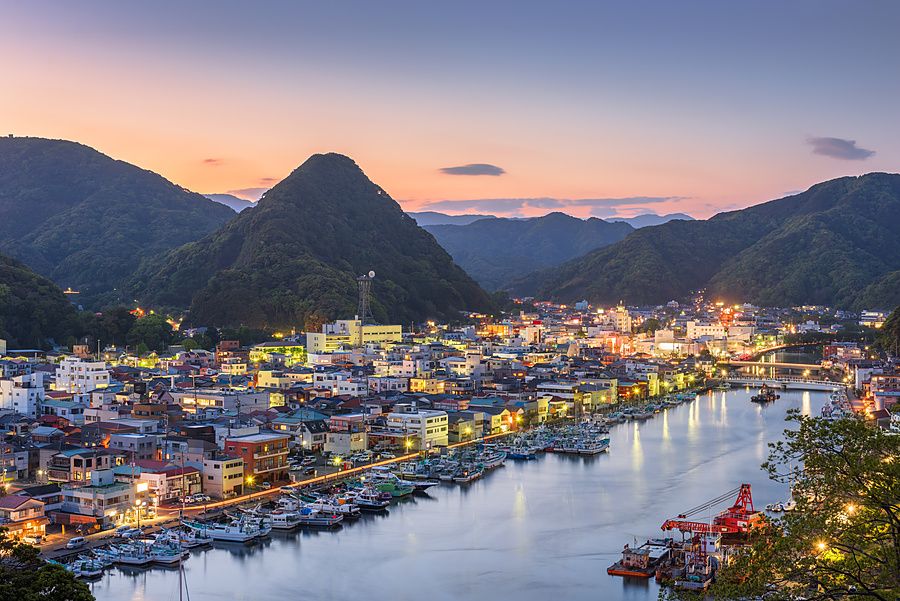
- The viewpoints: from the top you can see Shimoda’s harbor, the town’s rooftops, the headland across the bay and the open Pacific.
- The castle remains: at the top you’ll find the base of the tower and the dry moats, now full of trees. A samurai fleet that controlled this stretch of sea had its stronghold here. This was Shimoda Castle, which the Hojo built in 1588 to defend themselves against Toyotomi Hideyoshi. When his fleet laid siege in 1590, the defenders held out for about fifty days before surrendering.
- The Opening of Japan monument plaza: a wide open space with a stone monument marking the arrival of the American ships in Shimoda, which is how the town ended up in the history books.
- Sculptures in the woods: statues and artworks scattered along the trails under the tall trees. You come across them more or less by chance as you walk.
- Camellias and azaleas: the azaleas bloom along the edges of the trails in spring, and camellias of all kinds bloom in winter.
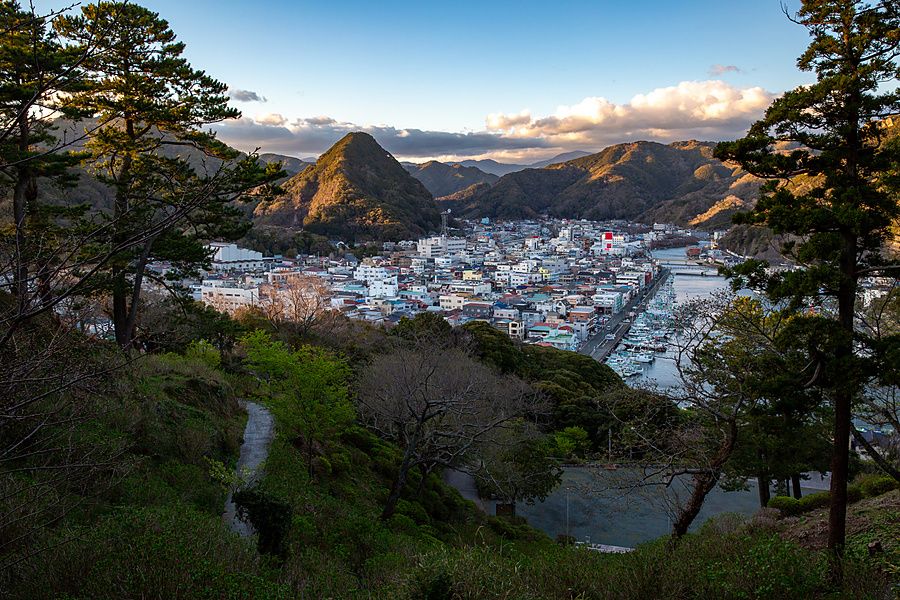
This is a real hill, not a flat park. The climb starts right at the entrance, with stone steps, steep stretches and a few dirt sections. Wear sneakers, and if you’re there in June with the rainy-season humidity, a spare T-shirt isn’t overkill.
The densest blooms are on the steepest slopes, and that’s where almost everyone ends up. If you head toward the castle remains and the forest trails, you’ll find far fewer people and dimmer light, with hydrangeas poking out between the trunks rather than growing in solid banks.
The monument plaza is the least interesting part unless you’re into history: it’s an open space with a stone monument, so you walk by, look at it and move on. The exception is the weekend of the Kurofune Matsuri, the Black Ships Festival, usually held in mid-May. The official ceremony takes place right in front of the monument, and the empty plaza fills with people.
The highlight, for me, is reaching a viewpoint with hydrangeas in the foreground, Shimoda’s gray rooftops in the middle and the harbor and its boats behind. Japan has plenty of hydrangea parks, but I don’t know another one with the sea right below like this.
It’s the place I always recommend to anyone going to Izu in June, because that’s the one time of year when a quiet seaside town like Shimoda bursts into color, and from up here you take it all in at once. The rest of the year I still like to stop by when I’m in the area, climb to the top and look out over the bay before heading down to the harbor for some fish.
When to go
June is the month to go, when the hydrangea festival is on and the flowers peak in the second half of the month. Those weeks get crowded: on weekends there are stalls selling local food, dance and drumming performances and a spot where you can have tea, and on the stairways you end up climbing in a line.
For emptier trails, go on a weekday and early in the morning, when the only people around are photographers with tripods and a few older locals out for a walk.
Light rain thins the crowds a lot, and hydrangeas covered in raindrops look even better. The only problem is the stone steps, which get slippery. Full sun, on the other hand, brings bigger crowds and a muggy heat you really feel on the climbs.
In midsummer, from July on, don’t bother: it’s hot, there are mosquitoes and the flowers are already gone. Spring, fall and winter are fine for an unhurried climb with the park almost to yourself. Just know you won’t get June’s burst of color.
The best photo
The shot to get is from one of the viewpoints facing the harbor. Go when the sky is clear, because with low clouds the bay turns gray and you lose half the picture.
On festival days you’ll wait your turn at the most open viewpoints, but higher up and along the forest trails there are spots with flowers among the trees where nobody’s standing in front of your lens.
At a glance
- The highlight: hydrangeas on the slopes with Shimoda’s harbor below.
- When to go: second half of June, on weekdays and early in the morning; there are fewer people when it drizzles.
- Best for: anyone touring the Izu Peninsula in early summer who’s fit enough for the climbs.
- Atmosphere: crowded flower-lined stairways in June, a quiet forest and a sea breeze the rest of the year.
Final thoughts
In June this is one of the few places in Japan that give you a real reason to go all the way down to the end of the Izu Peninsula: three million flowers on a hill that runs down to the sea. The downside is all the climbing and the weekend crowds, and if walking is hard for you or you hate muggy heat, you’re better off picking another park. Out of season it’s still a nice walk with a view of the bay, but there’s no reason to make the trip just for that.