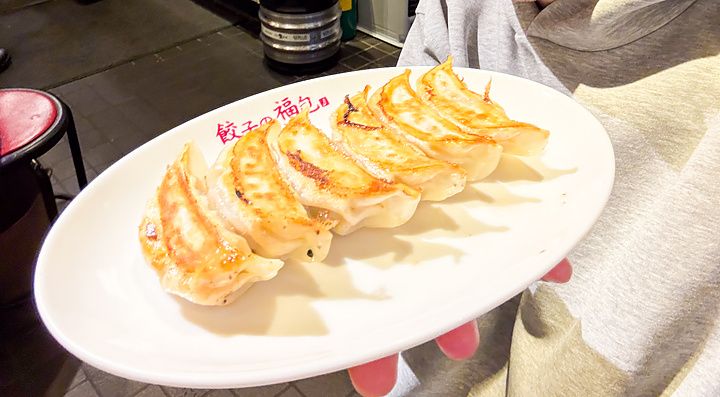
 232 m
Gyoza no Fukuho232 m
Thin-skinned gyoza, also available without garlic.
 ©Mike K. - Dreamstime
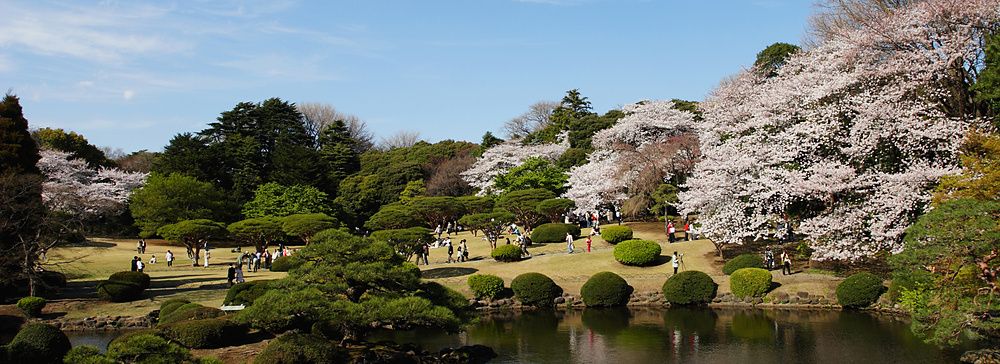
One of the most beautiful green spaces in Tokyo is, without a doubt, Shinjuku Gyoen. In every season, the park offers magical scenery that leaves the thousands of tourists and locals who walk through its gates speechless.
It’s an enchanting place to escape the noise of the city, and it still carries the feel of a time when emperors, politicians, and kings strolled along the little paths winding through the greenery. That’s because this public park was originally part of the imperial family’s estate, and it still has an elegant, regal charm that holds its own against Europe’s royal gardens.
From Shinjuku Station, leave on the south side and walk about ten minutes east to Shinjuku Gate. It's the most convenient entrance, but also the most crowded when the cherry trees are in bloom.
From Shinjuku-sanchome the gate is much closer, barely five minutes on foot.
If you're heading straight for the traditional garden, you're better off coming in from the other side and getting off at Sendagaya. From the station it's just a few minutes to Sendagaya Gate, which stays much quieter even on weekends.
This place is on MarcoMaps
Shinjuku Gyoen
My map of Japan: over 4,000 places I've tried myself, each with photos, rating, and hours. Filter by category and rating, find veg-friendly spots and places near you with GPS. No sign-up, right from your phone.


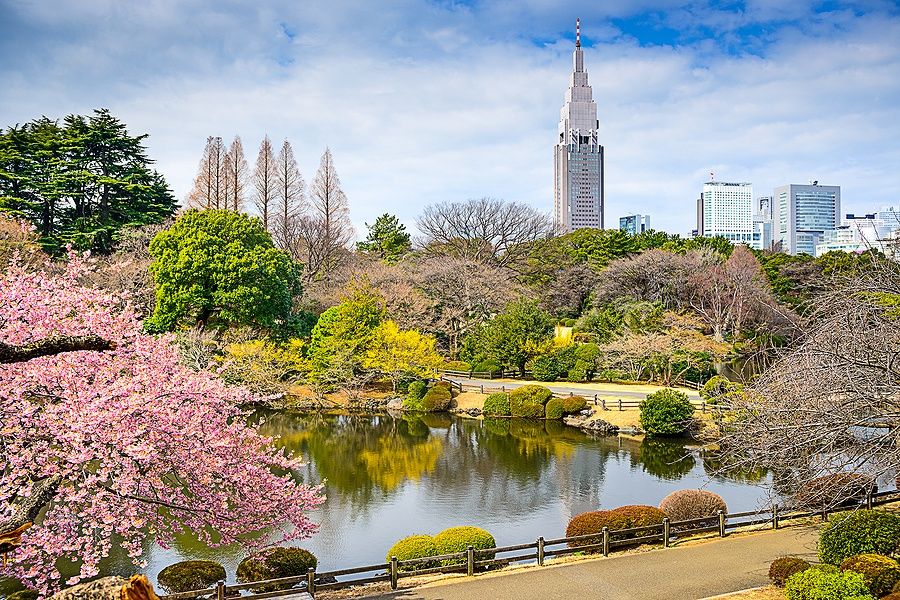
Shinjuku Gyoen started out as part of the residence of Kiyonari Naito, a loyal retainer of Tokugawa Ieyasu, and the land stayed in the Naito family’s hands for a long time until the government bought it. Around 1870, an experimental station was set up on the grounds to develop new farming methods by studying and putting into practice techniques for growing fruit and vegetables.
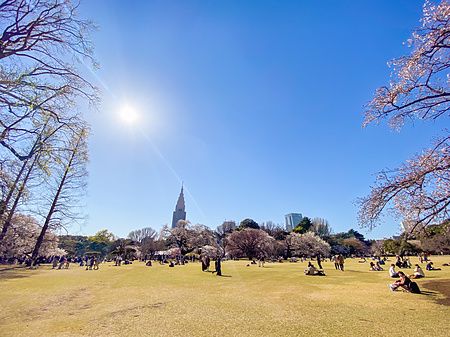
A few years later, in 1879, the experimental station moved out to make room for a botanical garden owned by the imperial family. From then on the garden grew and gained new features, like the ponds and the zoo that appeared next to what’s now the traditional Japanese garden. Shinjuku Gyoen didn’t stop being a center for plant research, though. It was here, in the greenhouses, that orchids were first brought into bloom in Japan, along with many other flowers that now brighten the country’s parks and gardens.
For many years the gardens played a double role. They were classic imperial gardens, the setting for many parties and ceremonies, and at the same time an efficient lab that supplied the city with seeds, flowers, and trees. Then World War II reached this place too, and sadly the bombings almost destroyed it. After the war the garden became government property, and once it was restored it opened to the public as Shinjuku Gyoen National Garden.

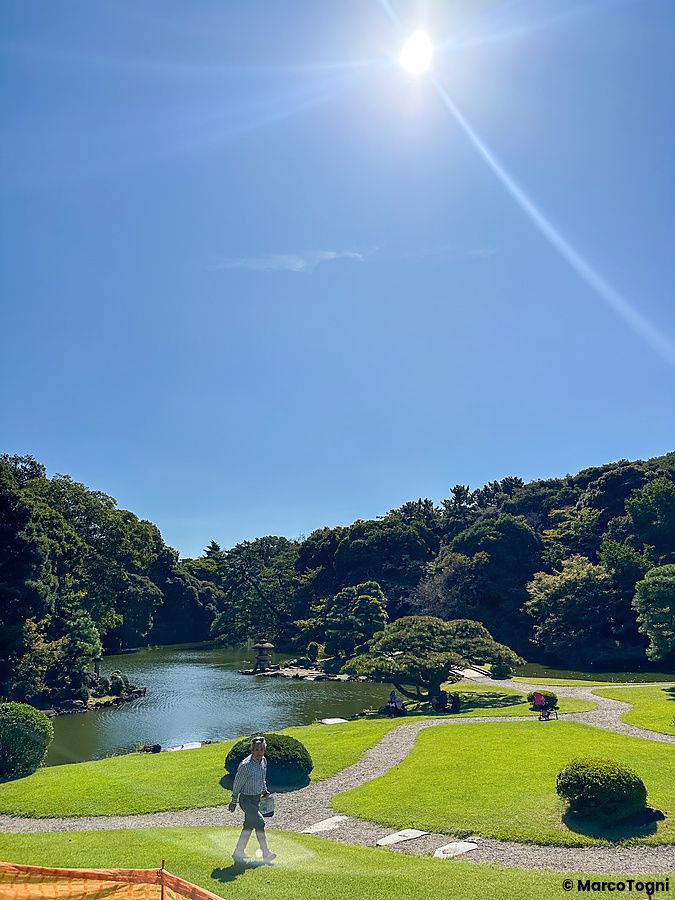
The garden covers a huge area, about 58 hectares. The best time to visit is definitely spring, from late March to early April, when the cherry trees bloom, the park fills with color, and the lawns get packed with tourists and locals enjoying the show. Of the roughly 10,000 trees in the garden, about 900 are cherry trees of some seventy different varieties, and the rest include very old cypresses, cedars, and tulip trees.
Inside the park you’ll find a mix of cultures and styles. You can walk through a typically English landscape, then suddenly find yourself surrounded by the colors and scents of the French countryside, and end up losing yourself in the calm of the traditional Japanese gardens. The English garden is the one right in front of you when you come in through Shinjuku Gate: huge open lawns with no fences and no keep-off-the-grass signs, where people just lie down and relax. The French-style garden is all neat and symmetrical, with the rose beds lined up in rows and an avenue of tall plane trees that turns golden in the fall. It only takes a few steps to go from one to the other, and this constant change of scenery is what makes the place different from any other park in the city.
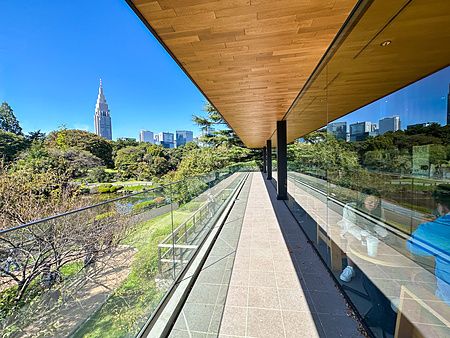
I’d also recommend taking a look inside the park’s greenhouse, rebuilt in 2012, where you can see lots of tropical and subtropical plants.
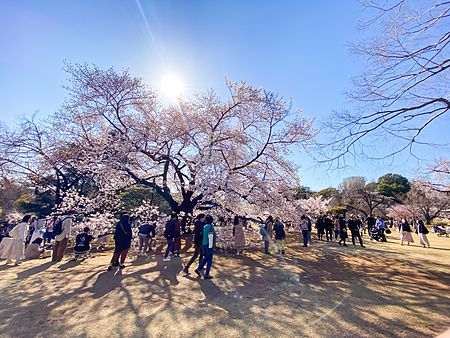
If you can’t make it in spring, don’t worry. From mid-November to early December the garden looks completely different: the maples turn bright red, and the ginkgos go a vivid yellow you can spot from far away.
In the first half of November there’s also the chrysanthemum exhibition, which carries on a court tradition. The flowers are grown and arranged inside bamboo pavilions put up specially in the Japanese garden, each one dedicated to a different cultivation style. Hardly any foreign visitors know about it, and on its own it makes a visit worthwhile at this time of year.
In the southern part of the park, the traditional garden wraps around a pond with small islands, low bridges, and stone lanterns. Here the city really does disappear, and the pace feels slower than on the big open lawns.
Overlooking the water is the Kyu Goryotei, also known as the Taiwan Pavilion. The Japanese community in Taiwan gave this southern Chinese-style building as a gift for the wedding of the future Emperor Hirohito, and it was completed in 1927. It’s one of the few historic buildings left in the garden, and you can go inside, sit in the shade, and look out at the pond from behind the columns, which are made of wood brought over from Taiwan just for this building.
A short walk away is the Rakuutei, a teahouse surrounded by greenery where you can stop for matcha and something sweet. It’s the easiest way to take a leisurely break right in the middle of Shinjuku.
Shinjuku Gyoen - nearby you will find:
232 mThin-skinned gyoza, also available without garlic.
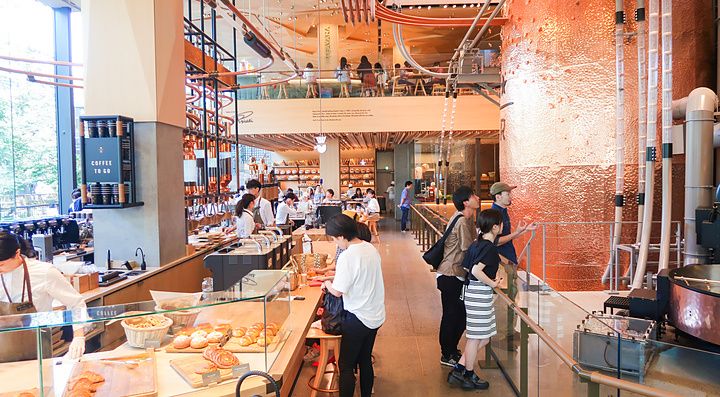 322 m
Premium coffee and a Princi bakery.
 355 m
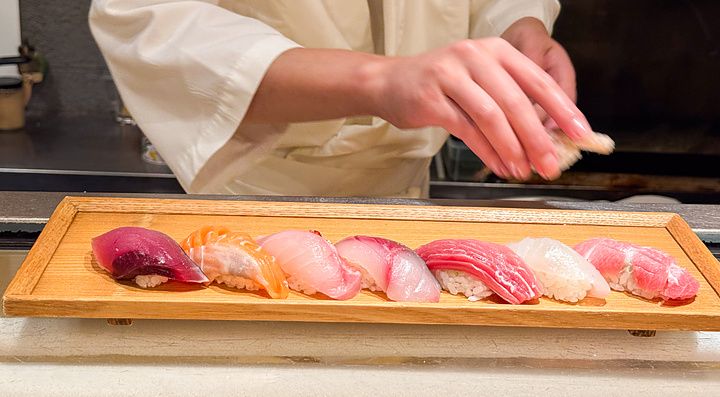
Quick sushi, good quality.
 371 m
Cheap kaiten sushi.
 390 m
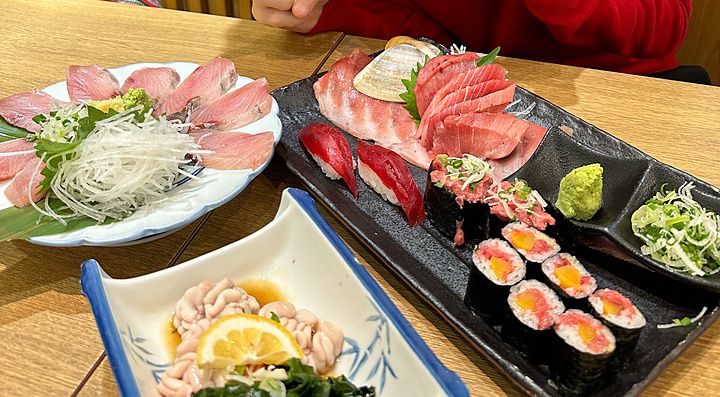
Raw fish and sushi.
 396 m
Great ramen chain.