 80 m
Maisen80 m
Unbeatable tonkatsu.
 ©Mirko Kuzmanovic - Shutterstock
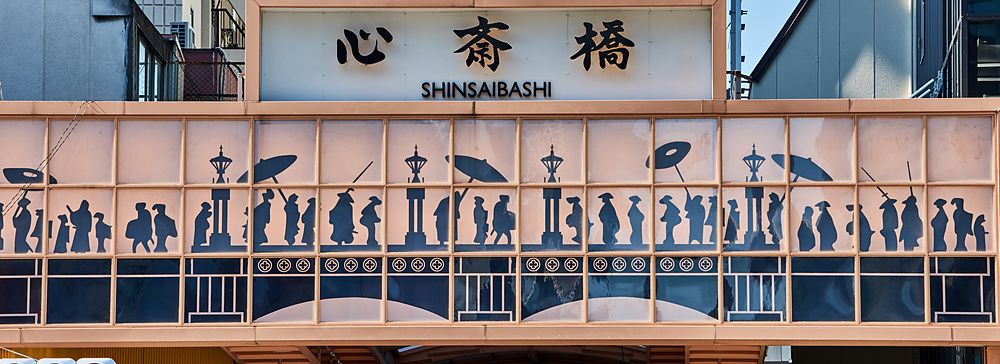
A covered shopping arcade in Shinsaibashi, Osaka, with a glass roof overhead and storefronts shoulder to shoulder for almost 600 meters without a break. Shinsaibashi-suji is the city’s best-known shopping street. It has clothing chains, huge cosmetics stores, a historic department store and, tucked in among the new signs, a few old shops that have hung on.
Come here if it’s your first time in Osaka, if it’s raining and you need somewhere to duck into, or if you want to see a Japanese shopping street at its biggest. It doesn’t much matter if you’re on your own or with kids, since all you do here is walk.
The first thing you’ll remember isn’t a store but the arcade itself. An arched glass roof runs dead straight with no end in sight, signs climb two floors high on either side, and underneath, people walk in both directions without a break. It feels less like a street with a roof on it than a very long building with the side walls taken off.
You’ll find a bit of everything inside, and that mix is exactly what sets it apart from a mall: clothing chains you already know, jewelers, luggage stores, 100-yen shops, a couple of musical instrument stores, and every 50 meters or so a giant cosmetics store with signs in Chinese and English and music blasting out the door.
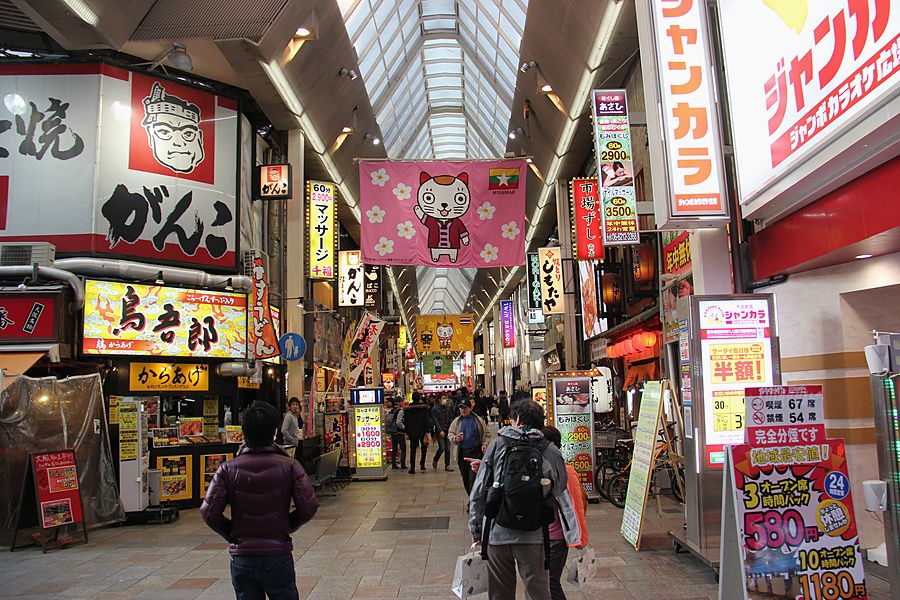
Hardly anyone walks the part north of the main avenue. The roof keeps going, but everything drops off all at once: fewer people, a few shutters down, textile wholesalers and shops that rely on neighborhood customers rather than tourists. If you want to see what the street was like before, that’s where to go.
I’ll tell you up front that there’s not much in the way of crafts or unusual souvenirs here. The big brands are the same ones you’ll find in Tokyo, and anything different is in the side streets, where you’ll find secondhand kimono, old prints and six-seat restaurants.
If crowds get to you, know this going in: at peak hours it’s as packed as a train station.
What this arcade really gives you isn’t shopping but a sense of the city’s scale. As you walk through it, you get the feeling that Osaka just goes on forever, and you won’t get that anywhere else downtown.
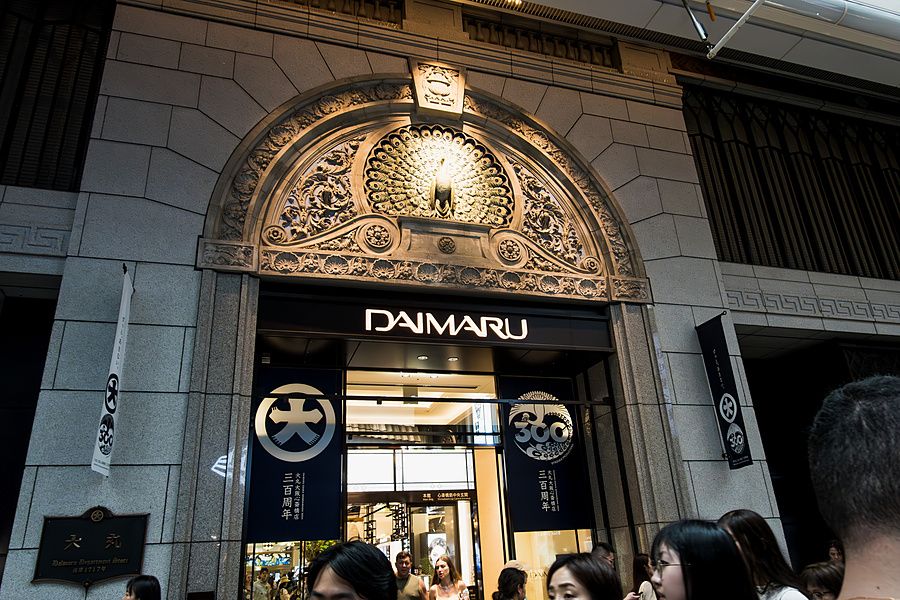
I come back every time I’m in Osaka, even when I’m not buying anything. At the end of the day I walk it all the way from north to south, stop under the department store to look at the peacock, pop into the ground floor for the old decorations, and come out the other end in front of the canal with the signs lit up. It’s the fastest way I know to remind myself that Osaka isn’t Tokyo.
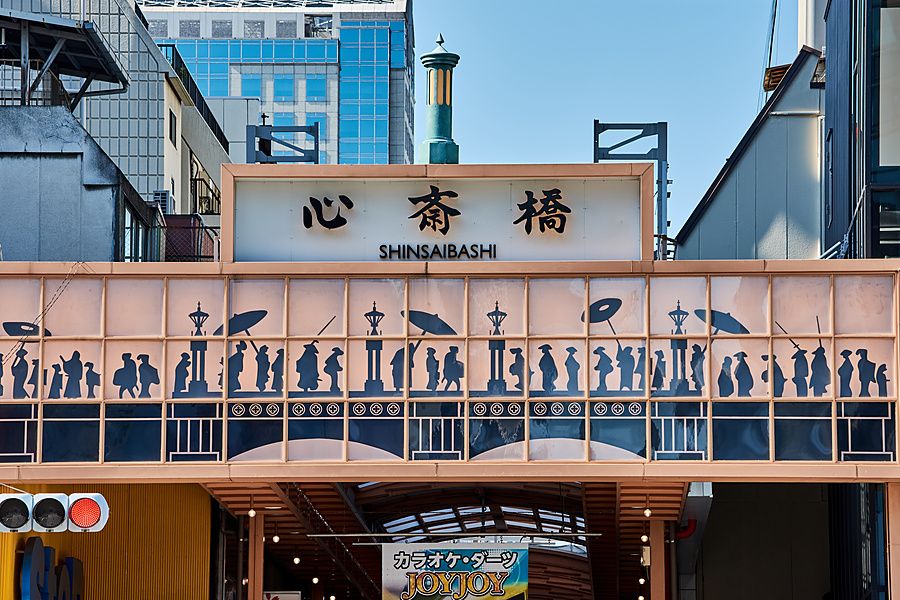
The name comes from a bridge. In 1622 a merchant named Okada Shinsai paid out of his own pocket to build a crossing over the Nagahori canal, and the street leading up to it from the south took his name. The bridge sat right between the kabuki theaters of Dotonbori and the Shinmachi pleasure quarter, which put it on exactly the right route for anyone with money to spend.
The department store came a century later, in 1726, as a textile shop. Today’s building is modeled on the one William Merrell Vories designed between the two world wars: they put the original pieces back wherever they could and recast all the rest from molds.
The best time is early morning on a weekday, when the shutters are going up and there are more clerks than customers in the arcade. You can see the structure, read the signs and walk down the middle without dodging anyone.
The other good window is the evening, again on a weekday. Everything’s open, the lights are on, it’s still easy to get around, and that’s when the arcade looks its best.
Saturday and Sunday afternoons are a different story. In the central stretch you’re down to a crawl, stuck among families, people hauling suitcases and tour groups that stop dead in the middle, and covering 100 meters takes three times as long.
Long holiday periods are even worse. If the weekend is all you have, go in the morning and save the afternoon for something else.
When it rains you stay dry under here, but everyone else has the same idea, so the arcade fills up more than usual. In summer the roof keeps the sun off you, which in August in Osaka is no small thing.
In winter there’s no wind and it’s pleasant. Seasons, fall colors and blossoms make no difference here. What matters is the time and the day, not the month.
It’s all flat, with no stairs or changes in level, and strollers and wheelchairs can get through everywhere, which makes it one of the easiest places in the city in that respect. What wears you out isn’t your legs but the weaving.
People stop dead in front of a window, whoever’s behind them hits the brakes, and if you’re holding a child’s hand you need to keep them close. Dragging a rolling suitcase through at busy times is genuinely hard work.
End to end, it’s not a short walk. By the time you reach the far end you’re in a different neighborhood, with different kinds of places and a different feel. There are practically no places to sit along the arcade, so to take a break you have to go inside somewhere. The two easiest options are the basement floors of the department store and the Parco building, which have counters and shared tables.
Toward the south end, where you come out at the canal, the touts appear, trying to steer you into one place or another. Just keep walking and nothing happens, and city patrols make the rounds specifically to deal with them. On crowded days, wear your backpack on your front, as you would on any busy street.
The shot everyone wants is at the far south end, on the bridge facing the Glico runner sign, and there’s a line of people waiting their turn there at any hour of the evening. If you want to skip it, the same sign is also easy to see from the sidewalk a little off to the side.
Inside the arcade the good spot is less obvious. Stand in the middle of the walkway and shoot down its length, with the glass roof narrowing into the distance and the signs overlapping on both sides. It works better in the evening, with the lights on and the glass reflecting them.
The third shot I’d recommend is the peacock relief on the department store’s facade, on the arcade side. It’s high up, so you need to take a step back, and most people walk right under it without noticing.
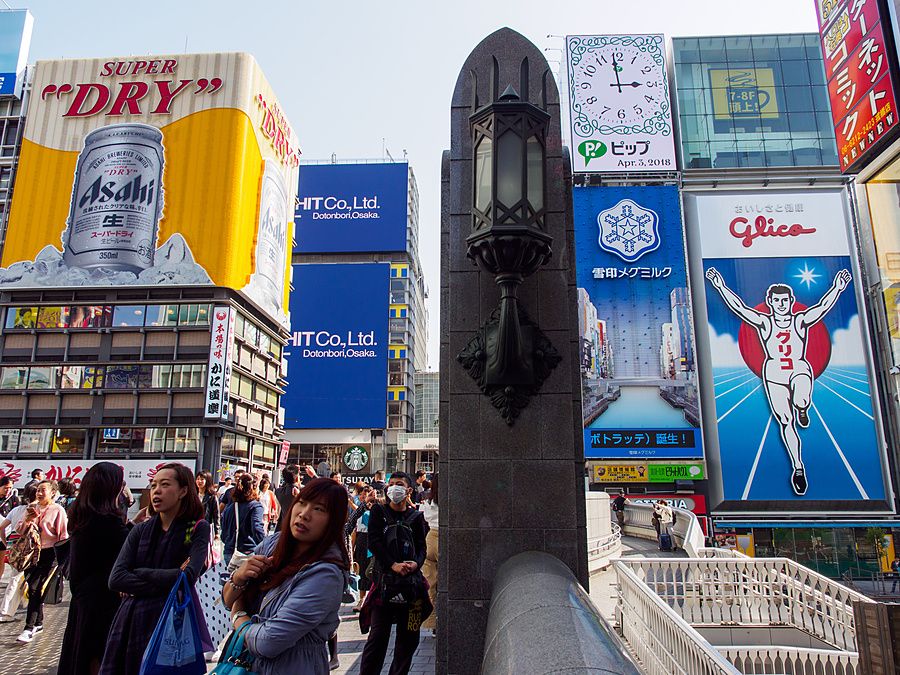
You don’t come here for a monument. You come for the street: the point is to walk the whole thing and look around, and the stores are a backdrop, a good share of them chains. It’s worth the detour for one specific reason: 600 meters of city under a roof that carries on both north and south, with the department store and the piece of the old stone bridge as landmarks along the way.
If you’re after artisan shops, peace and quiet and things you can’t find anywhere else, head into the side streets or go somewhere else, because you won’t find them along the main walkway. For everyone else it’s one of the most memorable things in Osaka, and all it asks is that you walk through it.
From Shinsaibashi Station, come up on the south side of Nagahori-dori. The north entrance to the arcade is a minute's walk away, right where the piece of the old bridge's railing stands.
If you're coming from Namba, it's better to do it the other way around: walk to Ebisu Bridge with the Glico sign and enter from the south, about 10 minutes on foot.
This place is on MarcoMaps
Shinsaibashi-suji
My map of Japan: over 4,000 places I've tried myself, each with photos, rating, and hours. Filter by category and rating, find veg-friendly spots and places near you with GPS. No sign-up, right from your phone.


Shinsaibashi-suji - nearby you will find:
80 mUnbeatable tonkatsu.
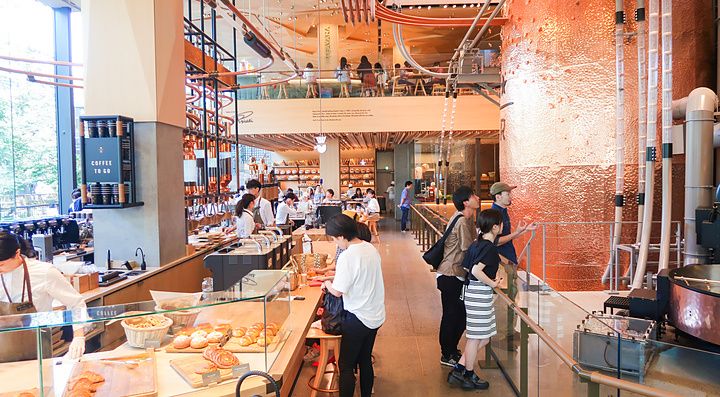 150 m
Premium coffee and a Princi bakery.
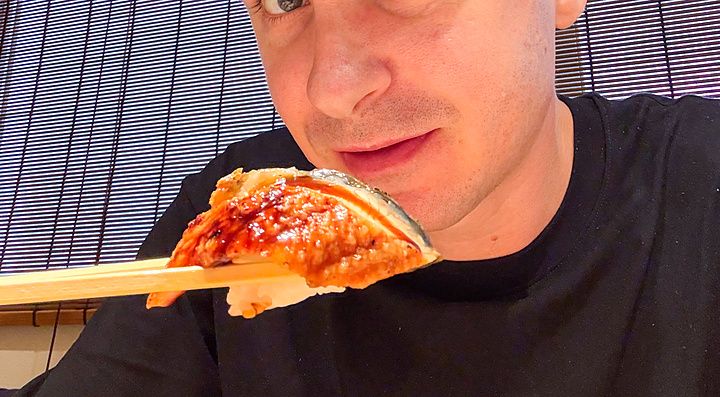 153 m
Cheap sushi and izakaya dishes.
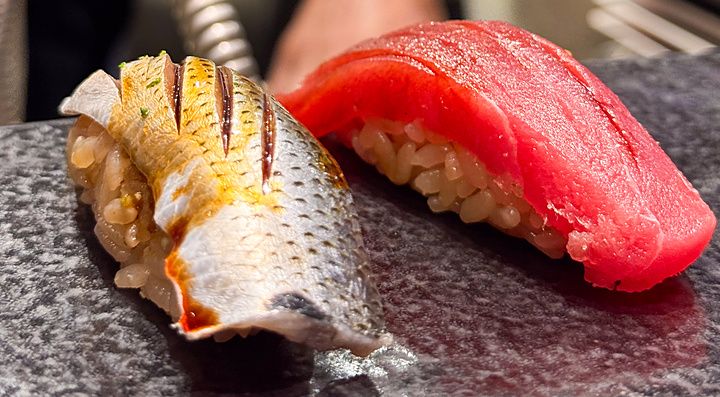 158 m
Chain with excellent sushi.
 184 m
Vegan takoyaki and kushikatsu.
 196 m
A store that sells everything. Great.