Shirahama Beach
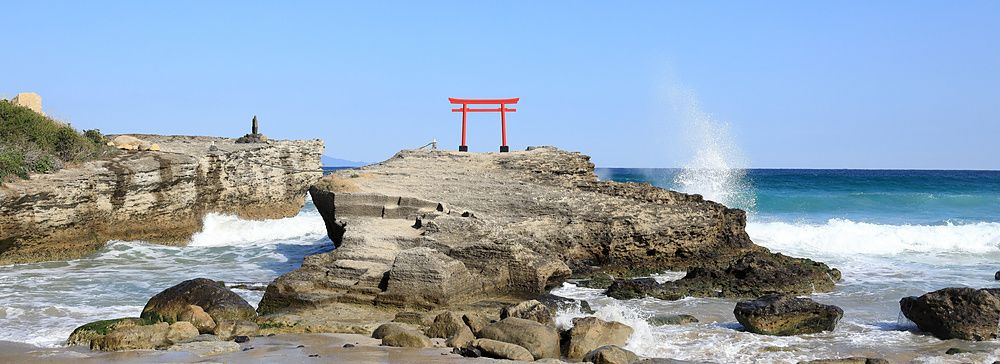
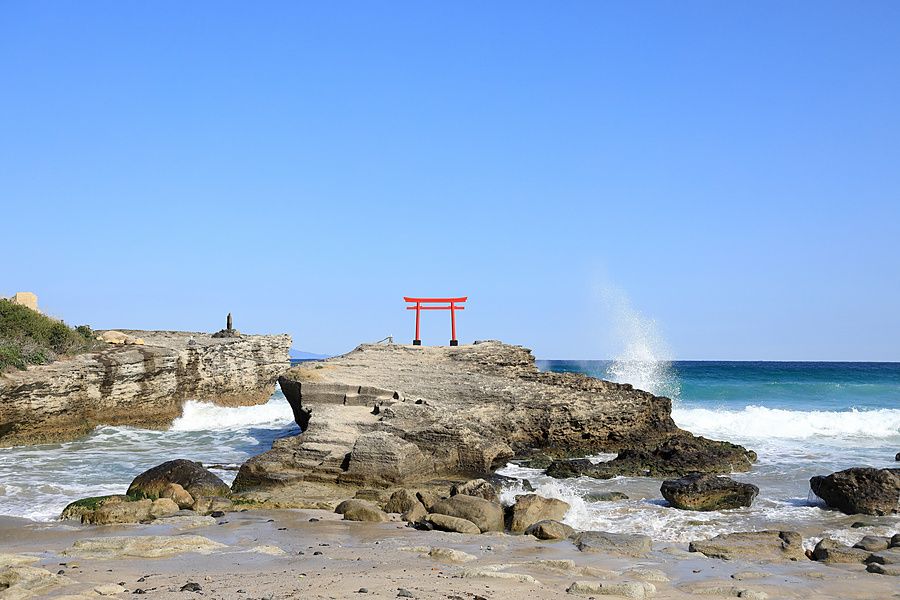
A beach almost 800 meters long in Shimoda, on the coast of the Izu Peninsula, with bright white sand and water so clear you’d never guess you’re only a few hours from Tokyo. Shirahama Beach is the largest in Izu, and it’s known for two things: the color of the water and the red torii standing on a rock at the far end of the bay, part of a shrine hidden among the trees.
It’s the place to go if you want a real beach day without flying to Okinawa, if you surf, or if you want to see the sunrise behind a torii.
What you’ll see
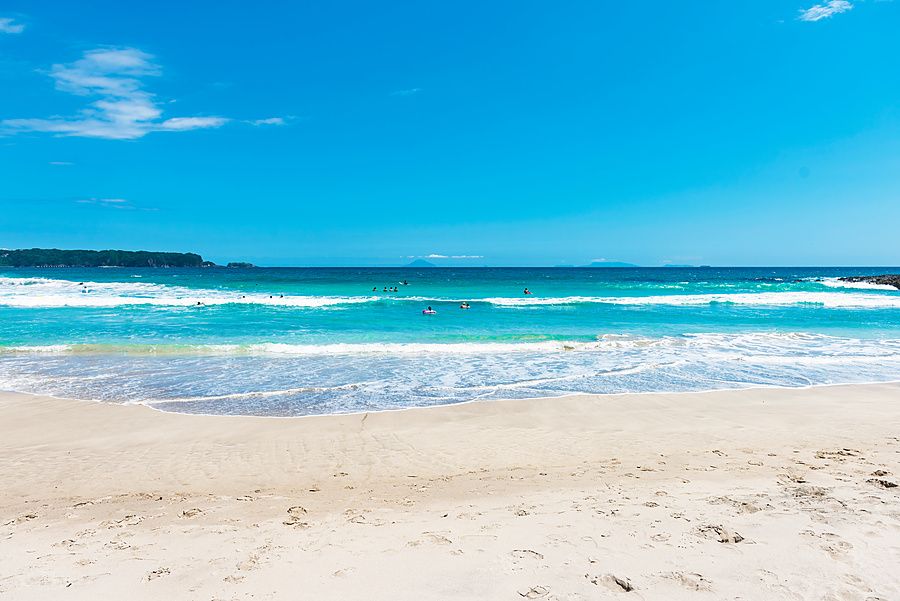
- The beach: about 770 meters of fine, very pale sand, wide enough to find a spot even on busy days. It’s comfortable to walk on barefoot.
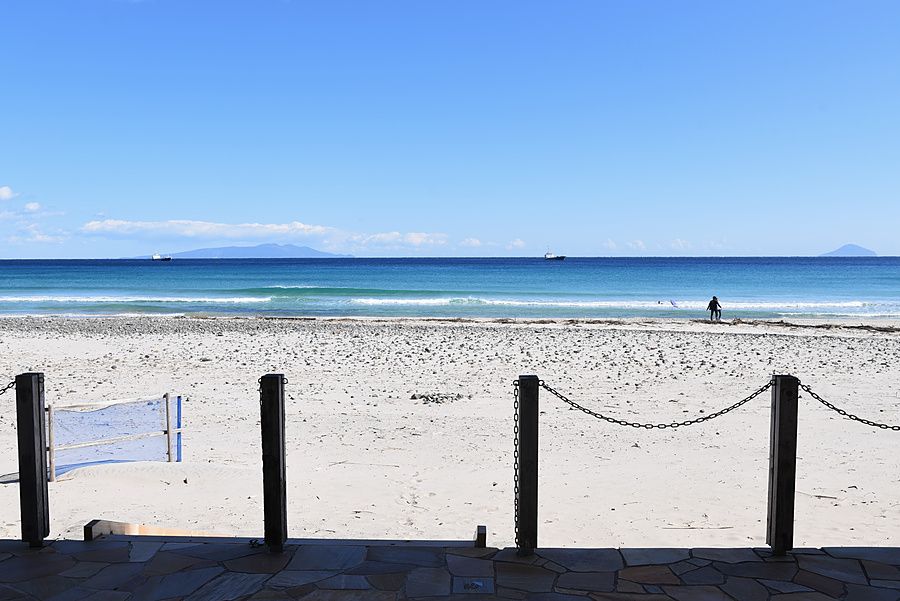
- The sea: blue and emerald green, clear as far out as you can still touch the bottom. On a haze-free day you can see the Izu Islands on the horizon.
- The torii on the rock: bright red, standing on top of a large volcanic rock at the end of the beach, with the sacred rope stretched beneath it. It faces the sea and the islands.
- Shirahama Shrine: right behind the rock, on a small wooded hill. Along the entrance path stand two huge cypress trees, which tradition says are two thousand years old.
- The woods and the main hall: from the prayer hall, a flight of steps on the left climbs through a grove of protected trees to the main hall. Up there, all you can hear is the waves.
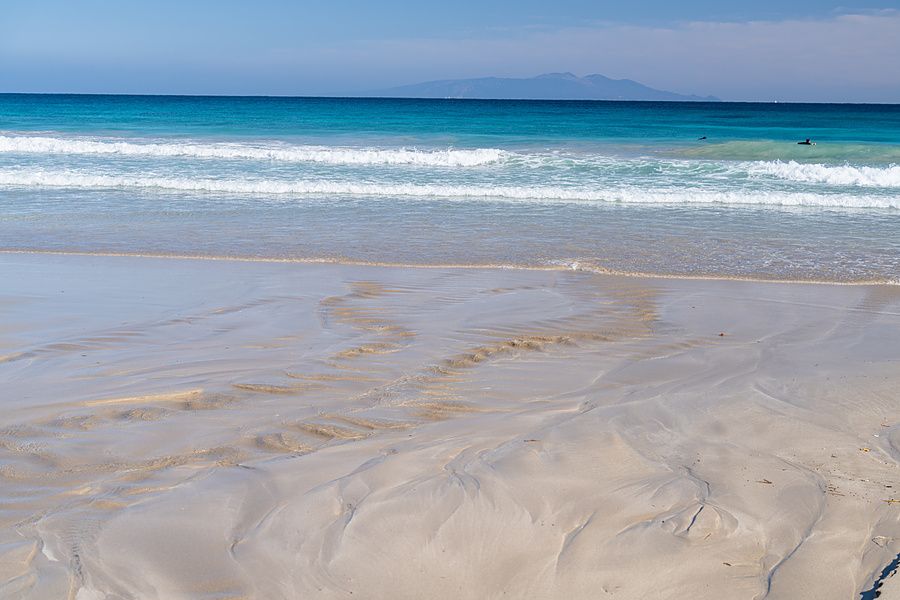
To reach the torii, you leave the sand and cross onto the rocks. At low tide you can climb up easily from the rocks in front, but at high tide your feet will get wet, so I recommend sandals or shoes you don’t mind getting wet, not white sneakers.
On the sand itself there are no concession stands, rows of umbrellas or little shacks. The places to eat and the shops are across the road that runs along the beach, so the sand stays clear. Compared with a lot of Japanese beaches cluttered with facilities, everything looks cleaner here, even at first glance.
The water is cold, even in midsummer. The first couple of minutes are a shock, then you get used to it. But if you’re expecting the warm water of Okinawa, keep in mind that this is a different climate.
The part a lot of people skip is the climb up to the shrine. They arrive, take a photo of the torii and go back to lying on the sand. I think that’s a mistake, because a short flight of steps through the trees takes you from a crowded beach to woods that are almost empty. And this isn’t just any shrine. Shirahama Jinja is considered the oldest in Izu, with a history traditionally said to go back more than 2,400 years.
According to legend, the shrine’s god came across the sea from Miyakejima and created the islands offshore. That’s why the torii on the rock faces them, and once you know that, you look at that horizon a little differently.
When people visit me from Italy and want to see the sea in Japan, I bring them here, because in one place you get pale sand, clear water and a real shrine, with thousand-year-old trees and people praying. This is the beach that changes the mind of anyone who thinks Japan has no beaches worth swimming at.
When to go
In summer, especially in August and on weekends, the beach is packed with young people, couples, families and surfers. There’s a lot going on, with music coming from cars in the parking lots and people lining up for the showers. If you want to swim and sunbathe, this is still the right time; just get there early in the morning.
September is my favorite month. The water is no colder than in August, and the crowds are gone. Out of season, only the surfers and the occasional dog walker are left. The sand is almost empty, and you can walk from one end to the other without weaving between towels.
Sunrise is when the beach is at its best. The sun comes up out of the sea right behind the torii, the rock turns black, the sky goes orange, and the only people on the beach are a couple of photographers and the surfers pulling on their wetsuits. If you’re staying in Shimoda the night before, set an alarm. It’s the best photo in all of Izu, and you can take your time getting it, with nobody in your way.
When the sky is overcast, the sea loses almost all its color and turns a dull gray, like the water at any ordinary beach. Check the forecast and go on a bright, sunny day.
The best photo spot
The best place to photograph the torii is on the sand just before the rocks, with the rock to one side and the open sea behind it. From there you get the red of the torii, the blue of the water and, when the sky is clear, the islands in the distance all in the frame.
Climbing up the rock to the torii is nice for looking out over the sea, but not so much for photos, because up close you can no longer frame the torii against the horizon. On windless days at low tide, the still water in the pools between the rocks reflects the torii and the sky. That’s the shot everyone is after, and it only works when the sea is calm.
At a glance
- The highlight: pale sand, clear water and the red torii on the rock at the end of the beach.
- When to go: at sunrise for the torii, in September for swimming without the crowds, never under a gray sky.
- Best for: anyone coming from Tokyo for a beach day, surfers, and people staying in Shimoda who can get up early.
- Atmosphere: young crowds and music in summer; out of season, waves, surfers and quiet woods above the bay.
Final thoughts
You come here for the sea and nothing else. There are no museums, alleys or monuments to tick off, just sand, water and a rock with a torii. But a sea like this is hard to find so close to Tokyo, and together with the shrine in the woods it makes for one of the best days you can spend in Izu. For me it’s worth the detour for the sunrise alone.
It’s not for you if you want warm, tropical water. And if you hate crowds and can only go on a Saturday in August, you’re better off waiting for September.