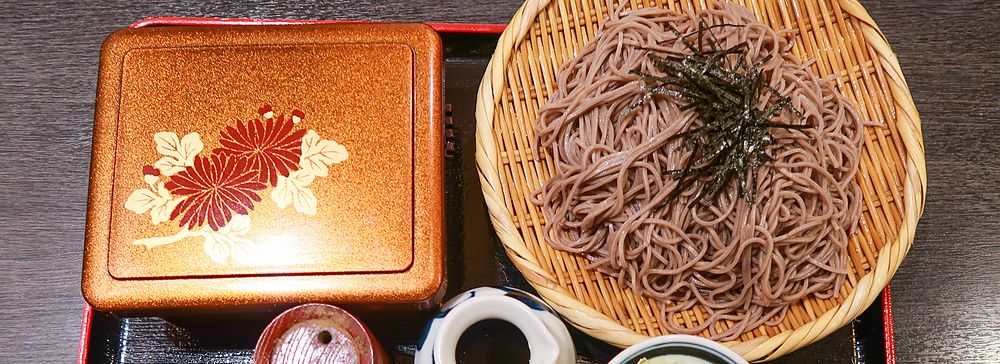
Soba
Whenever someone asks me which Japanese dish to try besides sushi and ramen, I say soba without thinking twice. Soba is the buckwheat noodle, and here people eat it everywhere, from the stand-up counters outside train stations to neighborhood shops where the owner kneads the dough by hand every morning.
People often lump soba in with udon, but it has a flavor all its own, a little earthy and slightly bitter, and there’s a specific way to eat it. Cold and hot soba are quite different from each other, and so are soba made with wheat and juwari soba, which is pure buckwheat. If you have celiac disease, you can eat it only with a few precautions, and you shouldn’t take them lightly.
Contents
What soba is
In Japanese, the word soba means both the buckwheat plant and the noodles made from it. The flour is mixed with water into a dough, which is rolled out with a long rolling pin, folded and cut with a knife into thin, even strips. The color ranges from light beige to dark gray, depending on how the grain is milled and whether the outer layer goes in too.
Soba has been around in Japan for centuries, but it was in the Edo period that it became the ultimate fast food. In 18th-century Tokyo, then still called Edo, soba shops were everywhere, feeding artisans, merchants and anyone who needed a quick meal. The capital still has a deep-rooted soba culture today, while around Osaka and Kyoto people tend to prefer udon.
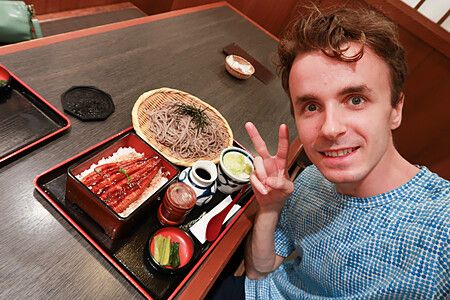
One tradition tied to all this is toshikoshi soba, the soba people eat on the night of December 31. The explanations vary. Some say the long noodles bring a long life; others say that since they break easily, they help you cut away the hardships and debts of the year that’s ending. Either way, the custom goes back at least to the Edo period and many families still follow it, and at the end of the year soba shops have very long lines.
Cold or hot
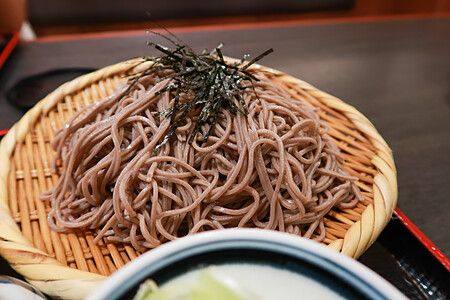
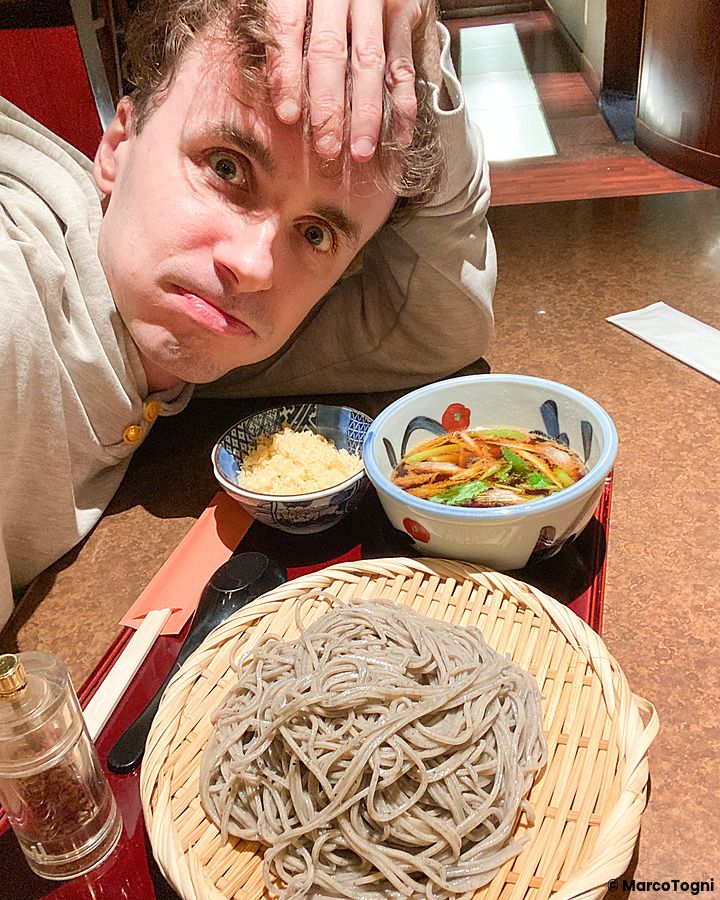
This is the first choice you’ll make when you look at the menu, and it matters. Cold soba is called mori soba or seiro soba. The noodles are drained, rinsed in cold water and served on a bamboo tray, with a small cup of concentrated sauce (tsuyu) on the side, plus scallions and wasabi. Zaru soba is pretty much the same thing, topped with thin strips of nori.
People who really love soba almost always order it cold, even in winter. That way you can taste the buckwheat better and the noodles stay firmer, while in hot broth they go soft quickly.
Hot soba comes in a bowl of broth made with dashi and soy sauce. It’s the one to pick on cold days, or when you need something to warm you up from the inside. These are the versions you’ll see most often:
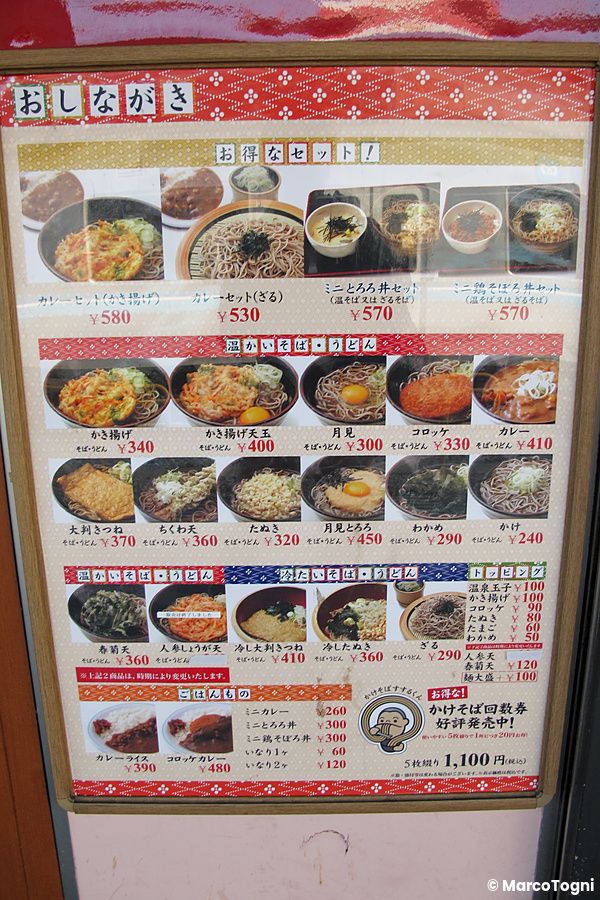
- Kake soba: the basic version, just broth and scallions, and the cheapest of all.
- Kitsune soba: topped with a slice of sweet fried tofu, soft and a little sugary.
- Tanuki soba: at least around Tokyo, it comes topped with crunchy bits of fried batter left over from making tempura.
- Tempura soba: comes with one or two large fried shrimp, or with kakiage, a fritter of thinly sliced vegetables.
- Kamo nanban: made with duck and grilled leek, and it’s the one I like ordering best in winter.
Juwari and nihachi
The difference between juwari and nihachi is what confuses people most on their first trip to Japan. Buckwheat flour doesn’t bind well on its own because it has no gluten, so the noodles tend to break. That’s why the vast majority of the soba you’ll eat also contains wheat flour. The most common kind is nihachi soba: two parts wheat to eight parts buckwheat, that is, 20 percent wheat and 80 percent buckwheat.
Nihachi literally means two-eight, but there’s also a historical explanation for the name, tied to the price of a serving in the Edo period: sixteen coins, or two times eight. Nobody agrees on where the name really comes from, but the ratio stuck, and it gives you smooth noodles that slide down easily and don’t break.
Juwari soba is made from 100 percent buckwheat (juwari means ten parts out of ten). You can tell right away. It has a darker color, a stronger aroma and a different texture, grainier and less springy. The noodles are often a bit thicker and tend to break if you lift them too forcefully.
Making good juwari is hard, because the dough crumbles easily and takes a lot of skill, so you’ll mostly find it at specialty shops, and it costs a bit more. I like it precisely because it tastes like buckwheat, while nihachi is milder and works even for people who don’t like strong flavors. If you see 十割 written on the menu or the sign, that’s juwari.
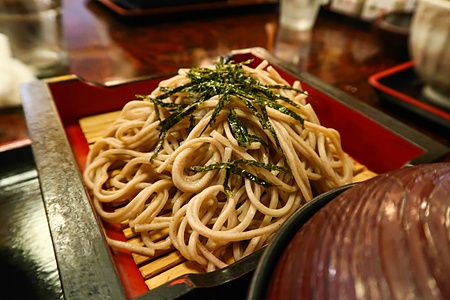
Soba and celiac disease
Soba isn’t automatically gluten-free, even though buckwheat is. Nihachi contains wheat, so it’s completely off the table. On paper, juwari is the only kind that can work for someone with celiac disease, but once it’s served at a restaurant there are several other points where gluten can get in.
The first and most important is the sauce. Both the tsuyu for cold soba and the broth for hot soba are made with soy sauce, and regular Japanese soy sauce (koikuchi) is made from soybeans and wheat. Even perfectly made juwari soba stops being gluten-free once you dip it in its sauce.
Beyond the sauce, there are other risks to keep in mind:
- The cooking water: at many shops juwari is boiled in the same pot as nihachi, and that makes cross-contamination practically guaranteed.
- Flour on the work surface: shops that make both kinds of soba often use the same tools, and the same flour to keep the dough from sticking.
- Tempura and fried batter: they’re made with wheat flour, and the oil they’re fried in stays contaminated too.
- Sobayu: the cooking water you drink at the end of the meal (more on that below), which carries over whatever has been boiled in the pot.
For someone with celiac disease, I think soba only makes sense at a shop that serves nothing but juwari, uses a dedicated pot, and serves it with salt or a sauce made from wheat-free tamari. Some specialty shops do this and even put it in writing, but it’s not the norm. Always ask explicitly, or show a card written in Japanese explaining that you can’t eat wheat (komugi), not even in trace amounts.
If you just have a mild intolerance, there’s more leeway, but if you have actual celiac disease, I’d treat soba as a risky dish until proven otherwise. Packs of dried juwari from the supermarket are a safer option if you’re cooking for yourself, because the label lists the ingredients and the cross-contamination warnings.
There’s also the opposite problem to be aware of. In Japan, buckwheat is one of the most serious allergens and can cause very severe reactions, which is why it’s always listed on packaging. If you’re allergic to buckwheat, you need to be careful at udon shops too, because the two are often cooked in the same pots.
Where to eat it
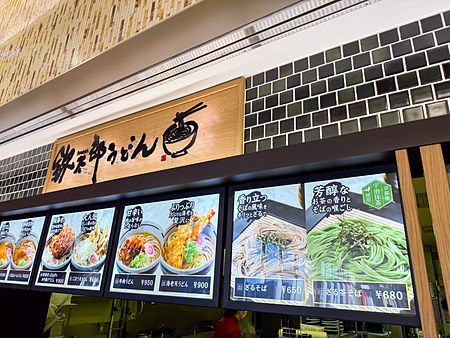
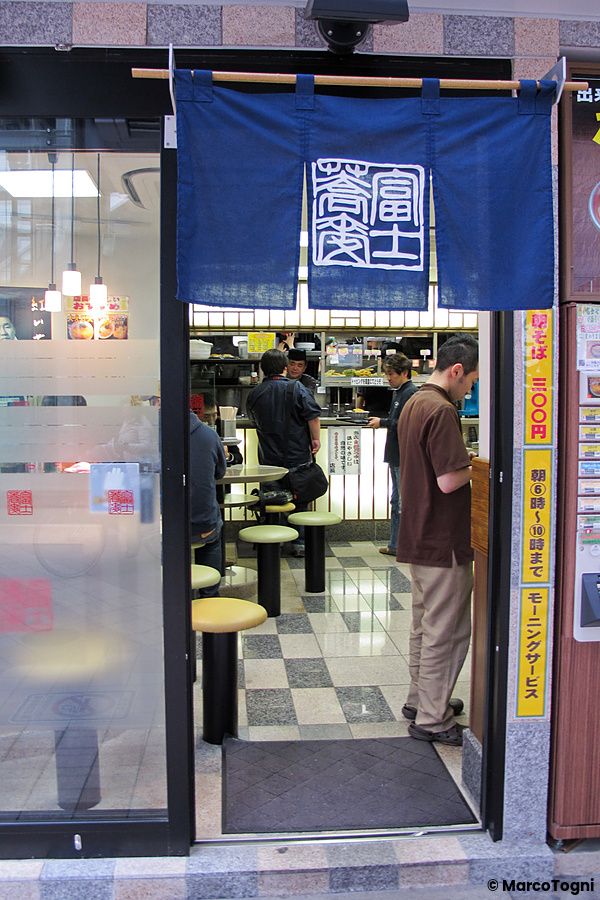
Soba covers every price range, and that’s one of the reasons I always recommend it. At the cheapest end are tachigui soba counters, where you eat standing up, and you’ll find them inside and outside train stations. You buy a ticket from a vending machine and hand it over at the counter, and within a couple of minutes your bowl is in front of you, all for around 500 yen or a little more.
Chains like Fuji Soba and Komoro Soba are all over Tokyo, and most of their customers are office workers who eat in five minutes and leave. The quality is about what you’d expect for a quick meal, and the soba is almost always nihachi or has even more wheat, but for breakfast or lunch on the go it’s perfectly fine. There are also small chains that serve juwari made from buckwheat they mill in-house at stand-up counter prices, like Sagaya, with locations in Shibuya, Ikebukuro, Akihabara and Jimbocho. You eat standing up, or close to it, but you can taste the difference from the soba at the regular stand-up counters.
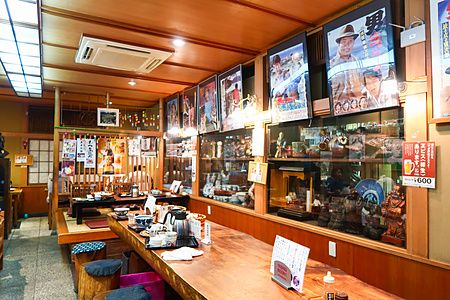
One step up are the neighborhood soba-ya, small places with a counter, a few tables and often a TV on in a corner. A serving of cold soba usually costs between 900 and 1,500 yen, and with tempura it easily climbs to 2,000 yen or more.
Finally, there are the historic shops and the more refined ones, where the soba is made by hand every day (teuchi soba) and you can often watch the cook kneading the dough behind a glass window. In Tokyo the most famous ones are concentrated around Kanda, near Akihabara, and at lunchtime you should expect a line. I’d suggest going a little before noon or in the early afternoon, because many of them close when the day’s dough runs out.
How to eat it
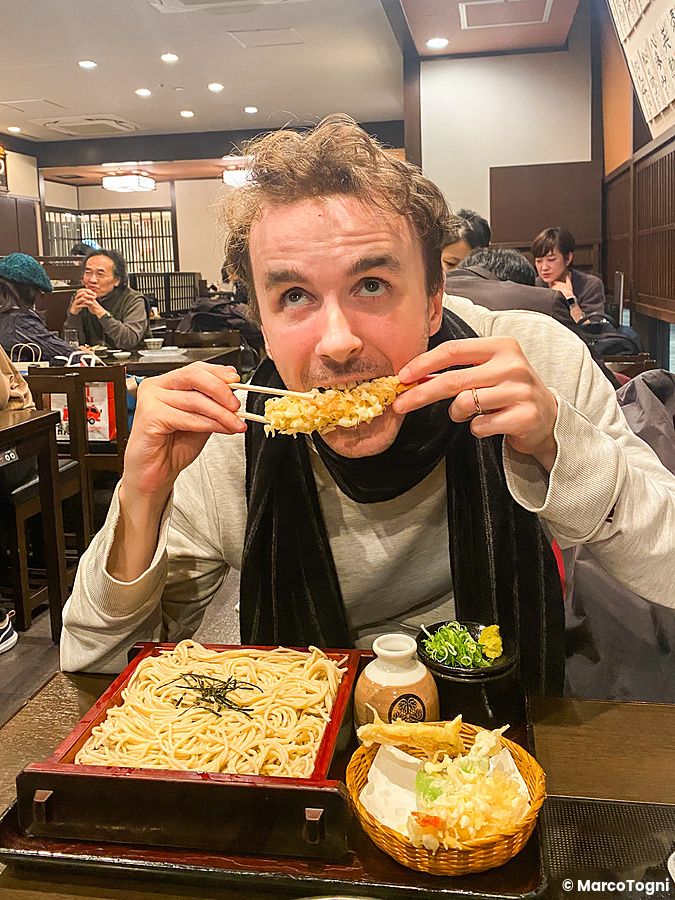
With cold soba the routine never changes. Pick up a small amount of noodles with your chopsticks, dip a third or half of their length in the sauce and bring them to your mouth. Don’t leave them soaking, because tsuyu is very strong and would drown out the taste of the buckwheat. You can stir the scallions and wasabi into the sauce, or put a pinch straight on the noodles, which is how people who are particular about flavor prefer to do it.
And yes, you make noise. Slurping soba is normal and nobody notices. In fact, it pulls air and aroma into your mouth along with the noodles. If it doesn’t come naturally to you, that’s fine, but don’t feel awkward doing it.
At the end of the meal, shops that serve cold soba bring you a wooden or ceramic pitcher full of cloudy, hot liquid. This is sobayu, the water the soba was cooked in. You pour it into the sauce left in your cup, and it turns into a kind of light broth that you sip.
There’s a practical reason for it too: during cooking, some of the buckwheat’s protein and nutrients pass into the water, and drinking it gets them back. Honestly, I always look forward to it, because it’s the right way to end the meal.
The more traditional soba-ya also have the custom of soba-mae, which means having a drink before the soba. You order a glass of sake with a few small dishes, such as sweet rolled omelet (dashimaki tamago), toasted miso or slices of kamaboko with wasabi, and you don’t order the soba until the end. It’s a relaxed way to eat, suited to the afternoon or early evening, and very different from a quick lunch at a stand-up counter in a station.
Regional soba
Once you leave Tokyo, soba changes quite a bit from one region to the next, and a few local styles are worth a trip on their own. The region most closely tied to soba is Nagano, where the cool mountain climate is good for growing buckwheat. Locally it’s called Shinshu soba, and you’ll find it in practically every restaurant, from Matsumoto to the Togakushi area, known for soba served in small mounds on a bamboo basket.
You’ll often see a list of Japan’s three great soba styles, and it’s a good place to start:
- Togakushi soba from Nagano: served cold, in small bundles on a round basket.
- Wanko soba from Morioka, in Iwate Prefecture: a server refills your bowl one mouthful at a time until you cover it with the lid, and some people get through more than a hundred bowls.
- Izumo soba from Shimane Prefecture: dark because the buckwheat is ground with the hull on, and served in small round bowls stacked on top of each other. You pour the sauce straight over the soba.
I’d add a couple more that you’ll often run into while traveling. Niigata’s hegi soba uses seaweed as a binder instead of wheat, has a very smooth texture, and comes on a large wooden tray meant for sharing. Kyoto’s nishin soba, on the other hand, is hot soba topped with herring cooked in a sweet sauce, and it’s one of the city’s classic dishes.
When people tell me they’re heading to Nagano or Izumo, I often suggest they plan a lunch around soba, because it tastes better there than in Tokyo and prices are still reasonable.
My advice
If it’s your first time, start with a cold zaru soba at a small place that makes it by hand, and if juwari is on the menu, order that one so you can tell right away what pure buckwheat tastes like. Then, some morning when you’re in a rush, try a station soba stand too. The soba there is nothing like that first bowl, and that’s exactly why you should try both.
If you have celiac disease, don’t trust the word juwari on its own, and always ask about the sauce and the pots. And if they bring a pitcher of sobayu at the end of the meal, drink every last drop.