Soma Nomaoi Festival
Soma Nomaoi is a festival with ancient roots, in which hundreds of riders in armor bring the samurai of the past back to life.
It takes place every year over three days, usually in late May, across Soma and Minami-Soma. Both are in Fukushima Prefecture, an area well known for horse breeding.
Three shrines organize it together: Ota Shrine and Odaka Shrine in Minami-Soma, and Nakamura Shrine in Soma. Its roots are said to go back to the 10th century, when local warriors started holding military drills on horseback.
Because of its historical importance, it has been designated an intangible cultural property of Japan.
Contents
What happens over the three days
The festival runs for three days and recreates the feel of another era, especially the Sengoku period (1477–1573). There are two highlights. In the Koshiki Kacchu Keiba, groups of samurai riders in helmets and armor, katana and all, compete in a horse race over 1,000 meters. In the Shinki Sodatsusen, several hundred mounted samurai compete against each other. Both take place on a huge field called Hibarigahara.
Besides these two, there’s plenty more worth watching. The first day opens with a solemn ceremony. On the second day a procession marches to Hibarigahara field to the sound of drums and a kind of horn made from a large conch shell with a hole drilled in it. On the last day comes the Nomakake ritual, in which men dressed in white catch horses with their bare hands and present them as an offering to Odaka Shrine.
A symbol of recovery after 2011
The festival takes place in an area hit hard by the 2011 earthquake and tsunami and by the Fukushima nuclear crisis, which forced many people in Minami-Soma to leave their homes.
That year Soma Nomaoi went ahead on a much smaller scale, without the main competitions. The field was quickly decontaminated, though, and the festival was back the very next year. For the local community it became a symbol of recovery.
Why it’s now held in May
For centuries Soma Nomaoi was held in the middle of summer, but the heat kept getting more extreme, and eventually the situation became unsustainable. At the 2023 festival more than a hundred horses and dozens of people needed treatment for heatstroke, and two horses died.
So the organizers made a historic decision and moved the festival to late May, when the weather is milder for both the riders in armor and the horses.
The Shinki Sodatsusen and the scramble for sacred flags
The Shinki Sodatsusen is probably the most spectacular part of the festival. Each round starts with fireworks shot into the sky, and when they burst they release sacred flags that drift slowly down toward the field.
Hundreds of riders then scramble on horseback to grab the flags as they fall. Whoever gets one races with it to the top of the hill, where the festival leaders are waiting.
How it began: Taira no Masakado and the Soma clan
According to tradition, it all started with Taira no Masakado, who is considered the ancestor of the Soma clan. He would let wild horses loose on the plain and chase them during military drills as stand-ins for the enemy.
Over the centuries these drills turned into a Shinto ritual for the peace and prosperity of the region. It’s this religious side that has kept the drills alive to this day, with the descendants of the local samurai carrying them on for more than a thousand years.
Photos
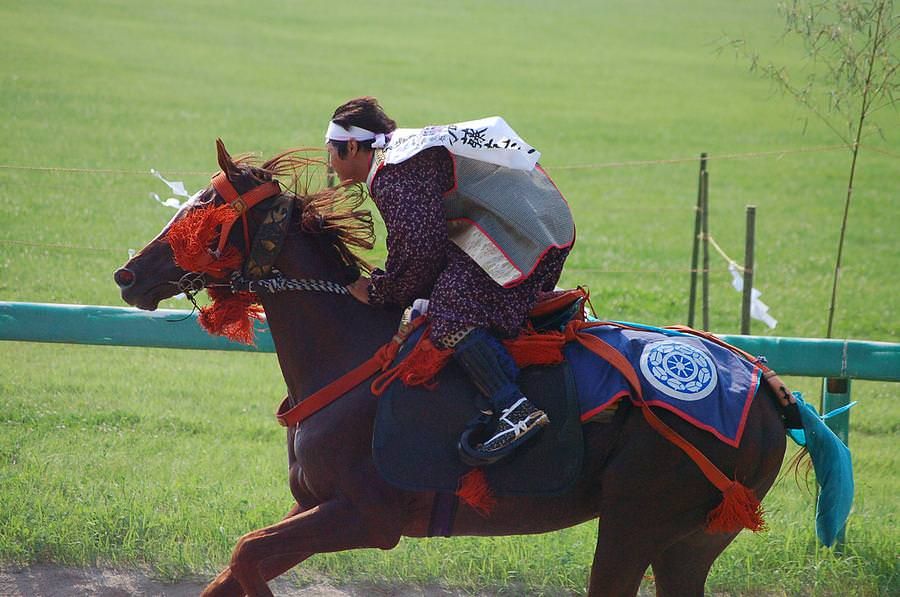
Creative Commons Hajime NAKANO
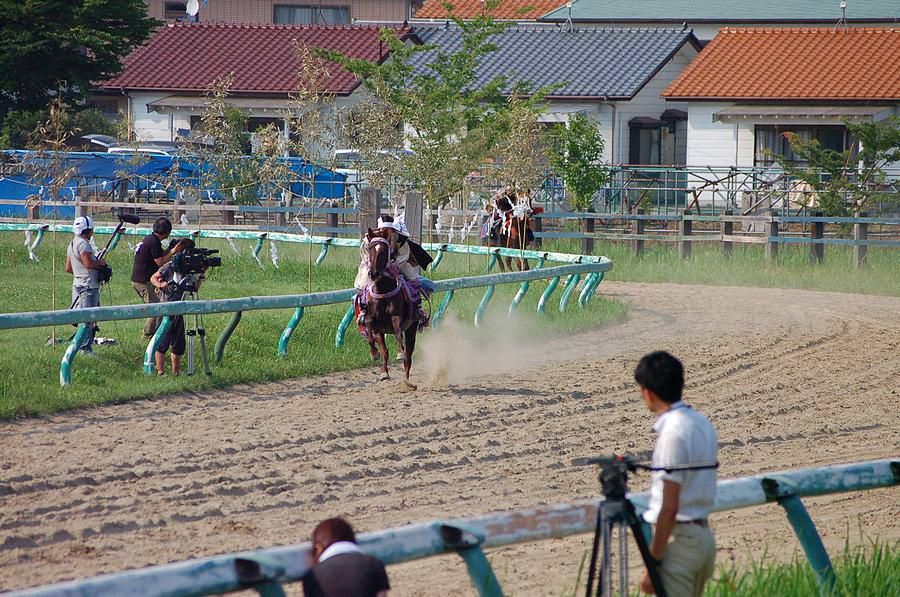
Creative Commons Hajime NAKANO