
Sugamo
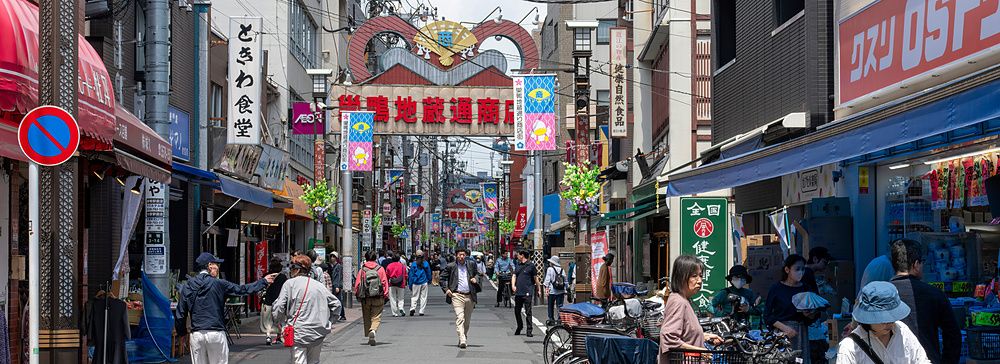
Sugamo is Tokyo in no hurry, and that’s exactly why I like it. There are no skyscrapers to photograph and no crossings to rush across. The pace here is set by the older people who fill a street about 800 meters long, shopping bags in hand and with all the time in the world.
People call it Grandma’s Harajuku, and the nickname says it all. It’s the same kind of shopping street, just aimed at people over eighty instead of fifteen-year-olds, with a couple hundred shops and restaurants. Hardly any tourists put this part of the city on their itinerary, and I think that’s a shame, because it shows you far more of everyday Japan than plenty of big-name sights do.
Contents
Restaurants

Nearby neighborhoods
Days ending in 4
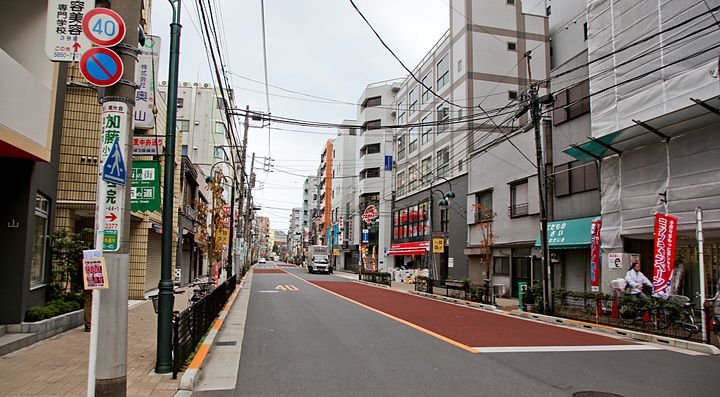
On days with a 4 in the date, the street turns into a different place. The market on days ending in 4 started when the original festival on the 24th, Jizo day, grew to include stalls on two more days each month. So I’d suggest coming on the 4th, 14th or 24th, when the street is at its liveliest and packed with people.
On those dates you catch it at its best, with stands selling sweets, clothes, knickknacks and secondhand stuff one after another, and prices stay low. On regular days everything moves more slowly and some stalls are missing, but to me it’s still worth the walk, because you get to see neighborhood life without the crowds.
Don’t expect trendy little spots or English menus on every corner. This is a street of long-established shops and food stores, where people come to actually shop, not to take photos.
What you’ll find in the shops
The shop windows on Jizo-dori are the most fun part, because they display things you won’t find anywhere else in Tokyo. There are tea shops, stores selling supplies for Buddhist altars, stands with comfortable clothes and wide-width shoes, and more than one window full of walking canes.
There’s even a whole chain built around red as a lucky color. Maruji has several shops on the street, including one just for women.
When it comes to food, the local specialty is still sweets with a touch of salt. The old shop that makes salted daifuku has been in business since 1937 and nearly always has a bit of a line. Nearby you’ll find hand-toasted senbei, anpan and a few stands where you eat standing up.
The color red and Koganji Temple
The first thing that jumps out at you is the color red. The shops sell red underwear in every size, worn as a good-luck charm for health and a long life, and older people really do wear it. It’s not a gimmick for tourists.
Halfway down the street is Koganji Temple, home of the Togenuki Jizo. Legend has it that someone swallowed a needle and got rid of it thanks to a scrap of paper from the temple. That’s how this Jizo got its reputation for pulling out thorns, both real ones and the thorns of worry and illness. You won’t get to see the Jizo, though. The main statue is a hibutsu, a secret image that’s never shown to the public. What people take home is the omikage, a slip of paper barely bigger than a postage stamp with the Jizo’s figure printed on it, which you pick up inside the main hall. When something hurts, you swallow it with a sip of water, which is exactly the remedy in the needle story.
Out front stands the Arai Kannon statue. You pour water over the figure, then take a cloth and rub the part of the statue that matches the spot where your own body hurts, hoping the pain will go away. There’s almost always a quiet line of older people, each one polishing the statue’s shoulders, knees or back.
Before you leave, try the local sweet, salted daifuku: a ball of mochi filled with bean paste, with a pinch of salt that cuts the sweetness. The Somei-Yoshino cherry trees are named after this very corner of the city, and if you have time left, Rikugien Garden is one train stop away. A little farther on is Ikebukuro, if you’re ready for Tokyo at full speed again.
Getting There
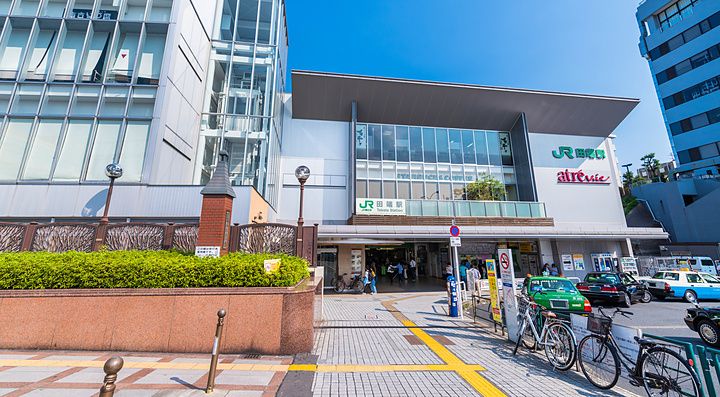
The street starts right by Sugamo Station. Take the North Exit, cross the big avenue, and in five minutes you're standing under the red sign for Jizo-dori, at the busier end. From the Mita subway line it's even quicker, since Exit A3 puts you right at the entrance.
The nicest way to arrive is still the tram. Get off at Koshinzuka and walk the street from its quieter end, heading toward the main station.
Useful Info
Name: Sugamo
Time needed: 1–2 hours for a walk with a few stops, a bit longer on market days
Tips: If you can, aim for a day with a 4 in the date. The stalls make the street twice as lively, and the temple keeps its gate open until 20:00 instead of 17:00. On other days, enjoy the quiet and actually go into the shops. You can get by with gestures, and nobody's in a hurry.
Getting there:
- Sugamo Station (JR Yamanote, Toei Mita): North Exit or Exit A3
- Koshinzuka stop (Tokyo Sakura Tram, the former Toden Arakawa Line): at the other end of the street
- Otsuka Station (JR Yamanote): about 8 minutes on foot
Map
MarcoMaps100% free
This place is on MarcoMaps
Sugamo
My map of Japan: over 4,000 places I've tried myself, each with photos, rating, and hours. Filter by category and rating, find veg-friendly spots and places near you with GPS. No sign-up, right from your phone.
- 4,000+ places
- Rating, photos, and hours
- Veg friendly
- Near me (GPS)
- Favorites without login
- Works offline

