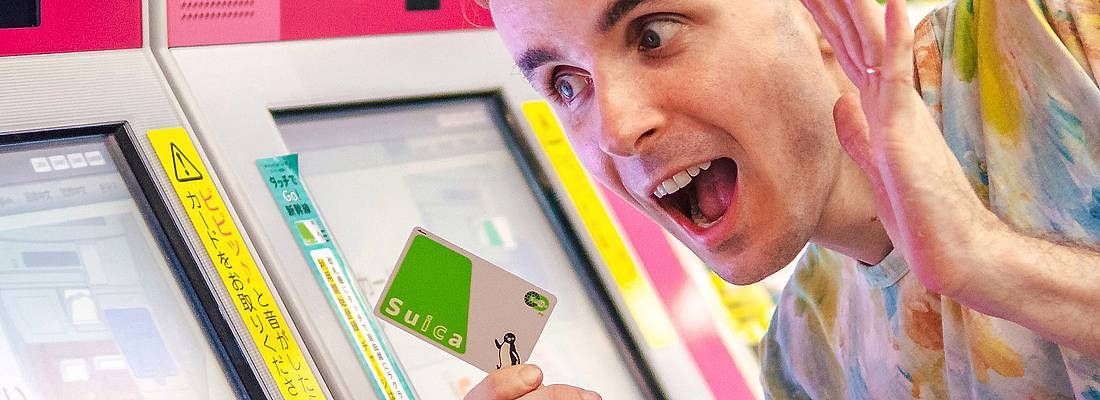
Suica and Pasmo IC Cards
You can buy a ticket every time you ride a local train in Japan, but it’s a real hassle and it wastes a lot of your time. I strongly recommend getting a rechargeable prepaid card instead. There are two main ones, the Suica and Pasmo IC cards, and having one is essential.
You can buy them and top them up at ticket machines. With rare exceptions they don’t get you any kind of discount, but they’re hugely convenient: you tap the card at the gate and walk through, and you never have to figure out what each trip costs.
Contents
They work all over Japan
Suica and Pasmo are identical, and you can use them anywhere in Japan. If you buy an IC card in Osaka, it’s called Icoca there, and of course it works in Tokyo too. All these cards are compatible with each other, so it makes no difference which one you get.
Just remember that the shinkansen works differently. You can’t board it just by tapping your card at the gate like you do on local trains: you need to register your card online first with a dedicated service like Touch de Go! Shinkansen or Smart EX. For all other transportation, your card works pretty much everywhere.
| Suica | Pasmo | |
|---|---|---|
| Where to buy it | JR stations | subway stations |
| Where it works | local trains, subways and buses all over Japan | local trains, subways and buses all over Japan |
| Deposit | 500 yen | 500 yen |
| On iPhone | yes, in Wallet | yes, in Wallet |
| Shinkansen by tapping at the gate | no | no |
If you buy it in Osaka it’s called Icoca, and it works the same way in Tokyo.
How to top up
Topping up is really easy:
- Insert the card into a ticket machine. The screen will show your remaining balance.
- Select the amount you want to add.
- Put in the cash.
Top-ups at the machines are cash only, though. Credit cards aren’t accepted, so always keep a few bills on hand. If the screen is all in Japanese, look for the English button, which you’ll find pretty much everywhere. You can also top up at the register in a conbini: just tap your card and tell the cashier how much you want to add.
At a conbini register it’s even easier: tap your card and say how much you want to add.
Saving money at the airport
Until a few years ago, at Narita Airport you could buy a Narita Express ticket bundled with a Suica. It cost 3,500 yen and got you both the train ride and a rechargeable Suica with 1,500 yen already on it. That deal is no longer available, but there’s now a discount for tourists that brings the Narita Express round trip down to 5,200 yen, compared with the regular fare of about 6,300 yen. If you use this discount, you’ll have to buy your Suica separately from one of the many machines. You’ll find them right in the airport, just before the gates to the Narita Express platforms.
Is the Japan Rail Pass worth it for Tokyo?
I’d strongly advise against using the Japan Rail Pass on the days you spend in and around Tokyo, because it’s very expensive. If you decide to get one anyway, start it on the first day you leave Tokyo for a city that’s fairly far away, like Kyoto or Osaka, or somewhere even farther. Keep in mind that the pass has become a lot more expensive. It no longer pays for itself on the classic Tokyo-Kyoto-Osaka route, and it only makes sense if you line up lots of long trips. If you’re only going to places near Tokyo, like Nikko or Kamakura, the Japan Rail Pass isn’t worth it.
Day passes in Tokyo
You can get a pass for one day or several, but I’d generally skip that too. Each pass only covers one railway company, and since tourists usually ride both Tokyo Metro and JR (and other companies’ trains too), you’d almost certainly end up buying some tickets anyway, which makes the pass pointless.
If you’re staying in Tokyo for a long time and you know you’ll ride the same route over and over, for example to get to school or work, you can buy a one-month or three-month commuter pass. It isn’t cheap, but if you make that trip every day you’ll save a little. You can buy it at the ticket machines.
If your balance is too low at the gate
If your balance doesn’t cover the fare when you try to leave the station, the gate closes and a red light flashes. Don’t panic, it happens to everyone. Right next to the exit gates there are fare adjustment machines: hold your card to the reader, the screen tells you how much you’re short, you put in the cash and you’re done.
You can also go to the staff member in the booth next to the gates, who’ll sort it out in a few seconds without you needing to speak Japanese. To avoid getting stuck just as you’re rushing to catch a train, always keep a healthy balance on your card.
Other ways to use them
Suica and Pasmo also work at vending machines, coin lockers and any store that accepts them. When it’s time to pay, just tap the card on the reader.
| Where | With the card |
|---|---|
| Local trains and subway | yes, tap the card at the ticket gate |
| Buses | yes |
| Conbini and stores with a reader | yes, at the register |
| Vending machines | yes |
| Coin lockers | yes |
| Shinkansen | not by tapping at the gate: you need Touch de Go! Shinkansen or Smart EX, with the card registered online |
Suica and Pasmo on your phone
If you have an iPhone, you can skip the plastic card altogether. You can add Suica and Pasmo straight to the Wallet app and top them up with a credit card wherever you are, even before you leave, without hunting for a machine at the station. At the ticket gate you tap your phone and walk through, just like you would with the card.
If you already have a physical card, you can move it to your phone by holding the card up to it. The balance transfers and the plastic card stops working, so only do it if you’re sure. Now and then a foreign credit card gets declined for top-ups. If that happens to you, top up with cash at a machine.
Android phones bought outside Japan can’t do this, because they don’t have the chip these cards need. If that’s your phone, stick with the plastic card.
Returning the card
You can return the card at a ticket office. They’ll give you back the remaining balance minus a 220-yen fee, plus the full 500-yen deposit you paid at the start. Since the cards stay valid for 10 years after you last use them, I’d keep yours (it makes a nice souvenir, too) and skip the trip to the ticket office and the line. As I mentioned, you can spend whatever’s left on it at any conbini. A Welcome Suica, the version for tourists that you may have been given at the airport, works differently. It has no deposit, it lasts 28 days, and any credit left on it isn’t refunded. If that’s the one in your pocket, make a point of spending it all before you leave.

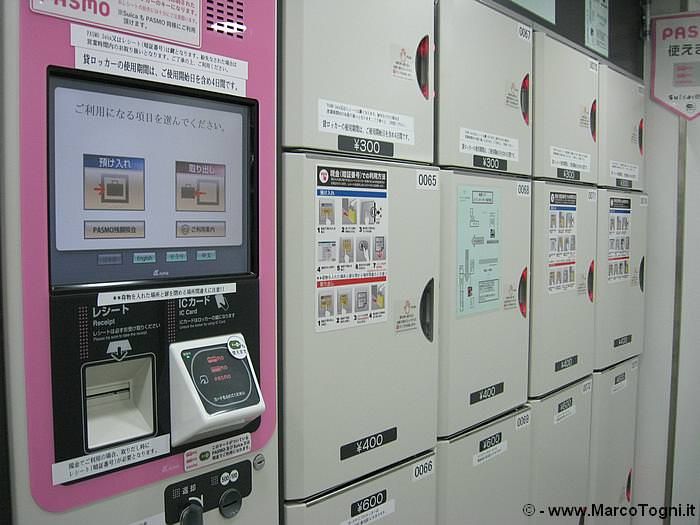
A coin locker you can use with Suica or Pasmo.