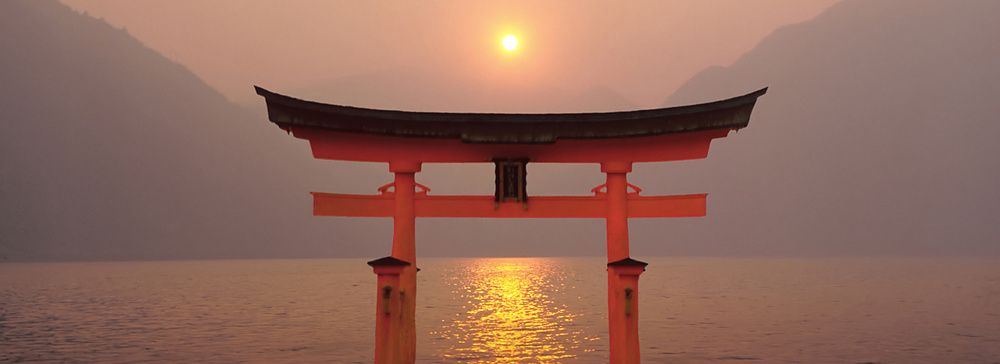
Sunrise and Sunset Times in Japan
Japan is in the Northern Hemisphere.
Here I want to give you a rough idea of sunrise and sunset times in Japan, meaning when it gets light and when it gets dark. I’m mostly talking about the middle of the country (Tokyo), but keep in mind that if you head north to Hokkaido or south to Okinawa, the times can shift by more than an hour.
The times below are approximate, not exact, because they change from day to day over the year.
Also remember that Japan doesn’t use daylight saving time, so if your country does, the gap with home can be quite noticeable in some months.
Contents
Sunrise and sunset by month
- January: sunrise around 6:50, sunset around 16:45
- February: sunrise around 6:30, sunset around 17:20
- March: sunrise around 6:10, sunset around 17:45
- April: sunrise around 5:15, sunset around 18:15
- May: sunrise around 4:30, sunset around 18:40
- June: sunrise around 4:20, sunset around 19:00
- July: sunrise around 4:30, sunset around 18:40
- August: sunrise around 5:00, sunset around 18:30
- September: sunrise around 5:20, sunset around 17:50
- October: sunrise around 5:50, sunset around 17:00
- November: sunrise around 6:20, sunset around 16:30
- December: sunrise around 6:45, sunset around 16:30
Sunrise and sunset don’t happen at the flip of a switch. The sky starts getting lighter a good half hour before sunrise, and after sunset you still have about twenty minutes of good light. Those are the minutes when the sky really lights up with color.
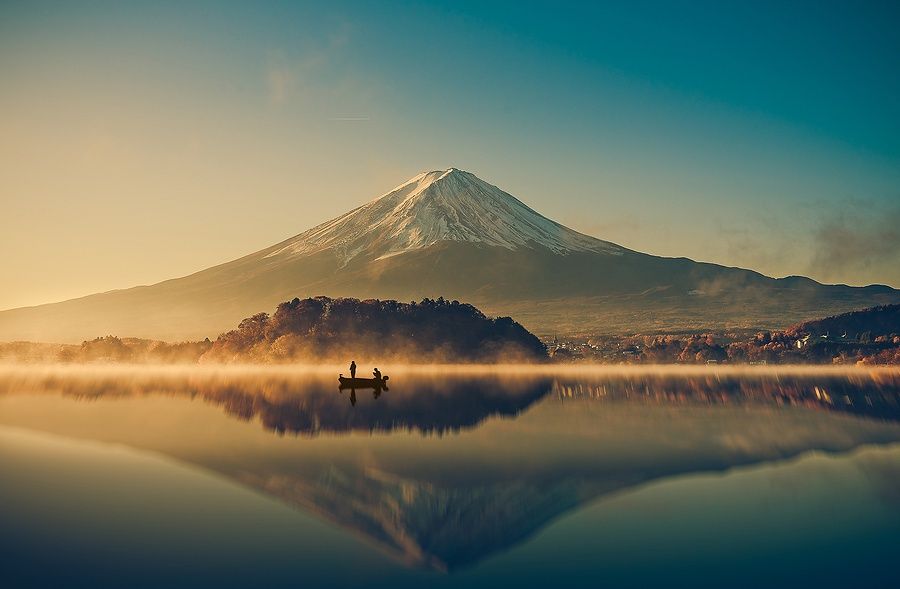
From Hokkaido to Okinawa
Use the Tokyo times as a starting point, but Japan stretches a long way north to south and you’ll definitely notice the differences. On June 21 in Sapporo the sun rises at 3:53 and sets at 19:19, while in Naha it doesn’t come up until 5:36. That’s almost two hours apart on the very same day.
In winter, it’s sunset times that differ. On December 21 it gets dark at 16:04 in Sapporo, at 16:32 in Tokyo and not until 17:43 in Naha. If your trip covers both the north and the south, don’t assume the daylight will be the same everywhere.
Time zone and daylight saving time
All of Japan is in a single time zone, based on the meridian that runs through Akashi, near Kobe. Tokyo is quite a bit farther east, so by the clock the sun rises and sets early. Add the fact that there’s no daylight saving time, and you’ll see why in June you’re wide awake at 4:20 and it’s pitch dark by 19:30.
For the same reason, if your country uses daylight saving time, your time difference with Japan isn’t the same all year: it changes by an hour whenever your clocks go forward or back.
How much daylight you get
In Tokyo the longest day of the year lasts about 14 and a half hours and the shortest just under ten, so the gap between summer and winter is less than five hours. Even in December you get enough daylight, as long as you’re out and about early.
One thing catches a lot of people off guard. The earliest sunset doesn’t fall on the solstice but comes in early December, when the sun is already gone by 16:29 in Tokyo. The latest sunrise doesn’t come until early January.