An omakasesushi counter in Daikanyama, tucked away on a narrow side street far from the foot traffic, and the kind of place you keep to yourself instead of telling everyone about. At Sushi Takeuchi you eat whatever the chef decides. The fish comes from Toyosu market that same morning, and the quality is on par with the big names.
It’s the right place when you want a serious omakase for one or two, sitting at the counter and watching the chef’s hands at work.
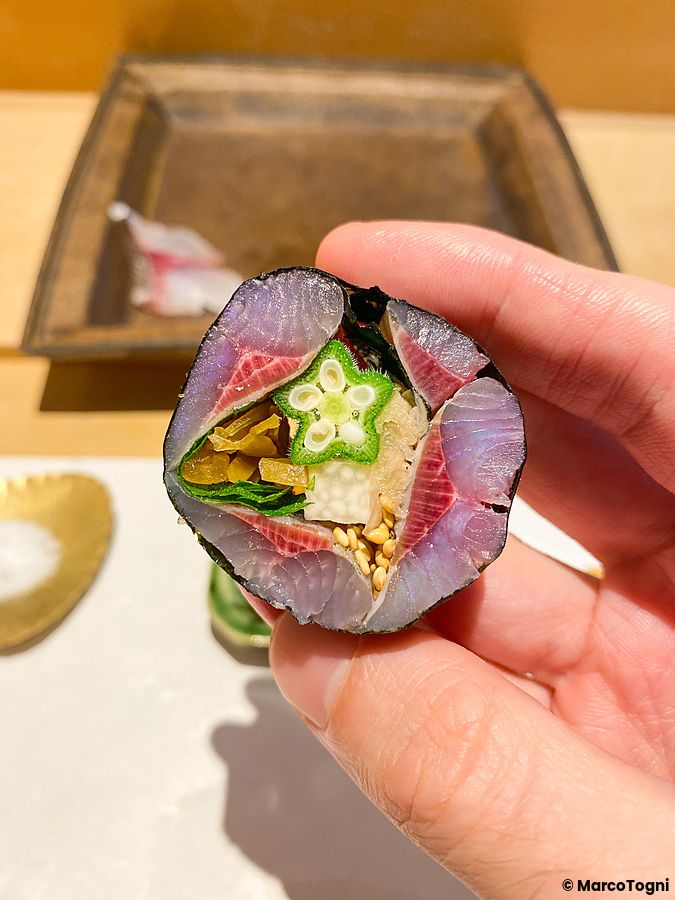
This creative maki wraps iwashi sardine and crunchy vegetables. It goes straight from the chef's hands into the diner's, to be eaten right away.
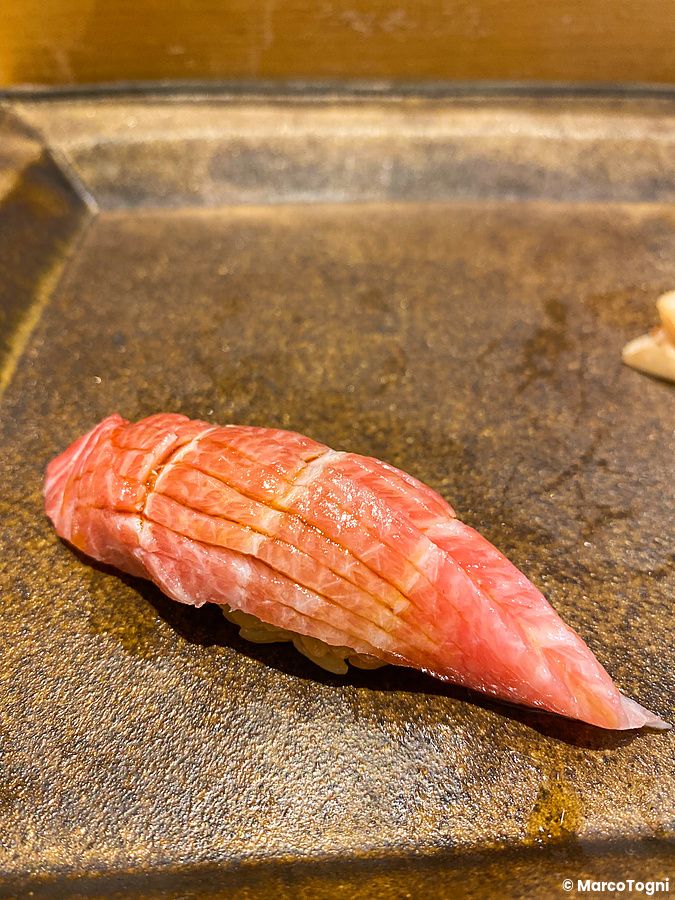
The white marbling in otoro tuna signals a high fat content.
Food and prices
There’s no menu. You get whatever’s good that day. A typical meal moves from appetizers through a run of nigiri, with a few hot dishes in between and soup at the end.
Chawanmushi: steamed egg custard, warm and soft, the kind that’s still wobbling in the bowl.
Sashimi of the day: the cut depends on what the chef finds at Toyosu that morning, not on a fixed list.
Tuna nigiri: one after another, from lean maguro all the way to the fatty cuts.
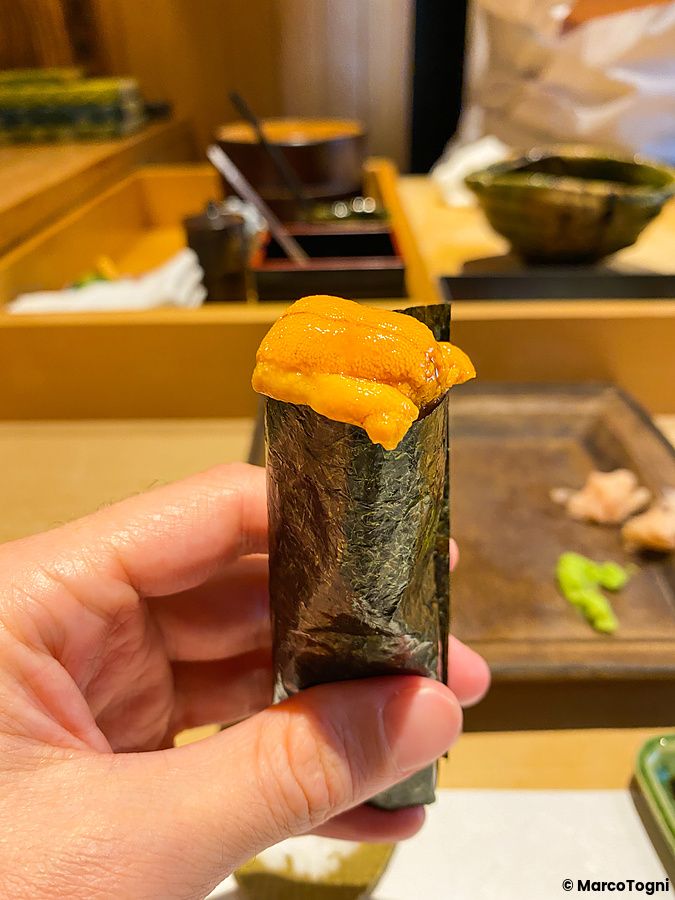
Uni: the sea urchin is sweet, without the metallic aftertaste it has when it’s mediocre.
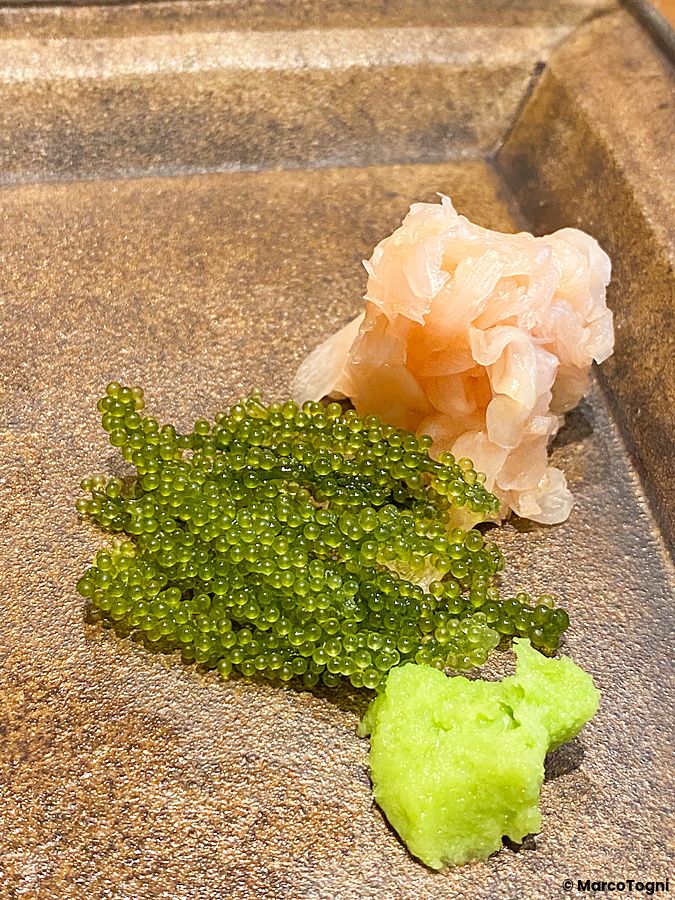
Umibudo: sea grapes, those little green clusters that crunch between your teeth and pop with a burst of salt.
Melon for dessert: perfectly ripe, so sweet you’d swear it had sugar added, but it’s just the fruit.
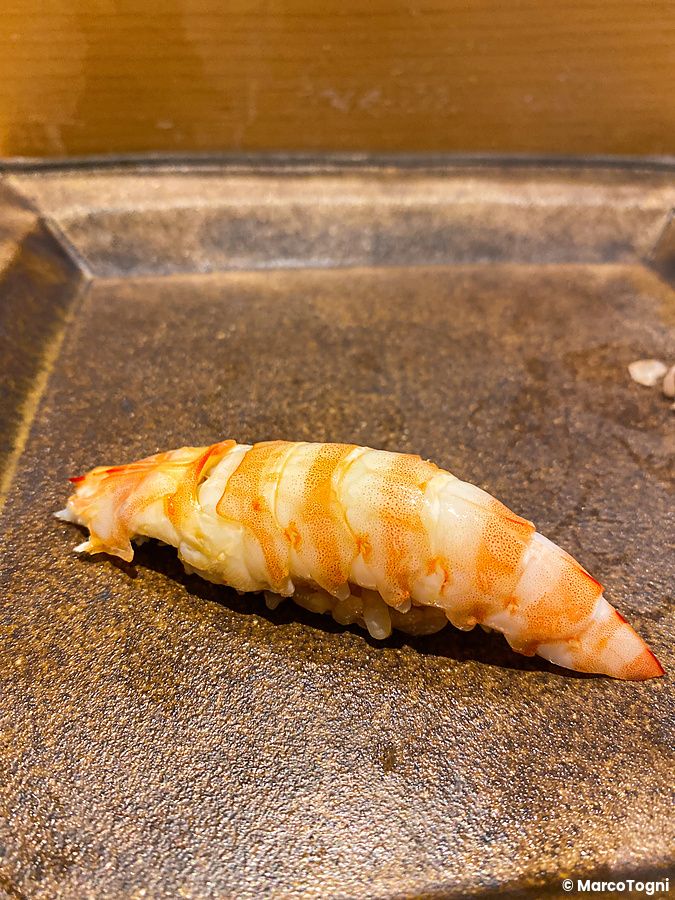
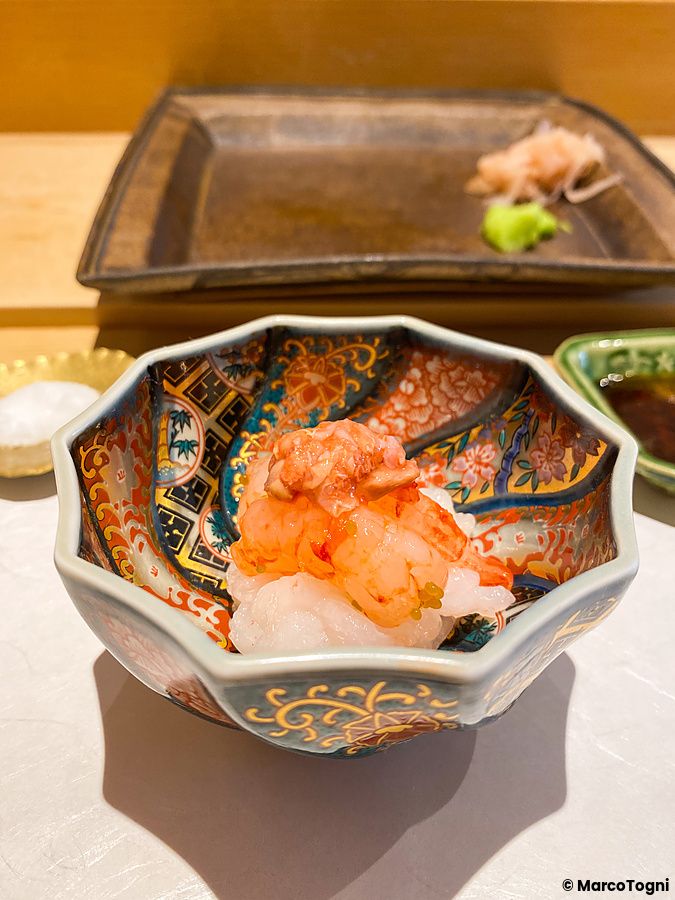
The kuruma ebi is cooked just briefly to firm up its orange-striped flesh. The shrimp is just the right size for its portion of rice.
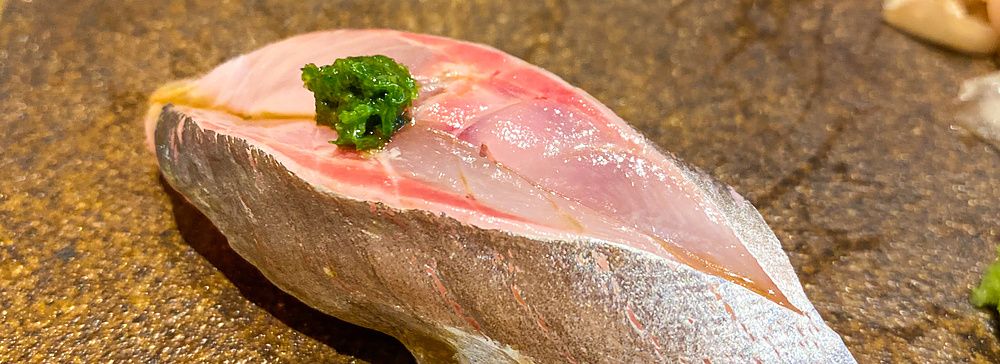
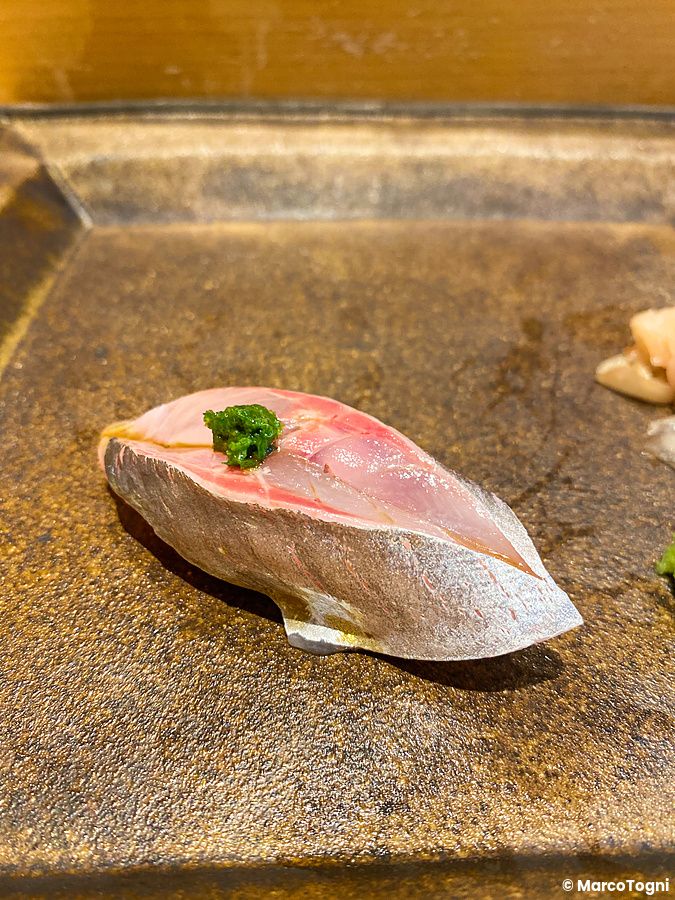
Horse mackerel often gets a dab of aromatic garnish. Don't add extra soy sauce, since the piece is already seasoned just right.
There’s no soy sauce for dipping in front of you here. Every nigiri comes already seasoned by the chef, some with a touch of citrus, some with toasted sesame, and you eat it just as it is. If you’re used to dipping it yourself, it throws you off at first, but then you realize he’s right.
The chef speaks only a little English. He tries, and he explains each fish as best he can, but if you’re hoping for a long chat in English, you’ll mostly get gestures and smiles. I don’t mind at all. If anything, I like it.
At dinner you’re looking at 20,000–22,000 yen per person including service, and lunch costs a lot less. For what comes across the counter, it’s a real bargain, and while the bill is on the high side, it’s more than justified.
When I want high-end sushi without spending a fortune, this is one of the first places that come to mind. For the price of an average omakase in this part of town, I get fish of a caliber you’d pay double for elsewhere, and I get to eat it at a more relaxed pace.
Lunch has two shorter menus at around 6,500–9,000 yen, and the bigger one also includes dishes that aren’t sushi. In the evening there’s only the full omakase, the long one that opens with appetizers and finishes with soup.
Lunch is the easiest way in if you want to get a feel for the chef’s style without too much of a commitment. If you want the whole thing, with each nigiri a step up in intensity from the last, go for dinner.
The raw shrimp stay almost translucent and come in finely decorated bowls that bring out the color of the flesh.
Orange sea urchin crowns a cylinder of rice and seaweed. Don't hesitate to pick it up with your fingers, so the delicate piece doesn't fall apart.
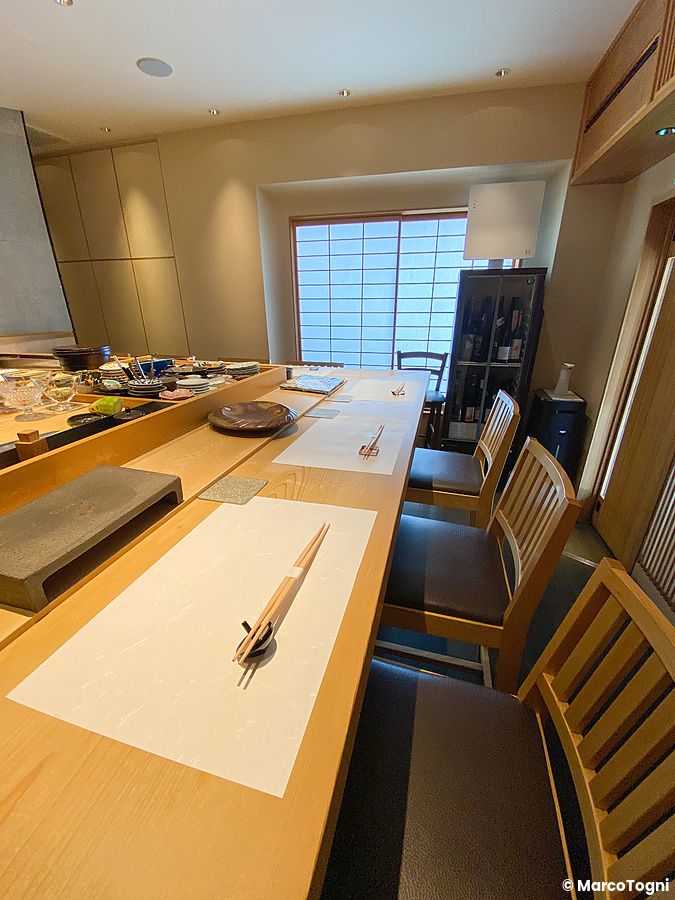
It’s counter only, just eight seats, with the chef working right in front of you, an arm’s length from your plate.
The room is elegant but not stiff, traditional in a way that lets you sit down and relax instead of feeling like you’re being judged. The chef puts you at ease from the start, and that matters as much as the fish.
He comes out of the Sushi Saito and Sushi Kanesaka school, two names that carry a lot of weight in the sushi world, and you can see his technique with the rice and the cuts in every piece. He’s broken away from that school, though. He doesn’t do textbook edomae, and between the classic nigiri you get combinations you wouldn’t find at a traditional counter, from creative maki to garnishes that change from piece to piece. It’s a personal touch, not a trend. His rice and knife work is still old school; what’s changed is the way he seasons.
The tiny beads of umibudo seaweed pop in your mouth and release an intense taste of the sea. An unusual nigiri that leaves your palate clean and fresh.
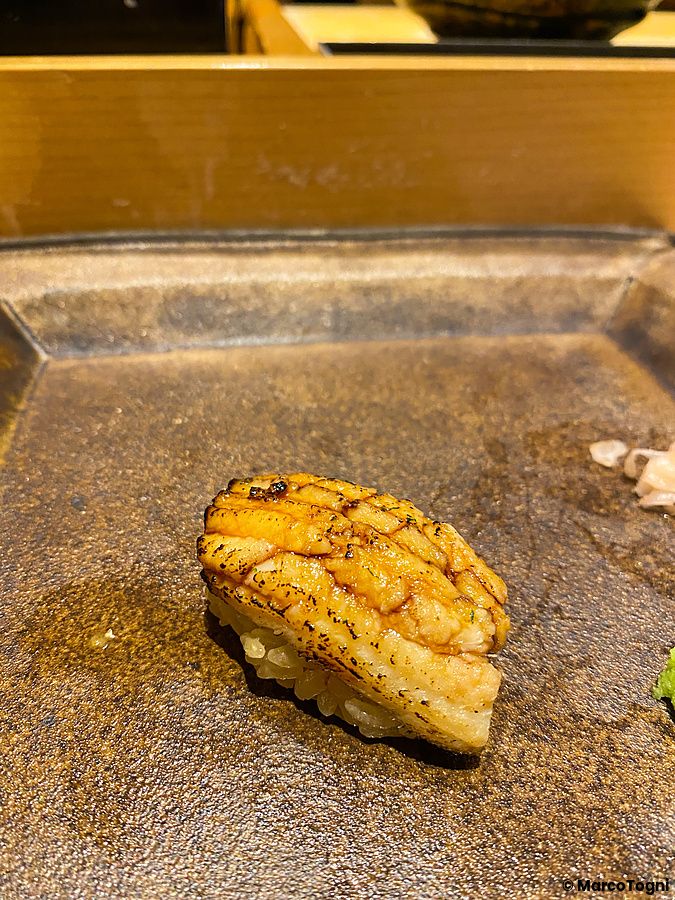
The anago eel has clear grill marks and is brushed with a thick sauce. It usually comes toward the end of the meal.
High-end omakase at a price well below the big-name places, with lighter options at lunch
Fish bought at Toyosu that same morning, with every nigiri already seasoned by the chef’s own hands
A chef from the Saito and Kanesaka school who’s down-to-earth from the very first piece
Cons:
The bill is still on the high side, especially at dinner
Not much English: if you want detailed explanations, it comes down to gestures
Best for: omakase on your own or for two, at lunch or dinner, in a quiet corner of Daikanyama.
Atmosphere: a small eight-seat counter, bright lighting and an elegant, relaxed feel, with the chef working right in front of you.
The light wood counter is where the whole dinner plays out. With only a few seats, you get to watch every single cut up close.
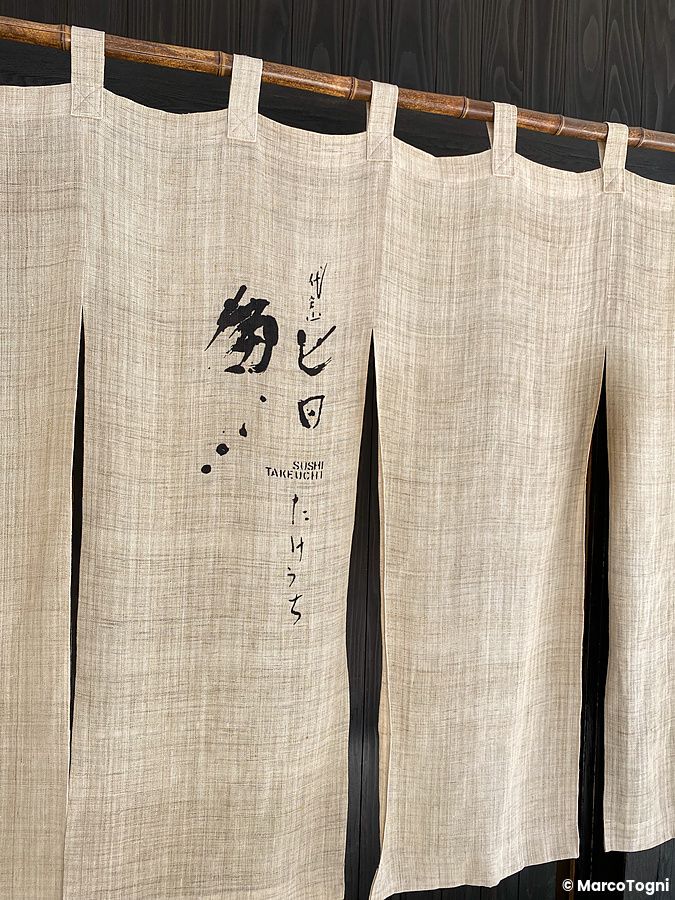
The noren curtain marks the restaurant's entrance. Once you step through it, the noise of the street disappears completely.
Final thoughts
What sticks with me when I walk out of Sushi Takeuchi is the sea urchin, sweet and clean, along with the chef’s hands seasoning each piece in front of you without ever asking how you want it. You just trust him. If you’re only going once, show up with no expectations about what you’ll eat and let him decide, because the fish changes every day and the surprise is half the fun.
With just eight seats, you get something that never happens in big dining rooms. You chat with the person next to you, everyone watches the same knife, and by the end you feel more like a guest in someone’s home than a customer. Tokyo doesn’t have many counters like this, and almost none on a quiet little street like this one. Go, and then go back.
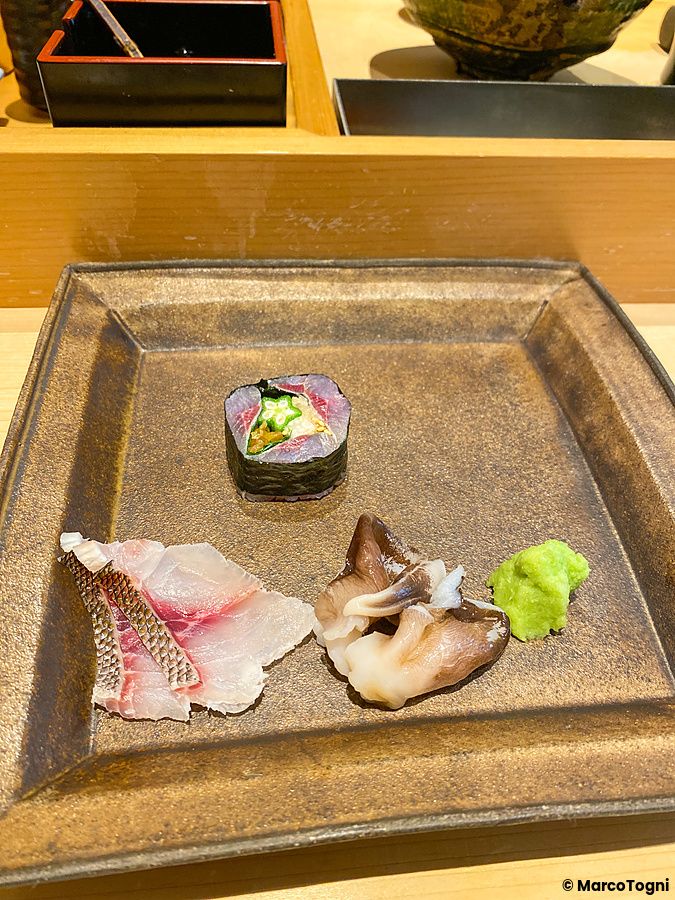
A sashimi selection with torigai shellfish and vegetarian maki. It's customary to start with the most delicate flavors so you don't overwhelm your palate.
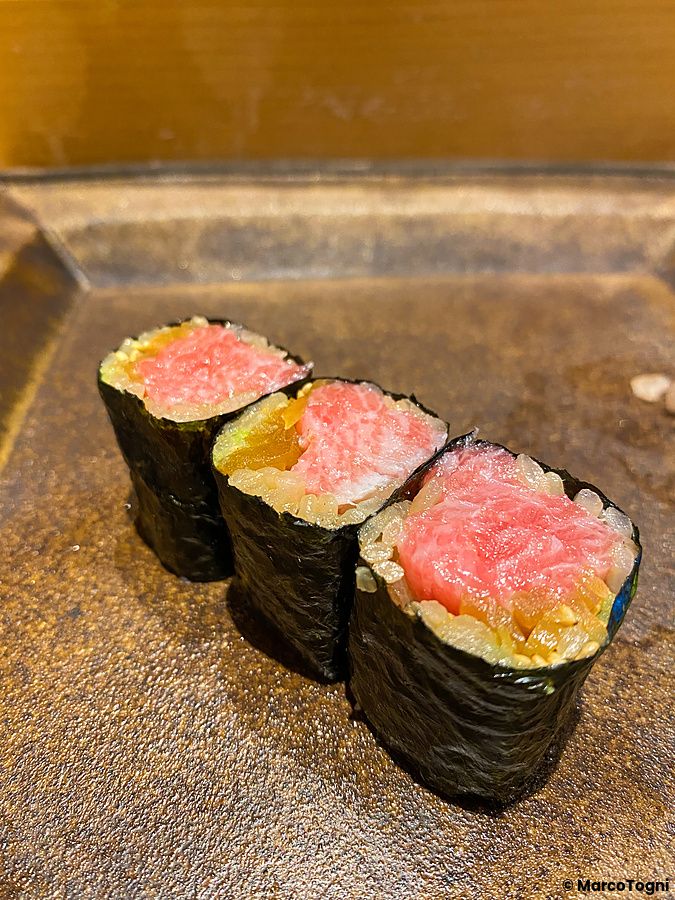
Bluefin tuna maki often show up at the end of the meal. The nori should be crisp when you bite into it, never chewy or damp where it touches the rice.
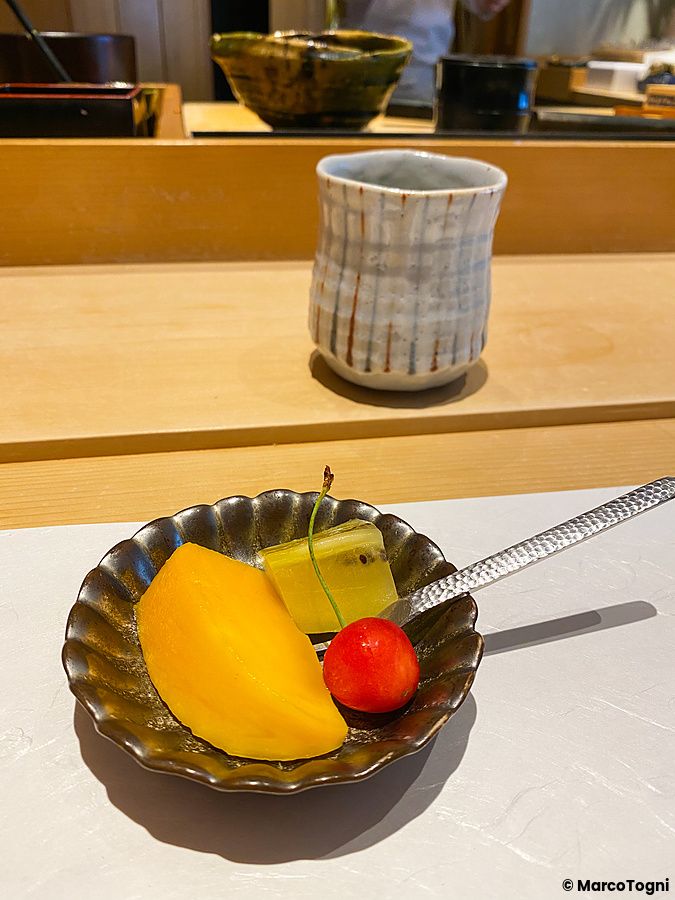
The meal ends with a selection of fresh fruit such as mango and cherries. A simple, clean finish that doesn't leave you feeling heavy.
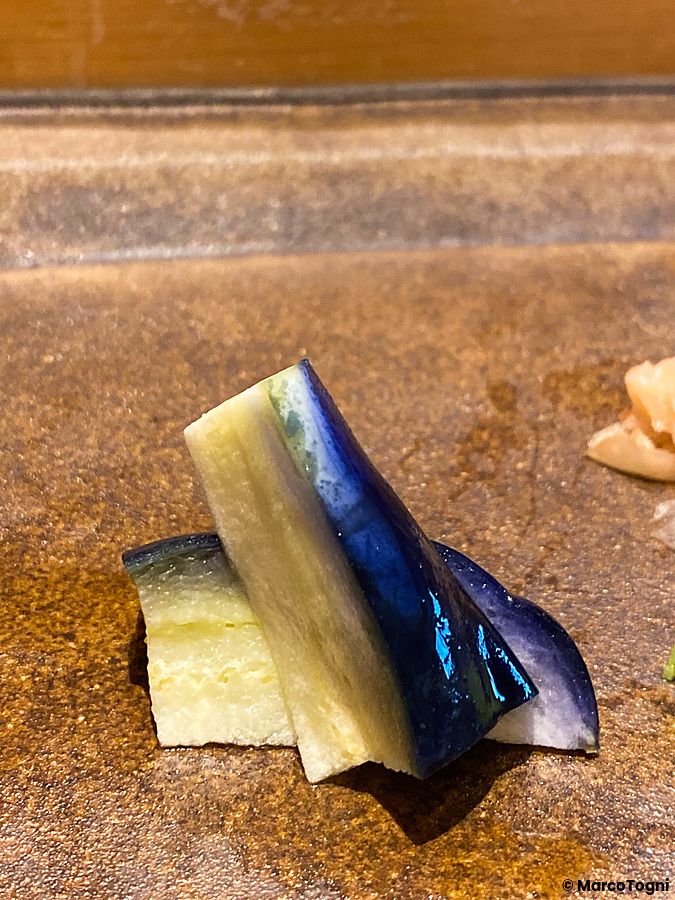
Vegetables get their turn at the counter too. The glossy purple-skinned eggplant is prepared with great care, and its texture comes as a surprise.
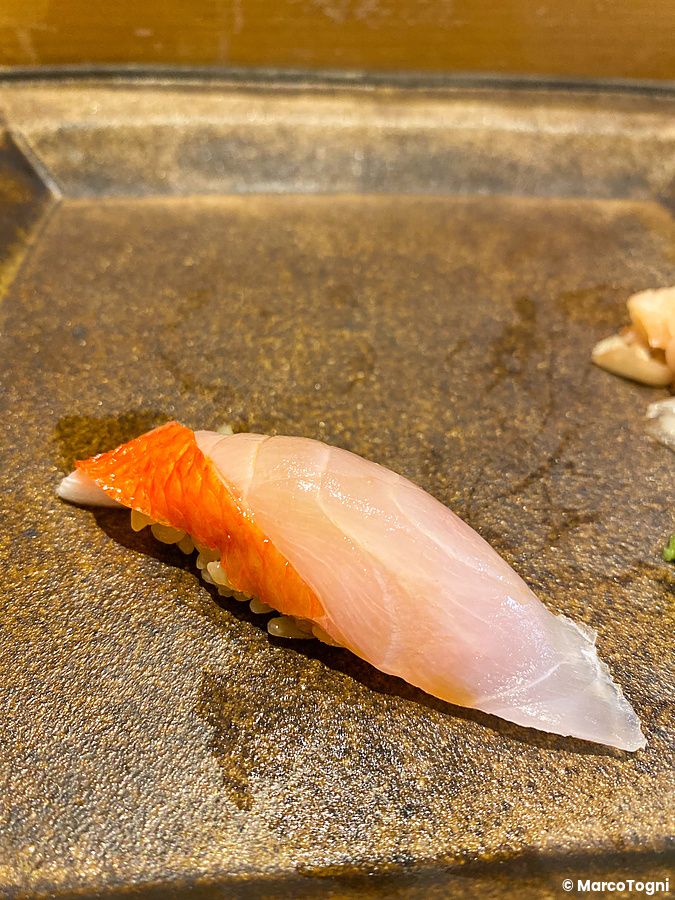
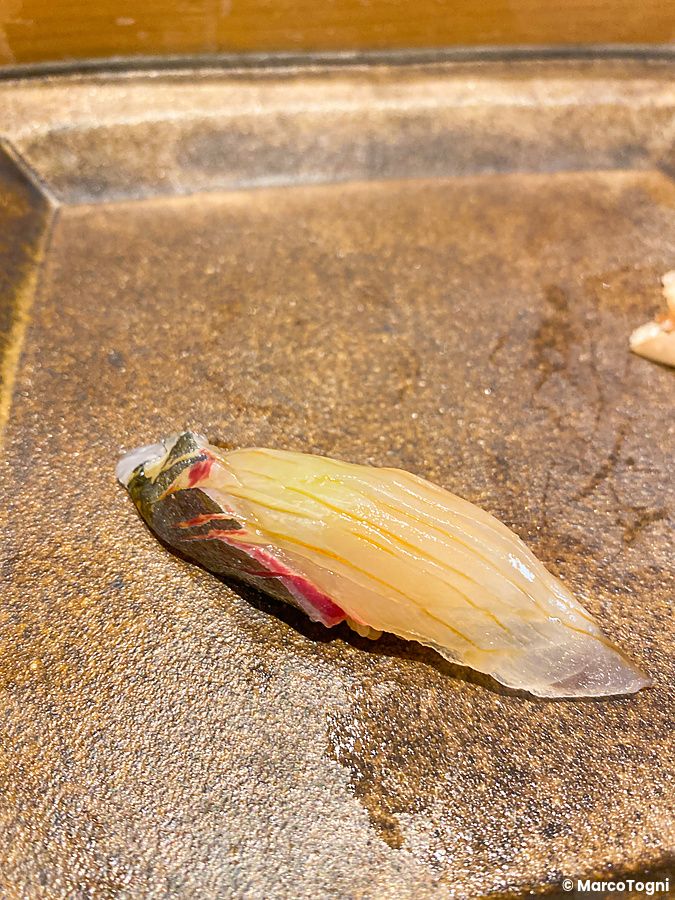
The red skin of the kinmedai stands out sharply against the ceramic plate. It's a deep-water fish with a particularly rich, sweet flavor.
The shima aji fillet has pinkish tones and a balanced fattiness. The pieces are set on dark, rough plates that make the fish stand out.
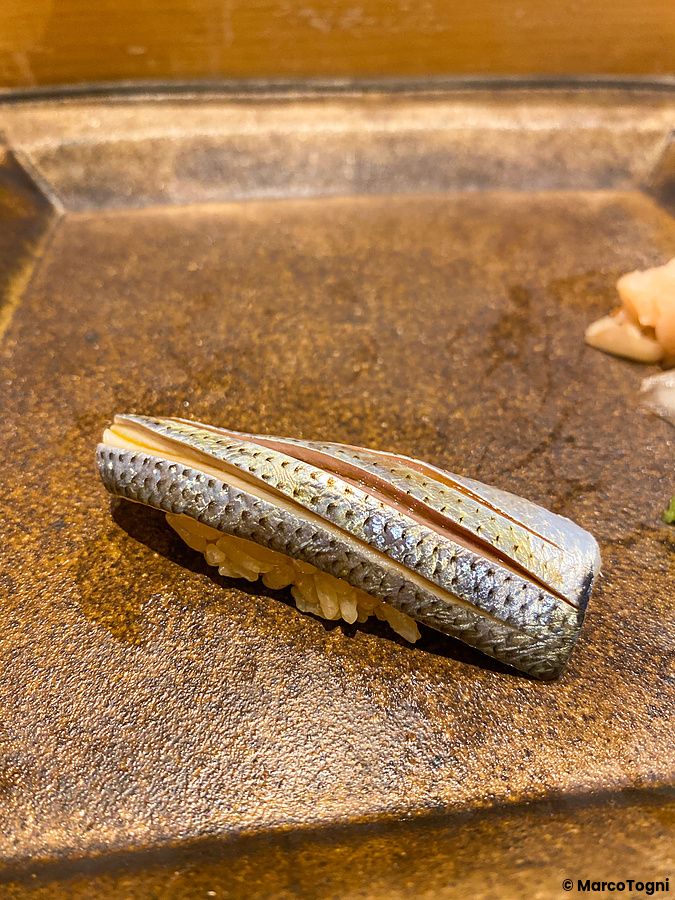
Kohada, with its silvery markings, needs careful marinating. It's a real test of the sushi chef's skill.
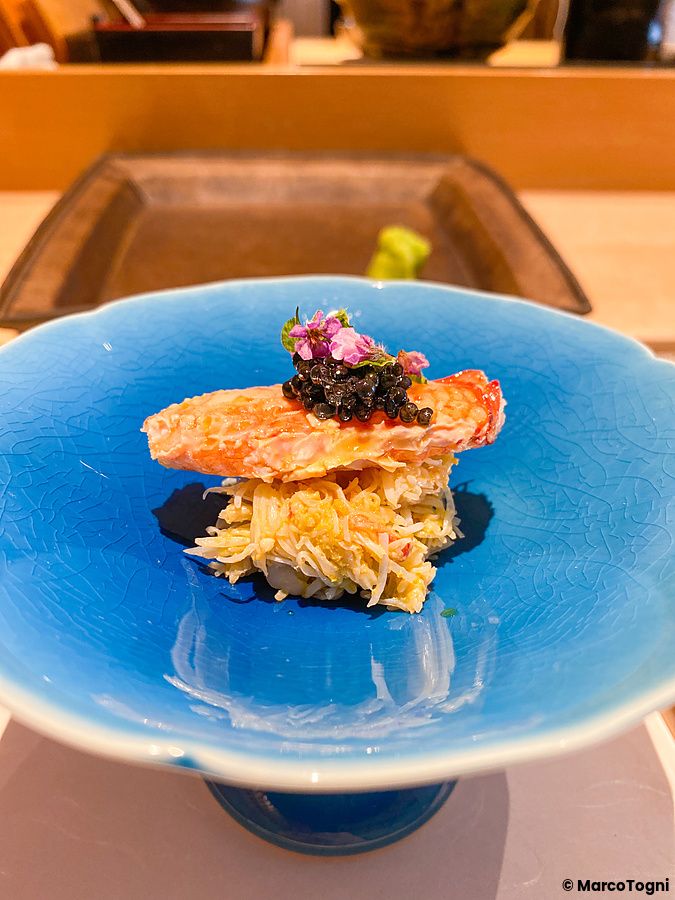
An appetizer of shredded crab and caviar served in blue ceramic. The intense flavors of the sea get your palate ready for the raw fish.
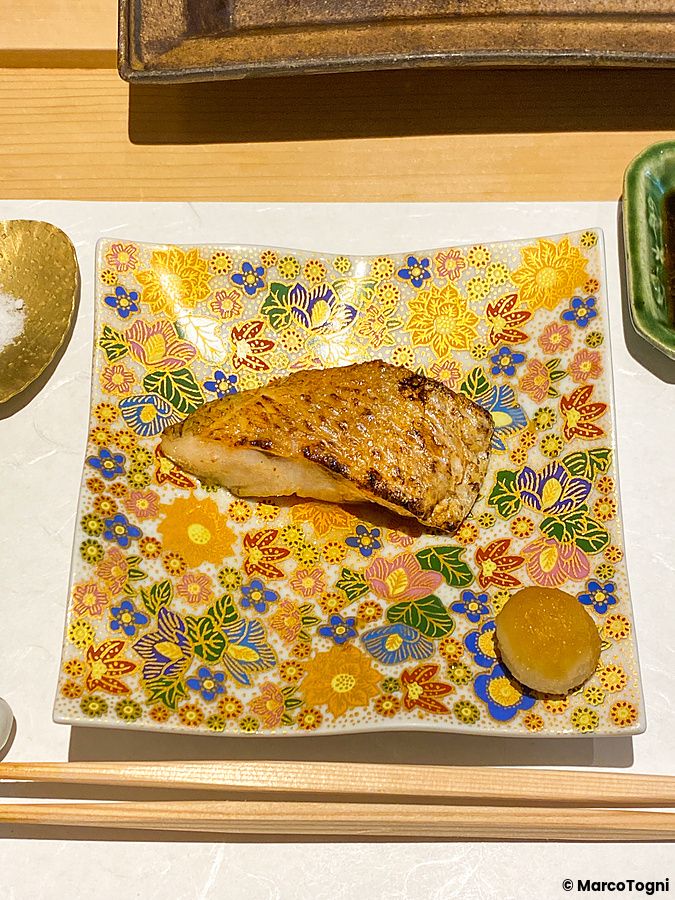
Grilled nodoguro releases its rich fat as it hits the heat. This hot course breaks up the run of cold dishes perfectly.
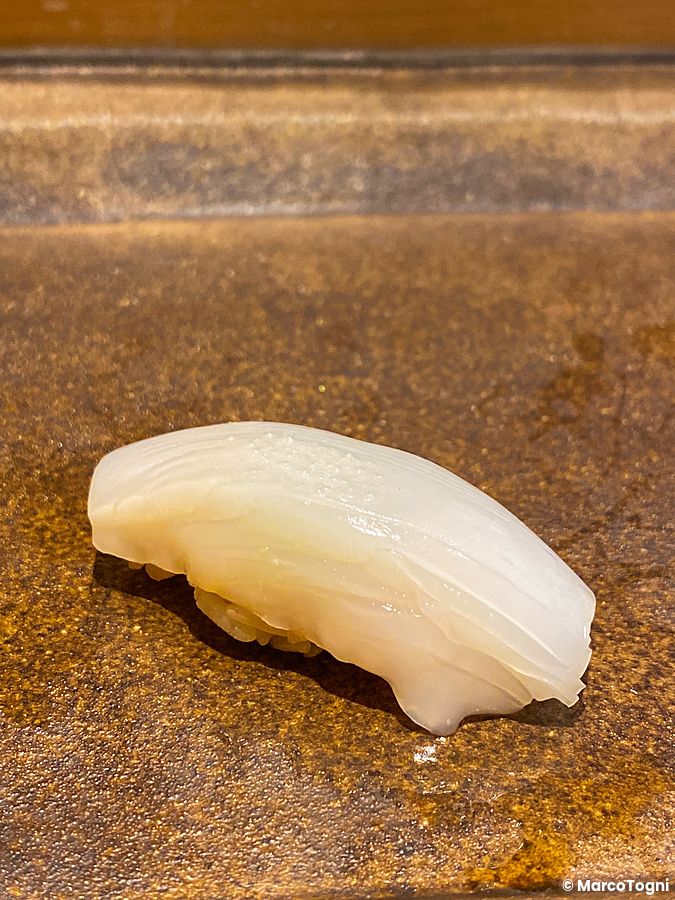
You can tell sumi ika cuttlefish by its pure white color and precise cut. It has a crisp bite and melts quickly in your mouth.
Getting There
From Daikanyama Station it's about a 10-minute walk toward Sarugakucho. You leave the shopping streets behind and turn onto a quiet side street, where the only sign of the entrance is the noren curtain. From Shibuya it takes about the same, and from Ebisu around 15 minutes, so if you're exploring these areas you can fit it in without a detour.
Time needed: About 2 hours at dinner, which is served in seatings. Lunch is closer to an hour and a half.
Closed: Besides its weekly day off, it also closes on the second and fourth Thursdays of the month, plus a year-end break from late December to the first few days of January.
Booking: With only eight seats at the counter, you basically have to book. Dinner is booked online, while lunch takes a phone call. Book well in advance for weekends, and keep in mind that last-minute cancellations are charged in full.
Tips: Don't expect a little dish of soy sauce. Every nigiri comes already seasoned by the chef, and you should eat it right away, the moment he hands it to you. Dress with a bit of care, since tank tops and flip-flops aren't welcome. And no strong perfume: at an eight-seat counter, everyone can smell it.
Getting there:
Daikanyama Station (Tokyu Toyoko): the closest
Shibuya Station (JR Yamanote, Ginza, Hanzomon, Fukutoshin, Keio Inokashira)
Ebisu (JR Yamanote, Hibiya subway line) is also within walking distance
Address: Japan, 〒150-0033 Tokyo, Shibuya, Sarugakucho, 5−8 MI代官山 1F
My map of Japan: over 4,000 places I've tried myself, each with photos, rating, and hours. Filter by category and rating, find veg-friendly spots and places near you with GPS. No sign-up, right from your phone.
 468 m