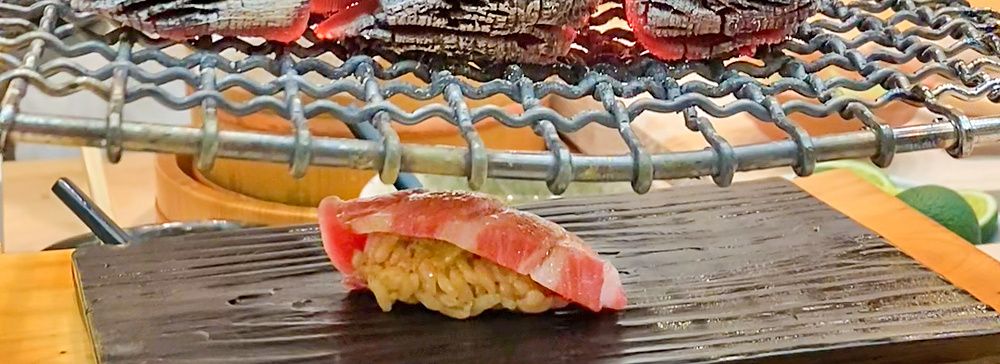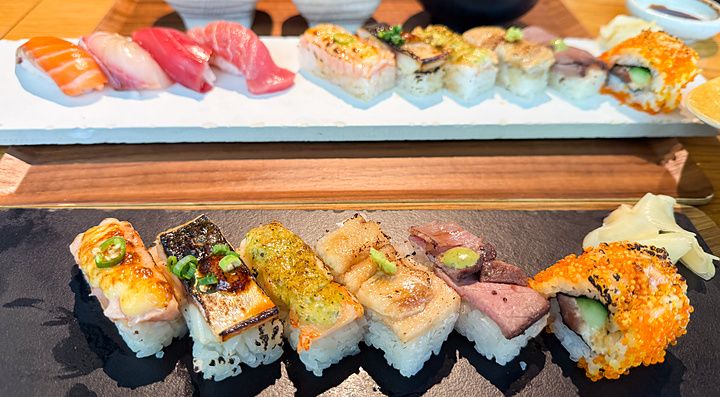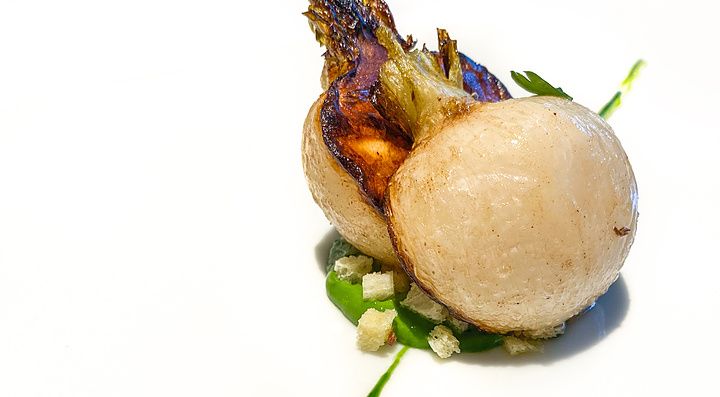
An otoro nigiri being seared with hot charcoal at Sushi Tou, while a chef handles the embers on a grill.

Sushi Tou

An omakase sushi counter in the Nishiazabu area of Roppongi, where the house signature is fatty tuna seared over charcoal and served still warm.
Sushi Tou is set inside a renovated old Japanese house, and the chef puts together every piece right in front of you.
You come here for a special dinner, a birthday or one of those nights when you want to treat yourself, not for a quick bite.
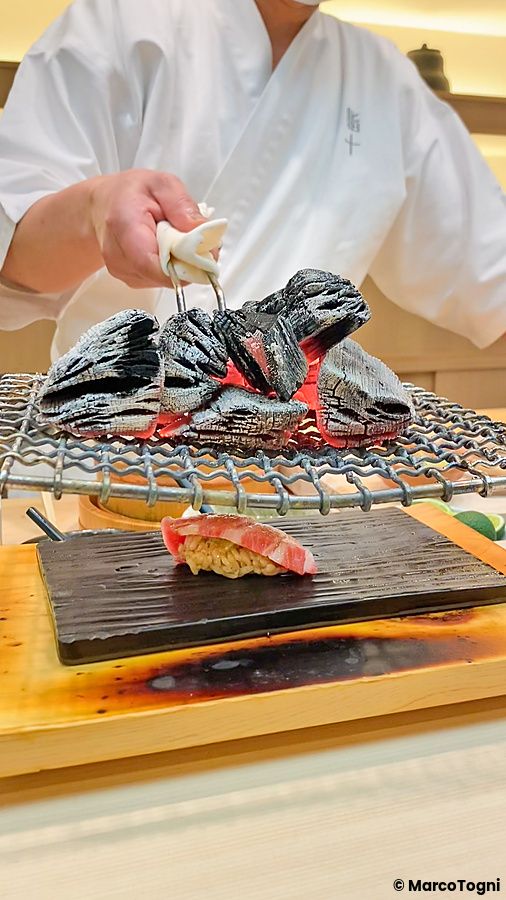
A piece of sushi warmed by hot coals on a metal grill, with a chef working the grill at Sushi Tou in Tokyo.
Here the chef holds glowing coals with tongs to sear the surface of the fish. The technique gives the cut a light smoky note.
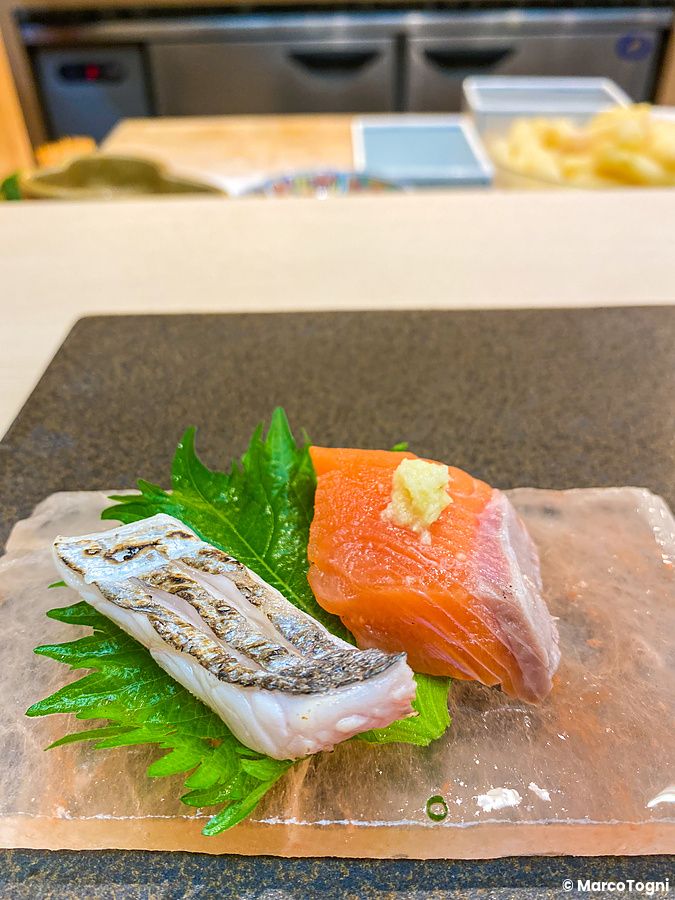
Tachiuo (beltfish) and masunosuke salmon on pink salt at Sushi Tou, served on green leaves on a wooden counter.
The pink salt block is the base for salmon and cutlassfish. Direct contact seasons the fish, so there's no need to add soy sauce.

Food and prices

It’s omakase only. You pick a menu and the chef takes it from there, moving between cooked bites, sashimi and nigiri all the way to dessert.
  • Charcoal-grilled otoro: the fattiest cut of the tuna, warmed over charcoal right then and there. It reaches you tender, with a light smoky aroma.
  • Three kinds of tuna: soy-marinated akami, chutoro and charcoal-grilled otoro, served one after another so you can taste how the fat changes from cut to cut.
  • Uni nigiri: sea urchin on rice, sweet and creamy.
  • Rice in a crab shell: kegani topped with uni and salmon roe, one of the courses on the more elaborate menus.
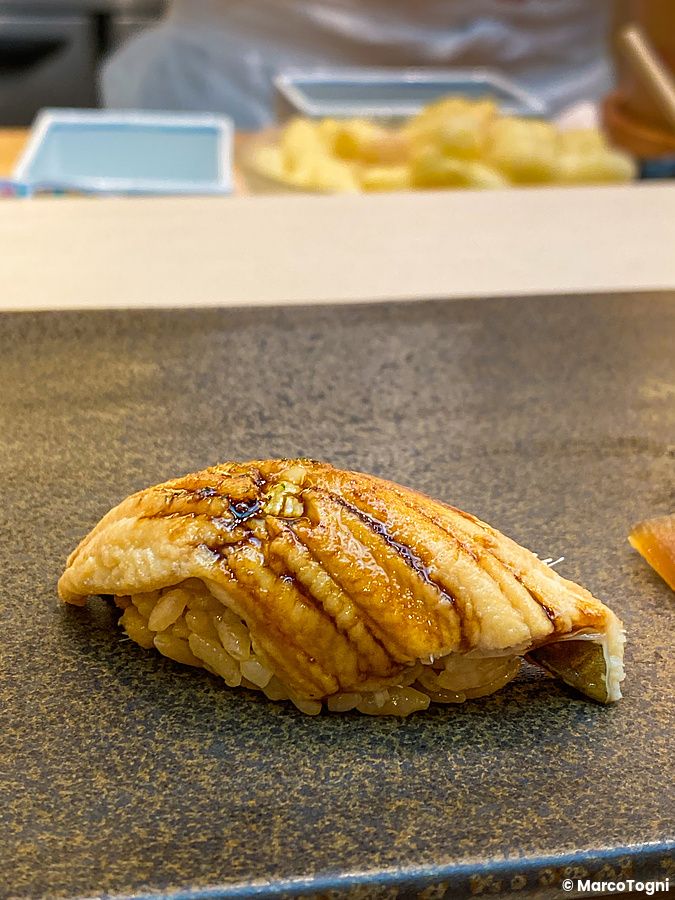
  • Anago: conger eel cooked slowly and rested for a day, then warmed on the outside.
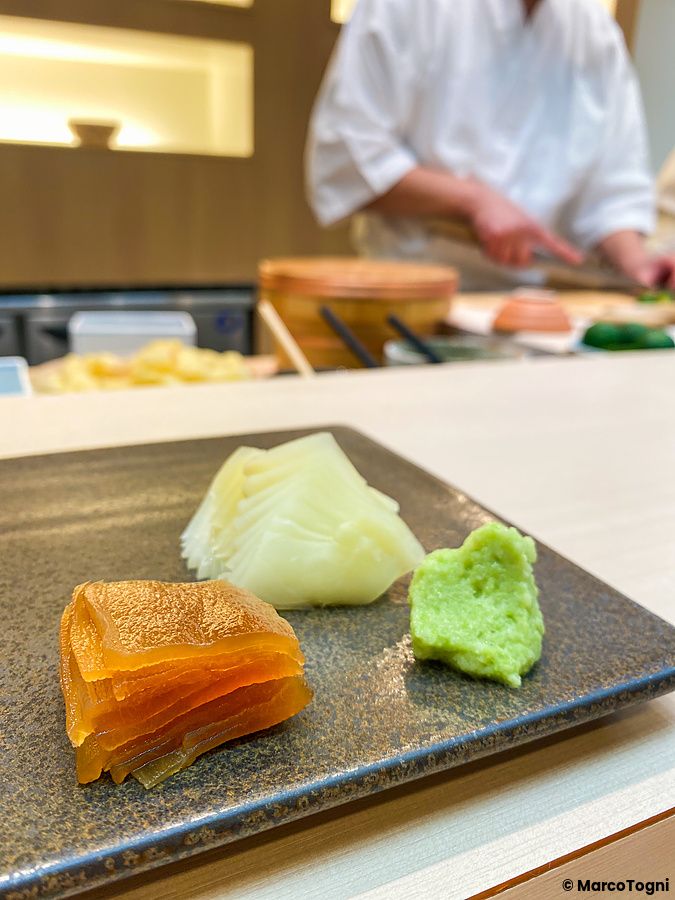
  • Kanpyo with olive oil: dried gourd is usually just another filling, but here it’s dressed with an oil made especially for the restaurant.
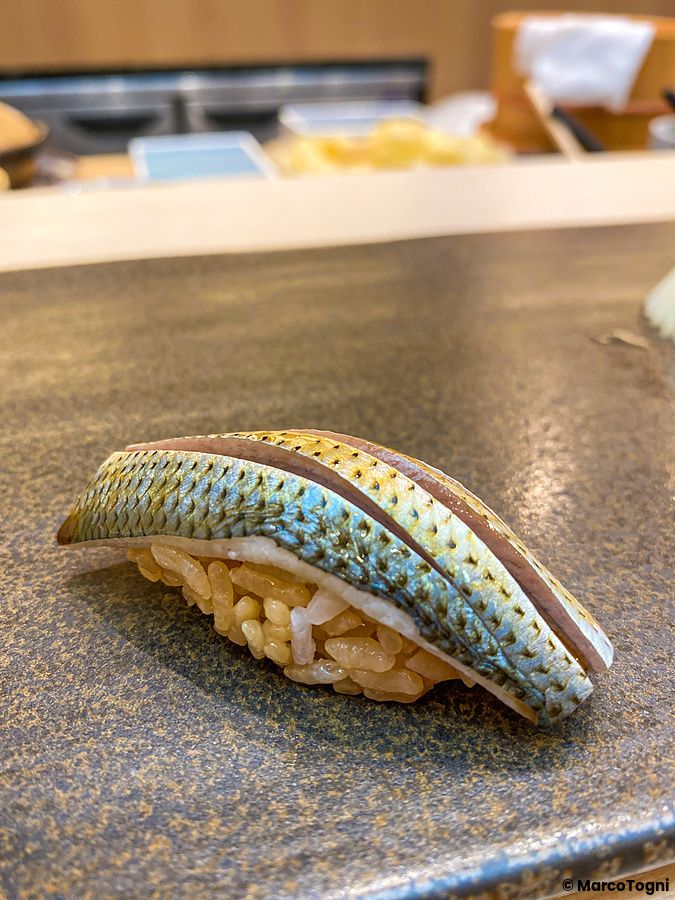
A kohada (gizzard shad) nigiri served on a dark plate at Sushi Tou in Tokyo.
The kohada's shimmering skin covers a base of brownish rice. This fish needs careful marinating to balance its natural acidity.
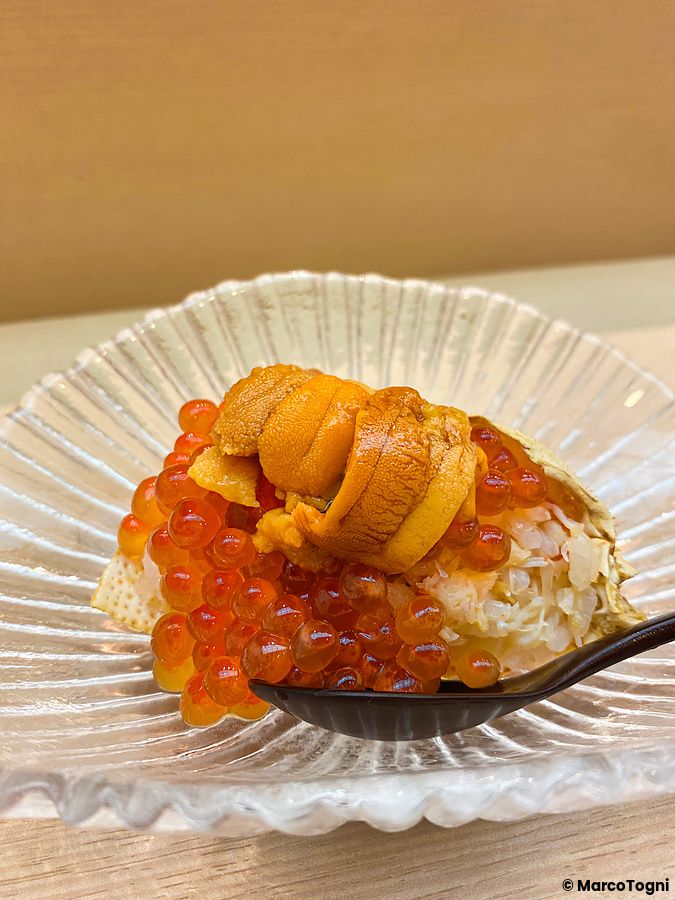
Crab, ikura and uni served in a clear glass bowl at Sushi Tou in Tokyo.
Crab, salmon roe and sea urchin share the glass bowl. Give it a gentle stir to bring the different textures together.

There are two kinds of rice, and you can taste the difference. Red vinegar goes with the fatty tuna and the more aged fish, rice vinegar with the delicate pieces, so each piece gets the right rice.
The charcoal grilling is the big moment of the meal. The coals glow right at the counter, the tuna sizzles, and it reaches you while it’s still fragrant. The chef tells you how to eat everything, in what order, and whether it needs soy sauce or not.
There are two soy sauces as well, chosen to suit each fish. The chef brushes them onto each piece, which is why you’ll be told not to dip anything. Every piece arrives already seasoned and should be eaten in a single bite. If you’re gluten-free, just let them know, because the kitchen will take care of it.
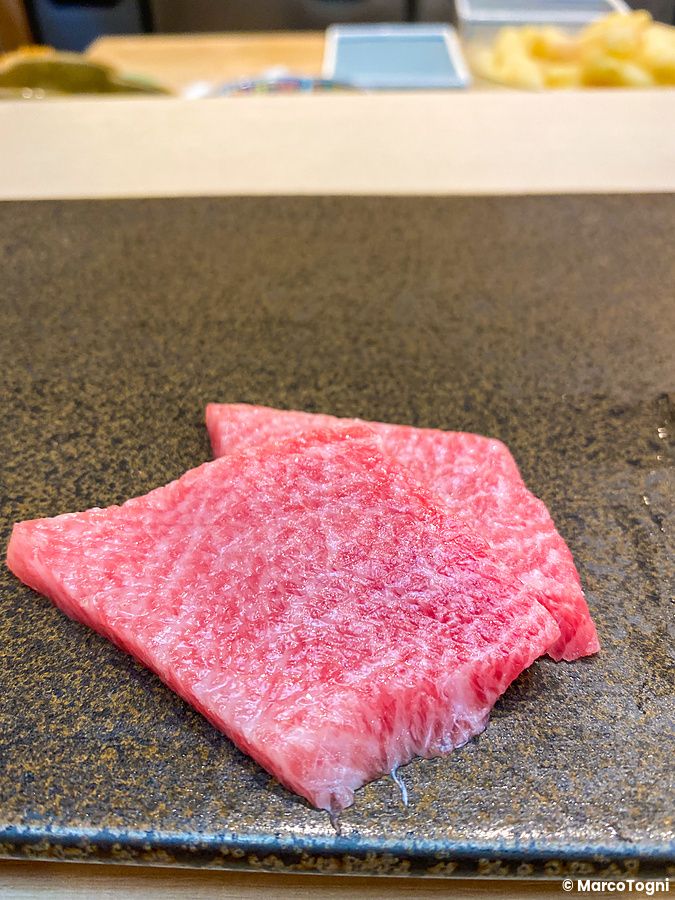
Two slices of chutoro tuna on a dark stone plate at Sushi Tou.
Slices of medium-fatty tuna stand out against the dark stone. The marbling makes it clear they'll melt in your mouth at the first bite.
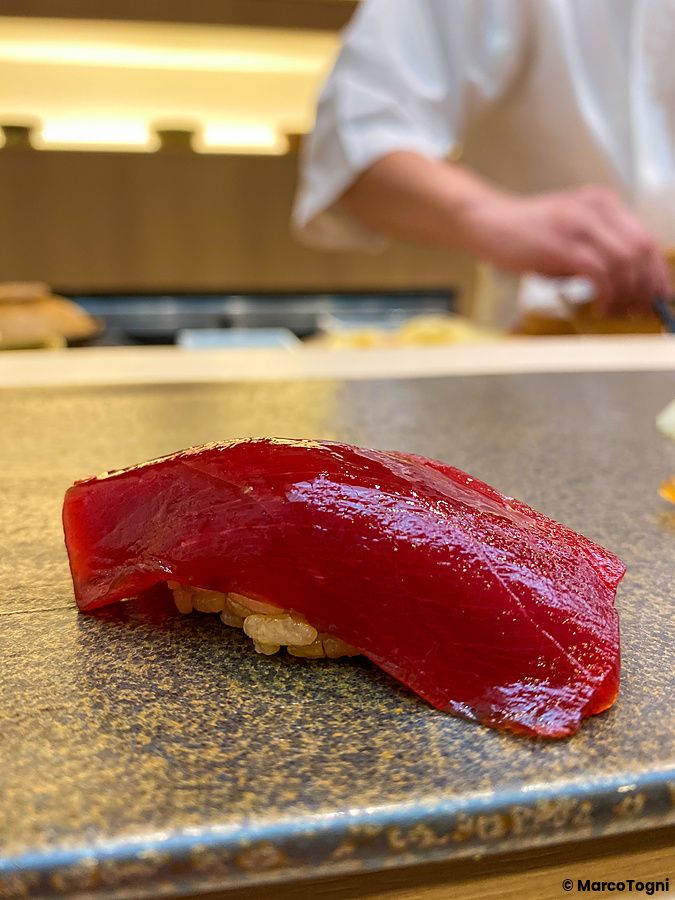
A fresh tuna nigiri on a dark stone plate at Sushi Tou in Tokyo.
This classic lean tuna nigiri stands out for its glossy surface. At places of this caliber, the fish is brushed with sauce before it's served.

Dinner runs between 20,000 and 30,000 yen per person, depending on the menu. Lunch is a lot cheaper, around 10,000–15,000 yen, and it’s the smart way to try it for less. Tax and service charges are added on top of those prices, so expect the final bill to be a good 20% higher.
It’s expensive, it’s not an everyday place, and I won’t pretend otherwise. But given the quality of the fish and the way they take care of you at the counter, the bill is fully justified, and I’ve been to plenty of places at the same price that offered far less.
When I want an omakase that’s also a bit of a show, with that charcoal-grilled tuna made right in front of me, Sushi Tou is one of the first places that come to mind. I order the top menu, and for a couple of hours I don’t think about anything else.

Choosing a menu

There are only a few menus, and what mostly changes between them is the quality of the fish.
At dinner, the lineup starts with the house menu, which is the full run of courses. The special menu moves up to better cuts, and at the top there’s the head chef’s omakase, where the chef has free rein with the best of the day.
At lunch you choose between a basic menu and a fuller one. Even the basic one runs to around fifteen courses: eleven nigiri, a small bowl of rice with uni and ikura, a maki and soup to finish.
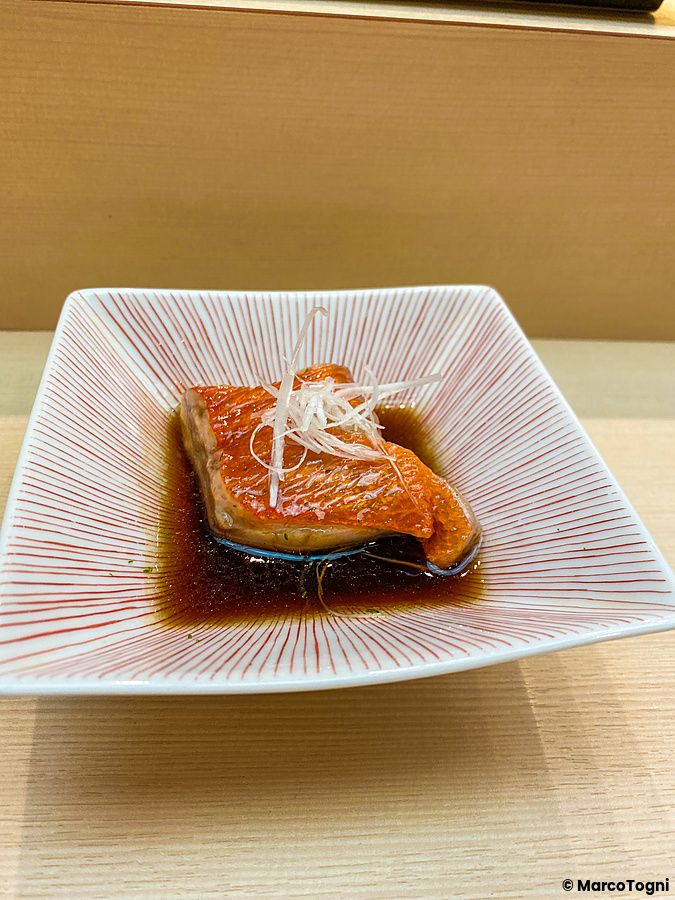
Kinmedai (golden eye snapper) in a slightly sweet sauce, neatly arranged on a small decorated plate at Sushi Tou.
The golden fish fillet comes in a thick dark sauce. Be sure to scoop up plenty of it to balance the delicate flesh.
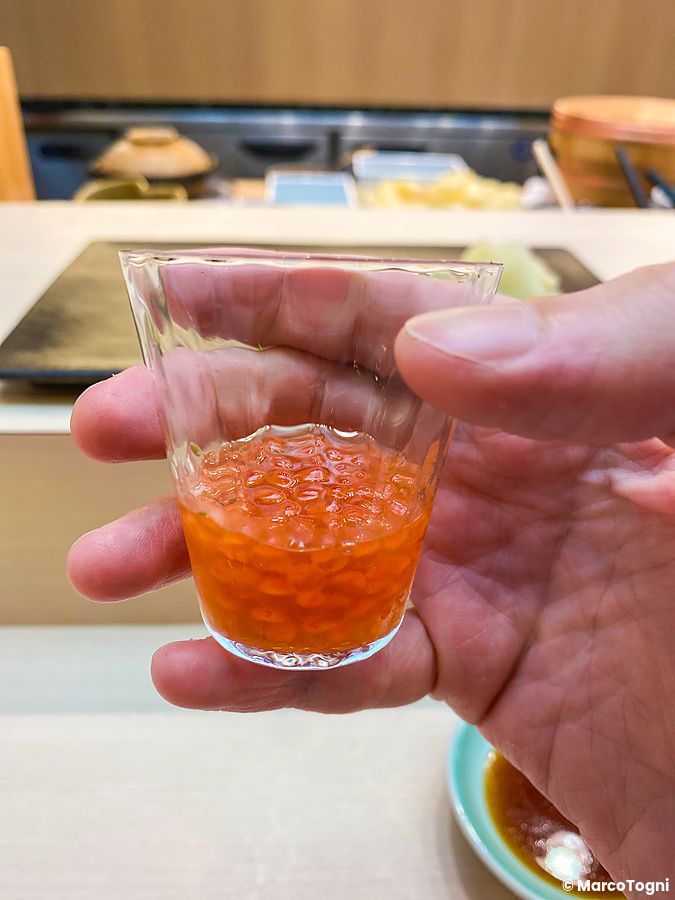
A hand holding a glass filled with ikura at Sushi Tou in Tokyo.
A small glass brimming with salmon roe, served right at the counter. It's an unusual way to serve it, and it lets you taste the roe's saltiness on its own.
An anago (saltwater eel) nigiri served on a dark stone plate at Sushi Tou in Tokyo.
Grilled, glazed conger eel closes out the nigiri. Its sweet, dark sauce is a sharp contrast to all the savory pieces before it.
A plate with kampyo (dried gourd strips), ginger and wasabi on a wooden counter at Sushi Tou.
On the dark plate you'll find ginger, wasabi and strips of marinated gourd. They're the basics for cleansing your palate between courses.

Inside

There’s the counter and nothing else, with the stools lined up side by side and the chef in front of you.
The light is soft, the wood is pale and voices stay low. You take your time here, and the dishes come out one at a time, unhurried.

The staff make guests who don’t speak Japanese feel at ease and have no trouble explaining things in English, which is one reason quite a few luxury hotels recommend the place to their guests.
The service is what surprises you most. The staff guide you through the meal with quiet courtesy and never rush you.

At a glance

Pros:

  • Fatty tuna seared over charcoal to order, with a smoky aroma and a tenderness you rarely find
  • Two different kinds of rice depending on the fish, tuna in three cuts, sweet sea urchin
  • Warm, attentive service, with every piece explained and staff who speak English comfortably

Cons:

  • It’s expensive, and the top dinner menu reaches special-occasion prices
  • No à la carte: you eat what the chef decides

Best for: a special dinner or a celebration, or anyone who wants a top-quality omakase with a bit of a show at the counter

Atmosphere: traditional house, wooden counter, low lighting, few guests and a slow pace

Bottom line

What stays with you from the whole evening is the sound of fatty tuna sizzling over charcoal just across the counter, and the aroma rising before the piece even reaches your plate. Go for the top menu without overthinking it. That’s where the best courses show up, like the crab with sea urchin in its shell and the conger eel warmed on the outside.
Sit at the counter and let the chef take over. The pieces land in front of you in the order the chef has in mind, and at some point you stop counting courses. Few counters in Tokyo can make you forget to talk for two whole hours. If you only have one special dinner in this city, make it this one.
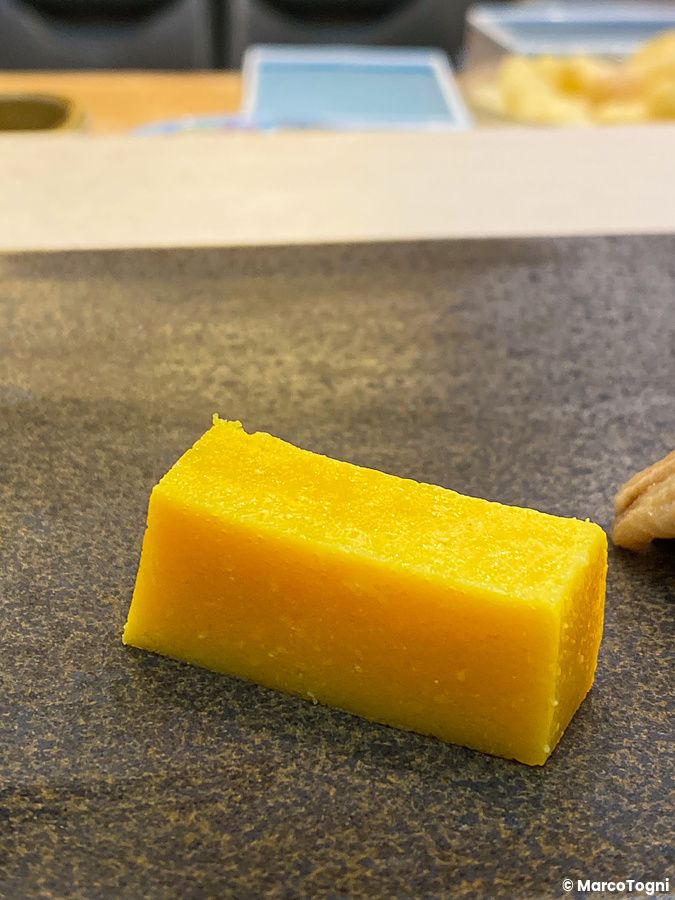
A bright yellow rectangular piece of tamagoyaki on a dark plate at Sushi Tou in Tokyo.
The bright yellow cube is a traditional Japanese omelet. Its firm texture and almost sweet flavor mark the end of the main meal.
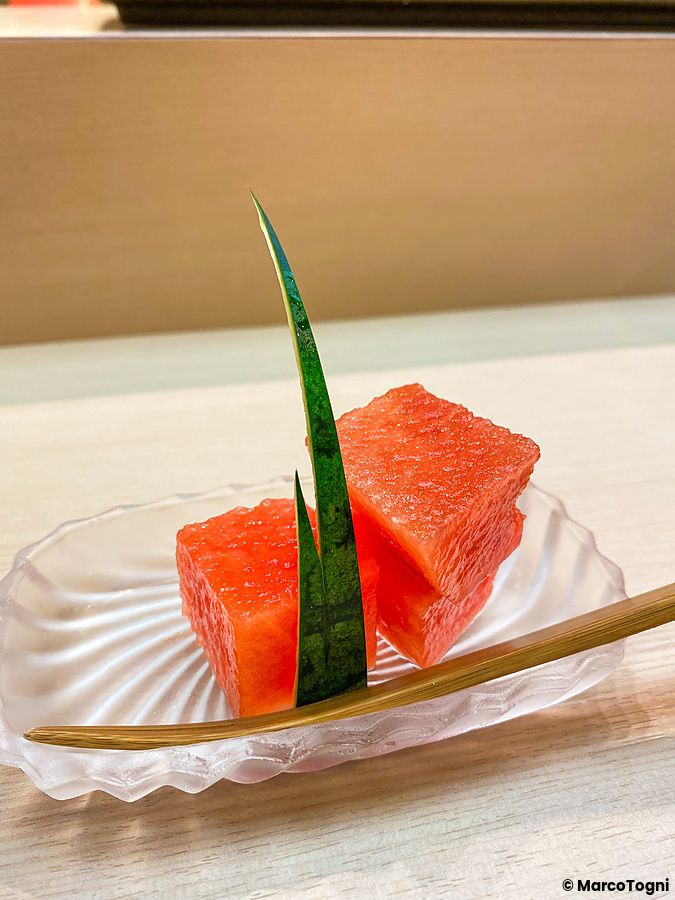
Cubes of fresh watermelon on a glass plate, garnished with a strip of peel, at Sushi Tou in Tokyo.
Two cubes of fresh watermelon cleanse your palate one last time. The thin strip of rind is only there to give the final presentation some structure.

Getting There

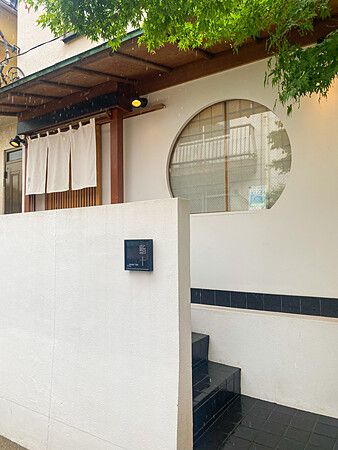
The restaurant is in Nishiazabu, on a quiet side street a couple of minutes from the intersection. From the outside it looks like any other Japanese house, with a wooden facade and no eye-catching sign, so check the address carefully.
The easiest way is to get off at Nogizaka, take Exit 5, then walk about eight minutes south to the Nishiazabu intersection.

If you're already out exploring Roppongi, it makes sense to walk from there. It's about ten minutes along Roppongi-dori, all on flat ground.

Useful Info

Name: Sushi Tou
Hours: Monday–Friday: 12:00–14:00, 17:30–22:00; Saturday: 12:00–14:00, 17:00–21:30; Sunday: closed
Time needed: About two hours. Dinner is served in set seatings at the counter, so that's how long the omakase takes.
Closed: On top of its weekly day off, the restaurant is also closed on national holidays.
Booking: Required. You book online through the official website, and with only ten seats, weekend evenings go fast, so book a few weeks ahead. Mention any allergies and intolerances in the booking notes, and keep in mind that cancellations from the day before onward are charged.
Tips: At the counter, let the chef lead the way. You'll be told what order to eat each piece in, and when you don't need soy sauce because the chef has already brushed it onto the fish. When the charcoal-grilled tuna arrives, eat it right away while it's still warm, because that's when it's at its best.
Getting there:
  • Nogizaka Station (Chiyoda Line): Exit 5, about 8 minutes on foot
  • Roppongi Station (Hibiya Line, Oedo Line): about 10 minutes on foot
Address: 2-chome-24-8 Nishiazabu, Minato City, Tokyo 106-0031, Japan
Website: Sushi Tou
Open in Google Maps

Map

MarcoMaps100% free

This place is on MarcoMaps

Sushi Tou

My map of Japan: over 4,000 places I've tried myself, each with photos, rating, and hours. Filter by category and rating, find veg-friendly spots and places near you with GPS. No sign-up, right from your phone.


  • 4,000+ places
  • Rating, photos, and hours
  • Veg friendly
  • Near me (GPS)
  • Favorites without login
  • Works offline
Open my map!
The MarcoMaps map of Japan with dozens of places markedThe map on a phone: a place's info card with photos, rating, hours and prices