Types of Sushi
Sushi looks simple, but the moment you sit down at the counter you realize how much there is to it. Knowing the types of sushi helps you order better, and it also lets you enjoy the experience more, without panicking when you’re faced with the menu or with a chef waiting for your order.
Below is a clear overview of the main types of sushi, written with travelers in mind: what to expect, which words to recognize, what to try first and which pieces to go for when you’re ready to level up. The idea is simple: you shouldn’t feel lost the first time you have lunch at a sushi-ya in Japan.
Contents
- The main types
- Nigiri
- Tuna cuts
- Maki and other rolls
- Gunkan and specialties
- Seasonal sushi
- Regional sushi
- Inari and chirashi
- Sashimi and similar dishes
- Sets and omakase
- Where to find each type
- Practical tips
- Is it worth it?
- Video: Which sushi to eat, the complete guide
- Video: How to eat sushi the right way
- Video: Where to eat sushi in Japan
The main types
The first thing to get straight is that “sushi” doesn’t mean “raw fish.” The word refers to rice seasoned with vinegar, sugar and salt and paired with different ingredients. The rice is called shari, and the topping or filling is called neta. It’s all about how the two work together, not just about the quality of the tuna.
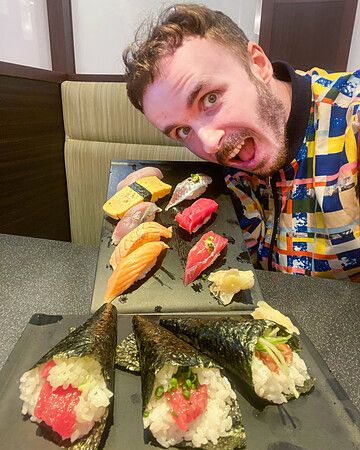
- nigiri: the classic little mound of rice with a slice of fish on top
- maki: rolls wrapped in seaweed or rice, with several subtypes
- gunkan: rice “boats” wrapped in seaweed, with soft ingredients on top
- pressed or regional sushi: such as oshizushi or Nara’s local sushi
- inari and chirashi: more “homestyle” versions, or sushi served in a bowl
- sashimi: technically not sushi, but often served at the same places
I suggest thinking of it this way: nigiri is the foundation, and everything else is a variation you can add as you get more comfortable. With just that picture in your head, the menu won’t look like it’s written in an alien language anymore.
Nigiri
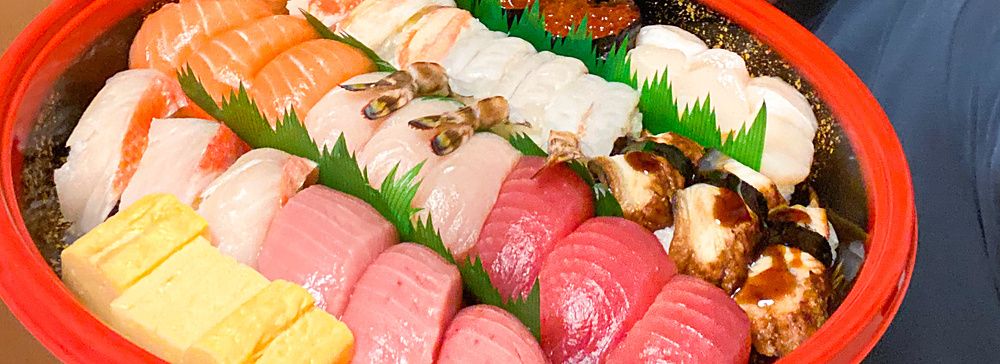
Nigiri is what almost everyone pictures when they think of sushi: a small oval of rice that holds together but stays soft, topped with a slice of fish or another ingredient. It’s the most direct way to taste how rice, fish and wasabi work together, and I think it’s also the best way to tell whether a restaurant knows what it’s doing.
You’ll usually see nigiri with tuna, salmon, sea bass, shrimp, squid, scallop and eel, but also with cooked toppings like sweet omelet (tamago) or boiled shrimp. Each piece is almost a single mouthful, and honestly, nigiri should be eaten in one bite, two at most, not cut up with chopsticks like a steak. And in case you’re wondering, yes, you can eat nigiri with your hands, and it’s not disrespectful at all. At the counter it’s actually the most natural way to do it, because the rice is shaped to stay soft and you risk breaking it apart with chopsticks. Nobody will say a word if you’d rather use chopsticks, but try it at least once: pick the piece up between your thumb and index finger, turn it over and lay the fish on your tongue. It changes how you taste the whole bite.
A common mistake is drowning nigiri in soy sauce. The trick is to tilt the piece and dip the fish, not the rice, so it doesn’t fall apart. At many places in Japan the chef already puts the right amount of wasabi between the rice and the fish, so there’s no need to pile more on top. If you can’t stand wasabi, say so at the start.
When I want to judge a restaurant, the first thing I look at is the seemingly “simple” nigiri: a good piece of salmon, tuna that isn’t too fatty, a shrimp. If those are done with care, the rest of the menu is almost always up to the same standard.
Tuna cuts
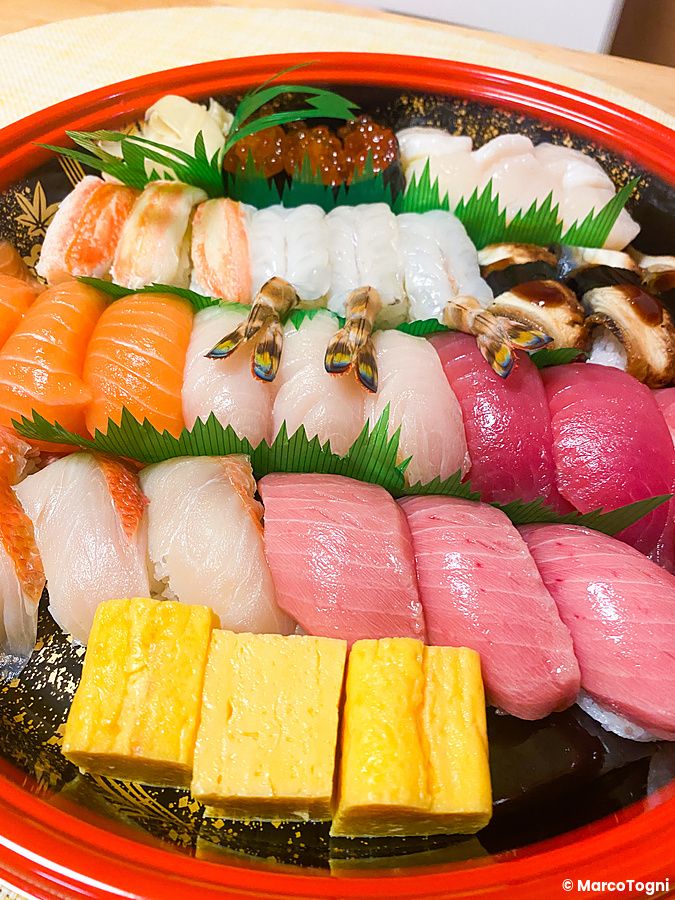
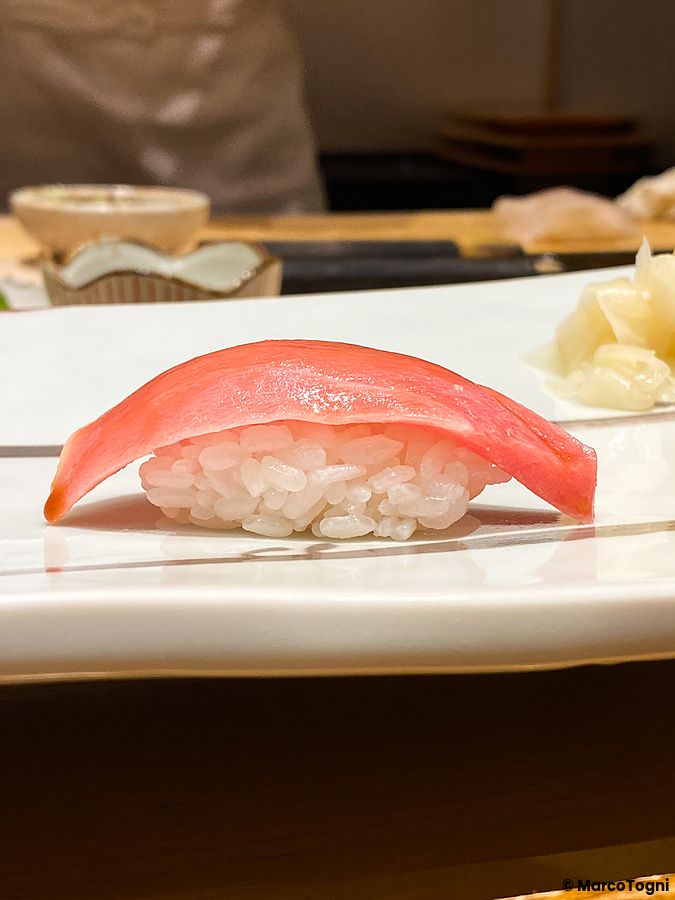
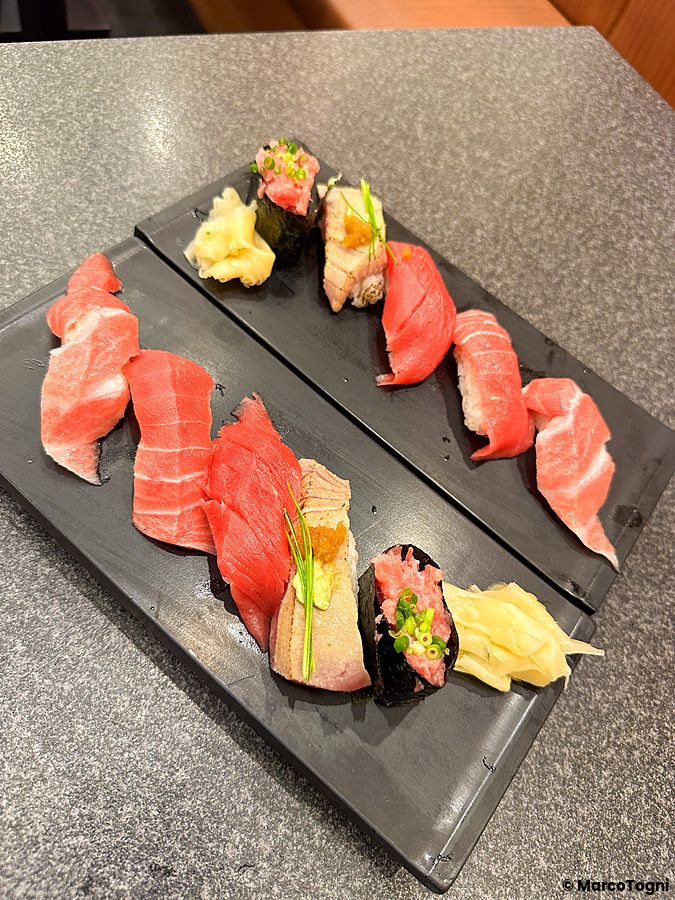
If one ingredient is going to confuse you on the menu, it’s tuna, because its name changes depending on which part of the fish it comes from. Akami is the lean red meat from the back, with a more distinct flavor. Chutoro is the middle cut, tender and with just the right amount of fat. Otoro comes from the belly: it’s almost buttery, melts in your mouth and is also the most expensive thing at the counter.
Then there are the preparations. Negitoro is minced fatty tuna with scallion, often served as gunkan or temaki, while zuke is akami marinated in soy sauce, a technique that started as a way to preserve fish and is now used purely for the flavor. I suggest trying them one after another in the same meal, since it’s the clearest way to figure out what you actually like. And don’t assume the fattiest one wins, because in the end a lot of people find that the akami is what stays with them.
Maki and other rolls
Maki are rolls of rice and filling wrapped in nori seaweed. They often come in servings of four or six pieces, and many people find them “easier” to eat, especially at first. Japan has several kinds, and if you can recognize them, you won’t be ordering at random.
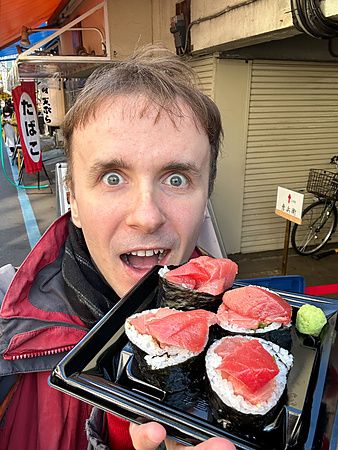
I save these rolls for the end. At a lot of sushi-ya that’s exactly how the meal wraps up, with something simple before the tea.
Futomaki are bigger rolls with several ingredients at once: egg, vegetables, fish, sometimes even surimi. You’ll often find them on festive occasions or in supermarkets, cut into thick slices. They’re more homestyle and less of a high-end counter thing, but very comforting if you like a mix of flavors.
Uramaki are inside-out rolls, with the rice outside and the seaweed inside. This is where the well-known California roll belongs, with avocado, surimi and often mayonnaise. Just so you know, in Japan California rolls are not as common as you’d expect. You’ll find them at some of the more modern places or ones that cater to foreign visitors, but if you walk into a small neighborhood sushi-ya, you’re much more likely to be offered classic hosomaki.
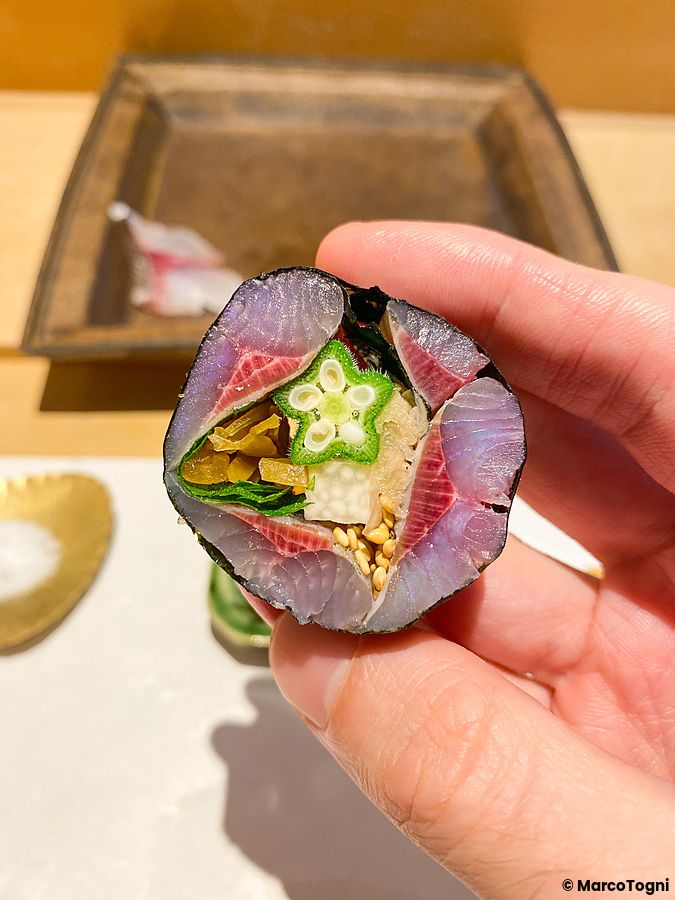
Finally there are temaki, seaweed cones filled with rice and other ingredients that you eat with your hands. They’re very casual, more the sort of thing you’d have for an evening with friends. They’re a good pick if you like the feel of crisp seaweed and want a bigger, fuller bite than nigiri.
If it’s your first time in Japan, I’d treat maki as an extra alongside nigiri: a couple of hosomaki for variety, maybe a temaki to try something more fun, without making a whole meal of rolls loaded with mayo and sauces.

Gunkan and specialties
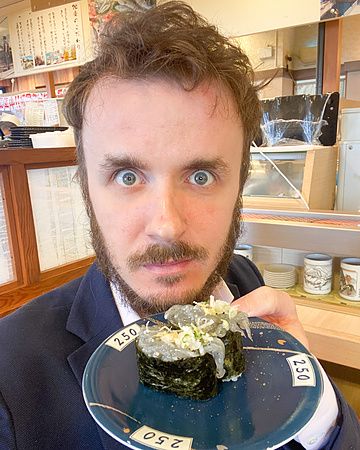
A gunkan (or gunkanmaki) looks like a little boat: an oval base of rice wrapped in a strip of nori that rises above it to form a small “cup.” The cup holds ingredients that would otherwise slide off, like salmon roe (ikura), flying fish roe (tobiko), sea urchin (uni) and minced fatty tuna (negitoro).
These are more intense bites, often with a strong flavor. An ikura gunkan literally bursts in your mouth, while an uni gunkan is creamy and rich. Honestly, these pieces divide people: they either love them or can’t stand them, and they’re worth trying once you feel ready for more challenging flavors.
The tricky part is how to dip them in soy sauce without everything falling off. In many cases I just barely touch the bottom of the rice to the sauce, or use my chopsticks to put a tiny drop of sauce on the topping. You don’t have to put soy sauce on everything, either. Some gunkan come already seasoned and taste better just as they’re served.
At many sushi-ya in Japan, gunkan are a way to serve premium ingredients in small portions. If you see names you don’t recognize, try a single piece instead of ordering four of the same. It’s a good way to try new things without being stuck finishing a whole plate of something you don’t like.
Beyond gunkan, another of the more “special” options you’ll often see is lightly seared sushi (aburi). The fish gets a quick pass over a flame, which creates a contrast between the warm outside and the rawer inside. It’s a good middle ground if fully raw fish isn’t your thing but you still want to stick with sushi.
Seasonal sushi
In Japan sushi changes with the seasons, and it’s not something only connoisseurs care about. At serious sushi-ya part of the menu really does rotate, and the chef will often offer you what’s in season without you asking. The word to recognize is shun, meaning an ingredient at its best time of year.
In spring you’ll find delicate fish like sayori and firefly squid. Summer is the time for aji, sardines and uni from the north, while fall brings sanma and returning bonito, fattier and more flavorful. Winter is when yellowtail and tuna are at their best.
If you see a separate little board or a slip of paper on the wall, that’s usually where the seasonal pieces are listed. Even if you can’t read Japanese, you can point at it and trust the chef, because it’s almost always the best thing you’ll eat at that meal.
Regional sushi
Japan isn’t just nigiri and rolls. There are many regional kinds of sushi, dating from before refrigerators, when fish had to be preserved in other ways. For travelers today they’re mostly a curiosity worth trying, often by picking up a bento at the station.
One of the best known is oshizushi, or pressed sushi. Instead of shaping the rice by hand, the cook uses a wooden mold: the fish goes in first, then the rice, and everything is pressed together and cut into small blocks. In the Osaka area battera is well known, and it’s often made with lightly marinated mackerel. It’s firmer and more regular in shape than classic nigiri.
In and around Nara you’ll find kakinoha-zushi, what many people call “Nara sushi”: small rectangles of rice with pressed fish, wrapped in persimmon leaves. You don’t eat the leaves. They’re there to add fragrance and protect each piece. This sushi is usually sold in ready-made sets, perfect for eating on the train or during a quick break.
There are also variations like saba-zushi in some cities, again built around oily fish like mackerel and prepared so it keeps longer. What I like about these regional styles is that they show you what Japan was like before refrigeration. They change not just the flavor but our whole idea of what sushi is.
As a traveler, there’s no point making it a mission to try them all, but if you come across a specialty shop at a station, I’d suggest grabbing a box to share. It’s an easy way to broaden your horizons a little without rearranging your trip.
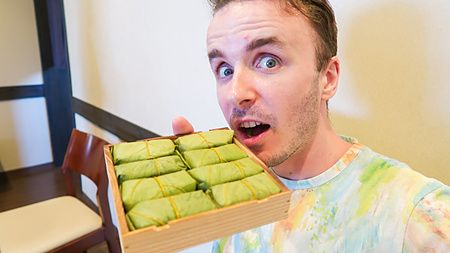
Inari and chirashi
Inarizushi might be the most underrated kind of sushi. It’s a pocket of fried tofu (abura-age) cooked in a sweet and savory broth, then filled with sushi rice. There’s no fish on top and no nori, but there’s no mistaking it: sweet, soft, pure comfort food. You’ll often find it in supermarkets, konbini and mixed sushi sets.
People who don’t like raw fish often like inari, because the flavor of the marinated tofu covers up most of the rest. The marinade usually contains fish broth (dashi), though, so it isn’t really vegan, even if at first glance it looks like nothing but rice and tofu. I’d think of it as a breather partway through the meal, not a meal on its own.
Chirashizushi is “scattered” sushi: sushi rice in a bowl, topped with slices of raw fish, fish roe, vegetables and thin strips of omelet. Some versions arrange the ingredients with great care, while in others they’re more mixed together, and then it’s often called barachirashi. It’s a perfect way to try lots of different ingredients in a single dish.
Don’t confuse it with a regular kaisendon, which is a bowl of plain white rice topped only with raw fish. With chirashi the rice is usually seasoned the way it is for sushi, and there are more toppings than just sashimi. I think chirashizushi works well when you don’t know what to order and want one dish that tells you how good the place is.
Inari and chirashi are two sides of the same coin. Inari is cheap and comforting, while chirashi is more substantial and varied. At new places I often use chirashi as a test: if the rice is good and the fish is cut with care, it’s usually worth coming back for a more serious omakase.
Sashimi and similar dishes
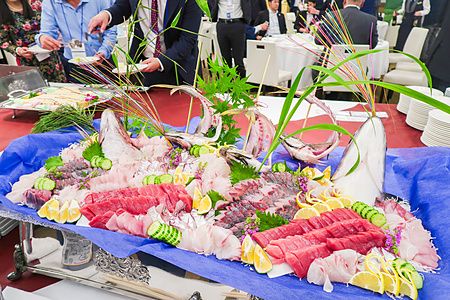
Sashimi isn’t sushi, but you’ll almost always see it on the same menu. It’s simply fish (or seafood) cut into slices and served without rice, with wasabi, soy sauce and sometimes grated daikon or other vegetables. With no rice in the way, it’s the most direct way to taste the fish.
Lots of people use “sushi” and “sashimi” as if they meant the same thing, but the difference is fundamental. Sushi is all about the balance between rice and neta, while sashimi is only about the fish. If you order nothing but sashimi, you’re really having a raw-fish appetizer; for a full meal, it usually makes sense to pair it with nigiri or other kinds of sushi.
Sashimi has a few close relatives, like tataki (fish seared on the outside and left raw inside, then sliced) and other preparations dressed with sauces, scallions or ginger. They aren’t sushi strictly speaking, but restaurants often serve them to round out the menu. Honestly, I see them as an easy way to change up the texture when there’s already plenty of rice on the table.
Sashimi makes sense if you really love raw fish and want to focus on quality. If you’re new to all this, I’d start with nigiri and maki, maybe adding a small plate of mixed sashimi to share. I promise it’s a gentler start that way, and you can take your time figuring out what you like best.
Sets and omakase
In practice, what changes the experience is often not so much the type of sushi as the way it’s served, and that’s where the difference between sets and omakase comes in.
A set (sometimes called moriawase, lunch set or nigiri set) is a plate or tray with several pieces served together, usually a mix of nigiri and maybe a few maki, with miso soup and some pickles. The price is usually clear right on the menu, ordering is quick, and you eat without much ceremony. It’s the ideal choice for a quick lunch or when you don’t feel like thinking too hard.
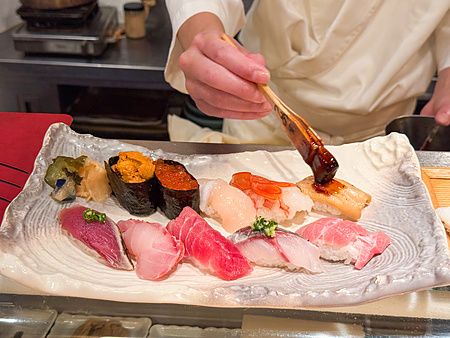
With omakase, you leave everything to the chef. The word literally means “I’ll leave it to you.” The pieces usually arrive one at a time or in small rounds, in whatever order the chef thinks works best. The rice is prepared and shaped on the spot, often slightly warm and packed less tightly than in high-volume sets. As a result, every bite has a livelier texture and is closer to the ideal temperature.
It isn’t just a question of price. It’s about pace. With a set, you eat a bit like you would a plate of pasta: everything’s in front of you, and you decide the timing and the combinations. With omakase, the chef sets the pace, watching you, figuring out whether you prefer fattier or leaner fish, and alternating delicate flavors with stronger ones. It’s a kind of conversation, even if you don’t speak the same language.
A set is generally cheaper and more of an everyday thing, while omakase is for a special night out. I’d stick to sets for quick lunches, maybe at a neighborhood sushi-ya or a kaiten sushi place, and save omakase for when you want the full sushi experience, without checking the clock every five minutes.
Where to find each type
Not every type of sushi turns up in the same places, and knowing where to look makes life a lot easier. At kaiten sushi places, the ones with the conveyor belt, you’ll mostly find nigiri, gunkan and a few rolls, usually ordered on a tablet. They’re the right place to try lots of different pieces with no commitment and without having to speak.
Neighborhood sushi-ya, the ones with a counter and the chef right in front of you, keep to a more classic lineup: nigiri, hosomaki and a few daily specials. Then there are tachigui, standing sushi bars that are quick and cheap and very common around stations.
For inari, futomaki, chirashi and regional sushi, the best place often isn’t a restaurant at all. Supermarkets and konbini, and above all the food floors in department stores, sell ready-made trays of them, and the quality is surprisingly good. It’s the easiest way to try the kinds you’d never order at a counter.
Practical tips
Once you’ve got the main types down, what’s left are the small things that make the difference. They’re details, but they often decide whether you walk out happy or a bit frustrated.
First, mention any restrictions right away. If you don’t eat raw fish, can’t stand wasabi, or are allergic to crustaceans or mollusks, say so at the start. With omakase it’s essential, but even with sets many places are willing to swap out one or two pieces if they know in time. I usually just say it simply and directly, without a long explanation.
With condiments, less is more: soy sauce is there to bring out the flavor, not to bury it. Don’t stir a mountain of wasabi into the little dish until you’ve got an aggressive green paste, because in many places in Japan that’s seen as undoing the chef’s work. Use a little wasabi at a time, maybe right on the piece if you like it strong. You’ll almost always find pickled ginger, gari, on the plate too. It’s not a side dish to eat by the handful; it’s there to cleanse your palate between different fish, for example when you go from a fatty piece to a delicate one. A couple of slices is enough.
The same goes for the hot green tea they put in front of you almost everywhere. It’s there precisely to cut through the fat between bites, and they’ll usually refill it for free as often as you like.
A few practical tricks I find useful:
- with nigiri, dip the fish side in the soy sauce, not the rice
- with thin maki, you can rest one end in the sauce instead of dunking the whole piece
- gunkan often come already seasoned, so just touch the rice to the sauce or use your chopsticks to add a drop on top
- how much room the plates take up matters: at the counter, don’t order twenty pieces at once; go in small batches
Think about the pace of your ordering, too. At places where you order à la carte, it’s normal to order a first round, eat it, then add more pieces based on what you liked, so you don’t have to order everything up front. Personally, I always like to leave room to order one or two favorites again at the end as a way to finish the meal.
Finally, don’t get stuck on the idea that you “have to” eat certain famous cuts no matter what. If you don’t like very fatty flavors, there’s no point forcing yourself to eat the richest toro just because everyone talks about it. The nice thing about sushi is that you can find your own way through it: there’s no ranking you have to follow, only what you enjoy eating.
Is it worth it?
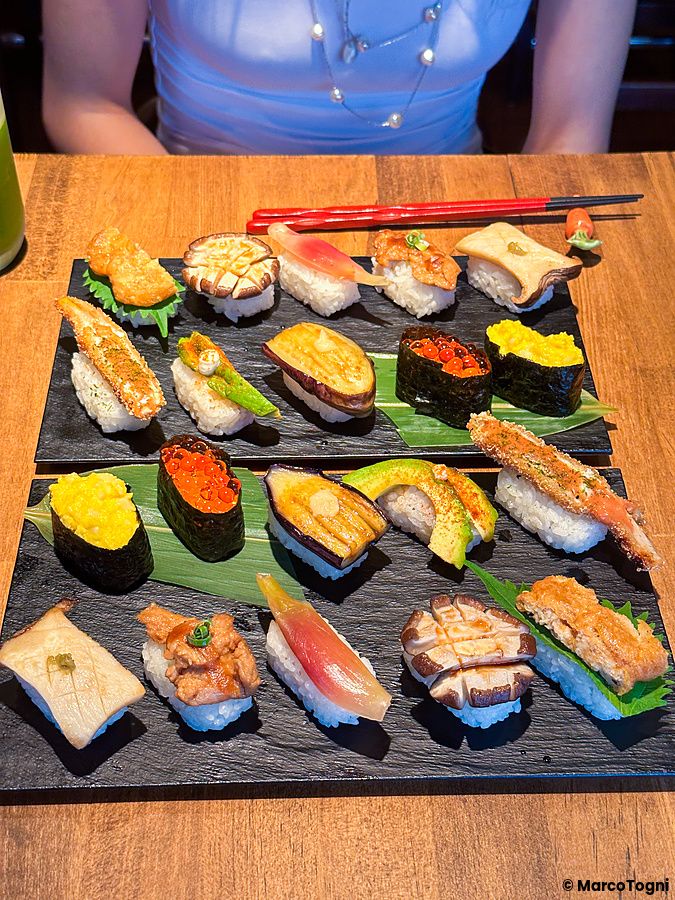
In the end, knowing the types of sushi isn’t about textbook knowledge. It’s a way to feel more at ease when you sit down at the counter. Once you know what a nigiri is, what to expect from chirashi, and when to choose a set over omakase, you can actually enjoy the meal instead of spending half an hour decoding the menu.
My advice is to start simple: a nigiri set, a few basic maki, maybe an inari and a slightly more unusual gunkan. Then, when you feel ready, treat yourself to a properly done omakase at a place that appeals to you. An evening in front of the chef, with the pieces arriving one at a time, can change the way you see sushi for good.
But often the best moment is the simplest one: a small plate with two nigiri you truly love, a little hot tea, the quiet of the restaurant around you. No photos you feel you have to take, no checklist to check off. Just you, the rice, the fish and that feeling that it’s still worth coming back, every single time.