Sushi
Sushi is the world’s best-known Japanese dish, but plenty of people don’t really know what it is.
They think it’s just raw fish and stay away from it, with no idea what they’re missing. Sushi is actually built on rice seasoned with vinegar, and dozens of different toppings go on it, from fish to omelet to just vegetables.
I’ll cover what sushi really is, how to eat it without embarrassing yourself, where to eat it in Japan and how to pick the right soy sauce.
Contents
- What sushi is
- Common types of sushi
- How to eat sushi
- Where to eat sushi
- Soy sauce
- Sushi vs. sashimi
- Dirt-cheap sushi
- Sushi Zanmai
- Kaiten sushi with touch-screen ordering
- Sushi Dai
- Video: How much supermarket sushi costs in Tokyo
- Video: How to eat sushi the right way
- Video: The 10 best sushi spots in Tokyo
- Photo gallery
What sushi is
Sushi is white rice seasoned with rice vinegar and sugar, paired with other ingredients. Before you eat a piece, you dip it lightly in soy sauce. Between bites you have some pickled ginger, whose sweet flavor gets your palate ready for the next kind of sushi.
In Japan, wasabi goes into the sushi too. It’s a green horseradish paste and it’s very hot, but unlike chili, which leaves your mouth burning for a long time, the heat disappears as soon as you take a sip of water.
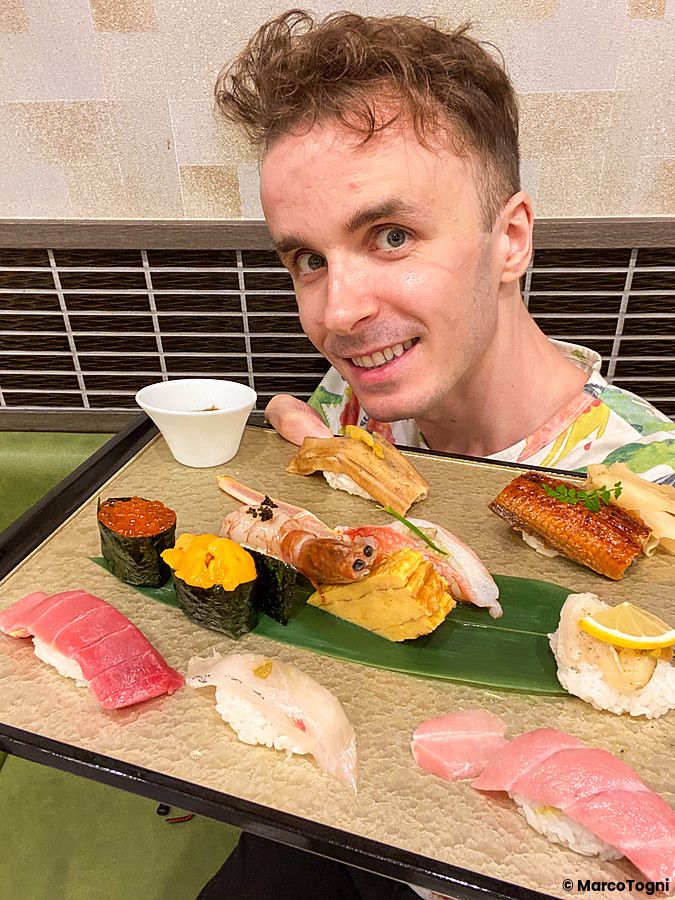
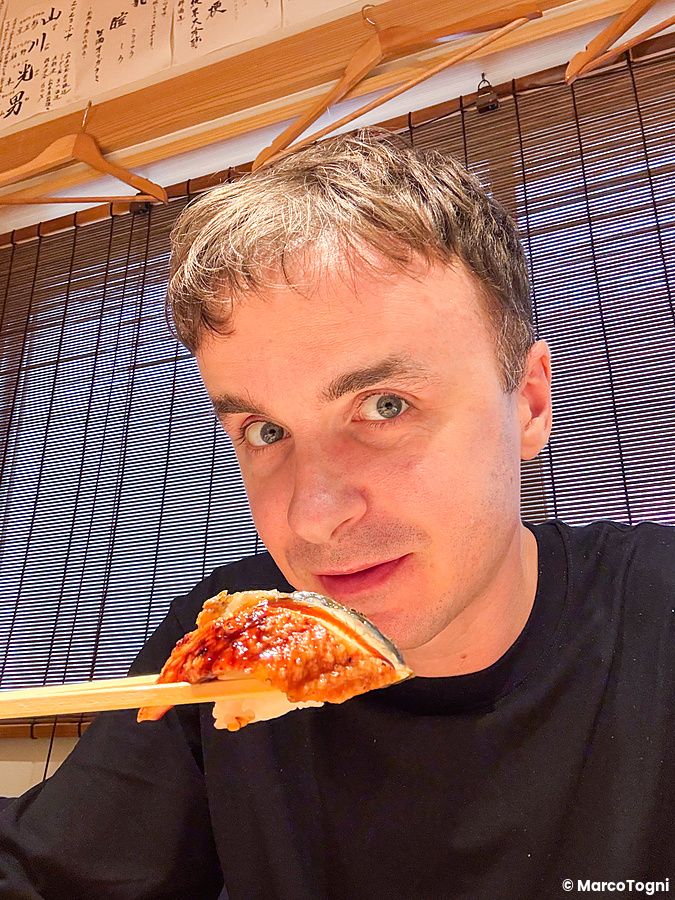
There are dozens of kinds of sushi, and some have no fish at all. Tamago Sushi is topped with omelet and other kinds use only vegetables, while some use cooked seafood: Ebi Sushi is topped with boiled shrimp, and Anago Sushi with sea eel.
Sushi is light and very healthy, and since every detail gets attention when it’s made, it’s also a pleasure to look at. Speaking of details, the secret is in the rice more than the fish. At good sushi places the rice comes out slightly warm, not cold, with grains that stay separate and fall apart as soon as they’re in your mouth. That, much more than the slice of fish on top, is what separates ordinary sushi from sushi done properly.
Common types of sushi
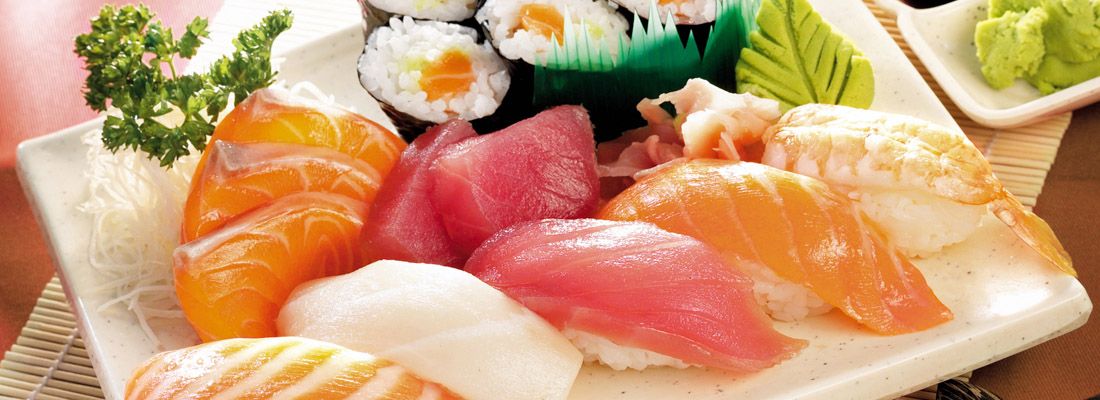
People usually talk about nigiri and maki, but once you sit down at the counter, these are the types you’ll mostly come across:
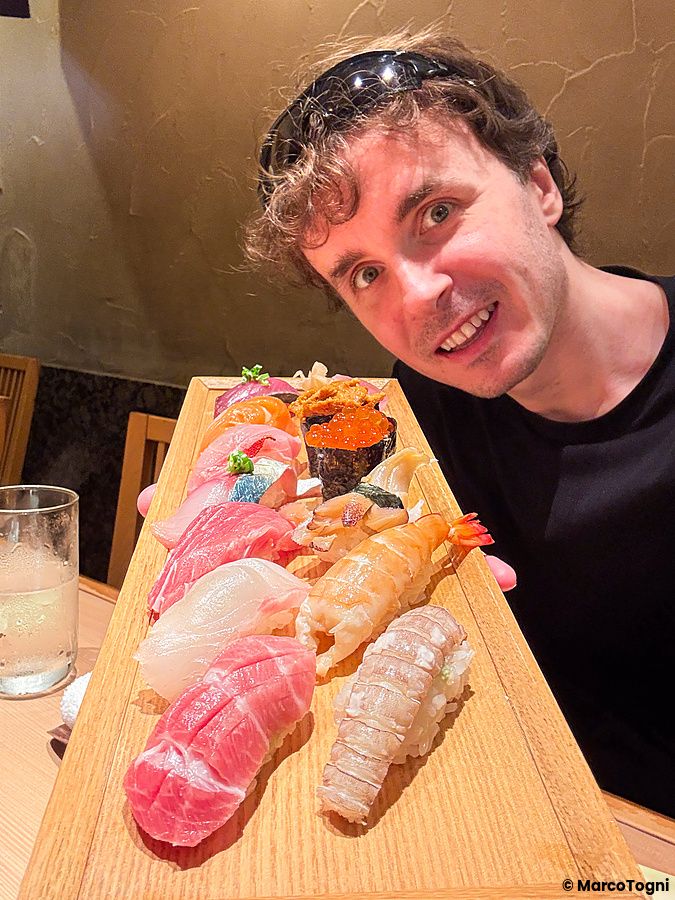
- Nigiri: a hand-pressed mound of rice with a slice of fish on top, the classic sushi.
- Maki: a roll with nori seaweed on the outside, cut into six or eight pieces.
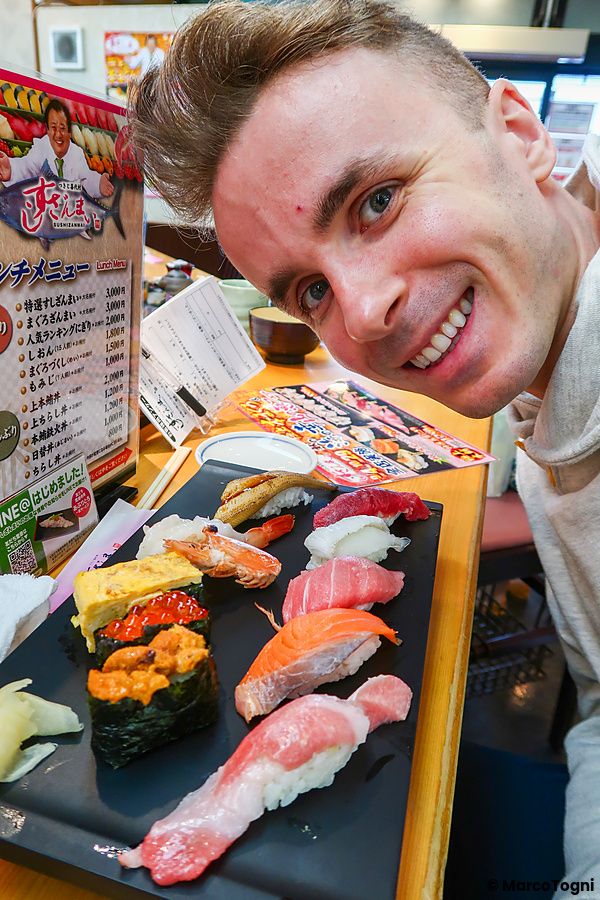
- Gunkan: rice wrapped in a strip of seaweed, made for soft or loose toppings like fish roe and sea urchin.
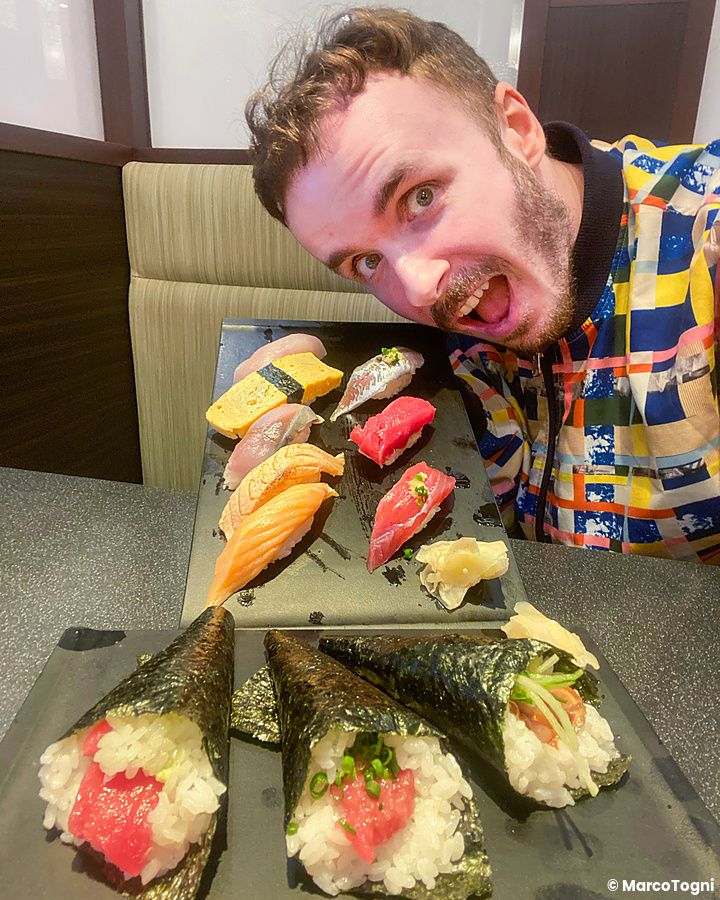
- Temaki: a filled seaweed cone that you eat right away with your hands, before the seaweed gets soft.
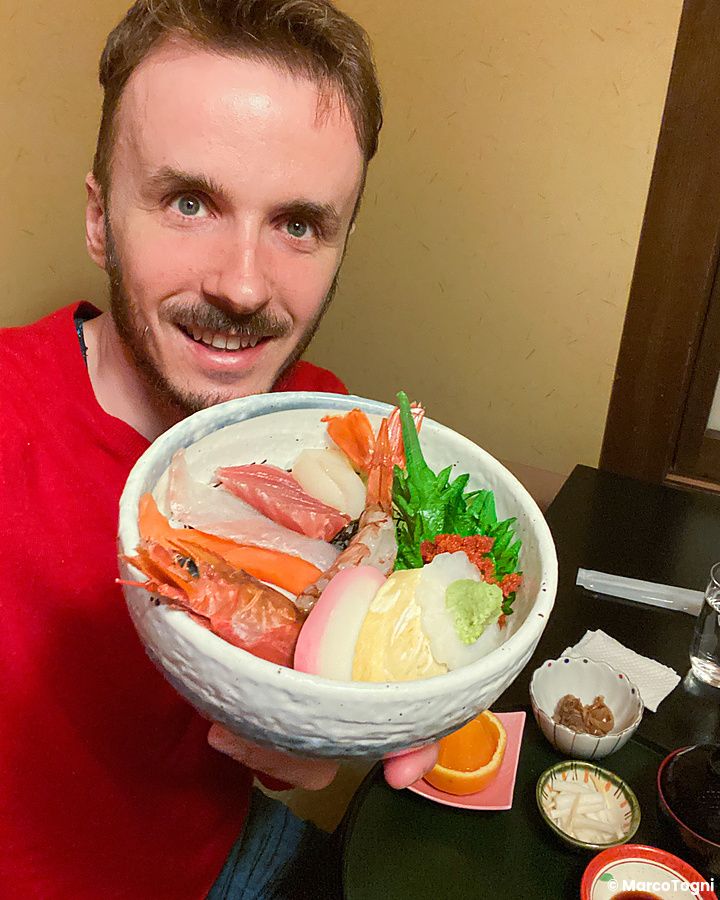
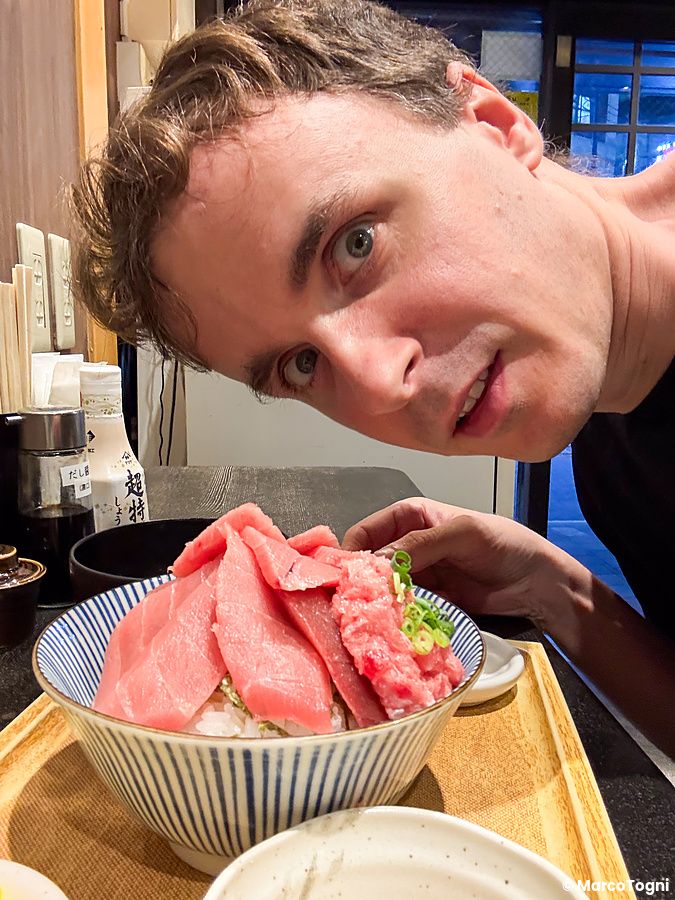
- Chirashi: a bowl of rice with sliced fish on top, the heartiest and easiest option if you don’t want to order piece by piece.
In Japan you’ll hardly ever find California rolls, or rolls that are fried or loaded with mayonnaise. They’re Western inventions.
How to eat sushi
You can eat sushi with chopsticks or with your hands. Personally, I’d skip the hands and learn to use chopsticks.
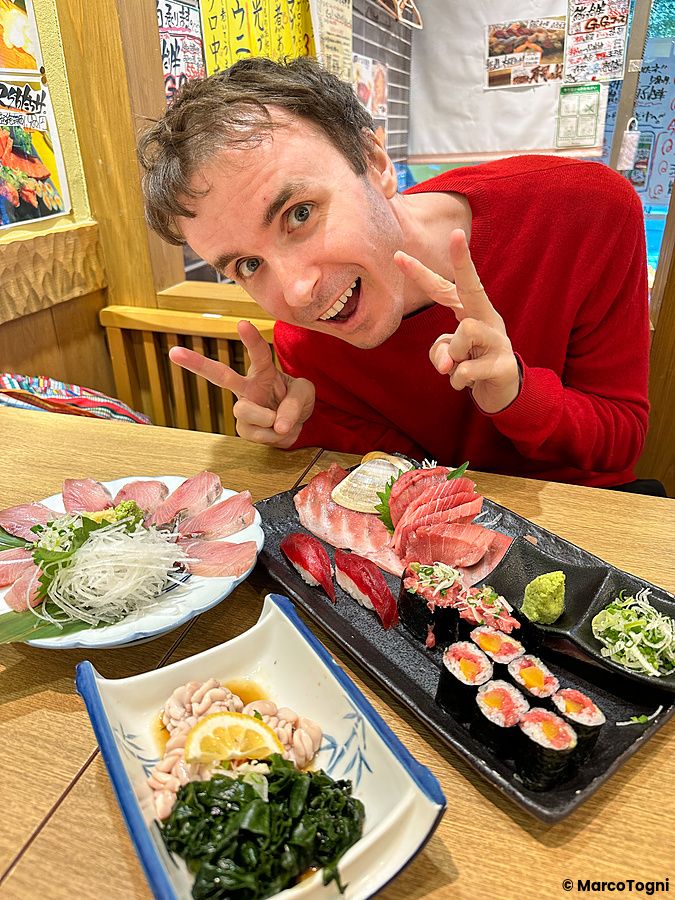
At a sushi meal, this is what you’ll have in front of you: a small bottle of soy sauce, a small dish, a plate or wooden board with the sushi on it, a green ball of wasabi and a few slices of pickled ginger.
First, pour some soy sauce into your small dish, which is where you’ll dip your sushi. You can mix a bit of wasabi into the soy sauce, but ask first whether the sushi already has wasabi in it, so you know how much to add and don’t overdo it. And remember that even if a big piece of wasabi makes you feel like you’re dying, a sip of water brings everything back to normal within a few seconds.
A lot of people dip the rice side into the soy sauce because it’s easier, but the right way is to dip the fish side (for nigiri sushi) or the seaweed side (for maki sushi). That way the rice keeps its flavor and you can taste it better.
Once you’ve dipped the piece lightly in the soy sauce, eat it. The pieces may look big, but they’re meant to be eaten in one bite.
At top sushi bars the piece sometimes comes to you ready to eat: the chef has already put wasabi between the rice and the fish and brushed on a thin coat of sauce. In that case don’t dip anything. Eat it as it is, or you’ll be covering up work done just for you.
After a bite or two you can have some pickled ginger, which can be pink, pale yellow, brown or white and has a pleasant, sweet flavor.
One last thing: pour a little soy sauce into the dish at a time, because leaving half a dish of soy sauce behind is considered wasteful.
Where to eat sushi
In Japan, these are the places I’d recommend:
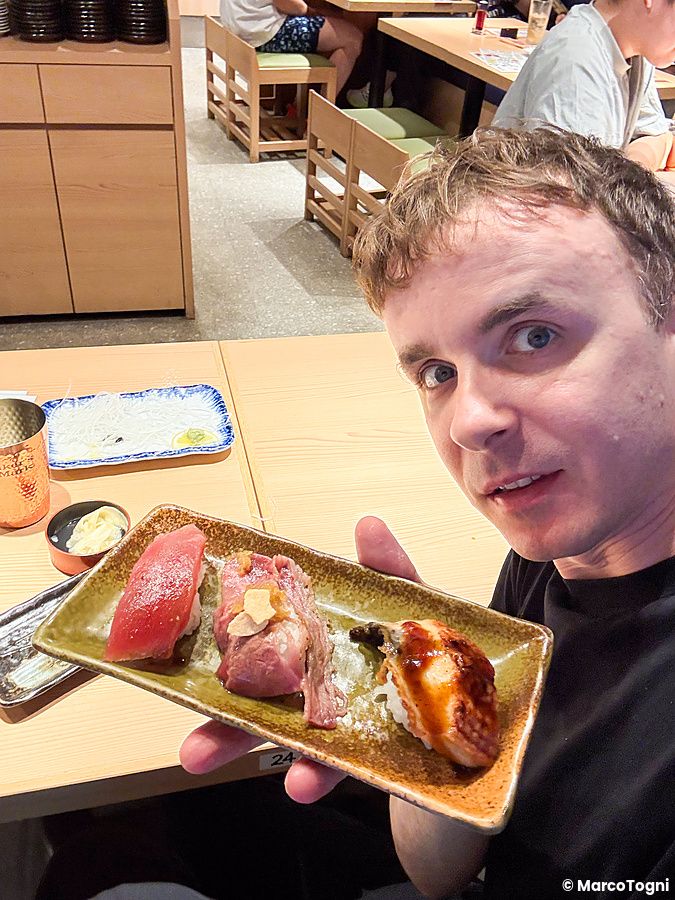
- Sushi Zanmai: a chain found mostly in Tokyo, with good-quality sushi that isn’t too expensive. Full lunch sets cost around 1,300 yen, while if you order off the menu, figure on at least 2,000–3,000 yen for a full meal.
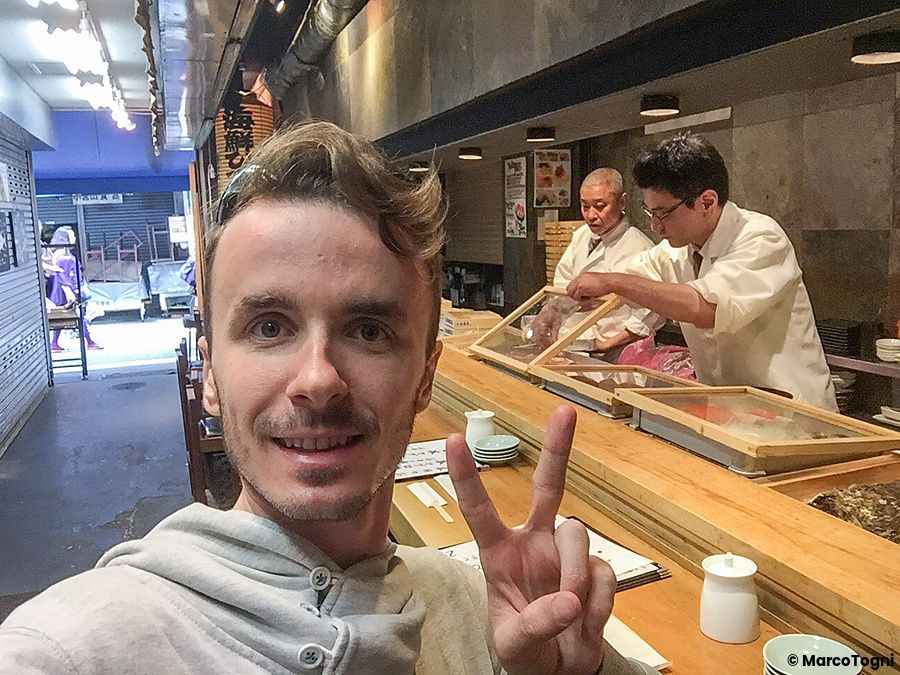
- Sushi Dai: at the Toyosu fish market. Expect to wait in line for about 2 hours. The omakase set costs about 5,500 yen.
- Daiwasushi: right next to Sushi Dai. The line is a bit shorter, but the sushi is still absolutely fantastic. About 5,500 yen.
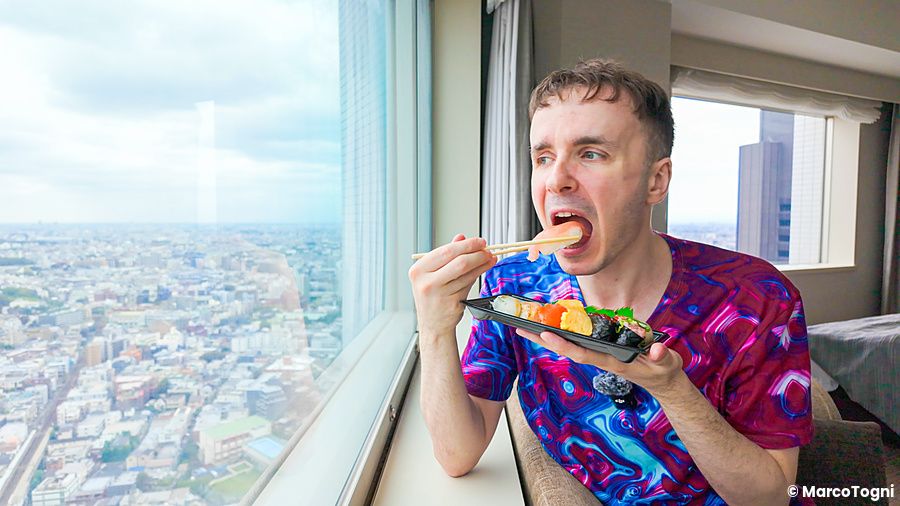
You can find dirt-cheap sushi at a lot of Japanese supermarkets, sometimes for as little as 500 yen a pack, and at many kaiten sushi restaurants like Genki Sushi and Kappa Zushi, where plates start at just over 100 yen.
Soy sauce
Soy sauce for sushi shouldn’t be too strong.
Kikkoman, one of the world’s leading soy sauce makers, produces several kinds:
- Regular soy sauce, in the red bottle: it isn’t suited to sushi, and it’s easy to find in supermarkets. It’s too strong for sushi, but if you can’t find anything else, get this one anyway; it’ll do fine.
- Soy sauce in the green bottle: it has 40% less salt than the one in the red bottle, and it’s the better choice for sushi.
- Sushi soy sauce: you can spot it because the label says “Sushi & Sashimi soy sauce.” It’s the best, but you won’t always find it. It also comes in fairly small bottles and isn’t exactly cheap, but it’s worth buying.
Sushi vs. sashimi
Sushi and sashimi aren’t the same thing, and in Japan nobody mixes them up. Sashimi is just sliced raw fish, with no rice, while sushi is always built on vinegared rice.
You dip sashimi in soy sauce, putting a little wasabi on the fish if you like, and it usually comes out first, while your palate is still clean. If you see sashimi moriawase on a menu, you’ll get an assortment of sliced fish. If you want rice too, order nigiri.
Dirt-cheap sushi
In this video I picked up some fantastic, heavily marked-down sushi at the supermarket and paid next to nothing for it. It tasted fantastic.

Sushi Zanmai
In this video I’m in Ikebukuro, where, as you can see, I got a big, really good sushi set for just over 1,000 yen.

Kaiten sushi with touch-screen ordering
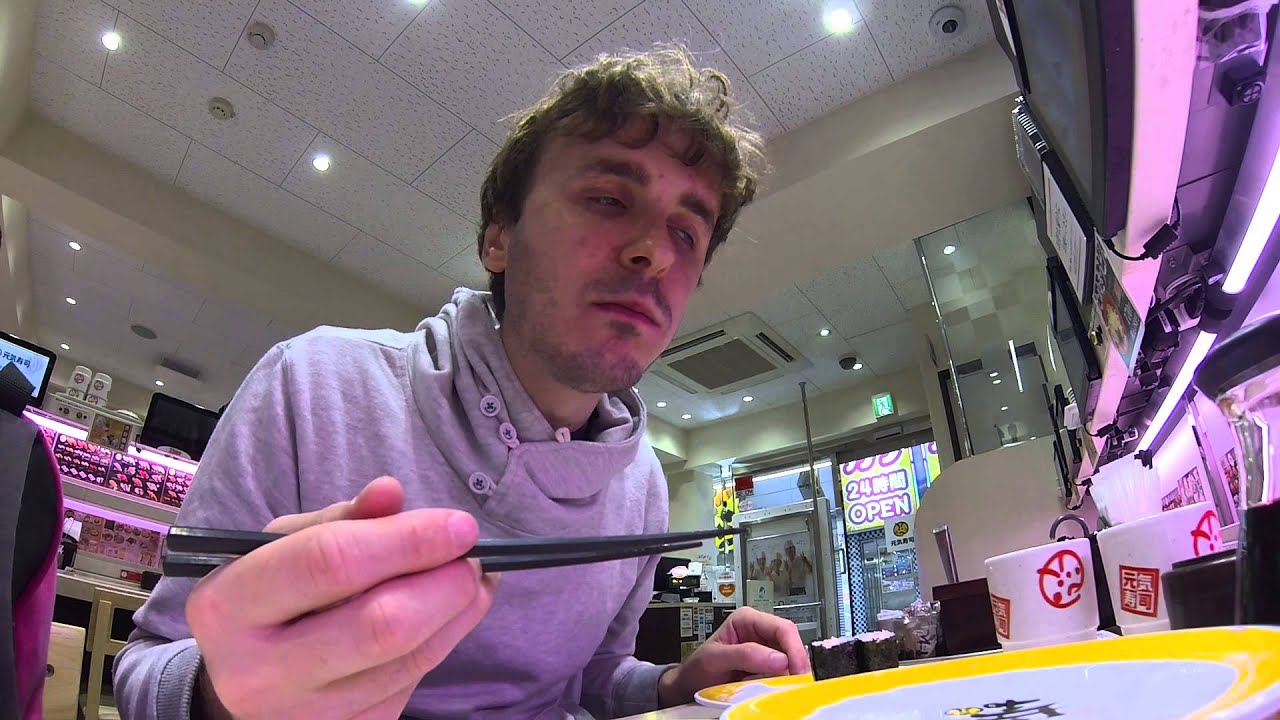
In this video I’m at Genki Sushi, one of the most common kaiten sushi chains in Japan. You order on a touch screen in English, and your plate comes to the table on a super-fast conveyor belt.
The Shibuya branch you see in the video has closed, but a few minutes’ walk away, in Dogenzaka, there’s Uobei: same group, same way of ordering, and open until 24:00.
Sushi Dai
Two hours in line for the best sushi breakfast in the world.
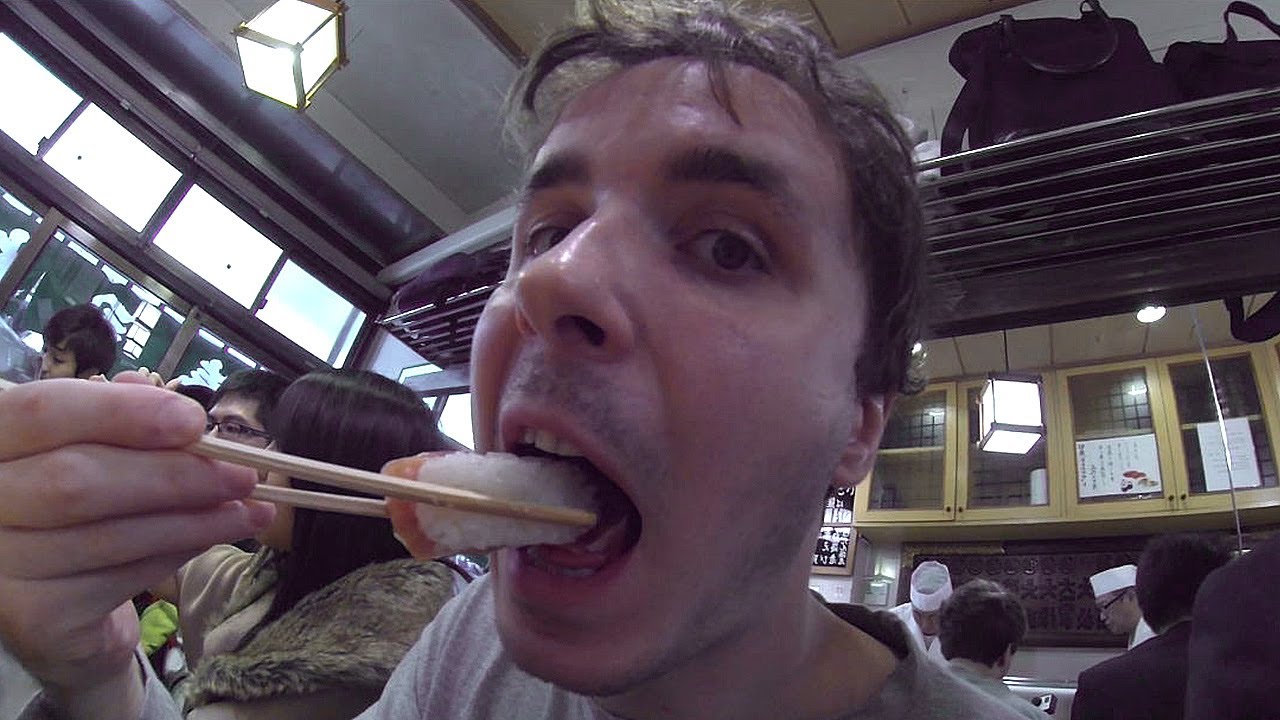
Photo gallery
Besides the photos below, check out lots more Sushi photos.