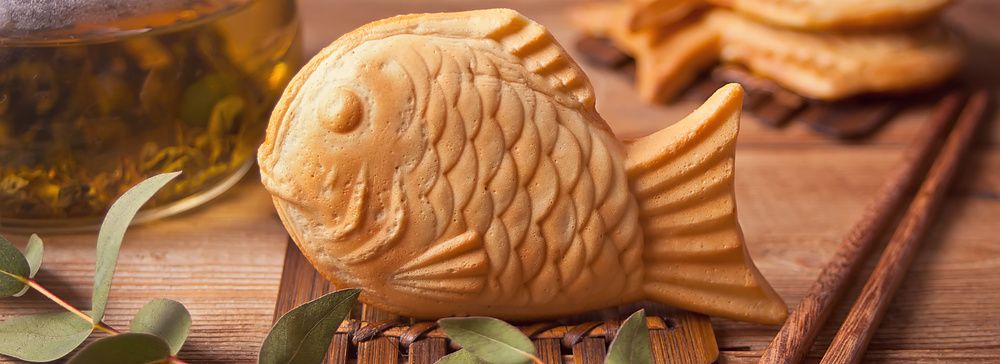
Taiyaki
Taiyaki is one of the simplest street sweets in Japan, and I always recommend it to people on their first trip here. It’s a little cake shaped like a fish: a pancake-like batter filled with sweetened red bean paste and cooked in an iron mold until golden.
It’s cheap, you eat it while you walk, and fresh out of the mold it’s so hot you have to blow on it. There’s more history behind it than you’d guess, though: a specific shop that invented it, two cooking styles that people here take very seriously, and even a song that sold millions of copies.
To tell if the one in your hand is any good, just do two things: watch how they cook it and bite into the tail.
Contents
What it actually is
The name pretty much explains it. Tai is the Japanese sea bream, a red fish served on special occasions, and yaki means cooked on a griddle. So the shape isn’t just a cute design choice; it’s the starting point for the whole sweet.
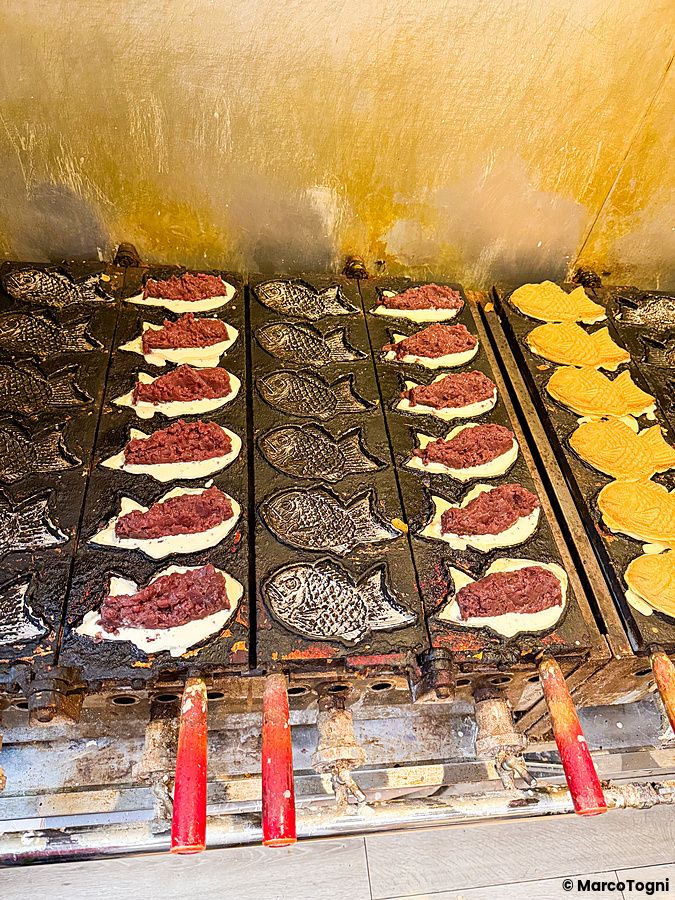
The batter is a runny mix of flour, eggs, sugar and baking powder, poured into two metal halves that close like tongs. Inside goes anko, a paste made from sweet azuki beans, which comes in two forms in the classic version: tsubuan, where you can still feel whole beans when you bite, and koshian, which is sieved until smooth.
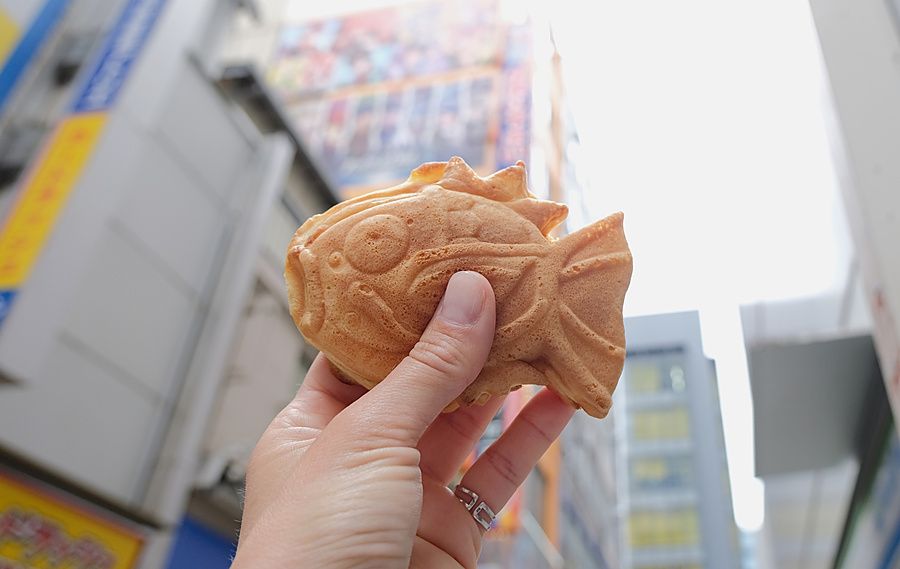
It fits in the palm of your hand, about fifteen centimeters from head to tail, and one is filling enough to count as an afternoon snack. Eat it hot, period. Once it cools it turns into something else, chewy and much less interesting.
My advice: don’t buy one to carry around all afternoon. Buy it when you want to eat it right away.
Where it comes from
The inventor has a name and an address. Naniwaya Sohonten in Azabu Juban, Tokyo, opened in 1909, and everything else started there.
The founder came from Osaka, which was called Naniwa in old Japanese, and that’s where the shop’s name comes from. He was selling imagawayaki, a round cake with the same filling that had been around for a long time, but business wasn’t great.
He tried a turtle-shaped mold instead, and still nothing. When he landed on the sea bream, sales took off, and within a few years that shape became the standard all over the country.
What I find funny about this story is that taiyaki started out as a marketing idea, not some ancient tradition. Then it passed the hundred-year mark and became one of those things Japanese people have always eaten without giving it a second thought.
Why a fish
In Japan, sea bream isn’t just any fish. It’s served at celebrations, at weddings and at New Year’s, and it costs a lot more than other common fish.
The reason is a pun: tai is part of the word medetai, which means auspicious, something worth celebrating. It’s a fish that brings good luck, and for generations it was something you only had on special occasions.
Putting that shape on a sweet that cost next to nothing was a way to bring a bit of luxury within everyone’s reach. You could buy a lucky fish with the loose change in your pocket and eat it on the street.
That still helps explain why, on holidays, the lines outside the old shops get a lot longer: plenty of people also buy them as small good-luck gifts.
Wild or farmed
In Japan people talk about tennenmono taiyaki, literally wild-caught, and yoshokumono, farmed. It’s a joke, and what it really refers to is the cooking method.
The wild ones are cooked one at a time in a single mold with a handle, held over an open flame and turned by hand nonstop. The people who make them for a living call this icchoyaki, which is the proper term, and it takes strong wrists and a good eye for when it’s done.
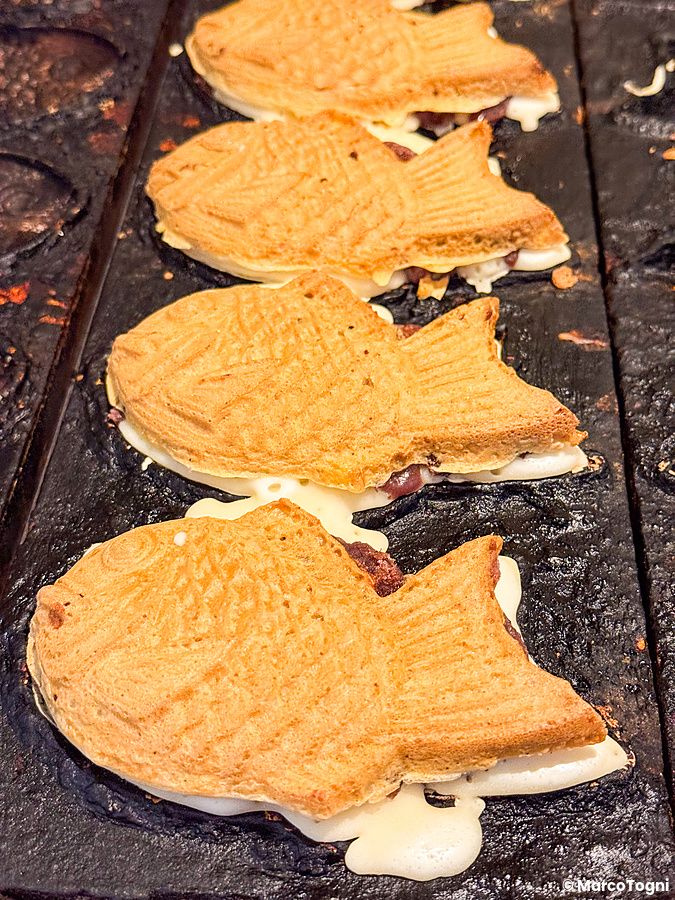
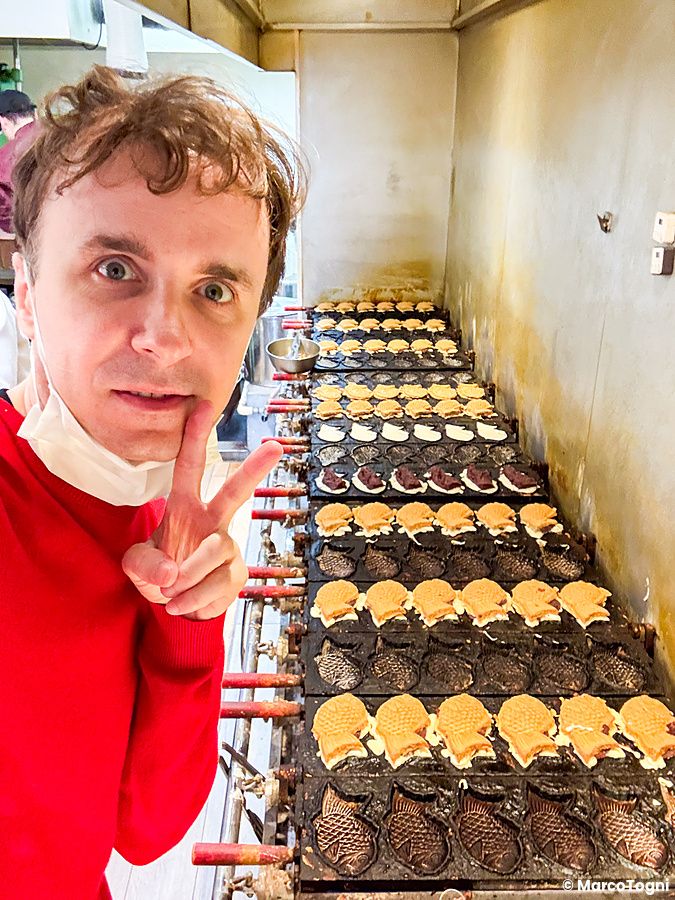
The farmed ones come off a large griddle where the molds are joined together. The cook pours in the batter, adds anko to one half, closes the griddle, and six, eight or ten come out in one go, almost always on an electric griddle. This method came about to keep up with the lines once taiyaki became a nationwide craze.
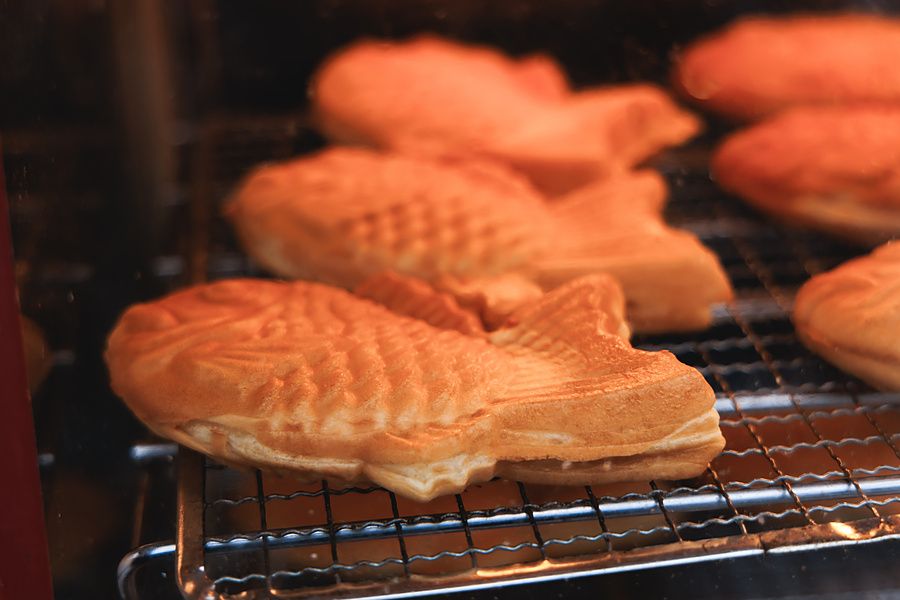
You can tell the difference. Cooked one at a time over a flame, the shell comes out thinner and crispier, almost brittle enough to break in your hand, and the edges stay uneven. The griddle kind is softer and more uniform, closer to a pancake. If you want to figure out at a glance which one you’re looking at:
- Watch the cook’s hands: if they’re holding what look like iron tongs and flipping them over the flame, you’re looking at icchoyaki.
- Look at the shape of the finished ones: ragged, slightly charred edges mean single molds, while fish that all look identical come from the big griddle.
- Check the tail: if it’s thin, dry and crisp like a wafer, it was cooked over a direct flame.
- Ask if their taiyaki are tennen: shops that use the old method are delighted to hear that word.
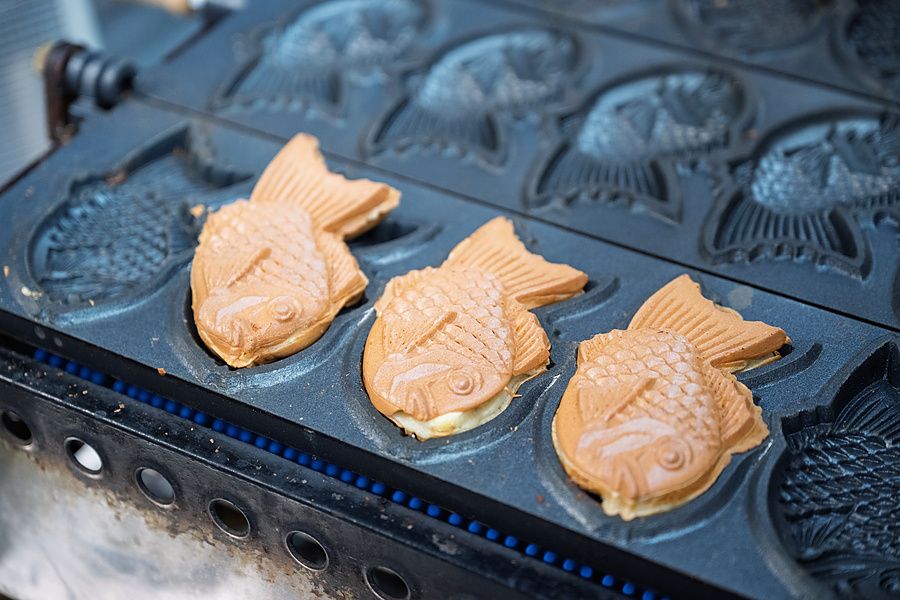
Honestly, I don’t rank them. I like the one-at-a-time kind better for the contrast between shell and filling, but a well-maintained griddle turns out a soft cake that plenty of people like exactly that way.
What goes inside
The old shops serve anko and nothing else, with at most a choice between whole beans and the sieved paste. That’s a deliberate choice, not laziness: when you only make one thing, you make it exactly the same way for a hundred years.
Outside the old shops, the range has grown a lot. Chains and stands in shopping malls offer custard, chocolate, matcha and sweet potato, and in my opinion sweet potato holds up best next to the original, because it stays thick without getting cloying.
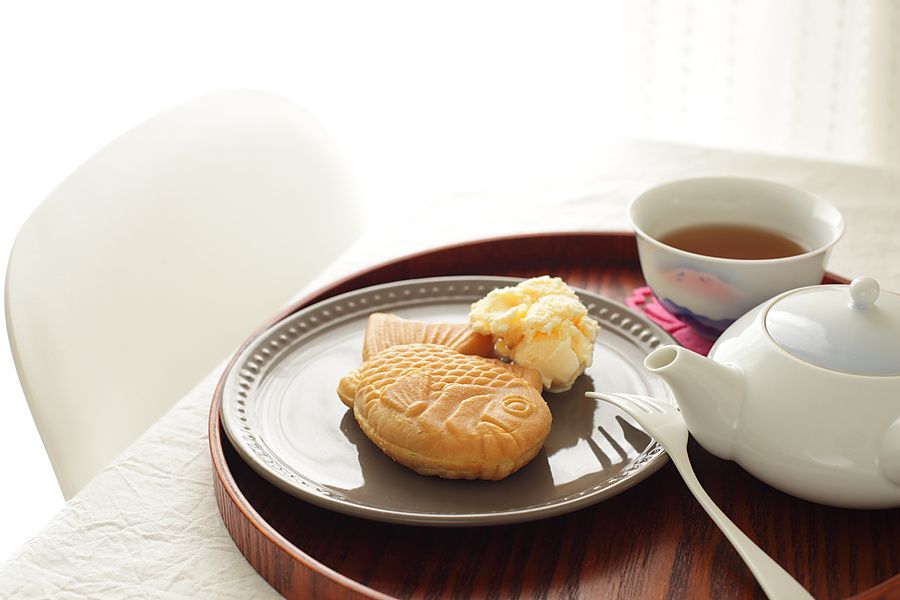
There are also savory versions, with cheese, sausage or bacon, and ones with ice cream stuffed into the still-warm shell. There’s even a white version, made with flours that give it a chewy, sticky texture instead of a crisp one, and it’s very different from the classic.
Then there are the other shapes, which are almost always tied to a particular place: near Ueno Zoo in Tokyo you’ll find panda-shaped ones, and in Hokkaido they make them shaped like squid. They’re cute to take pictures of, but for your first taste, start with anko.
Croissant taiyaki
One version deserves its own mention because you can find it everywhere now: taiyaki made with puff pastry. The dough is layered and buttery like a croissant, pressed between two very hot plates and cooked at high heat, so it comes out flat, golden and glossy.
The texture has nothing to do with the traditional kind. It flakes apart, leaves crumbs on your fingers and tastes much more buttery. It was launched by Gin no An, the sweets spin-off of the chain known for its octopus balls, and before long it was copied across half of Japan.
I think it’s good, but it’s a different sweet. It’s a lot more filling, and if you eat one in the middle of the afternoon, you’ll end up skipping dinner.
If you only have one afternoon and want to understand taiyaki, get the classic one. Save the puff pastry for round two.
Tokyo’s big three
In Tokyo, people talk about three historic shops, all cooking one at a time and all with an orderly line outside the door. They’re far apart, so don’t try to hit all three in an hour, but each one is in a neighborhood that’s worth the walk anyway.
- Naniwaya Sohonten in Azabu Juban: the original shop I told you about. The shell is thin, and you taste the slight char along with the sweetness of the beans. The neighborhood around it is quiet and full of little shops, one of the few corners of Tokyo where people walk slowly.
- Yanagiya in Ningyocho, the old part of town near Nihonbashi: open since 1916, it fills the fish from head to the tip of the tail, and the crust crunches when you bite into it.
- Wakaba in Yotsuya, between Shinjuku and central Tokyo: the house rule here is that there always has to be anko in the tail, and the batter is spread so thin that if you hold it up to the light, you can make out the dark filling.
These places are small, often with barely any room inside, and the line moves, but it’s still a line. If you go on a weekend or during the holidays, expect to wait, and don’t be surprised if they ask how many you want before you even reach the counter.
Outside Tokyo
Taiyaki isn’t a Tokyo thing; you’ll find it everywhere. In Osaka and Kyoto there are stands in the shopping arcades and covered markets, and they’re often the easiest places to grab one because you run into them while you’re already out exploring.
Among the widespread chains, Naruto Taiyaki Honpo cooks one at a time over a direct flame and has shops across half of Japan, including in Osaka’s nightlife area. Yokohama Kurikoan offers a lot more flavors and a softer cake, with many more locations inside train stations and shopping malls.
My advice when you’re traveling is simple. Don’t make a big detour for a snack that costs a few hundred yen, but when you see a stand with the flame going and someone flipping the molds, stop. That’s the time to buy one, because you get one that’s just been cooked instead of one kept warm under a heat lamp.
How much it costs
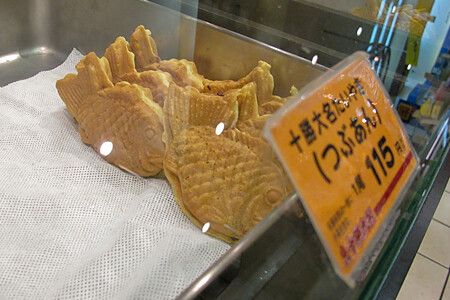
These are some of the cheapest sweets in Japan. At the old shops you’ll pay around 200 yen per fish. The price goes up a bit at the chains and for unusual fillings, and puff pastry costs the most of all because it takes a lot more work.
They’re still snack prices: for under 1,000 yen, two people can eat and still have one left over for later. Prices change over time like everything else, so check the sign before you order.
Quite a few old-style shops are cash only, so keep a few 100-yen coins in your pocket instead of counting on your card.
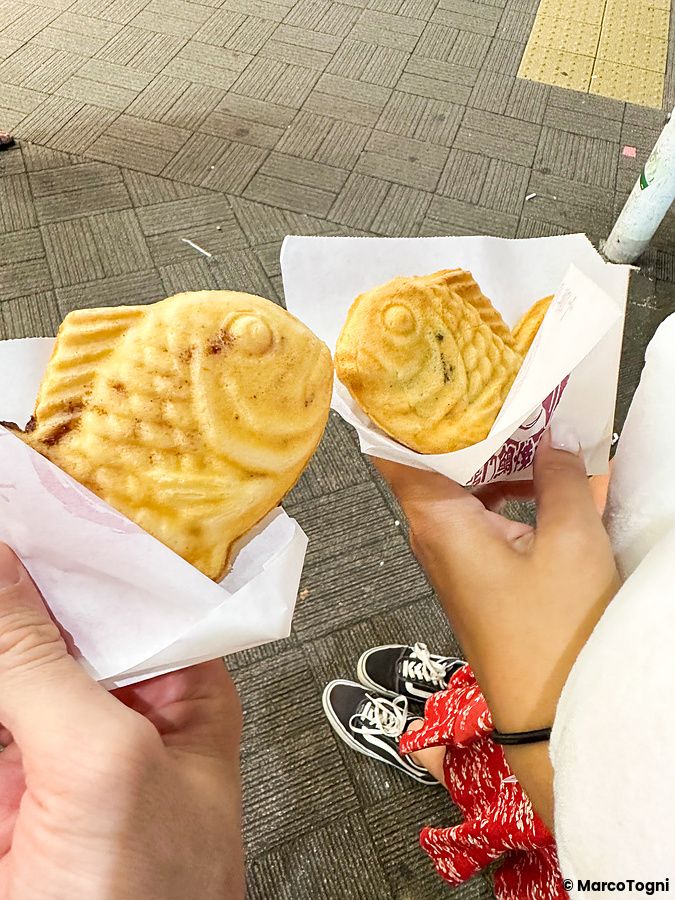
If you buy more than one, they’ll put them in a paper bag, which keeps them warm but also traps the steam. Wait too long and the crust goes soft, and you lose the best part.
Head or tail first?
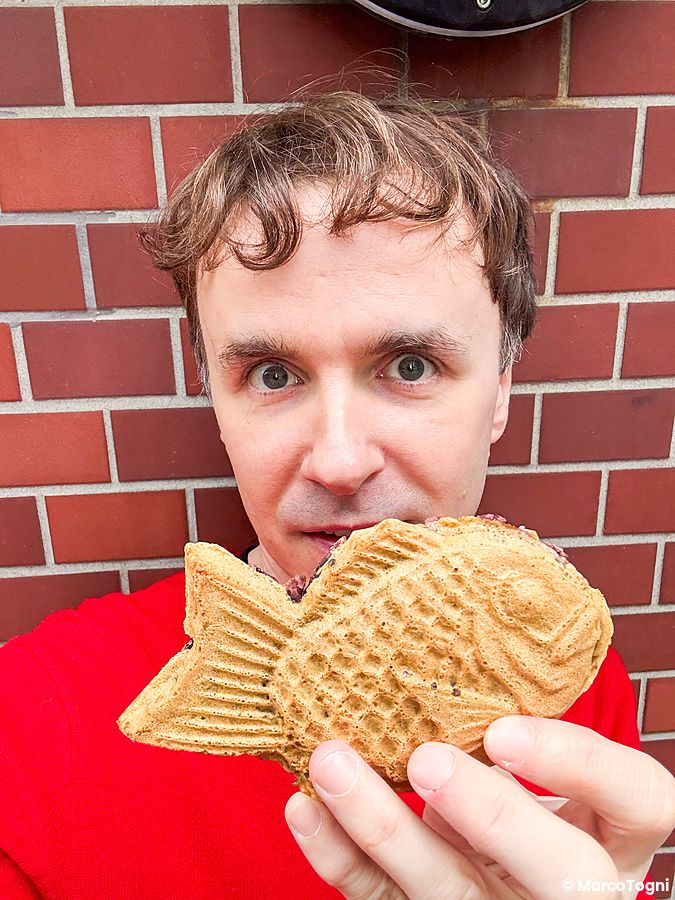
People in Japan take this question seriously, and the surveys that come out every so often land in roughly the same place: about seven in ten people start with the head. Tail-first eaters often say that if you start at the head, the fish seems to be looking at you, and they’d rather avoid that.
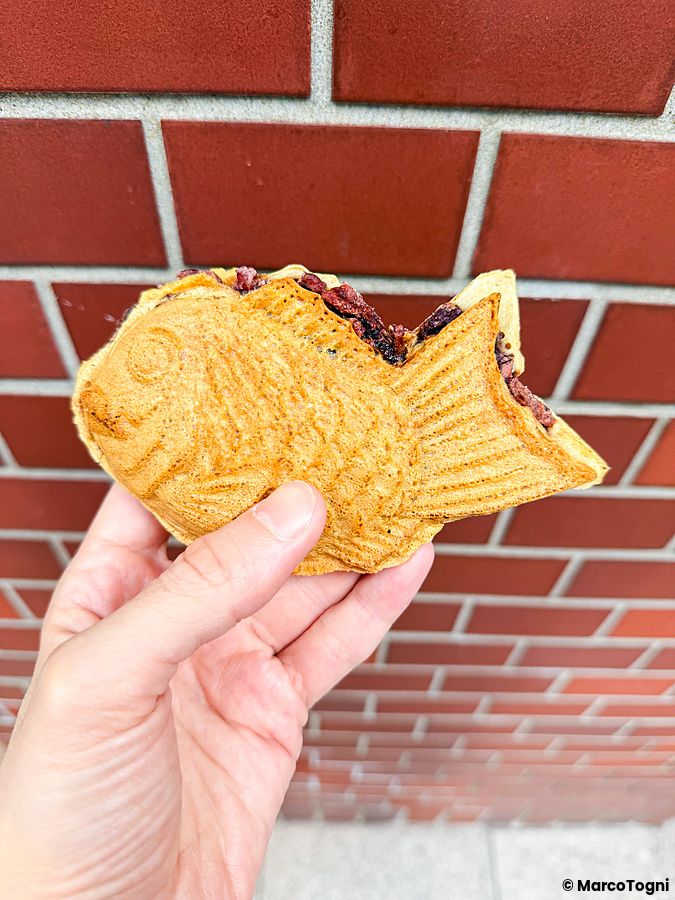
Behind the joke, though, there’s a real way to judge a shop. The tail is the thinnest part, so it’s the first place where shops cutting costs leave out the anko, and when you bite into it you get nothing but empty shell.
That’s why serious shops make a point of saying the filling goes all the way to the tail, and for Wakaba it’s a matter of principle. To size up a new place, eat the tail first.
If it’s full, I’d recommend going back. If it’s empty, that tells you everything you need to know about the shop.
The taiyaki song
In 1975 a children’s song came out about a taiyaki that gets sick of being stuck on the griddle, escapes and swims off into the sea. It sold more than four and a half million copies and is still the best-selling single in Japanese music history, which even earned it a place in the world record books.
The shop in Azabu Juban is usually credited as the one that inspired the story. You don’t need to speak Japanese to see what a big deal the song is: hum it in front of anyone over forty and they’ll almost certainly chime in with the chorus. It’s called Oyoge! Taiyaki-kun, which means Swim, Taiyaki!, and it comes right up if you search for it online. The ending is darker than you’d expect. Once it’s out at sea, the little fish ends up on a fisherman’s hook, and the fisherman eats it.
I bring this up because it helps explain what taiyaki means to Japanese people. It isn’t a fancy treat from a pastry shop, and there’s no aura of untouchable tradition around it. It’s a childhood snack, street food tied to family memories, something you hold in your hand while it’s still warm.
Taking them home
If you buy more than you can eat, they freeze really well. The steps are simple, but follow them in the right order or you’ll end up with a soggy taiyaki.
- Wrap each one in plastic wrap as soon as it’s cooled down, then put them all in a freezer bag and seal it tight.
- They’ll keep in the freezer for a good couple of months without losing much, while in the fridge the shell gets hard within a day.
- Microwave them for under a minute, just long enough to thaw the center and warm up the filling.
- Finish them in a toaster or toaster oven for a couple of minutes with the wrap off. This is the step that brings back the crispy crust.
If you’re eating one fresh from the shop, the only thing to remember is to wait a moment before you bite in. The anko inside holds the heat much longer than the shell around it, and trust me, if you bite in too soon you’ll feel it for the rest of the day.
My recommendation
When people ask me what sweet treat to try in Japan for next to nothing, taiyaki is one of the first things I think of, ahead of plenty of far more photogenic pastry shops. It’s a fish-shaped iron mold, some batter, sweet beans, and a craft that’s been passed down for more than a hundred years.
If I had to pick just one, I’d go for the kind cooked one at a time over the flame, with whole-bean anko, eaten standing up right outside the shop while it’s still burning hot. Then maybe make your second one the puff pastry kind, since you’re there anyway.