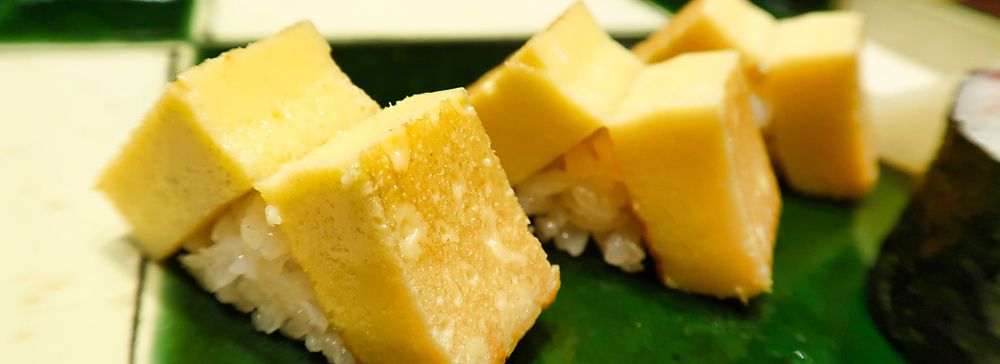
Tamagoyaki
Tamagoyaki is one of those Japanese dishes you eat without giving it much thought, until one day you notice it’s everywhere. It’s the layered rolled omelet you find in station bento, on nigiri at the start or end of a sushi dinner, and on the menu of any izakaya.
It looks like the simplest thing in the world: eggs, a little seasoning and a rectangular pan. Behind it, though, there’s a lot of technique. There are two regional schools that have almost nothing in common, and there are shops that have made nothing else for a hundred years. Still, with the right pan and a few attempts, you can make it at home too.
Contents
What is tamagoyaki
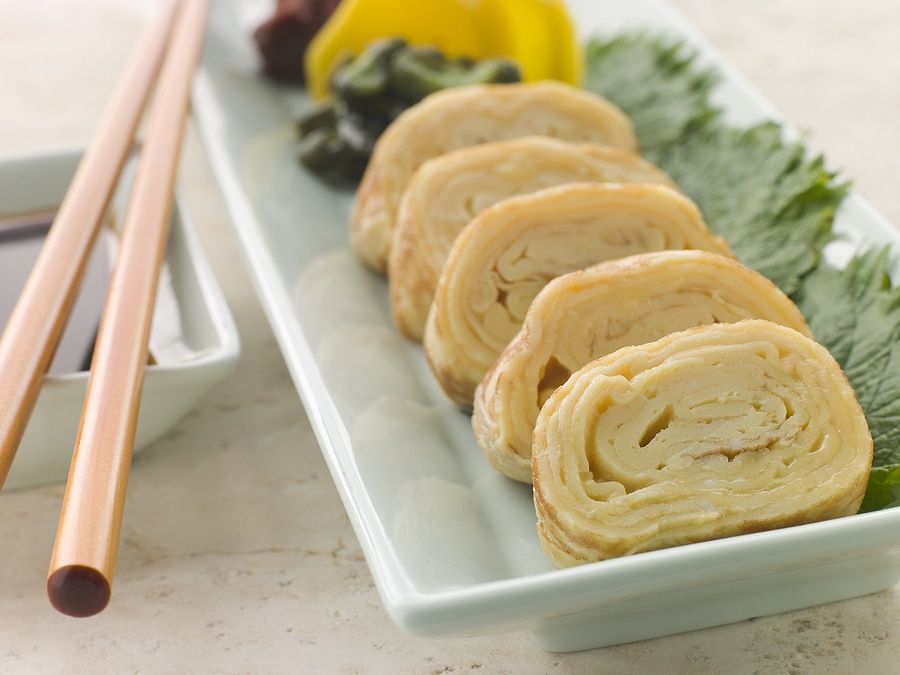
The name just means cooked egg, but in Japan it refers to something specific. Eggs are beaten with dashi, the basic broth of Japanese cooking, plus a few seasonings, then cooked one thin layer at a time and rolled up until they form a compact block. It’s cut into slices about two centimeters thick, and in cross-section you can see the spirals of the layers.
It isn’t an Italian frittata, and it isn’t a French omelet either. The texture sits somewhere in between: soft, a bit springy and moist inside. Above all, people often eat it lukewarm or cold, which is why it ends up in every lunch box.
The name actually covers two different families. One is atsuyaki tamago, the thick, sweet version. The other is dashimaki tamago, which is softer, full of broth and made without sugar. After their first bite, many people assume tamagoyaki is always sweet, but it depends a lot on where you eat it.
Tokyo vs. Kansai
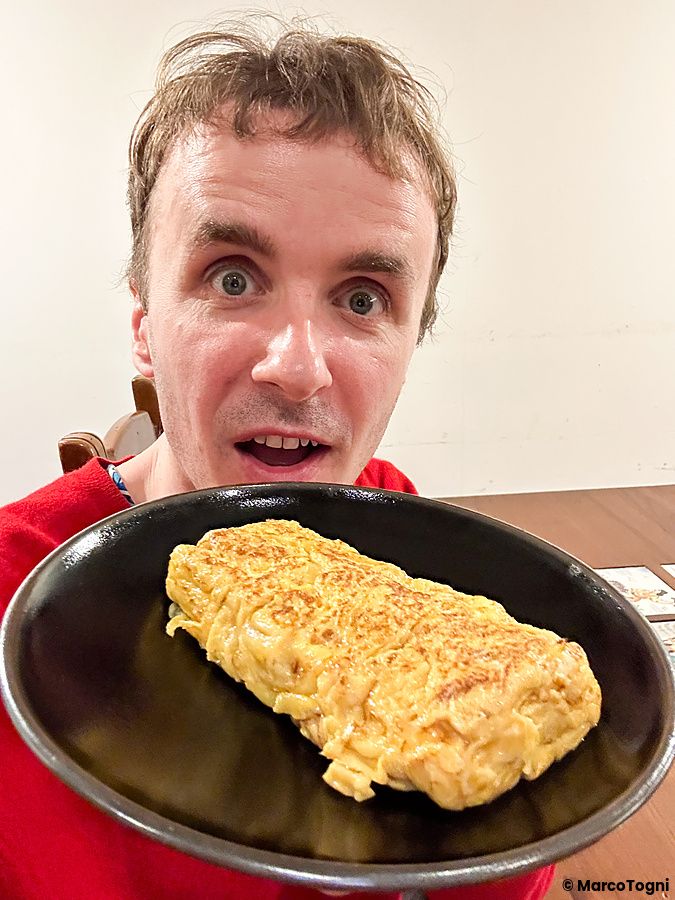
This is where you can really taste the difference between eastern and western Japan. In the Tokyo area, tamagoyaki is sweet, made with sugar and dark soy sauce, cooked in thicker layers and left to brown until it forms a golden crust. It tastes almost like a dessert, and it’s the kind many sushi bars serve you.
In Kansai, meaning Kyoto, Osaka and the surrounding area, they go the opposite way: no sugar, lots of dashi, light soy sauce and a dash of mirin. The layers are very thin and the egg stays pale yellow, with no scorch marks. When you press a slice of dashimaki with your chopsticks, broth comes out, and that’s how you know it’s well made.
The pan changes too. The Tokyo one is almost square, while the Kansai one is a longer, narrower rectangle, and in Japanese they’re simply called the eastern type and the western type. The square shape makes it easier to get a neat block, while the long one helps you roll lots of thin layers.
I’ll be honest: some Japanese people who grew up in Osaka find Tokyo’s sweet tamagoyaki a bit odd, and vice versa. If you’re traveling between the two cities, I recommend trying both within a few days of each other, because that’s the only way you’ll understand the difference.
Tamagoyaki at sushi restaurants
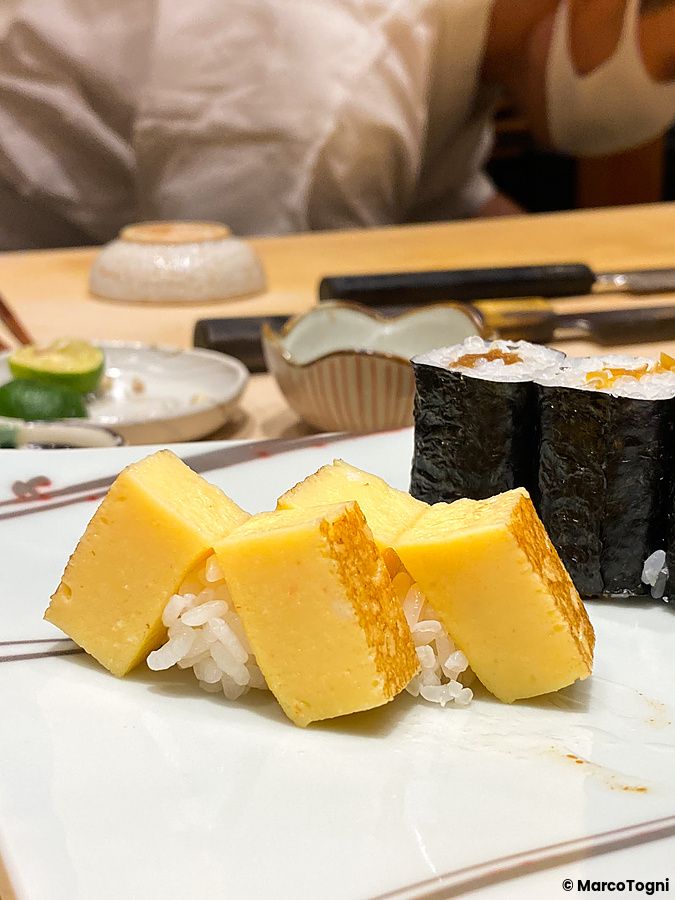
At sushi restaurants tamagoyaki has a special name: gyoku, the alternative reading of the character used for egg. Traditionally it was one of the toughest tests for apprentices, who had to get it right before they were considered fully trained chefs.
That’s why you often hear that to judge a sushi bar, all you need to do is order the tamago. It’s not gospel, but there’s some truth to it: it’s the only piece that doesn’t depend on the quality of fish bought at the market. Only the skill of the person making it counts.
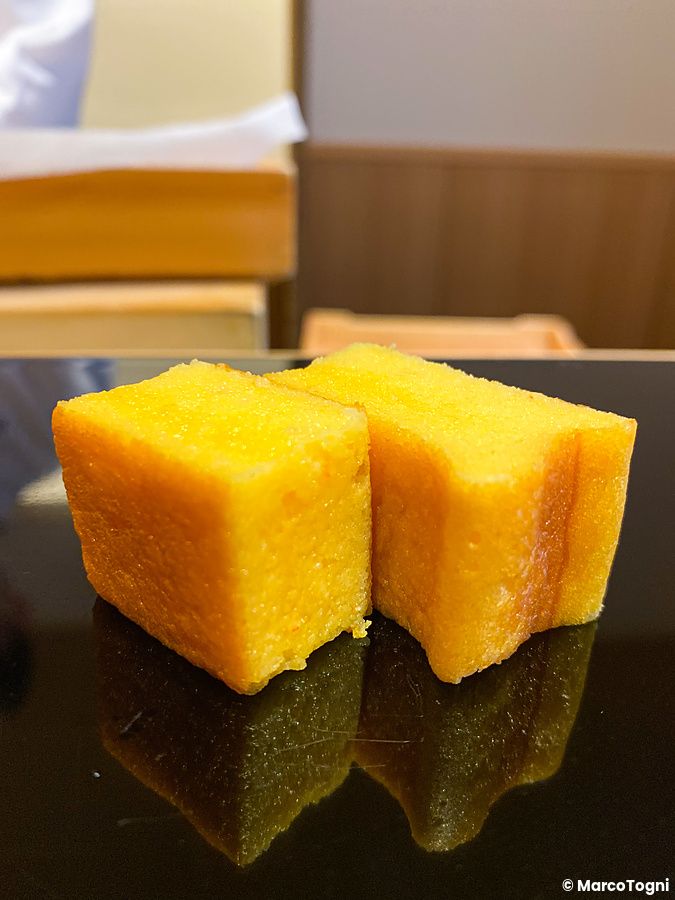
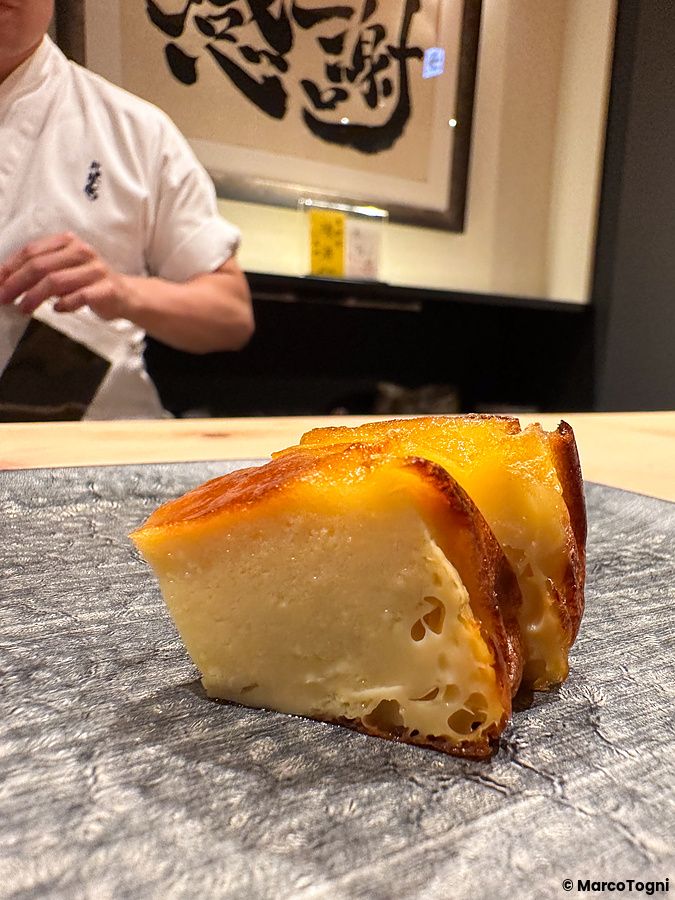
At high-end sushi bars you may get a tamagoyaki very different from the homemade kind. It’s tall and firm, with a sponge cake texture and a sweet taste, with shrimp or white fish blended into the egg. It often arrives as the last piece, closing the meal like a dessert.
At kaitenzushi, the conveyor belt restaurants, tamago is almost always a thin sweet slice laid on the rice and held in place with a strip of seaweed. It’s nothing special, but kids love it and it’s one of the cheapest items on the menu.
Don’t be surprised to find the opposite, either. In some areas, for example parts of Shizuoka Prefecture, sushi bars use a thin omelet instead of the thick block.
Where to eat it in Tokyo
The best-known place for tamagoyaki in Tokyo is the Tsukiji Outer Market, the part that stayed open after the wholesale fish market moved. Among the stalls there are specialty shops that make nothing but tamagoyaki, with cooks standing at their pans side by side, facing the street.
These are the ones I recommend:
- Yamacho, near the market’s information center, which sells tamagoyaki on a skewer for a couple hundred yen, to eat standing up. There’s almost always a line, but it moves fast.
- Marutake, which opened as a tamagoyaki shop in the late 1920s and is run by the family of Terry Ito, a very well-known TV personality in Japan. Theirs is the soft, sweet kind, made with the family’s own dashi.
- The other shops in the same market, which often also make versions with eel, shrimp or green onion inside and sell whole blocks to take away. The best known is Tsukiji Shoro, open since 1924, whose tamagoyaki is less sweet than Marutake’s. It also has shops in department stores.
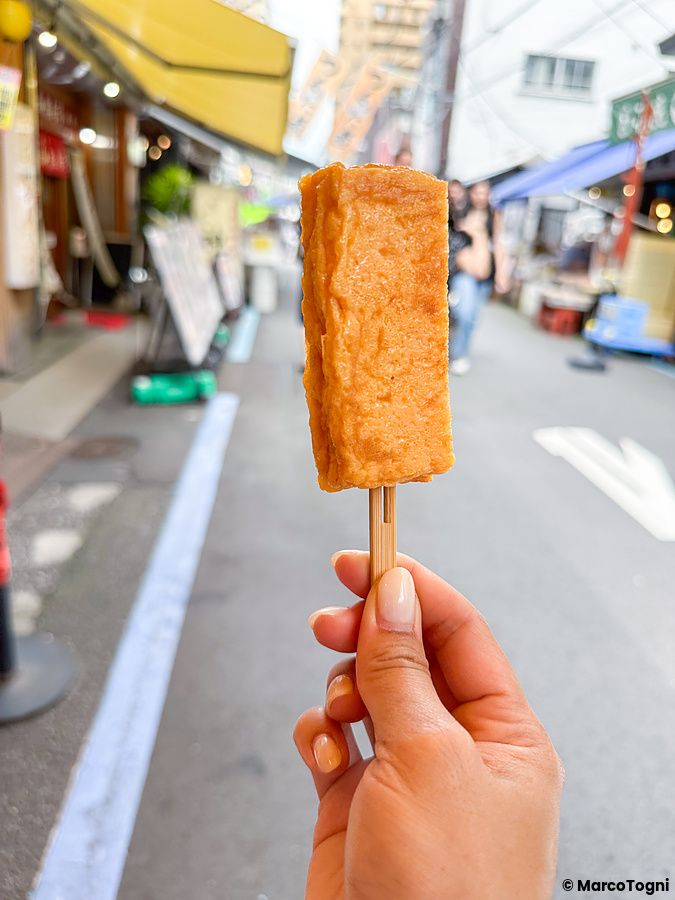
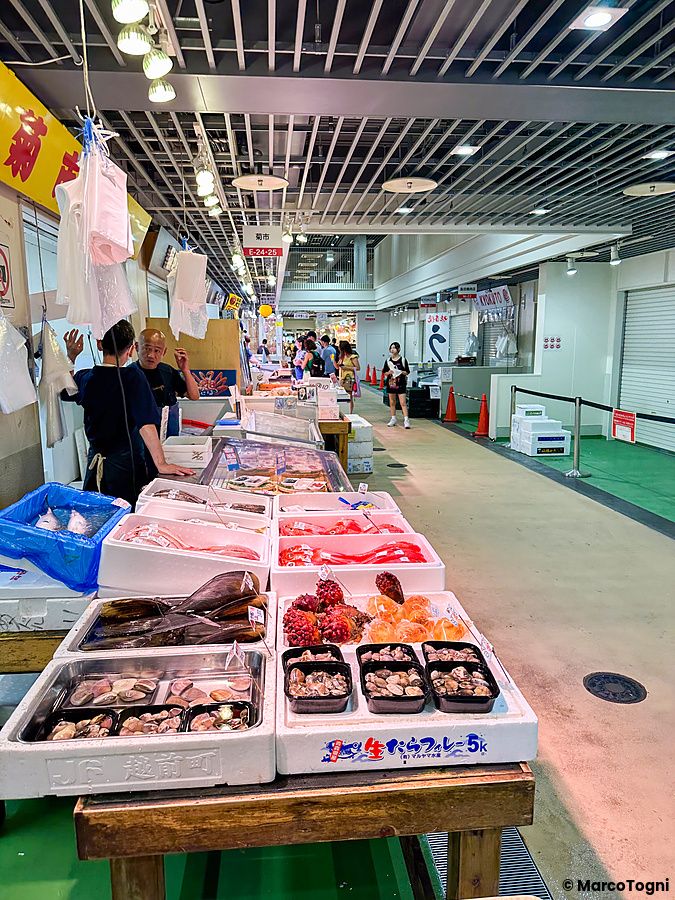
My advice is to go early in the morning, because by late morning Tsukiji is swamped with people and many shops close in the early afternoon. Get a skewer there so you can eat it hot, and if you like it, buy a whole block to eat at your hotel. It keeps well in the fridge for a day.
Outside Tsukiji there’s no need to hunt for special places. Dashimaki tamago is on the menu at almost every izakaya and usually costs around 500–1,000 yen a portion, served with a little mound of grated daikon and a few drops of soy sauce. When I walk into an izakaya I don’t know, it’s one of the first things I order, because it comes out fast and everyone at the table likes it.
Kyoto and dashimaki
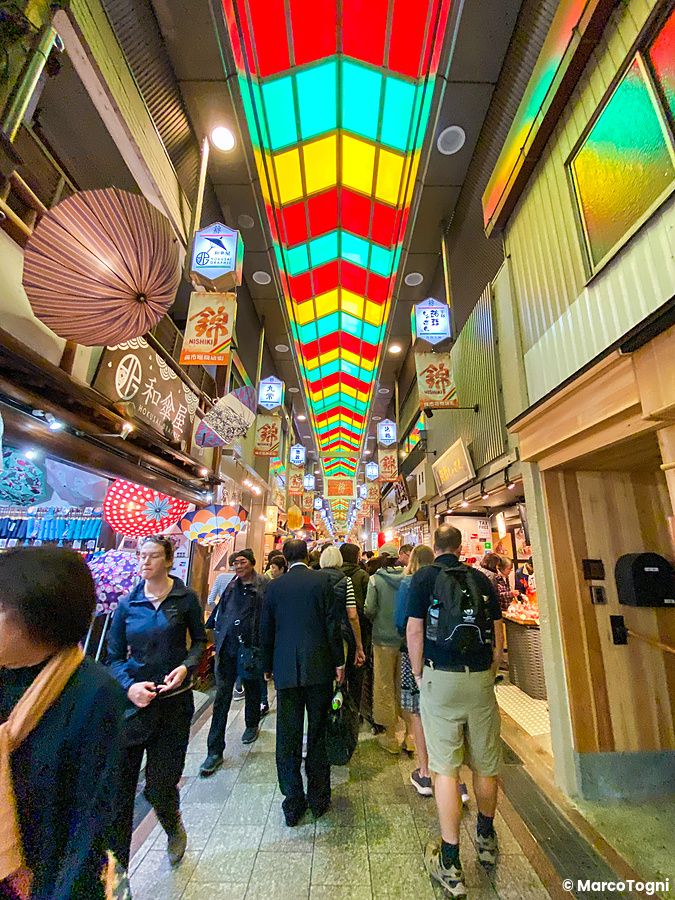
If Tsukiji is the home of sweet tamagoyaki, the savory Kansai kind belongs to Nishiki Market in Kyoto. Along the covered street there are shops making dashimaki all day long in front of passersby. The best known is Miki Keiran, which uses a dashi made with kombu seaweed and katsuobushi, dried bonito flakes.
Kyoto’s dashimaki is so full of broth that it slumps a little on the plate as soon as it’s cut. The flavor is delicate and salty, with the briny aftertaste you get from dashi. I really like it, because it’s the opposite of what you picture when you think of an omelet.
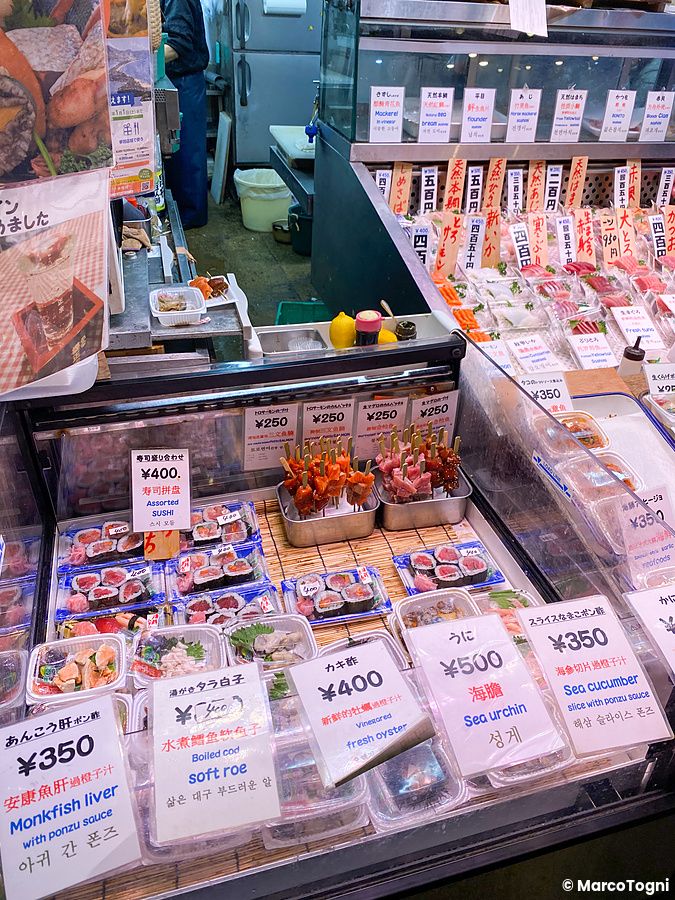
At Nishiki, too, you’ll find small portions or skewers to try on the spot, as well as whole packaged blocks. Keep in mind that in many parts of the market you’re asked not to eat while walking. You eat in front of the shop, in the designated area, and then carry on.
In Osaka, dashimaki often shows up at izakaya and at small restaurants serving home-style cooking. All over Kansai it’s also common to find it between slices of soft bread with mayonnaise, as a tamago sando. In Kyoto there are several versions made with hot dashimaki instead of mashed boiled egg.
Bento and konbini
The tamagoyaki Japanese people eat most often isn’t the restaurant kind but the one in their bento. Moms make it in the morning for their kids, and two or three yellow slices next to the rice are practically a must, partly because they add color next to the white rice and the vegetables.
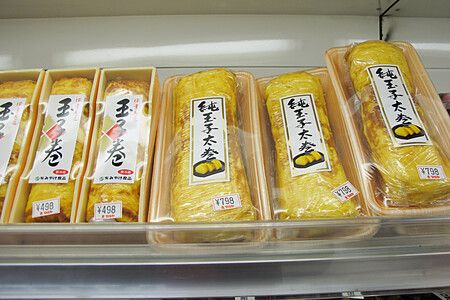
At konbini and supermarkets you’ll find packaged, pre-sliced tamagoyaki for next to nothing, and you’ll also find slices in the onigiri and bento sold in the refrigerated section. They’re fine for a snack, but they’re not the same as the freshly made kind: denser, sometimes a bit rubbery and usually quite sweet.
A close relative of tamagoyaki is datemaki, which people eat at New Year’s as part of osechi, the boxes of traditional holiday dishes. It’s a roll of egg and fish paste, cooked like a big omelet and rolled up in a bamboo mat that leaves ridges on top.
It tastes very sweet and has a texture a bit like cake. If you’re in Japan at the end of December, you’ll see it stacked up in every supermarket, but the rest of the year it’s harder to find.
The right pan
To make tamagoyaki at home you need a dedicated pan, which in Japanese is called makiyakinabe or tamagoyakiki. You can try it in a round pan and trim the edges at the end, but the result isn’t the same and you waste quite a bit of egg.
There are basically three options:
- A nonstick pan, the easiest to use if you’re just starting out. It’s cheap, roughly 1,000 to 3,000 yen, and you’ll find it at any housewares store or at Muji and similar shops.
- An iron pan, which is heavier and has to be seasoned with oil before you first use it, but lasts for years and handles high heat well.
- A tin-lined copper pan, the kind professional cooks use. Copper heats evenly and gives you a uniform crust, but the price climbs to several thousand yen, often over 10,000, and the pan needs careful handling.
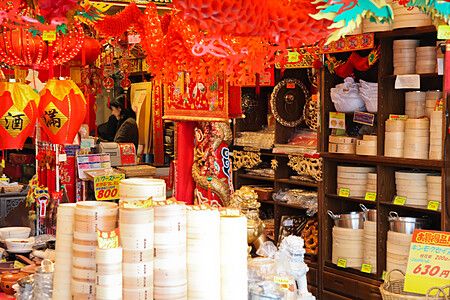
The best place to buy one is Kappabashi, the kitchenware shopping street between Ueno and Asakusa. There you can compare the square Tokyo pan and the long Kansai one up close and pick the size. For one or two people the small one is enough; it takes two or three eggs at a time.
Before you buy a copper pan, check your stove, because the traditional ones don’t work on induction cooktops. It’s one of the souvenirs I recommend most often to people who love cooking, but it’s only worth it if you’re going to actually use it.
How to make it
There isn’t much to the basic recipe. Three eggs make one block in a small pan, and you’ll need a few tablespoons of dashi and a teaspoon of soy sauce. If you want the Tokyo version, add a tablespoon of sugar and one of mirin. For dashimaki, leave out the sugar, use more dashi and switch to light-colored soy sauce.
Beat the eggs with chopsticks in a back-and-forth motion, without whipping them, so they don’t get foamy. For a smoother result, strain the mixture through a sieve.
Here are the steps:
- Get the pan good and hot and grease it with a paper towel soaked in oil. Keep the towel next to you the whole time you’re cooking.
- Pour in a thin layer of egg, tilt the pan so the egg covers the bottom and pop any bubbles with your chopsticks.
- While the top is still a little runny, start from the far side and roll the egg toward you with chopsticks or a small spatula.
- Push the roll back to the far side, grease the empty part of the pan and pour in another layer. Lift the roll so the raw egg runs underneath and sticks to it.
- Keep going until you run out of mixture. Then wrap the hot block in a bamboo mat or parchment paper for a few minutes so it takes on a squared-off shape.
The most common mistake is waiting too long to roll. If the egg is already cooked all the way through, it won’t stick to the next layer, and the block comes apart in layers when you slice it.
Heat matters too. If it’s too low, the egg dries out. If it’s too high, the sweet version burns right away because of the sugar. Let’s be honest: everyone’s first two or three come out lopsided. Eat them anyway. The flavor is right even when the shape isn’t.
Variations worth trying
Once you get the hang of it, tamagoyaki becomes a base for all sorts of things. In Japanese homes the most common additions are chopped scallions, nori laid over one layer before rolling, cheese, shirasu, which are small boiled white fish, or a piece of grilled eel in the center. In Osaka and Kyoto that last one even has its own name, umaki.
On izakaya menus you’ll often find dashimaki with mentaiko, which is spicy cod roe, or dashimaki with a thick dashi-based sauce poured over the top. If you spot any of these, they’re all worth trying.
My advice is to always start with the plain version, both at restaurants and at home. It’s the one that shows you right away the difference between well-made tamagoyaki and an ordinary one, and fillings only make sense after that.
Which one to go for
If you only have a few days in Tokyo and want to try tamagoyaki somewhere famous, the simplest choice is to have it on a skewer for breakfast at Tsukiji Outer Market. If you’re passing through Kyoto, put the dashimaki at Nishiki on your list of things to try at the market.
Otherwise, any izakaya right by your hotel will do. Honestly, I almost always go for dashimaki over the sweet kind. I like it hot, with grated daikon on top and a beer on the side. It’s not the dish you expect to remember from a trip to Japan, but after a while you’ll be ordering it without even looking at the menu. How do you like yours, sweet or savory?