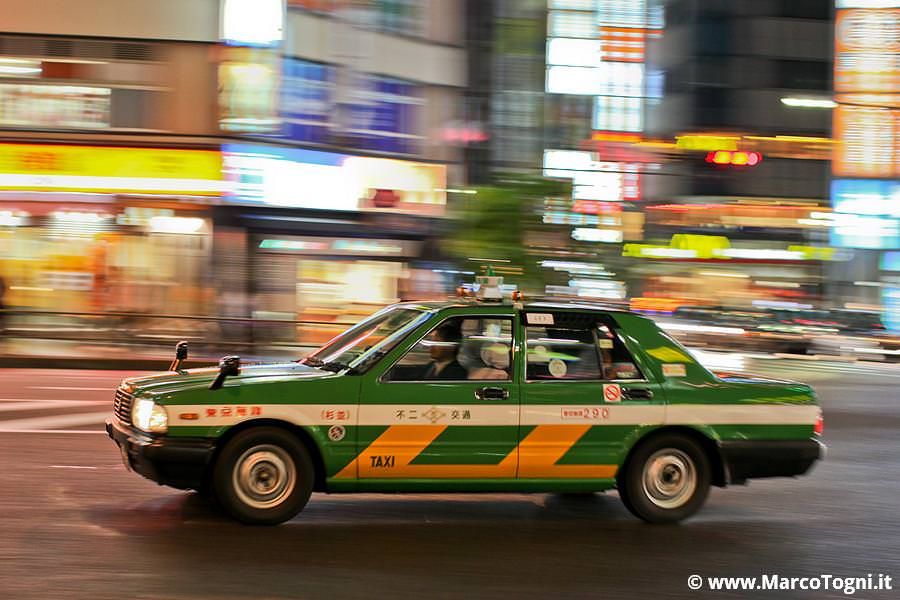
Taxis in Japan
Taxis aren’t the first thing that comes to mind when you think of Japan. Yet there are times when they become essential. Maybe you’ve missed the last train, or you’re somewhere remote with no bus in sight, or you’re dragging heavy suitcases through the rain. That’s when you realize that knowing how to use taxis in Japan isn’t as simple as it sounds, and that it can make a real difference.
Japanese taxis are known for being clean, punctual and safe, but some of the ways they work can throw you off if you’re new to the country. The doors open by themselves, you can pay with an IC card, and sometimes a taxi won’t stop even though it looks available. I’ll walk you through when they’re worth taking, what they cost, how to catch one and what to avoid, plus plenty of quirks, so you’re not caught off guard when you really need one.
Contents
Cost
People often tell me that “taxis in Japan are expensive,” but honestly, are they cheap anywhere else in the world? Taxis in Japan don’t actually cost that much more than they do in the world’s major capitals. Fares generally start at around 500 yen for the first kilometer, then go up 100 yen every 232 meters, and you’ll pay more when there’s heavy traffic.
Given all that, it makes sense that taxis aren’t the best way to get around Japan.
Paying
You have more options than you might think when it comes to paying. Almost every taxi in the big cities takes international credit cards and IC cards like Suica or Pasmo, which you tap on the reader next to your seat. Many cars also display QR codes for Japanese digital payment apps, but those won’t be much use to you.
Rural areas are a different story. You can still end up in a taxi that takes cash only, so keep a few bills on hand once you’re outside the cities. And remember one thing that always catches people off guard: in Japan you don’t tip, ever. If you tell the driver to keep the change, chances are they’ll hand it back anyway.
Taxi scams
Japanese taxi drivers generally don’t try to rip you off on purpose the way they do in some parts of the world, so calling it a “scam” is probably going too far. That said, I’ve personally had a driver who was clearly trying to stretch out the ride. And it’s still true that a lot of drivers make glaring mistakes. I’ve seen it on my own trips and on the tours I’ve led, and those mistakes can cost you money, time and patience. That’s why it helps to know a few basic rules:
1. Always give the exact address. Don’t just say the name of the place unless it’s a major station or somewhere very well known (“Shibuya Station” is fine). If all you say is “Hotel Sakura” or “Tanaka Restaurant,” you could end up somewhere completely wrong and pay double to get back. Many hotels also have several locations, some with very similar names. Say “Apa Hotel Kabukicho,” for example, and the driver might take you to “Apa Hotel Kabukicho Tower,” which is somewhere else entirely.
2. Never show the driver Google Maps on your phone. And never hand them your phone. If you must, copy the address in Japanese and show them that. Every taxi has GPS navigation, so make sure the driver uses it. Once they start eyeballing your phone and guessing, they often take a longer route, not out of malice but because they haven’t really understood where you want to go. The easiest fix is to ask the front desk for one of the hotel’s business cards, which has the name, address and phone number in Japanese, and keep it in your pocket for the whole trip. Hand it to the driver and the problem is solved in three seconds.
If you’re going anywhere else, the destination’s phone number works great too. Japanese car navigation systems can look a place up by its phone number, and that’s far more reliable than a mispronounced name.
Uber in Japan
Uber does exist in Japan, but it doesn’t work the way it does in other countries. What shows up isn’t an Uber car but a regular taxi, with a meter and official fares. Basically, the app is just a way to book a taxi. It’s handy if you don’t feel like looking for one on the street, but don’t expect discounts or special treatment. The other downside is coverage: in big cities and tourist areas you’ll find a car easily, while in smaller towns you may wait a long time or find nothing at all. The real advantage is something else, though. You type the address into the app and the driver sees it already written in Japanese on their screen, so there’s zero confusion about where you’re going. If you don’t speak a word of Japanese, that’s often worth more than not having to hunt for a taxi on the street.
The app locals use
Most people in Japan use Go, the most popular app for calling a taxi. It works very well: you can see on the map where the car is, and you can pay through the app or in cash.
The good news is that it works with a foreign number too. The only catch is that you need to receive the verification text, so with a data-only eSIM you won’t be able to sign up. The app is also available in English and takes international credit cards. If you just can’t sign up, you’ll have to use Uber or flag down a taxi on the street. That’s not a big deal, since taxis in Japan are safe and easy to find, especially around stations.
Trains after midnight
Taxis are expensive, that’s true, but around midnight the train and subway lines stop running, and they don’t start again until around 5 the next morning.
If you miss your train, the only way back to your hotel, or home, is to take a taxi. As a rule, if your hotel is far away, expect to pay a lot. If it’s fairly close, you could try walking and ask for directions along the way. To figure out whether you’re far or close, just think about how long the subway ride took. Say you’re in Asakusa and your hotel is in Shinjuku: that’s at least half an hour by subway, too far to walk comfortably, and a taxi would cost a lot. If you’re in Shibuya and your hotel is in Shinjuku, under 10 minutes by subway, you could take a taxi or try walking it for the experience.
At night, the rates I mentioned above go up.
Why taxis sometimes don’t stop
You’re at the curb with your arm up, an available taxi is coming toward you… and it drives right past without even slowing down. It’s not just you. This happens a lot in Japan, especially in the evening, and it can be confusing. But it’s nothing personal, and it’s certainly not rudeness. There are several reasons why a taxi that looks available won’t stop even when you’ve waved it down:
- It’s already booked through an app or by phone. Many taxis show a green or red sign (in kanji) that isn’t always easy to read at a glance, and some are “available but assigned.”
- The driver is ending their shift and doesn’t want to get too far from the depot. This happens mostly in big cities: after a certain hour, if your destination is “too far,” they may pass you by.
- There’s nowhere safe to stop, especially on fast-moving roads or in front of busy stations. In Japan, safety and following the rules are taken very seriously.
Traffic
At night it’s not an issue, but if something comes up and you end up in a taxi in the afternoon, you may be better off getting out and walking. As I mentioned above, the meter keeps running even when the taxi sits in traffic for several minutes, and since some Tokyo traffic jams can leave you stuck for quite a while, you could end up paying a pretty steep fare.
Doors that open by themselves
What throws people off the most the first time is that the door opens on its own. The driver pulls a lever from their seat and the rear door swings outward, so when the taxi pulls over, take a step back or it’ll hit you.
At the end of the ride your instinct will be to close it, but don’t. Just get out and let the driver handle it. If you slam it shut by hand you could damage the mechanism, and you’ll get a dirty look. You always get in and out on the curb side, while the door facing the street stays shut.
Is haggling only an Okinawa thing?
There’s no haggling over prices in Japan, unlike many other Asian countries. Taxis charge fixed fares and you can’t ask for a different price, except maybe in a few special cases when you’re going fairly far.
When I was in Okinawa, though, I asked a few drivers how much they’d charge to take me to a beach quite a way from Naha, the main city in the archipelago, and I realized that negotiating on longer trips is fairly normal. In the end I made a deal with a friendly driver, who even gave me his personal phone number in case I wanted a ride back.
My guess is that this is more common in Okinawa and probably in more rural areas, while in Tokyo you’re unlikely to get anywhere negotiating. I’ve paid 7,000 yen for a taxi there, and once, when a friend paid for a very long ride, the bill came to around 12,000 yen, with no way to agree on the price beforehand.
Different companies
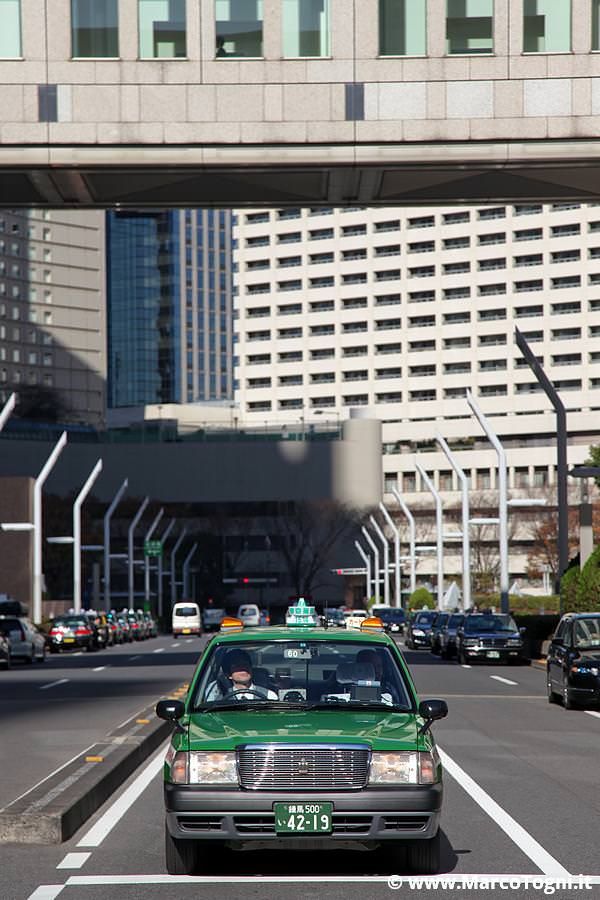
There are several taxi companies. The best way to get a taxi is to go to a station, where you’ll find them lined up, or you can book one by phone, though without at least some Japanese that can be quite a challenge.
Taxi tours in Tokyo
One of the easiest ways to see Tokyo is a private taxi tour, with a driver who takes you around for the whole day. You choose the route, stop wherever you like and set your own pace. At first it might sound like the perfect solution, but it isn’t always the best deal: if you want to cover a lot of ground in one day, you’re often better off taking several separate taxis, so you’re not also paying for the driver’s waiting time. Also, many drivers just do the driving and don’t act as a real guide. Still, if you’re after maximum convenience and zero stress, it can be worth considering, especially if there are several of you.