teamLab Botanical Garden
A botanical garden in Nagai Park, in the south of Osaka, that after dark fills with lights, sounds and artworks reacting to the people walking by, to the wind and even to birds. This is teamLab Botanical Garden, a teamLab that’s entirely outdoors. There are no enclosed rooms or mirrors: you walk among real trees and glowing eggs you can push, and past a lake with the colors reflected on the water.
To me it’s one of the best ways to spend an evening in Osaka. It’s perfect if you’ve already seen teamLab in Tokyo and want something different, and it’s great for couples and for families whose kids need to run around after a day of museums and shopping.
Contents
What you’ll see
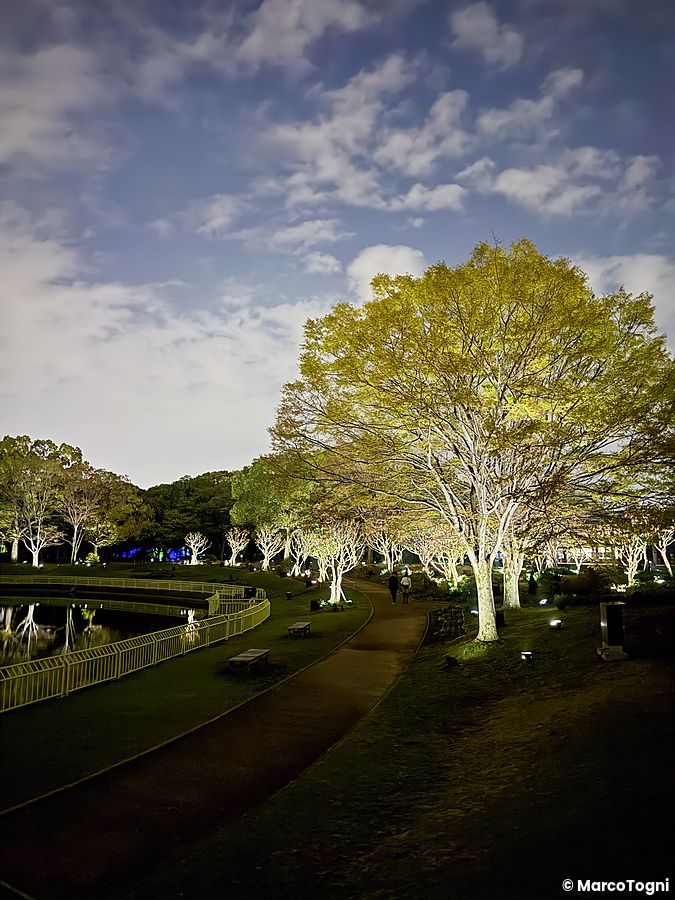
During the day this is just the park’s regular botanical garden, with lawns, a big lake and small groves of different trees. In the evening the artworks are built around those same plants and scattered along the paths. There’s no set route, so you decide which way to go and where to circle back to.
These are the ones you shouldn’t skip:
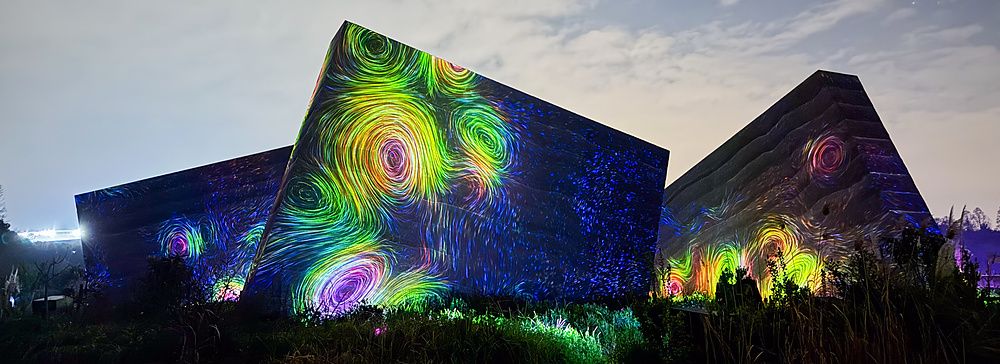
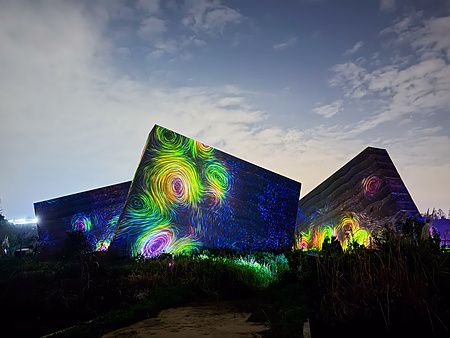
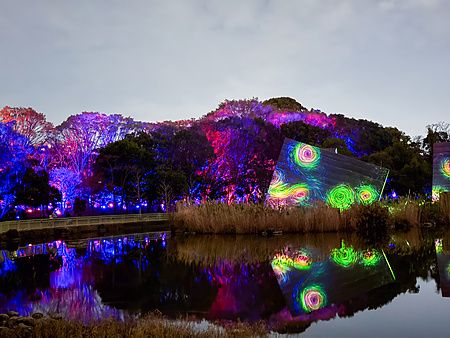
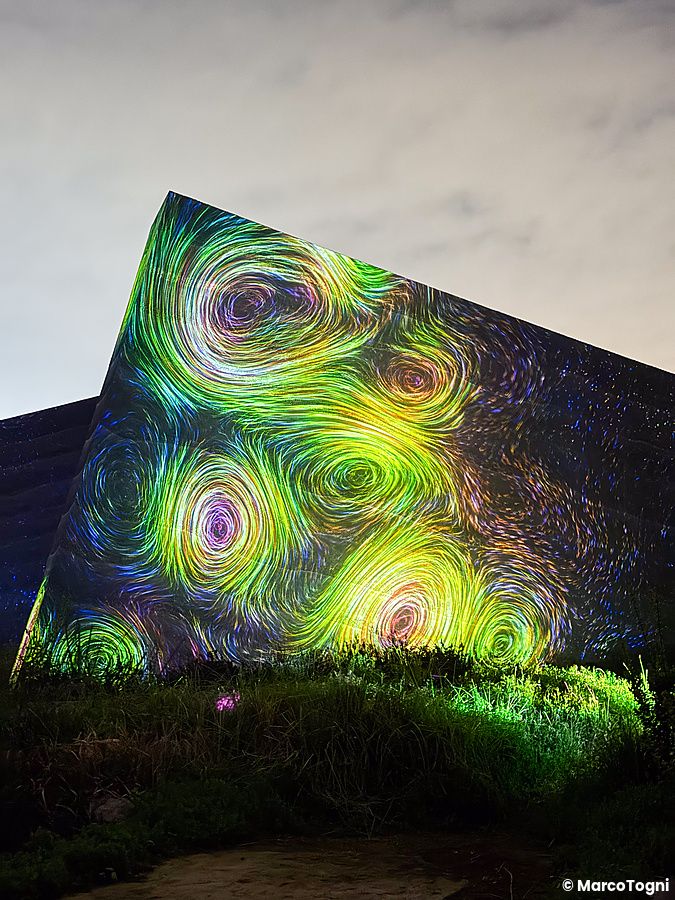
- The bird sculptures in the wind: big blocks on the lakeshore covered in colored swirls that keep shifting and are reflected in the dark water.
- The camellia garden: glowing eggs about a meter tall. Touch one and it changes color, and the color spreads to the ones nearby like a wave.
- The eucalyptus forest: soft eggs two or three meters tall, packed side by side. You push them, and they bend and spring back upright, changing color and sound.
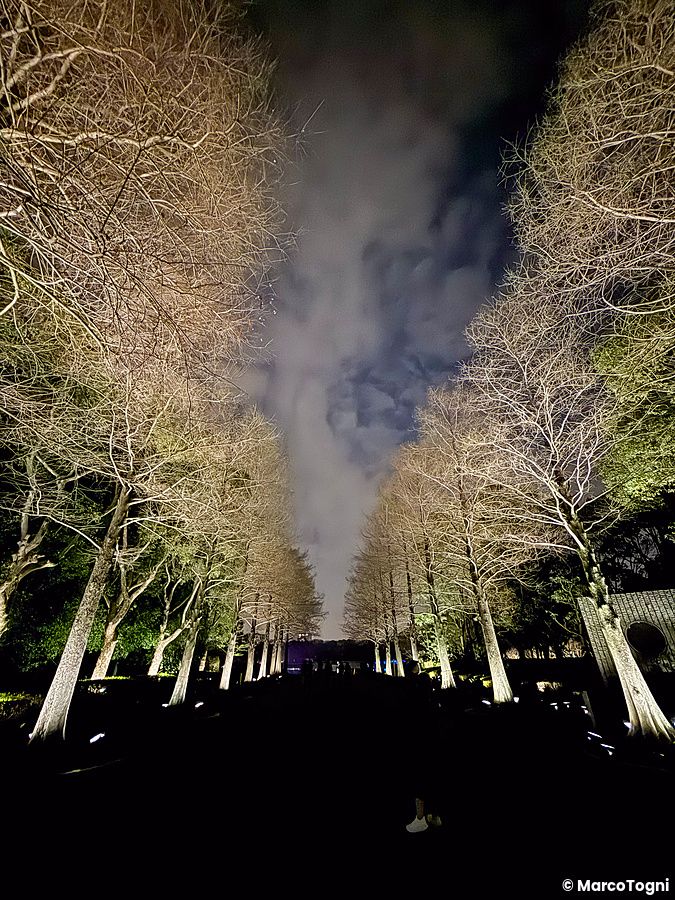
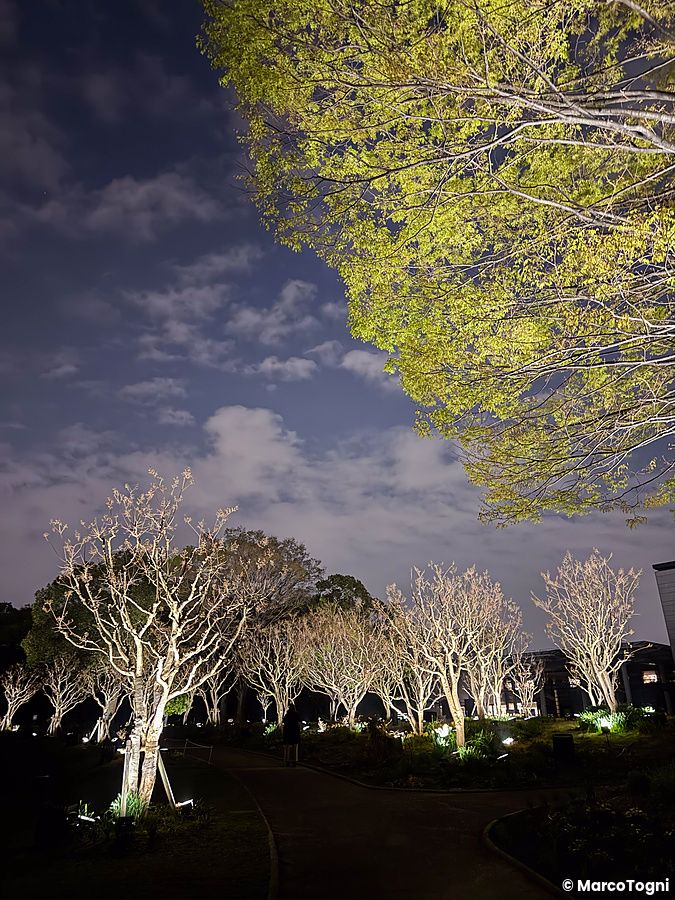
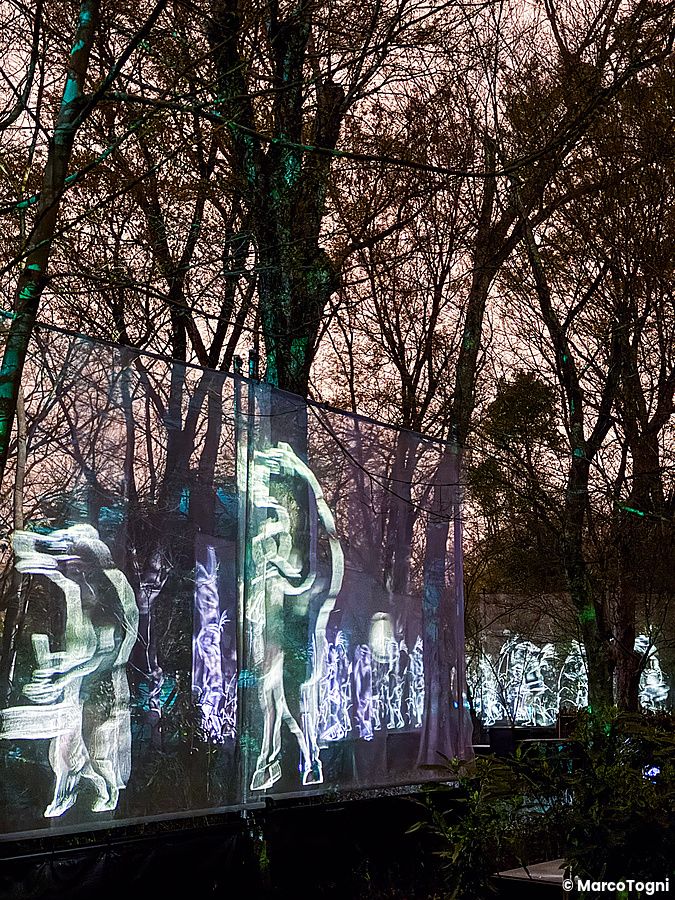
- The woods where the trees light up: the lights on the trunks glow brighter and play a sound as you walk past, and a procession of little animals drawn in a Japanese style files through the trees.
- The columns that dance with the wind: tall, thin poles that change light and sound depending on how the real wind is blowing that night.
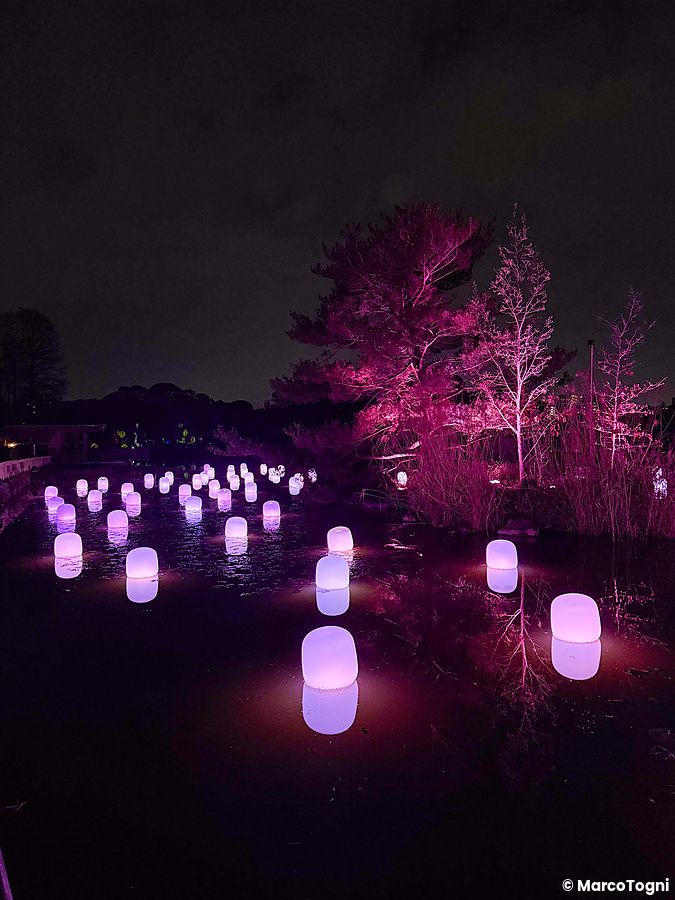
- The lamps on the big lake: they float on the water and glow brighter if you stop in front of them for a while.
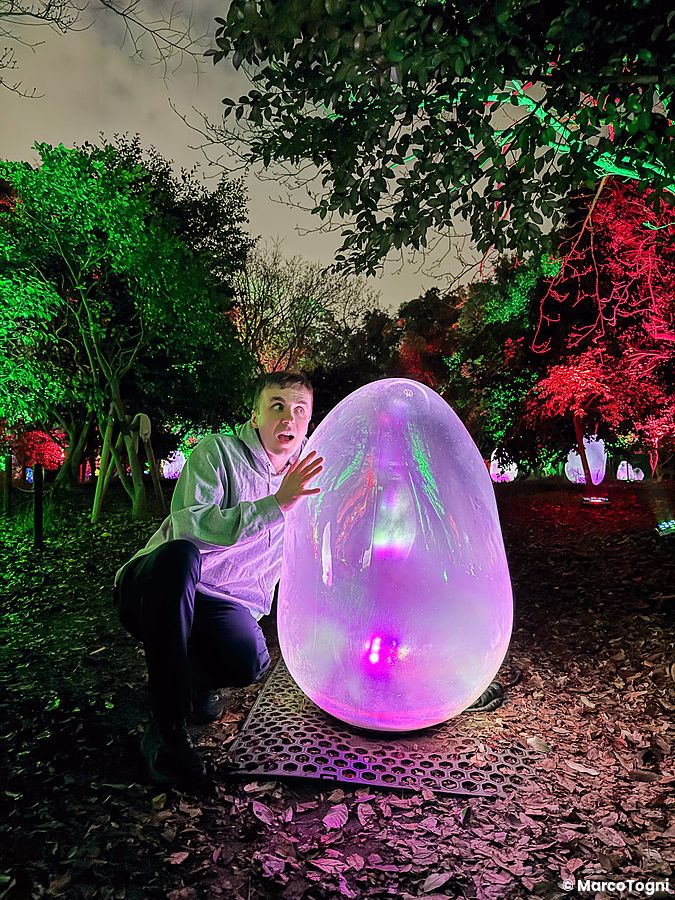
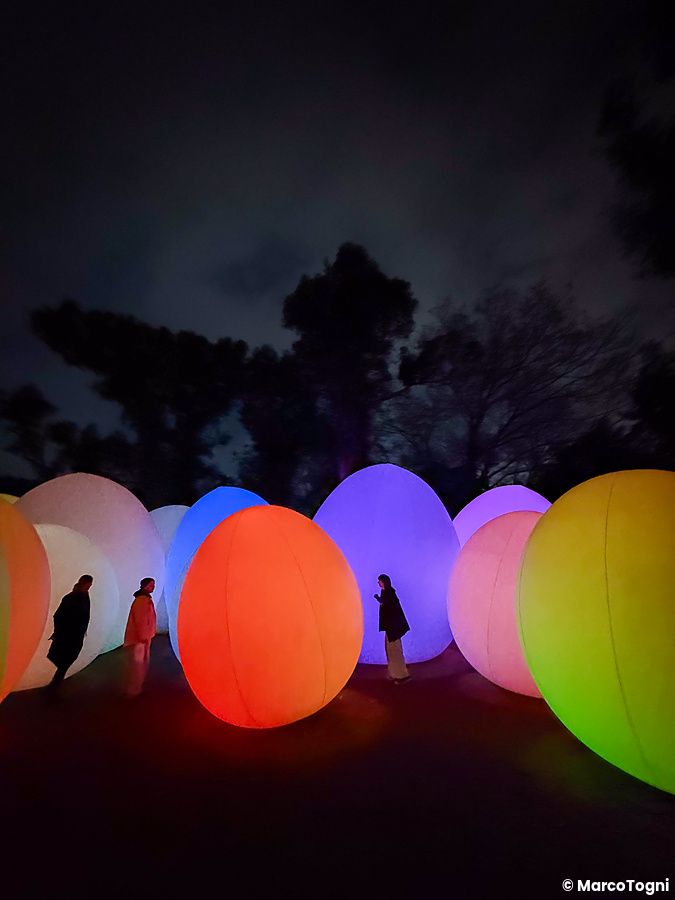
The eucalyptus forest is the part everyone goes crazy for, adults and kids alike. You squeeze in between the eggs, push them with your shoulders and watch the color race ahead of you through the trunks. This is the spot where people linger the most.
The bird sculptures, on the other hand, are the best thing here to just stand and watch. I suggest finding a spot on the shore a little off to the side, away from the small crowd in front, and letting them change for a few minutes, because the pattern never repeats.
If you’ve seen teamLab in Tokyo and expect rooms full of mirrors and projections on every wall, you’ll find fewer works here, spaced farther apart, with stretches of dark greenery to walk through in between. The idea is also almost always the same: light that responds when you get close. If you want something new around every corner, you might find it repetitive after a while.
Some of the works built around flowers also appear only in certain seasons. The beds of blue nemophila light up roughly from late March to mid-April. In summer there are thousands of white sunflowers that glow when you stop near them, and in the fall the same light effect moves to the cosmos in bloom. The evening is never quite the same from one season to the next, so if there’s a particular work you care about, check the official website before you go to see what’s on at that time.
What really matters here is the way the technology blends with what’s already there: the scent of the plants changing from one grove to the next, the low music along the paths, the wind moving the eggs and shifting the light and sound of the columns. Indoors, everything is planned down to the last detail. Here, the night itself does part of the work.
When people come to visit me and they’ve already seen teamLab Planets in Tokyo, this is where I bring them, because seeing the two side by side is the best way to understand what happens when the same ideas move outdoors. And every time I come back in a different season, I find different flowers lit up.
When to go
The best time is late spring or fall, when a light jacket is all you need in the evening and you feel like walking. In summer Osaka’s humidity doesn’t let up even after sunset, even though that’s sunflower season.
A night with a bit of wind brings out the best in the columns and the eucalyptus eggs, which move on their own even when nobody’s pushing them. If it rains, don’t bother. Everything is outdoors, there’s no roof to shelter under, and wet paths in the dark are no fun.
On weekends and during Japanese holidays there’s a line at the entrance, and the eucalyptus forest turns into a kind of family party, with kids running everywhere. The garden absorbs the crowds, though. Once you move away from the entrance the groups spread out, and you can always find an empty stretch of shore by the lake.
On a weekday the difference is clear, especially toward the end of the evening, when only a few couples are left in some of the groves and all you hear is the music.
Darkness, shoes and mosquitoes
The ground is almost entirely flat, with no stairs, but you’ll walk a lot. The garden covers twenty-four hectares and the works are spread over a good part of it. What tires you out isn’t hills but distance, and you feel it in your legs by the end.
The paths are deliberately dimly lit, and in some stretches it’s hard to see where you’re stepping. Wear comfortable closed-toe shoes, not sandals or heels, because in the eucalyptus forest you’re walking on dirt and over roots.
In summer and early fall, bring bug spray and wear long pants, because the mosquitoes in the woods really do bite. In the colder months, on the other hand, evenings outdoors get freezing and you won’t feel much like lingering in front of the works.
With kids it’s an easy evening. They can touch almost everything, push the eggs and run around without anyone telling them off. In the dark stretches, hold the little ones’ hands, and at the lake it’s best to stay close to the shore with them.
The best photo
The best shot is from the lakeshore in front of the bird sculptures, far enough away to get the reflection in the water in the frame too. There’s always someone standing right in front, but if you move a few meters you’ll find a clear shot without having to wait.
In the eucalyptus forest, the shot to go for is the dark silhouette of a person against the glowing eggs, with the tree trunks behind. The darkness makes phone photos less sharp than usual, but people’s outlines against the light come out great.
In short
- The highlight: the giant eggs among the eucalyptus trees and the colorful sculptures reflected in the lake.
- When to go: spring or fall, ideally on a weekday and on an evening with a light breeze.
- Best for: people who’ve already seen teamLab in Tokyo, couples, and families with kids who want to touch things and run around.
- Atmosphere: dark paths, low music, the scent of plants, people scattered among the groves.
Final thoughts
You don’t come here to count the artworks, since there are fewer than in Tokyo. You come to walk at night through a real garden that reacts to you, to the wind and to the season. That’s why it’s worth setting aside an evening for it, even if you’re only in Osaka for a few days and the park is away from the center.
It’s not for anyone who hates walking in the dark, anyone looking for purpose-built spaces with effects everywhere, or anyone who ends up in Osaka in the middle of summer and doesn’t handle humidity and mosquitoes well.
Getting There
From Namba, Shinsaibashi or Umeda, take the Midosuji subway line south to Nagai Station. From Namba it takes about 15 minutes. Use exit 3 and walk into Nagai Park, and you'll reach the botanical garden entrance in 7-10 minutes on foot.
If you have a JR Pass or you're coming from Tennoji, you can also take the JR Hanwa line to JR Nagai Station, about a 10-minute walk from the park.
Useful Info
The price changes by date, and on the busiest evenings adults can pay up to about 2,200 yen.
- Nagai Station (Osaka Metro Midosuji): exit 3
- JR Nagai Station (JR Hanwa)
Map
This place is on MarcoMaps
teamLab Botanical Garden
My map of Japan: over 4,000 places I've tried myself, each with photos, rating, and hours. Filter by category and rating, find veg-friendly spots and places near you with GPS. No sign-up, right from your phone.
- 4,000+ places
- Rating, photos, and hours
- Veg friendly
- Near me (GPS)
- Favorites without login
- Works offline

