Teishoku
Teishoku is the meal I’d tell you to try first when you get to Japan. It’s a tray with rice, miso soup, a main dish and a few sides, and it already tells you almost everything about how Japanese people eat day to day.
It isn’t fancy restaurant food, and it isn’t street food either. It’s lunch for office workers and students, and dinner for people who live alone and don’t feel like cooking at night. You only need to know two or three things to feel at home right away, from using the ticket machine at the door to asking for a large serving of rice.
Contents
What teishoku is
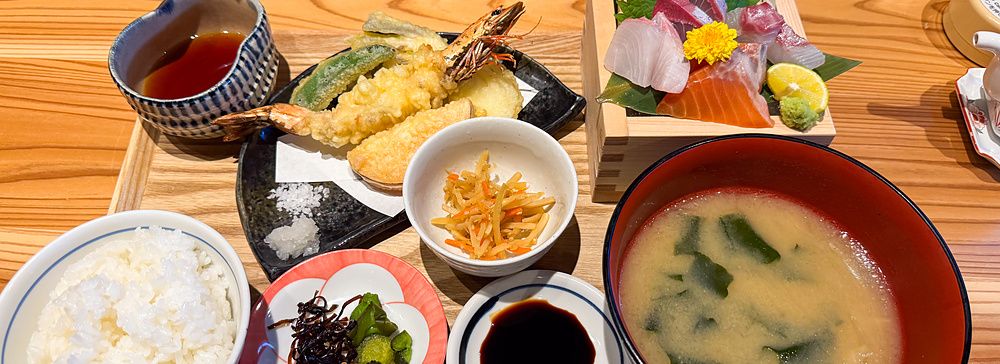
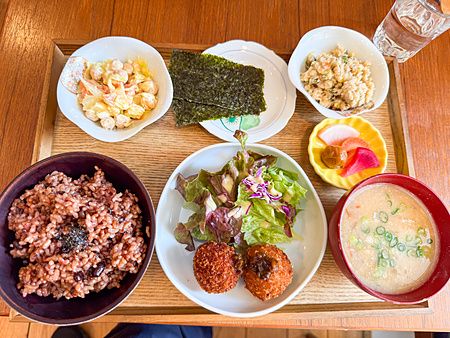
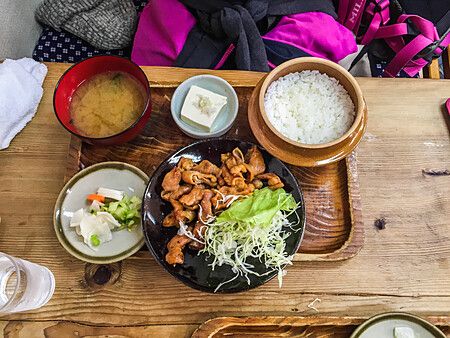
The word teishoku means something like “set meal”: the combination is fixed, you only pick the main dish, and everything else comes with it. On the tray you’ll almost always find a bowl of white rice, a small bowl of miso soup, the main dish, a small side and a few pieces of pickled vegetables, tsukemono.
The main dish gives its name to the whole set. Order karaage teishoku and you get fried chicken with everything else around it; order saba misoni teishoku and you get mackerel cooked in miso, and so on.
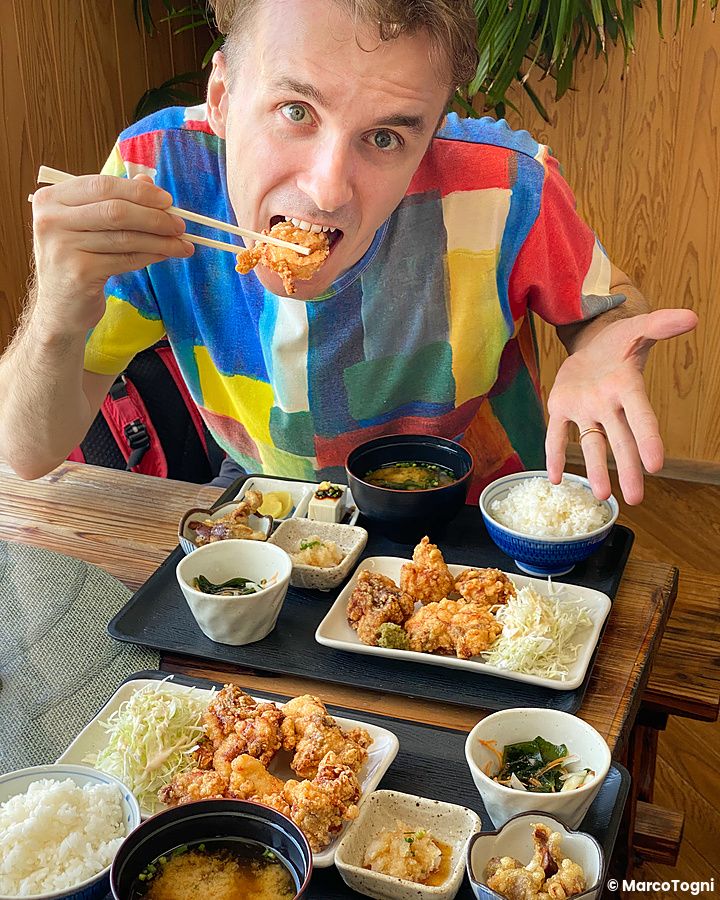
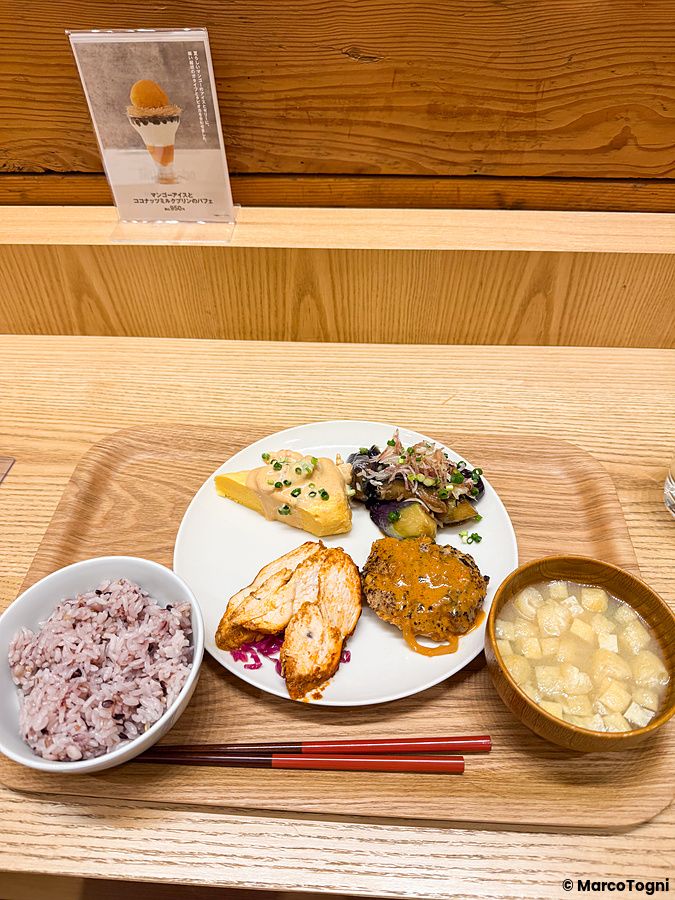
The formula goes back to an old idea, ichiju sansai, one soup and three dishes, which in Japan has been considered the basis of a balanced meal for many centuries. The three dishes are a main and two sides, and the rice isn’t even counted because it’s taken for granted.
In practice, the everyday teishoku is often a simpler version with just one side, but the idea is the same: some protein, some vegetables, hot soup and plenty of rice. That’s why Japanese people find familiar, everyday flavors in a teishoku, even at an ordinary place near the office.
How the tray is laid out
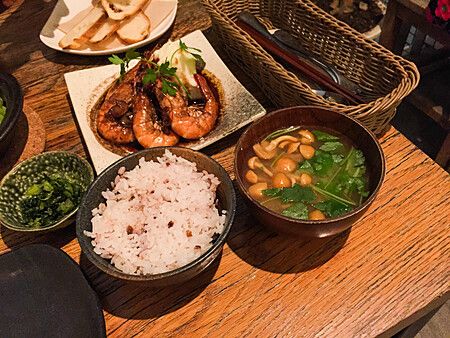
Where each bowl goes isn’t random, and knowing the layout keeps you from feeling awkward. The rice sits in front of you on the left and the miso soup in front on the right, while the main dish goes behind them, usually on the right, and the small sides fill whatever space is left.
The chopsticks lie horizontally in front of the tray, tips pointing left. If the main dish is something fried, like a cutlet or fish fritters, it normally comes with a little mound of finely shredded cabbage, a slice of lemon and sometimes a scoop of potato salad.
The sauces and condiments are usually already on the table, in little jars and bottles that all look the same. These are the ones you’ll see most often:
- Soy sauce, which goes on grilled fish, cold tofu and vegetables, but which you don’t put on plain white rice.
- A thick, dark sauce for fried food, sosu, which you pour over the cutlet or the fish fritters and often over the cabbage too.
- Salad dressing, sometimes sesame, sometimes a sort of Japanese-style vinaigrette, meant for the raw cabbage.
- Chili powder mixed with other spices, shichimi, which a lot of people add to their soup or to pork dishes.
The most popular dishes
The king of teishoku is shogayaki, pork pan-fried with soy sauce and fresh ginger. Whenever I see a Japanese ranking of the most-ordered dishes, it’s always at the top, along with karaage, marinated fried chicken.
Those are the two I’d recommend if you don’t know where to start, because pretty much everyone likes them and they go perfectly with rice, which is exactly what they’re made for.
Then there’s a whole range of classics you’ll find on almost every menu:
- Saba shioyaki, salted and grilled mackerel, simple and full of flavor, with crispy skin.
- Saba misoni, the same mackerel but stewed in a sweet miso sauce, softer and a better fit if you don’t like strong-tasting fish.
- Aji fry, breaded and fried horse mackerel, which reminds a lot of people of home-cooked fried fish.
- Niku yasai itame, stir-fried meat and vegetables, a generous plate and usually one of the cheapest items.
- Chicken nanban, fried chicken dipped in a sweet and sour sauce and topped with tartar sauce. The dish started in southern Japan and is now everywhere.
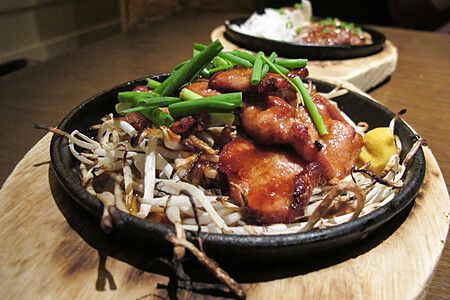
Many menus also have higawari teishoku, the daily special, which changes every day or every week. In neighborhood places it’s often the best deal, and it’s what the regulars order without even looking at the menu.
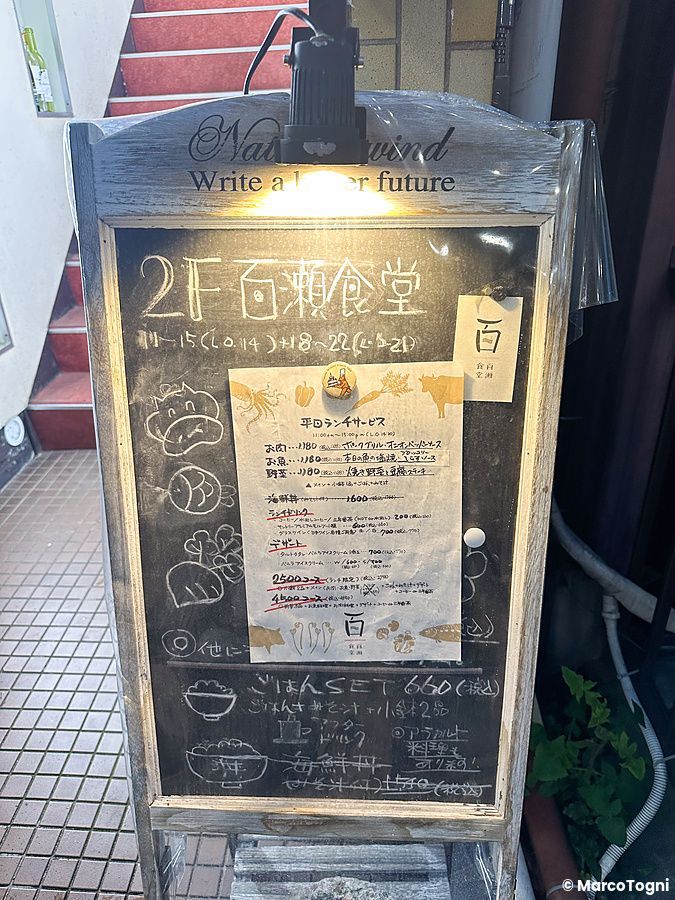
Honestly, when I walk into a new place, the first thing I look at is the daily special board. If it’s handwritten and changes often, that’s usually a good sign.
Where to eat teishoku
You can find teishoku everywhere, but the experience varies a lot depending on the kind of place. These are the main options:
- Teishoku chains like Yayoi-ken and Ootoya, with picture menus and clear prices, which you’ll find near almost every major station.
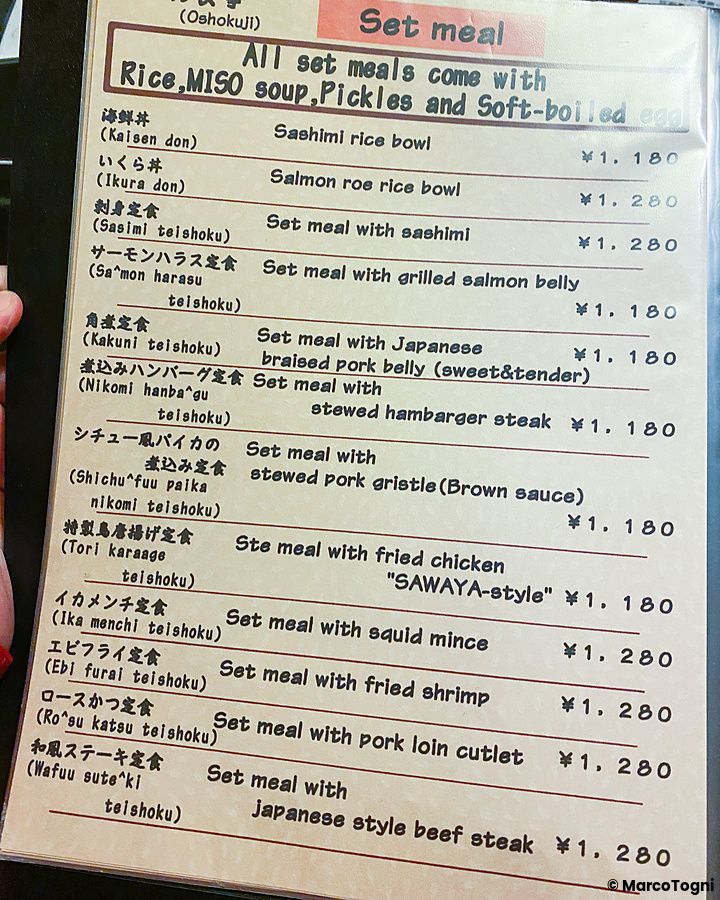
- Neighborhood places, teishokuya or shokudo, often run by the same family for decades, with a few tables and a menu written on slips of paper pinned to the wall.
- Gyudon chains like Matsuya and Sukiya, which serve sets with soup and a side alongside their beef bowls, at rock-bottom prices.
- Restaurants that specialize in one thing, like tonkatsu places or the fish restaurants near the markets, where teishoku is the standard way the dish is served.
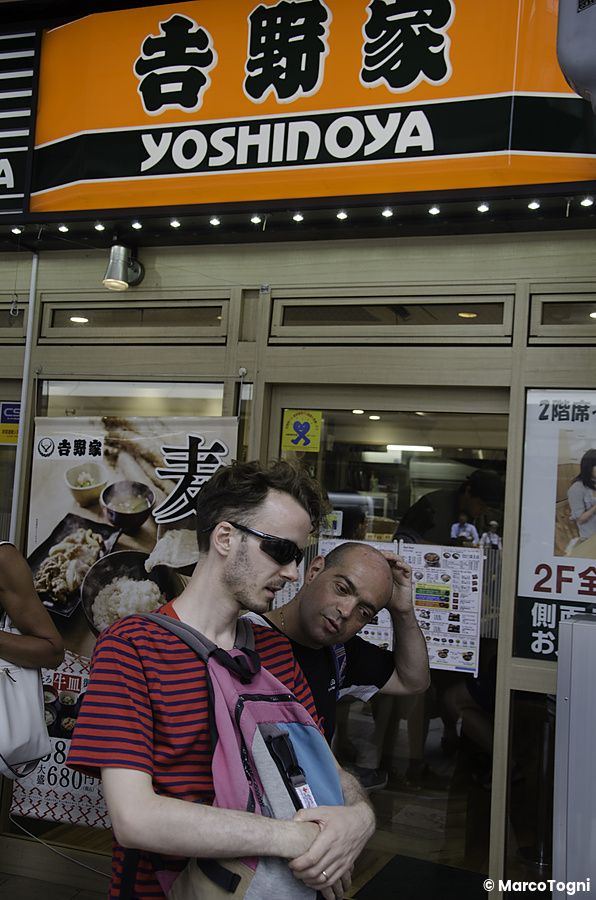
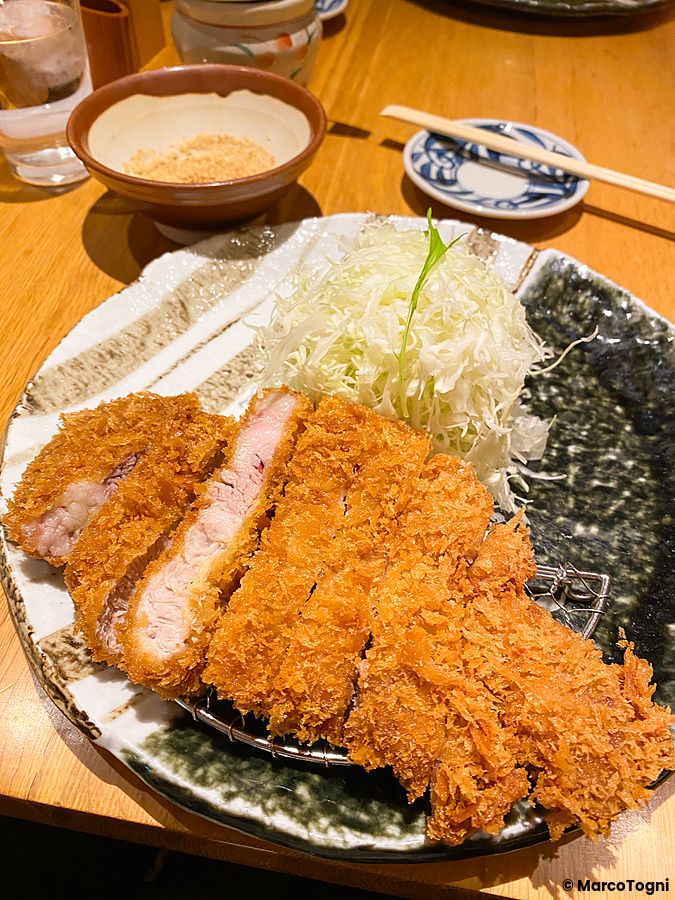
If it’s your first time here, chains are the easiest place to start, because you don’t have to read any Japanese and you already know what you’ll get. The downside is that after two or three visits everything tastes always the same, wherever you are.
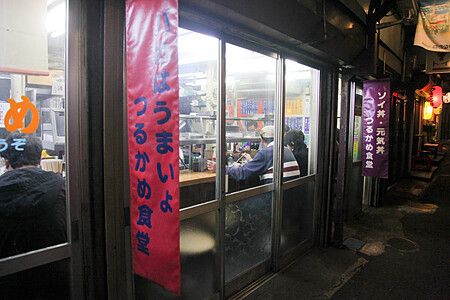
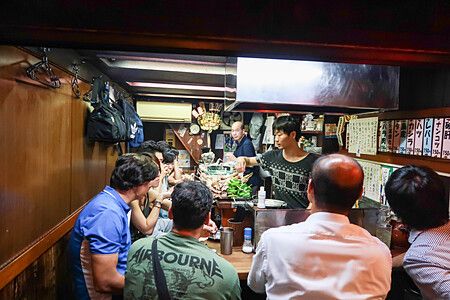
Neighborhood places are a different story. At lunch they’re packed with office workers who eat in silence and are done in fifteen minutes, with the TV on in a corner, an older man in the kitchen and his wife bringing out the trays. This is where teishoku has the most character, but it’s also where you sometimes won’t find an English menu and can only pay cash.
Yayoi-ken and Ootoya
These are the two best-known chains, and even though they’re similar they take a different approach. Yayoi-ken is cheaper and more generous with portions. You can go back for white rice as many times as you like, serving yourself from a big rice cooker in the restaurant, and there’s a container of pickled vegetables on the table for everyone to share.
One thing I really like about Yayoi-ken is that with some dishes, shogayaki included, they give you a little broth to pour over your last bowl of rice, so you can end the meal with a sort of ochazuke, rice in broth. It’s a small detail, but it shows you how Japanese people think about a meal down to the last bite.
Ootoya is a level above, with higher prices and a wider menu. They cook everything in-house, which you can tell from the neater presentation, and besides the classics they have slightly more elaborate dishes with lots of vegetables and different sauces.
You can swap your rice for five-grain rice at no extra charge, which people who want a lighter meal like. Ootoya is less generous with rice than Yayoi-ken, though, so if you’re really hungry, ask for a large serving when you order.
Some people in Japan sum up the difference like this: if you want to eat a lot, go to Yayoi-ken; if you want more dishes to choose from, go to Ootoya. I’d say that’s pretty accurate.
How to order
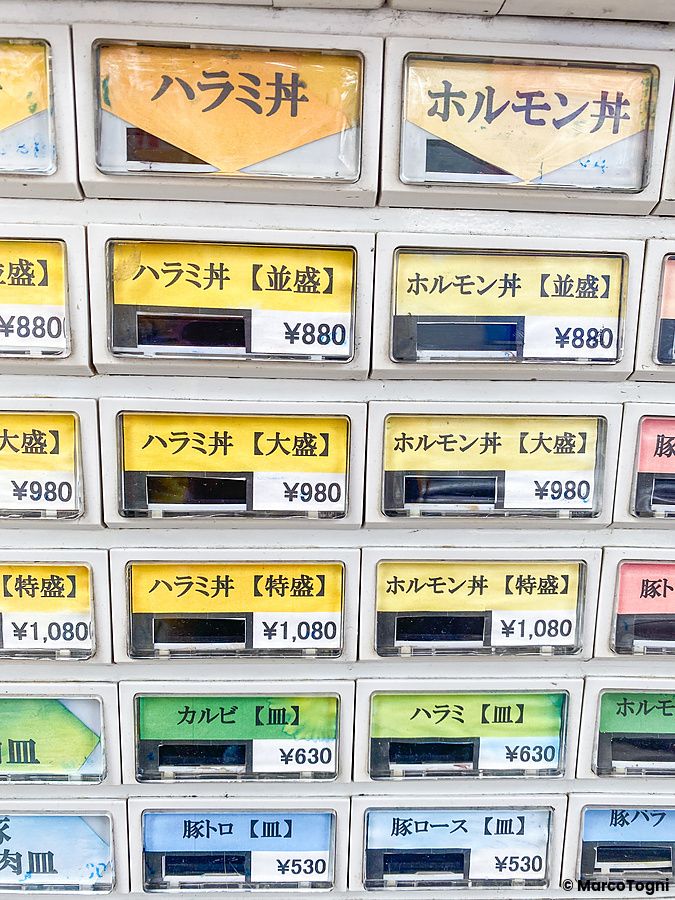
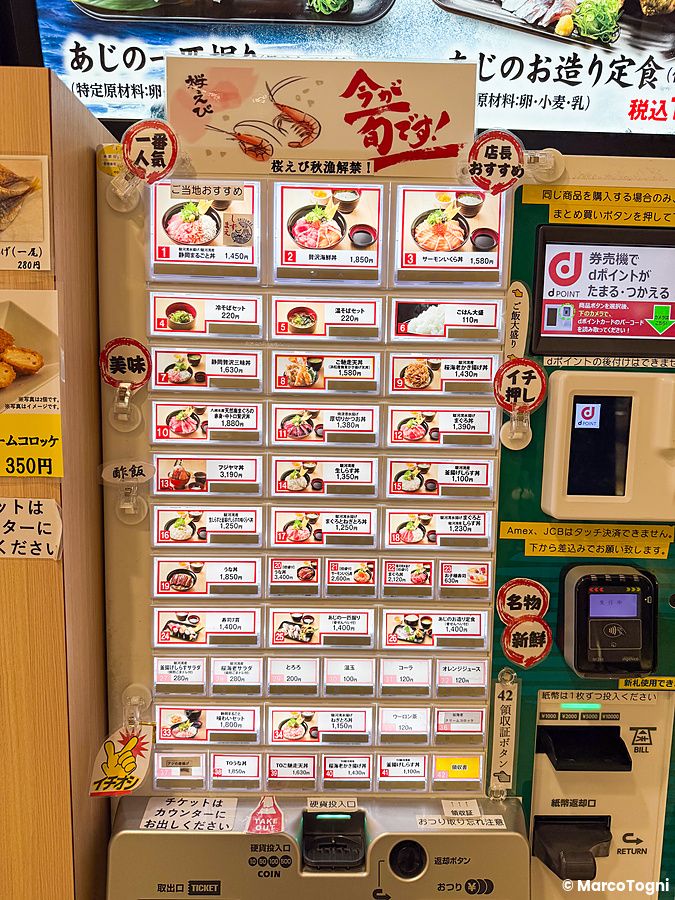
In many places, especially chains and the quicker spots, you order at a ticket machine by the entrance. You put in your money, press the button for your dish, take the ticket and hand it to the staff or leave it on the counter, then sit down and wait.
The newer machines have pictures and often an English option, and many take cards and electronic payments. The older ones in neighborhood places only take coins and small bills, so always keep a few 1,000-yen bills in your pocket.
In places with table service, they bring you free water or tea and come over to take your order. A few words come in handy:
- Gohan omori means a large serving of rice, and in many places it costs little or nothing extra.
- Gohan sukuname is the opposite, less rice, useful if the dish is already a generous portion.
- Okawari means a refill: you can get more rice in places that offer it, and sometimes more soup too.
- Higawari, as I mentioned, is the daily special, and if you can’t read the menu you can just point to that word.
Paying is easy. If you used the machine, you’ve already paid; otherwise you take the check from your table to the register on your way out. There’s no tipping, same as everywhere else in Japan.
A few table manners
There’s no strict etiquette, but a few habits help you enjoy the meal more. You pick up the rice bowl and the soup bowl with your left hand and bring them close to your mouth, while the larger plates stay on the tray.
You drink the miso soup straight from the bowl, using your chopsticks only to hold back the tofu or seaweed. You don’t need a spoon, and most teishokuya won’t even give you one.
Many Japanese people alternate a bite of rice, a bite of the main dish and a sip of soup, instead of finishing one thing at a time. That’s exactly how they teach it in school, and it’s how the flavors on the tray work best: the main dish is salty on purpose, because it’s meant to go with the rice.
Another thing I often see tourists do is pour soy sauce straight onto their bowl of white rice. It’s not a crime, but nobody does it, and the rice stops being the neutral base it’s supposed to be. Use soy sauce on the fish or the vegetables instead.
Finally, teishoku places at lunchtime are all about speed. People eat, get up and leave, and sitting around chatting while there’s a line outside is frowned upon.
Prices and the best times to go
Teishoku is one of the cheapest ways to get a full, sit-down meal in Japan. At gyudon chains you’ll usually spend under 1,000 yen, at specialty chains roughly 700 to 1,300 yen, and at neighborhood places around 800 to 1,200 yen.
At restaurants that only do one thing, like the good tonkatsu places or the ones serving fresh fish, it’s easy to spend 1,500–2,500 yen, but there you’re paying for a dish made by specialists. Prices change fairly often, so treat these numbers as a rough guide.
As for timing, I’d avoid the half hour right after noon in office districts like Shinjuku, Shinbashi or Otemachi. That’s when the lines spill out the door and the place runs like an assembly line.
Get there around 11:30 or after 13:30 and you can take your time. Some neighborhood places close in the afternoon and reopen in the evening, while the chains stay open all day, some of them until late at night, which comes in handy when you get back to your hotel hungry.
I’ll be honest with you: if you’re on a budget and don’t want to live on supermarket sandwiches, a teishoku at lunch makes the most sense. For that money you get a hot meal with vegetables and protein that keeps you going until evening. The same formula works for breakfast too. In the morning many chains, Yayoi-ken included, serve asa teishoku, the morning set, with a piece of grilled fish, an egg, natto, rice and miso soup.
It’s the traditional Japanese breakfast that hotels charge quite a lot for, and here you get a simple, quick version of it, sitting next to office workers grabbing a meal before work.
Teishoku at home
The teishoku formula is also how a lot of Japanese people put together dinner at home: rice, soup, some fish or a bit of meat, and a couple of vegetable sides, sometimes made ahead and kept in the fridge to last the week.
If you like to cook, making shogayaki or salt-grilled fish with rice and miso soup is the easiest way to bring a real Japanese meal into your own kitchen. You only need a few ingredients: soy sauce, ginger, mirin, good short-grain rice and an instant dashi mix, which you can also find at Asian grocery stores.
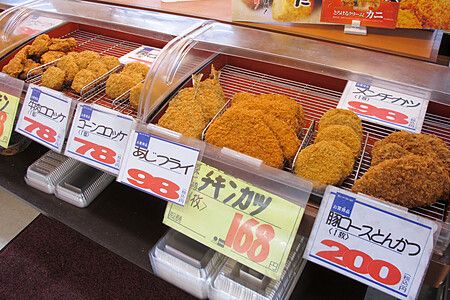
If you’re staying in an apartment, Japanese supermarkets have all the ready-made sides you need at the deli counter. Pick up a pack of karaage, a packet of instant soup and a serving of rice, and you’ve got a teishoku on your own table for very little money.
My advice
If I could have someone new to Japan try just one meal, it wouldn’t be sushi or ramen. It would be an everyday teishoku, in a place full of working people. Start with Yayoi-ken or Ootoya to get used to the tray and the ticket machine. Then, the second or third time, walk into a neighborhood place with a curtain hanging in the doorway and the menu up on the wall.
Order the daily special, ask for a large serving of rice and eat the Japanese way, a little of everything at a time. I promise that after a few days you’ll be the one looking out for that curtain as you walk around.